

By Global Gastronomy Desk
Published: October 2026
Main Facts
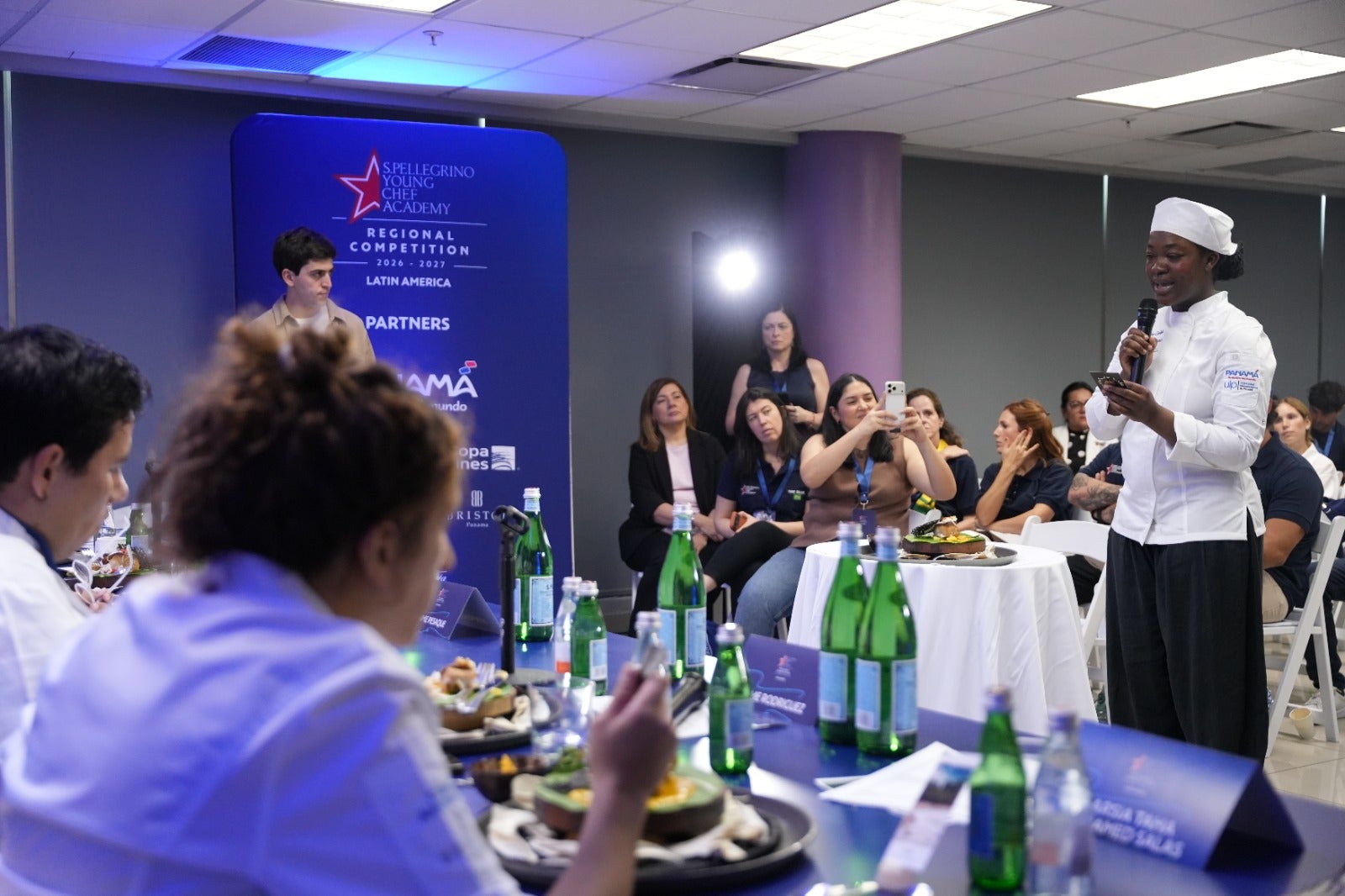
At just 22 years of age, Colombian chef Heisy Córdoba has captured the attention of the international culinary community. Representing the vibrant biodiversity and deep ancestral traditions of the Colombian Pacific, Córdoba advanced to the prestigious Latin America and Caribbean regional finals of the S.Pellegrino Young Chef Academy competition held in Panama.
Her signature dish, titled "Volver" (To Return), served as the centerpiece of her presentation. A deeply personal and emotionally resonant creation, the dish centers around a wood-fired seabass (róbalo) accompanied by elements of lactofermented mango, chontaduro cream, rooftop herbs, and a modern interpretation of her grandmother’s traditional arroz atollado (a rich, wet rice dish).
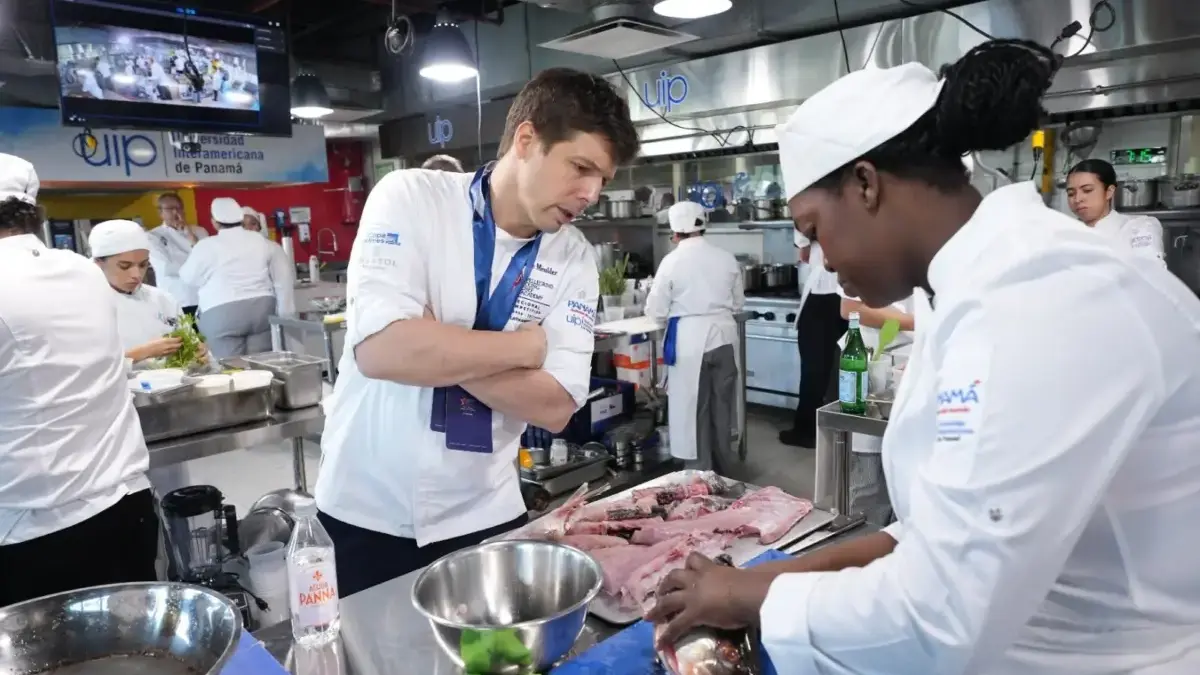
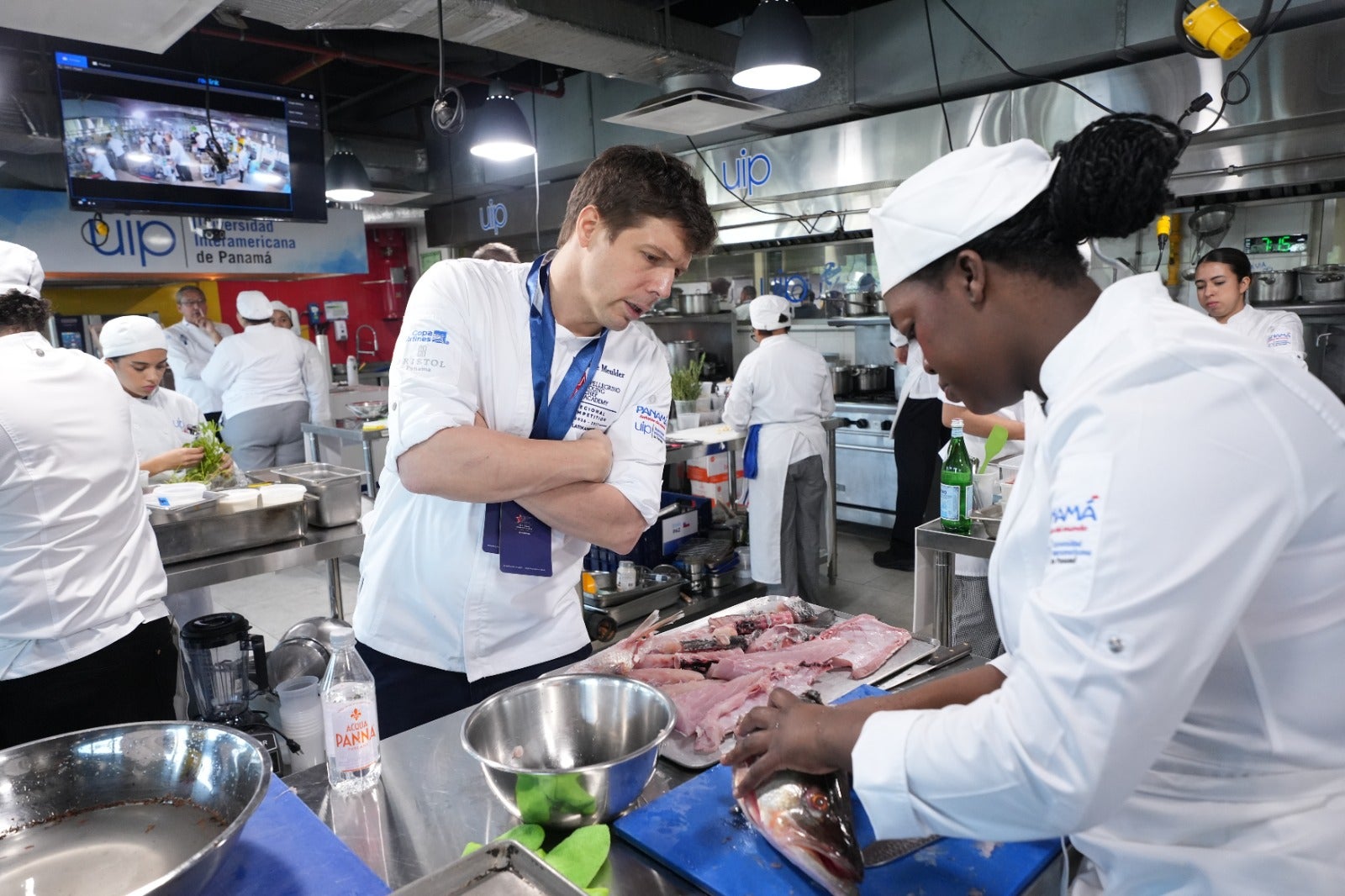
Currently working at Pajares Salinas, a renowned Spanish restaurant in Bogotá, Córdoba stood out among the elite class of young culinary talents as one of the four proud Colombian finalists in the regional bracket. Guided by her mentor, chef Klaas De Meulder, Córdoba utilized the international stage not merely to showcase technical mastery, but to pay homage to the rich Afro-descendant and indigenous culinary heritage of the Chocó department—a region she has not physically visited in over a decade.
Chronology: From the School Desks of Bogotá to the International Stage
The journey of Heisy Córdoba from a curious high school student to an acclaimed regional finalist in one of the world’s most rigorous culinary competitions is a testament to dedication, instinct, and a profound connection to her roots.
The Crossroads of Storytelling
Long before stepping into a professional kitchen, Córdoba found herself torn between two distinct mediums of expression: photojournalism and gastronomy. To her, both disciplines shared a common goal—the ability to freeze moments in time, tell compelling stories, and evoke raw human emotion. The turning point arrived during her final year of high school, when she attended a masterclass led by a guest chef at a local university.
"From that exact moment, I felt that this was what I truly wanted to do," Córdoba recalls. She realized early on that cooking was not just about feeding people; it was an intricate canvas for art, creativity, and personal storytelling.
Entering the Professional Kitchen
Upon graduating from secondary school, Córdoba immediately pursued a technical degree in culinary arts. As part of her academic requirements, she secured an internship at Pajares Salinas, a historic Spanish fine-dining establishment in Bogotá. Her work ethic, natural palate, and dedication impressed the kitchen leadership so profoundly that she was offered a permanent position upon completing her internship. Over the course of four years in the capital’s rigorous culinary scene, Córdoba honed her technical execution, mastering European classical techniques while quietly harboring a desire to merge her professional skills with the untamed, vibrant flavors of her childhood.
The Conception of "Volver"
When the opportunity to enter the S.Pellegrino Young Chef Academy competition arose, Córdoba faced a daunting realization: she had not returned to her home department of Chocó in approximately 12 years. This physical and temporal distance became the psychological and conceptual anchor for her competition entry.
Working alongside her mentor, Klaas De Meulder, Córdoba spent months conceptualizing a dish that would bridge the gap between her memories of her grandmother’s kitchen in Bahía Solano and the high-end techniques she practiced daily in Bogotá. The result was "Volver," a plate that traveled thousands of miles across borders to make its debut in Panama, captivating judges with its sophisticated balance of memory, identity, and avant-garde technique.
Supporting Data: The Anatomy of "Volver" and the Culinary Pantry of the Pacific
To fully appreciate the weight of Córdoba’s achievement, one must examine the intricate composition of "Volver" and the rich cultural pantry from which it draws its inspiration.
The Menu Breakdown
According to the official descriptive menu presented to the international judges in Panama, "Volver" is formally defined as:
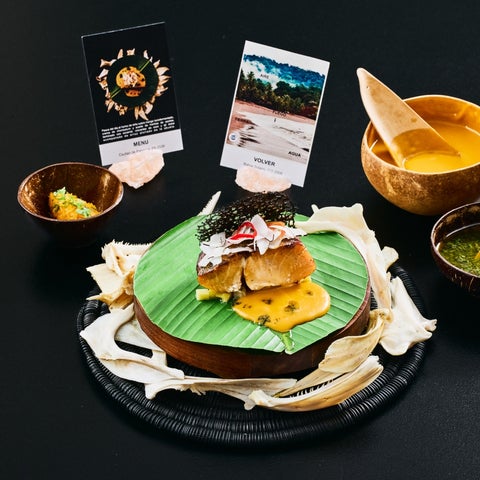
"Catch of the day cooked in a wood-fired oven, resting on lactofermented mango, chontaduro cream, and rooftop herb oil, finished with socarrat, coconut crisps, and sweet chili, accompanied by grandmother’s atollado rice."
Dissecting the plate reveals a multi-layered sensory experience:
- The Protein: A pristine fillet of róbalo (seabass), wood-fired to achieve a delicate balance of smokiness and tender flakiness.
- The Foundation: A modern base of lactofermented mango, which introduces a bright, contemporary acidity that cuts through the richness of the fish.
- The Sauces: A velvety cream made from chontaduro (peach palm fruit) infused with coconut milk, paired with an herbaceous chimichurri crafted from traditional hierbas de azotea (rooftop herbs grown in traditional raised garden beds in the Colombian Pacific).
- The Textures: Crispy coconut elements and a savory socarrat (the prized crispy bottom layer of paella, repurposed here through a Colombian lens), paired with a cracker-like crisp made from arroz atollado.
- The Side: A separate side bowl featuring arroz atollado prepared utilizing the discarded head and bones of the seabass, ensuring absolute sustainability and honoring the zero-waste ethos deeply ingrained in traditional rural cooking.
The Visual Presentation
Presentation is paramount on the global culinary stage. Córdoba’s dish arrived at the judges’ table resting upon a vibrant banana leaf, artfully framed by bleached fish bones. The accompanying sauces, herb oils, and rice were housed in traditional, handcrafted coconut shell cuencos. Alongside the food, an artistic card featured a photograph of a sun-drenched beach in Bahía Solano, Chocó, overlaid with four elemental concepts: Air, Earth, Fire, and Water—a poetic summation of the Pacific ecosystem.
The Pacific Pantry and Historical Roots
The ingredients utilized in "Volver" are not chosen at random; they represent an ecosystem and a history. According to historical archives from Señal Memoria, the gastronomy of the Colombian Pacific is a complex tapestry woven from African, indigenous, and European influences.
During the colonial era, enslaved African populations brought to the tropical lowlands of the Pacific coast adapted their ancestral culinary knowledge to the hyper-endemic ingredients of the jungle and the sea. Throughout generations, this knowledge has been preserved and transmitted almost exclusively through oral tradition by women—mothers and grandmothers who mastered the art of survival and cultural preservation through the hearth.
For Córdoba, watching her own grandmother cook not just as a domestic duty, but as a means of economic survival and artistic expression, fundamentally altered her perspective on what it means to be a cook. The Pacific pantry—characterized by coconut, chontaduro, plantains, wild seafood, and aromatic herbs—possesses an assertive flavor profile that demands respect. Córdoba’s brilliance lies in her ability to take these everyday, humble staples and elevate them to the echelons of fine dining without stripping away their soul.
Official Responses and Industry Reactions
The reception of Heisy Córdoba’s entry at the S.Pellegrino Young Chef Academy regional finals generated widespread acclaim across Latin American culinary circles.
International judges and regional gastronomy experts praised the young Colombian chef for her maturity, noting that her dish possessed a narrative depth rarely seen among competitors of her age. Rather than relying on imported luxury ingredients (such as truffles or caviar), Córdoba turned to the bio-cultural wealth of her homeland, proving that local ingredients like chontaduro and rooftop herbs hold equal, if not superior, storytelling power.
Her mentor, chef Klaas De Meulder, expressed immense pride in Córdoba’s dedication throughout the rigorous preparation process. In statements following the competition, De Meulder highlighted her relentless work ethic, her ability to translate abstract memories into precise culinary execution, and her unwavering commitment to authenticity.
Colombian culinary associations and cultural preservation groups have similarly lauded Córdoba, pointing to her success as a vital step forward for the visibility of Afro-Colombian and Pacific gastronomy. By stepping onto an international stage and proudly declaring the origins of her flavors, Córdoba has positioned herself as part of a new generation of chefs who are actively decolonizing high-end gastronomy and redefining what elite cuisine looks like in South America.
Implications: The Future of Colombian Pacific Gastronomy
The reverberations of Heisy Córdoba’s success extend far beyond a single competition in Panama. They signal a profound shift in the trajectory of Colombian cuisine on the global stage.
1. Elevating Regional Heritage to Fine Dining
For decades, traditional cuisines from Colombia’s coastal and jungle regions—particularly the Pacific—were largely relegated to informal, domestic spaces or localized traditional restaurants. Córdoba’s achievement demonstrates that Pacific ingredients can be integrated into high-end, avant-garde gastronomy without losing their cultural integrity. By pairing ancestral techniques like wood-fired cooking and rooftop herb gathering with contemporary methods like lactofermentation, chefs like Córdoba are opening doors for a new wave of modern Colombian Pacific restaurants.
2. Inspiring a New Generation of Young Chefs
At only 22 years old, Córdoba’s rise serves as a powerful beacon for youth in marginalized or distant regions of Colombia. Her journey from Chocó to the kitchens of Bogotá, and ultimately to an international podium, illustrates that culinary arts can serve as a legitimate, highly respected vehicle for social mobility, artistic expression, and global cultural diplomacy. It reinforces the idea that geographical distance from major metropolitan culinary hubs is no longer a barrier to international recognition, provided the storyteller has a genuine, compelling narrative.
3. Sustainability and Zero-Waste as Ancestral Wisdom
In an era where modern fine dining is obsessed with buzzwords like "sustainability," "zero-waste," and "farm-to-table," Córdoba’s work highlights an important truth: these modern culinary philosophies have been practiced by indigenous and Afro-descendant communities for centuries out of necessity and respect for the land. By utilizing the head and bones of the seabass to enrich her arroz atollado, Córdoba did not invent a new trendy sustainable practice; she simply replicated the wisdom of her grandmother. This realization challenges the euro-centric bias of global fine dining, repositioning traditional communities not as subjects to be modernized, but as the original masters of sustainable gastronomy.
Epilogue: The Power of "Volver"
As Heisy Córdoba continues her career at Pajares Salinas and looks toward future culinary endeavors, "Volver" remains a milestone in her professional life. More than a recipe, it is a bridge connecting the girl who left Bahía Solano a decade ago with the accomplished chef shaping the future of Colombian cuisine today. In her own words, encapsulating the philosophy that guides her knives and flames:
"The cuisine of the Pacific has a very strong and clear identity, and for me, the beauty lies in respecting that identity, but also finding new ways to express it."

Leave a Reply