

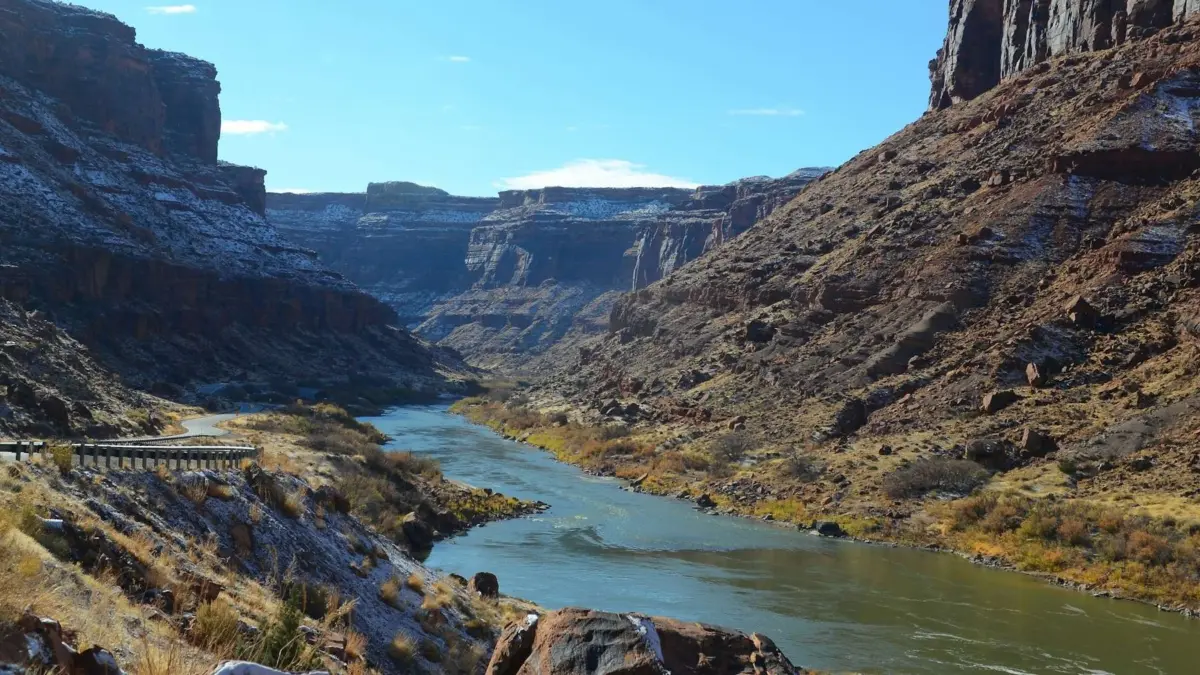
WASHINGTON — In the sprawling arid expanses of the American West, few natural elements command as much existential and economic power as the Colorado River. Spanning thousands of miles, crossing multiple state lines, and stretching across the international border into Mexico, the river is far more than a geographical landmark; it is the lifeblood of a multi-billion-dollar regional economy.
From the booming metropolitan hubs of the desert Southwest to sprawling agricultural valleys and sovereign Indigenous tribal lands, the management of the Colorado River dictates the livelihood, employment, and stability of millions of people. However, decades of over-allocation, persistent megadroughts fueled by global climate change, and complex geopolitical tensions have brought this vital watershed to a critical juncture.
As federal agencies, state governments, and tribal leaders grapple with declining reservoir levels at Lake Mead and Lake Powell, a comprehensive new management strategy is taking shape. At the forefront of this effort is the United States Bureau of Reclamation, which has unveiled a robust framework designed to navigate the complexities of water security, economic resilience, and ecological preservation over the next decade.
Main Facts: The Economic and Ecological Engine of the West
The Colorado River basin is a complex socio-ecological system where environmental conservation and economic productivity are inextricably linked. The river serves as the primary municipal, industrial, and agricultural water supply for seven U.S. states—Arizona, California, Colorado, New Mexico, Nevada, Utah, and Wyoming—as well as parts of northwestern Mexico.
A Multibillion-Dollar Economic Driver
The economic footprint of the Colorado River cannot be overstated. It sustains:
- Intensive Agriculture: Millions of acres of some of the most productive farmland in the United States rely entirely on Colorado River water to produce crops that feed the nation and global export markets.
- Thriving Urban Centers: Major metropolitan areas, including Phoenix, Las Vegas, San Diego, and Los Angeles, depend on the river’s aqueducts and reservoirs to sustain urban growth, real estate markets, and commercial enterprises.
- Tourism and Recreation: Billions of dollars are generated annually through water-based recreation, national parks, fishing, and tourism along the river’s canyons, lakes, and reservoirs.
- Energy Generation: Hydropower facilities along the river, notably at the Hoover Dam and Glen Canyon Dam, supply clean, reliable electricity to vast regional power grids.
The Multi-Stakeholder Dilemma
Managing such a high-demand resource requires intricate coordination among a diverse array of stakeholders. These include federal regulators, state water czars, agricultural cooperatives, large corporations, and sovereign Native American tribes. Because water rights and allocations are tied to legal precedents and historical compacts—such as the 1922 Colorado River Compact—any shift in distribution inevitably creates winners and losers.
Consequently, the river’s management is a high-stakes balancing act. Ensuring equitable access while preventing ecological collapse requires explicit agreements that can adapt to sudden environmental shocks and long-term climate shifts.
Chronology: A History of Management and the Path to the Post-2026 Framework
To understand the urgency of current policy decisions, it is essential to trace how the governance of the Colorado River has evolved from localized extraction to integrated basin-wide management.
- 1922: The Colorado River Compact. Signed at Peppermint, Colorado, this historic agreement divided the basin into the Upper and Lower Divisions, allocating 7.5 million acre-feet of water annually to each. Unfortunately, the compact was based on overly optimistic hydrological data from an unusually wet decade, setting the stage for future water deficits.
- 1944: The Mexican Water Treaty. The United States and Mexico signed a treaty guaranteeing Mexico 1.5 million acre-feet of water annually from the Colorado River, formally integrating international obligations into basin management.
- Late 20th Century: Infrastructure Boom. The construction of massive engineering marvels—including the Hoover Dam, Glen Canyon Dam, and extensive canal systems like the Central Arizona Project—transformed the West, allowing populations to boom in hyper-arid environments.
- The 21st-Century Megadrought. Beginning in the early 2000s, the American West entered one of the driest periods in over a millennium. Water withdrawals consistently outpaced natural replenishment through snowpack melt, causing reservoir levels at Lake Mead and Lake Powell to plummet to historic lows.
- 2007–2019: Interim Guidelines. Recognizing the mounting crisis, basin states and federal regulators agreed to a set of guidelines for coordinated operations of Lake Powell and Lake Mead, establishing shortage-sharing mechanisms for the Lower Basin.
- Recent Years: The Post-2026 Planning Phase. With the 2007 interim guidelines expiring in 2026, the U.S. Bureau of Reclamation initiated a comprehensive, multi-year public planning process to draft the operational rules that will govern the river for the decades following 2026.
Supporting Data: Hydrological Realities and the 10-Year Planning Horizon
The urgency driving current negotiations is rooted in stark hydrological data. For over two decades, the volume of water flowing into the Colorado River system has steadily decreased, while demand has remained stubbornly high.
The Bureau of Reclamation’s Strategic Response
To address this volatility, the Bureau of Reclamation has detailed a forward-looking strategy that redefines how long-term water management is conducted. Rather than relying on rigid, multi-decade plans that quickly become obsolete, the agency has instituted a dynamic 10-year planning framework, underpinned by 2-year operational decision cycles.
- The 10-Year Strategic Vision: This framework provides a long-term horizon, allowing states, tribes, and industries to plan infrastructure investments, agricultural shifts, and municipal growth with a degree of predictability.
- The 2-Year Tactical Cycles: Recognizing that climate change and geopolitical shifts can radically alter water availability in a matter of months, the system allows for granular, adaptive decision-making every 24 months. This agility ensures that policy can respond in real-time to severe droughts or unexpected hydrological recovery.
Principles of Storage and Shortage Protection
The new operational guidelines establish clear, enforceable principles and safeguards governing:
- Water Storage: Protocols for how water is conserved and banked in major reservoirs during wetter years to buffer against future deficits.
- Shortage Sharing: Pre-established formulas for how water cuts must be distributed among the Upper and Lower Basin states when reservoir elevations drop below critical thresholds.
- Ecosystem Health Protections: Mandates to protect minimum environmental flows, safeguarding aquatic habitats, riparian zones, and water quality against the strains of extreme scarcity.
Official Responses: Perspectives from Regulators, Tribes, and Communities
The formulation of the post-2026 operational guidelines has brought a diverse coalition of voices to the negotiating table. Federal, state, and tribal leaders have weighed in heavily on the necessity of structural reform.
Federal Regulators
Officials from the Department of the Interior and the Bureau of Reclamation emphasize that business-as-usual is no longer an option. In recent policy briefs, representatives stressed that modernizing the river’s operating rules is a national security and economic imperative.
"We are managing a system under 20th-century rules for 21st-century realities," noted a senior official involved in the planning process. "Our objective with the 10-year adaptive framework is to build resilience, reduce guesswork, and provide a stable foundation that protects both human livelihoods and natural ecosystems."
Sovereign Indigenous Nations
For decades, Native American tribes—many of whom hold senior water rights to the Colorado River—were sidelined in major basin negotiations. In the current planning cycle, tribal nations have demanded and secured a more prominent seat at the decision-making table.
Tribal leaders have highlighted the cultural and economic importance of the river, advocating for mechanisms that allow tribes to lease, store, or market their water rights without losing them, thereby fostering economic self-sufficiency while contributing to basin-wide conservation efforts.
Agricultural and Municipal Leaders
Agricultural producers, who account for roughly 70% of Colorado River water consumption, face immense pressure to adopt high-efficiency irrigation technologies, fallowing programs, and crop-switching initiatives. Meanwhile, municipal water managers in fast-growing cities like Las Vegas and Phoenix have successfully implemented aggressive conservation and water-recycling programs, proving that urban areas can decouple population growth from increased water demand. However, representatives from farming communities caution that water reductions must be implemented fairly to prevent rural economic devastation.
Implications: Securing the Economic and Environmental Future of the West
The outcomes of these ongoing management strategies carry profound implications for the future stability of the American West.
Mitigating Economic Uncertainty
By establishing transparent, predictable guidelines for water distribution and shortage management, federal and state authorities aim to eliminate the paralyzing legal battles and adversarial politics that have historically plagued the basin. Reducing uncertainty directly protects regional employment, agricultural markets, and industrial operations. When businesses, farmers, and municipalities know how water will be managed during dry spells, they can make informed long-term investments rather than reacting in panic to sudden water crises.
The Imperative of Climate Adaptation
The Colorado River serves as a bellwether for climate change adaptation worldwide. As global temperatures rise and precipitation patterns become increasingly erratic, the strategies deployed in the American West will be scrutinized as a global model for river basin management. Integrating short-term tactical adjustments within a long-term strategic vision provides the necessary flexibility to withstand unforeseen climate shocks.
A Shared Responsibility
Ultimately, the health of the Colorado River depends on a collective acknowledgment that water is a finite, shared resource. As agreements are finalized and implemented over the coming years, the cooperation between the United States and Mexico, state governments, agricultural sectors, and Indigenous tribes will determine whether the West can sustainably support its communities for generations to come.
Safeguarding the health of the Colorado River is not merely an environmental crusade; it is the fundamental prerequisite for the continued economic vitality and survival of the American West.




Leave a Reply