

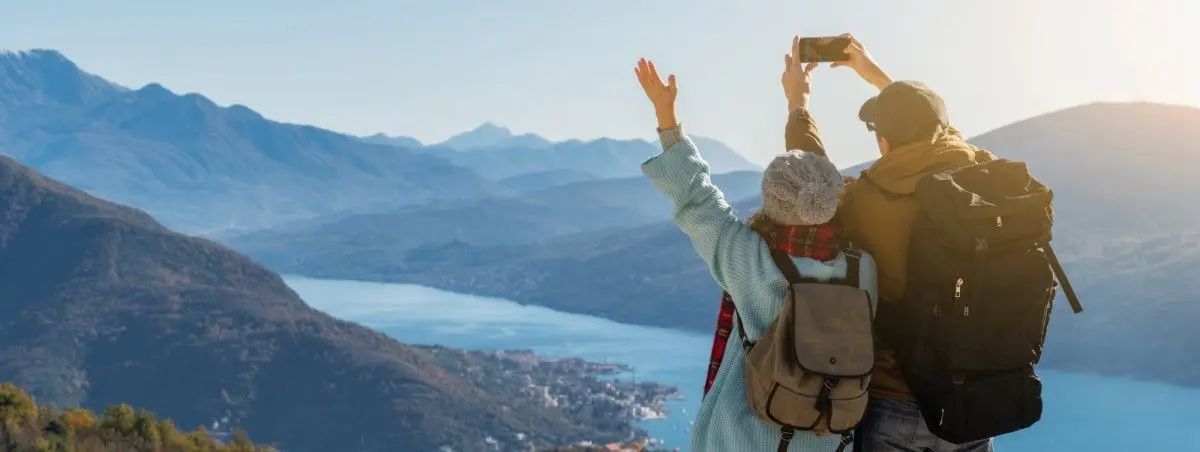
MADRID — In an era dominated by hyper-connectivity, the journey of a thousand miles no longer begins with a single step, but with a scroll. Social media platforms have long since transcended their origins as mere communication tools to become powerful catalysts for wanderlust. Yet, as a comprehensive new study reveals, the relationship between digital platforms and travelers is undergoing a profound maturation.
Spaniards have emerged as the vanguard of this trend in Europe, demonstrating a unique reliance on digital channels to dream up their next getaways. Commissioned by travel giant eDreams and conducted by research firm OnePoll among 1,000 Spanish adults who have traveled abroad in the last five years, the data paints a fascinating portrait of modern tourism. It reveals a paradox: while digital inspiration is at an all-time high, travelers are simultaneously demanding greater authenticity, pulling back on screen time during their actual vacations, and rejecting the pressure to artificially inflate subpar travel experiences.
1. Main Facts: Spain Leads Europe in Social Media Travel Inspiration
The primary takeaway from the eDreams study is clear: Spain sits comfortably at the top of the European table when it comes to social media-driven travel inspiration.
According to the research, 48% of Spanish travelers state that they are inspired by social media networks when organizing their holidays. This puts Spain ahead of its European neighbors surveyed, narrowly edging out Italy (44%) and Germany (42%).
Rather than serving as a fleeting trend, platforms like Instagram, TikTok, and YouTube have cemented their status as foundational pillars within the consumer decision-making matrix. They are no longer just places to daydream; they are active search engines for flight paths, boutique hotels, and hidden culinary gems.
However, this influence is far from uniform. A deep dive into the demographics reveals a stark generational divide:
- Gen Z (18–24 years old): A staggering 78% of young adults in this bracket report discovering new destinations they had never previously considered through social media.
- Millennials (25–34 years old): Close behind, 60% of this demographic find their horizons broadened by digital feeds.
- Gen X (55–64 years old): The influence drops significantly to 32%.
- Boomers (65+ years old): Only 23% of older travelers look to social media for initial destination ideas.
These figures underscore that while digital inspiration has permeated older demographics to some degree, it remains the native language of younger generations, dictating how they perceive the global map.
2. Chronology: The Evolution of Digital Travel Discovery
To understand where the travel industry stands today, it is essential to trace how social media transformed from an afterthought into the primary inspiration engine for millions.
Phase 1: The Era of the Digital Scrapbook (Early 2010s)
In the early days of platforms like Instagram and Pinterest, social media served primarily as a digital photo album. Travelers posted their pictures after returning home. Inspiration was largely aspirational and passive, dominated by travel agencies moving their brochures into digital formats, alongside early travel bloggers sharing static images of iconic landmarks like the Eiffel Tower or the Colosseum.
Phase 2: The Rise of the Influencer and Virality (Mid-to-Late 2010s)
As algorithms evolved and the "influencer" economy boomed, social media shifted from passive viewing to active persuasion. Content creators began partnering with tourism boards and hotels to market specific destinations. This era was characterized by viral trends—destination marketing campaigns that caused massive, sometimes overwhelming spikes in tourism to specific, highly photogenic spots (often leading to overtourism concerns in places like Amalfi, Santorini, or Ibiza).
Phase 3: The Quest for Authenticity and Micro-Communities (Present Day)
Today, travelers have grown weary of over-filtered, hyper-commercialized content. The current phase, as highlighted by the eDreams study, marks a critical pivot toward authenticity. Modern users are skeptical of mass-market viral sensations. Instead, they seek out micro-influencers, peer reviews, and lesser-known spots. Social media has transitioned from a tool that dictates where everyone else is going into a sophisticated search tool used to find where nobody else is.
3. Supporting Data: What Motivates the Modern Spanish Traveler?
The eDreams-OnePoll study provides granular insight into what precisely captures the attention of Spanish travelers scrolling through their feeds, as well as how they behave once they arrive at their destinations.
The Hunt for Hidden Gems vs. Viral Trends
When asked what motivates them while browsing travel content, Spanish respondents overwhelmingly pointed toward originality:
- 40% stated their primary motivation is discovering hidden places and authentic experiences. (Among travelers aged 25 to 34, this figure spikes to 47%).
- 17% value realistic, grounded previews—such as raw photos and videos of hotels, beaches, or local activities—that help them accurately visualize the experience.
- 11% seek validation and inspiration from creators who share a similar lifestyle and budget.
- Only 9% are swayed by viral posts that trigger an immediate, impulsive desire to travel.
This data exposes a fundamental shift in consumer psychology. The era of blindly booking a trip because a 10-second video went viral is waning; today’s Spanish traveler wants substance, context, and a guarantee of uniqueness.
The Shift in Sharing: Landscapes Over Selfies
How Spaniards portray their travels online has also evolved. When sharing content from their holidays, the focus remains firmly on the destination rather than the traveler’s own ego:
- 82% of respondents prefer to post landscapes and monuments.
- 57% focus on gastronomy (local food, restaurants, markets).
- 57% share experiences and activities undertaken during the trip.
- 40% opt for personal photographs or selfies.
Gender nuances also emerge within this data: 44% of women select selfies as a primary type of holiday content they share, compared to 35% of men, pointing to subtle differences in how personal narratives are constructed online.
Digital Detox: Less Screen Time on Vacation
Perhaps the most encouraging trend for wellness and mindful travel is the conscious reduction of social media use during the trip.
While 52% of Spaniards admit to checking social media at some point during the day while on holiday, they do so significantly less than during their normal daily routines. Furthermore, the survey notes a growing cultural aversion to "masking" reality—travelers are increasingly less inclined to paint a picture of perfection on their profiles if their actual holiday experiences fall short of expectations. Authenticity on the feed matches a desire for authenticity on the ground.
4. Official Responses and Industry Perspectives
Industry leaders are taking close note of these behavioral shifts. Far from viewing social media as a fleeting distraction, travel executives see it as a permanent, evolving fixture of the tourism ecosystem that requires careful navigation.
Pablo Caspers, Chief Travel Officer of eDreams Odigeo, offered a comprehensive perspective on the findings, emphasizing the democratization of travel discovery:
"Social media has transformed into a grand window to the world, making the discovery of destinations more accessible, visual, and personal than ever before," Caspers noted.
"Whether it is to find a place away from the usual environments or to immortalize memories with loved ones, these platforms allow travelers to celebrate the best of their journeys and inspire others to explore."
Caspers’ remarks highlight the dual responsibility resting on both travel platforms and tourism boards. As consumers demand genuine, unvarnished portrayals of destinations, the industry must move away from deceptive marketing and embrace transparency. When travelers seek hidden gems, tourism marketers must find ways to promote lesser-known regions responsibly, balancing economic development with sustainability and the preservation of local character.
5. Broader Implications for the Global Tourism Industry
The implications of the eDreams study extend far beyond Spanish borders, offering crucial lessons for tour operators, hoteliers, airlines, and destination management organizations (DMOs) worldwide.
1. The Redefinition of Destination Marketing
Tourism boards can no longer rely on glossy, high-production-value commercials that project an unattainable ideal. Because modern consumers—especially Gen Z and Millennials—crave authenticity, marketing campaigns must lean into raw, user-generated content (UGC), local storytelling, and off-the-beaten-path itineraries. Highlighting sustainable tourism practices and community-led initiatives will increasingly become a competitive advantage.
2. Balancing Digital Engagement with Mindfulness
The finding that travelers are intentionally reducing their social media consumption while on holiday signals a cultural pushback against constant digital tethering. Forward-thinking hospitality brands are capitalizing on this by offering "offline packages," digital detox retreats, and spaces designed to encourage real-world interaction rather than photo-ops. Ironically, the path to booking a hotel is paved by social media, but the path to retaining loyal guests is paved by real-world, screen-free satisfaction.
3. Generational Segmentation is Mandatory
Travel companies must adopt highly targeted digital strategies. A one-size-fits-all social media campaign will fail. Brands targeting younger demographics must invest heavily in dynamic, short-form video content that highlights unique, hidden experiences. Conversely, campaigns directed at older demographics must continue utilizing traditional digital touchpoints, emphasizing reliability, comfort, and ease of planning.
Conclusion
Social media’s marriage with the travel industry is no longer in its experimental honeymoon phase; it has settled into a mature, pragmatic partnership. For Spanish travelers—who lead Europe in digital wanderlust—platforms like Instagram and TikTok are trusted advisors in the early stages of dreaming and planning. Yet, as consumers grow wiser, demand greater authenticity, and protect their peace of mind while on vacation, the digital sphere must adapt. The future belongs not to the loudest viral video, but to the most authentic digital story.

Leave a Reply