By Global Aviation Desk Published exclusively in English
Main Facts
From its operational headquarters overlooking a sprawling hangar at Bogotá’s El Dorado International Airport, Helistar manages an empire of air mobility. Directed by Ricardo Trujillo—a retired Colombian Air Force colonel with 28 years of military flying experience—the company has evolved from a modest regional provider into Colombia’s premier private aviation powerhouse.
Helistar’s operational footprint extends far beyond domestic borders. The company holds critical international certifications, including the prestigious Federal Aviation Administration (FAA) FAR 129 certification, enabling it to execute charter operations not only between Colombia and the United States, but also natively within U.S. airspace. Furthermore, the firm operates its own Fixed-Base Operator (FBO) at El Dorado, offering high-profile travelers exclusive private terminals, streamlined customs processing, discreet security, and bespoke ground services.
While Helistar’s luxury fleet has transported global music icons (such as Karol G, Feid, Shakira, and Blessd), elite athletes (including James Rodríguez, Radamel Falcao García, and Luis Díaz), and prominent political figures—such as transporting "El Tigre" (Radamel Falcao) across Colombia during campaigns, carrying Donald Trump Jr. across Colombia and Panama, and supporting political figures like Abelardo de la Espriella—the company’s narrative is equally defined by humanitarian intervention.
Operating a diverse, technologically advanced fleet of multi-engine helicopters and ultra-long-range jets, Helistar bridges the gap between ultra-luxury commercial aviation and critical disaster relief. Whether deploying medicalized air ambulances to isolated indigenous reserves or dropping thousands of liters of water over wildfire-threatened water sources, Helistar represents a unique dual-paradigm in modern private aviation: a seamless blend of elite luxury and life-saving utility.
Chronology: The Flight Path of Helistar
The trajectory of Helistar is a masterclass in strategic fleet expansion and calculated aviation risk-taking.
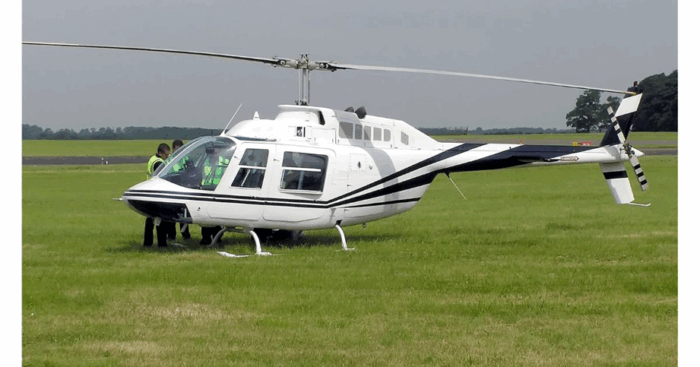
1999 (The Genesis): The enterprise originates in Medellín under the name Aeroregional. Armed with a single, single-engine Bell 206 Ranger helicopter, the company establishes its foundational operations.
2005–2006 (The Pivot): The company transitions into private commercial operations, rebranding as Helistar. Management implements a decisive shift toward multi-engine aircraft, laying the groundwork for high-end VIP transport and industrial oil and gas support.
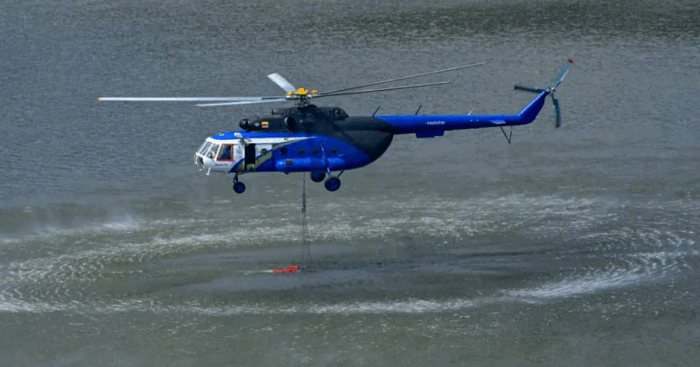
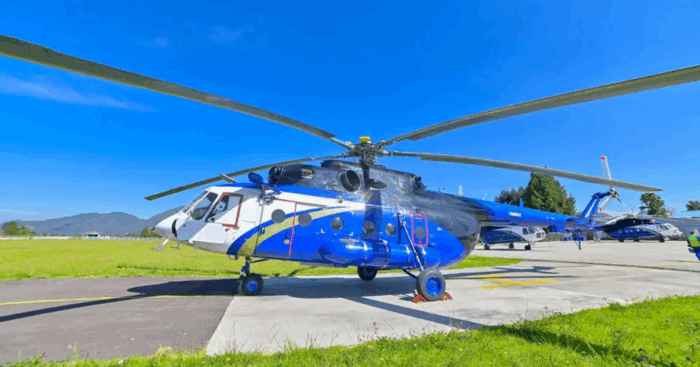
2007–2009 (Industrial Scaling): Helistar introduces the heavy-lift Russian-manufactured Mi-17, capable of hauling 23 passengers or four tons of cargo. This opens lucrative contracts within Colombia’s burgeoning oil and gas sector. Shortly after, the company acquires five Bell 412 helicopters and ventures into fixed-wing aircraft with the acquisition of a King Air 350.
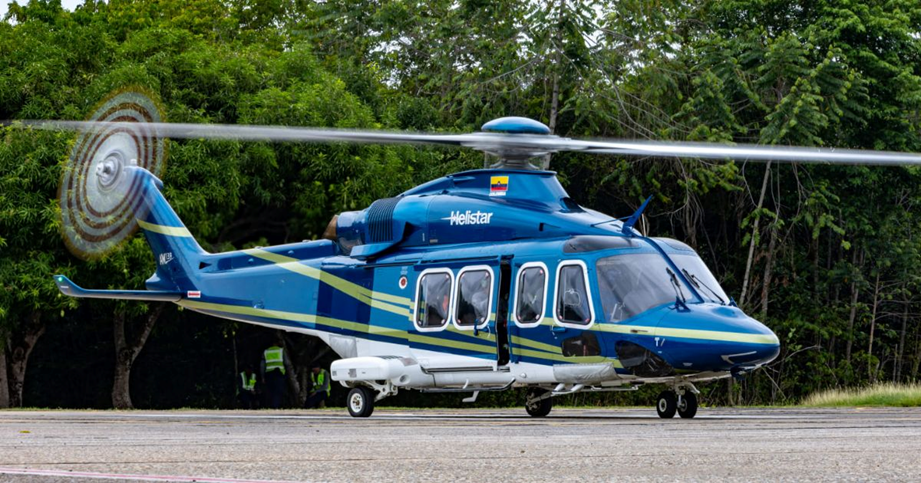
2010–2014 (Technological Leap): Helistar introduces eight Eurocopter (Airbus) EC145 helicopters—marking the first time this advanced, automated airframe operates commercially in Colombia. This is followed in 2014 by the integration of AgustaWestland AW139 helicopters, expanding the company’s offshore maritime capabilities. Concurrently, Helistar enters the executive jet market, introducing a Hawker 900XP, followed by the trans-continental Falcon 2000.
2020–Present (The Global Expansion): Catalyzed by post-pandemic shifts in global private aviation demand, Helistar secures the FAA FAR 129 certification and pursues EASA European cross-atlantic clearances. The fleet is crowned by the ultra-long-range Gulfstream G500, cementing the company’s status as an international charter leader.
Supporting Data: Fleet, Safety, and Operational Metrics
Helistar’s dominance in the Latin American aviation sector is anchored in hard operational metrics, rigorous safety audits, and continuous technological investments.
Fleet Composition and Capabilities
Helicopter Fleet: Operates seven distinct helicopter types, ranging from light tactical models to heavy utility platforms. Key airframes include the Mi-17, Bell 412, EC145, and AW139. Cumulative offshore maritime flight hours exceed 7,300 hours.
Fixed-Wing Jets: The crown jewel of the fixed-wing fleet is the Gulfstream G500. This executive jet boasts a 10-hour endurance range, a service ceiling of 50,000 feet, and intercontinental reach capable of direct routes like Bogotá to Madrid. It accommodates up to 15 passengers, features high-speed private internet, customizable sleeping configurations (four beds), and complete acoustic isolation between the passenger lounge, galley, and flight deck.
Safety Record: Under the operational leadership of Col. Ricardo Trujillo, Helistar has accumulated nearly 53,000 safe flight hours.
Regulatory and Safety Certifications
To compete on the global stage, Helistar maintains an uncompromising stance on safety standards, backed by international oversight:
FAA FAR 129 Certification: Grants authorization for direct U.S. charter operations and domestic U.S. point-to-point flights.
Argus and Wyvern Audits: Holds gold and safety-partner ratings mandated by international brokers and corporate risk managers.
EASA Compliance: Advanced compliance frameworks meeting European Union Aviation Safety Agency standards for trans-oceanic single-engine alternate flight operations.
Official Responses and Industry Perspectives
Reflecting on the company’s evolution, Director of Operations Ricardo Trujillo emphasizes that Helistar’s success is rooted in adaptability and unyielding discipline inherited from military aviation.
"When you look at our hangars today, you see a direct reflection of a vision that started with a single Bell 206 in Medellín," Trujillo notes from his office, gesturing toward a framed photograph of a historic company helicopter. "We didn’t just buy aircraft to fill space; every model we introduced—from the heavy-lift Mi-17 that unlocked the oil fields, to the EC145s and the Gulfstream G500—solved a specific logistical challenge for our clients."
Trujillo highlights that the post-pandemic market fundamentally re-engineered consumer expectations regarding privacy, safety, and timing.
"In the private aviation sector, luxury is baseline; reliability and discretion are the real currencies," Trujillo explains. Whether managing a multi-month European tour for global pop star Karol G, executing secure diplomatic transits for international figures like Donald Trump Jr., or coordinating an emergency medical evacuation for an isolated indigenous community in Chocó, Trujillo maintains that the operational standard remains identical: absolute precision.
Implications: Bridging Corporate Luxury and National Utility
Helistar’s dual operational model carries profound socio-economic and logistical implications for Colombia and the broader Andean region.
1. Catalyzing Economic Mobility and Foreign Investment
By securing advanced international certifications (FAA FAR 129) and operating top-tier assets like the Gulfstream G500 and an exclusive FBO at El Dorado, Helistar acts as a critical friction-reducer for foreign direct investment, high-net-worth tourism, and entertainment logistics. International artists, corporate executives, and diplomats can transition seamlessly from global trunk lines to private regional distribution without navigating public terminal congestion. This infrastructure enhances Colombia’s competitiveness as a regional hub for business and culture.
2. A Lifeline for Isolated Communities
Conversely, Helistar’s commercial success subsidizes its vital humanitarian utility. In a geographically fragmented country like Colombia—where rugged terrain, jungle, and mountain ranges frequently isolate rural populations—commercial infrastructure often fails during natural disasters.
Helistar’s capability to rapidly convert luxury or industrial assets into emergency response vehicles has proven indispensable. Recent operations—such as deploying medicalized EC145 air ambulances and heavy-lift Mi-17s to Chocó and Valle del Cauca following earthquakes and severe flooding—saved dozens of lives. Transporting 109 patients (including neonates) and dropping 26,000 kilograms of emergency supplies into regions unreachable by land underscores a corporate social responsibility model rarely matched in private aviation. Similarly, deploying water-bucket-equipped helicopters to protect municipal water supplies from wildfires in Tolima illustrates the direct, tangible value of private aviation assets during national crises.
Conclusion
As Helistar looks toward the future—with planned integrations including a specialized Search and Rescue (SAR) AW139, a Pilatus PC-24 in 2027, and a Gulfstream G300 in 2028—the company stands as a testament to what is possible when rigorous military discipline meets entrepreneurial foresight. It proves that the skies above Colombia can simultaneously accommodate the heights of global luxury and the profound grounding of humanitarian duty.











Leave a Reply