

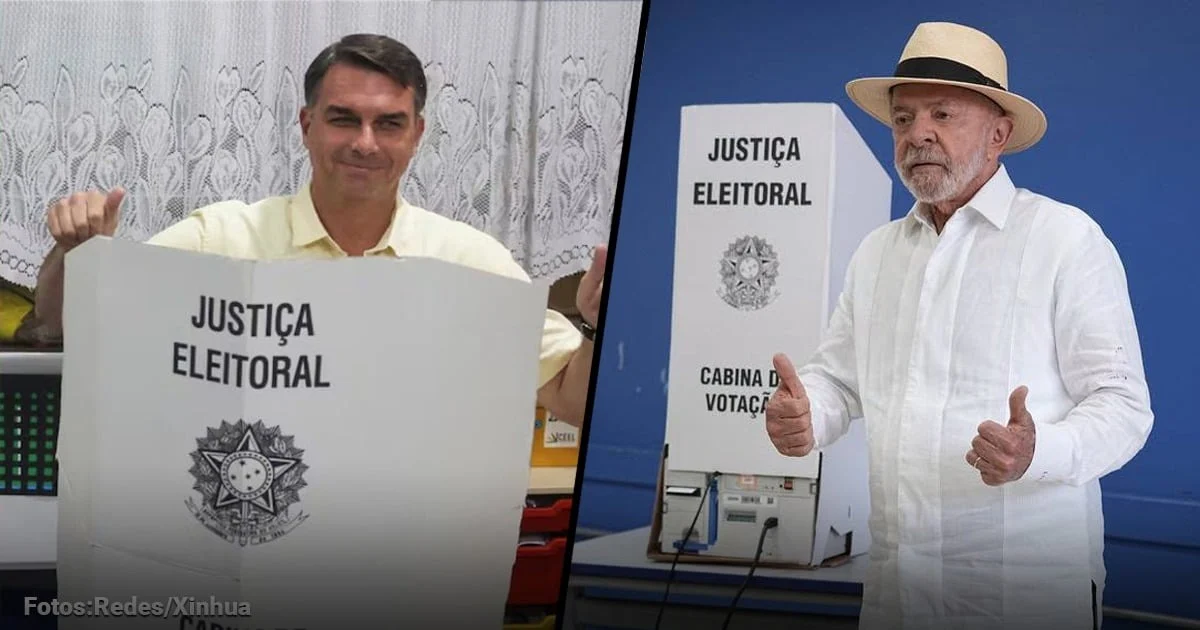
BRASILIA — In a stunning political upset that defied nearly all major pre-election polls, Flávio Bolsonaro—carrying the mantle of his father, former President Jair Bolsonaro—captured a narrow yet consequential victory in the first round of Brazil’s presidential election. Securing 47.07% of the valid votes, the 45-year-old senator outperformed incumbent leftist President Luiz Inácio Lula da Silva, who finished closely behind with 45.12%.
With 100% of the electronic voting machines processed, neither candidate cleared the constitutionally mandated 50% threshold required to avoid a runoff. As a result, the fate of the world’s fourth-largest democracy now hinges on a fiercely contested three-week sprint, culminating in a definitive showdown at the ballot box on Sunday, October 25, 2026.
The razor-thin margin of just over two percentage points underscores a profoundly polarized nation. Out of an electorate of approximately 158 million eligible citizens, massive participation yielded 105 million valid votes. The outcome not only invalidates the final projections of Brazil’s most prominent pollsters but also injects a renewed surge of momentum into the nation’s conservative movement, setting the stage for one of the most volatile political fortnights in modern Latin American history.
Main Facts
The preliminary results of the October 2026 Brazilian presidential election have redrawn the nation’s political map and challenged conventional wisdom regarding voter sentiment.
- The Frontrunners: Flávio Bolsonaro, representing the right-wing Liberal Party (PL) and seeking to restore his family’s political dynasty to the Planalto Palace, secured 47.07% of the valid vote (representing roughly 49.4 million votes). President Luiz Inácio Lula da Silva, the 80-year-old incumbent of the Workers’ Party (PT) seeking an unprecedented fourth presidential mandate, finished second with 45.12% (approximately 47.3 million votes).
- The Threshold and Runoff: Because neither candidate achieved an absolute majority (>50%), Brazilian electoral law mandates a second-round runoff, scheduled for Sunday, October 25, 2026.
- Geographical Divide: The race exposed a classic Brazilian geographic cleavage. Flávio Bolsonaro surged early on the back of overwhelming support in densely populated southeastern and southern economic powerhouses—specifically Minas Gerais, Rio de Janeiro, and São Paulo. However, Lula clawed back ground as rural and urban returns rolled in from the Northeast, the traditional bastion of the Brazilian left.
- Minor Candidates: Three trailing candidates collectively siphoned off roughly 8.7 million valid votes, accounting for slightly more than 7.3% of the total electorate. Augusto Cury (Avante), Renan Santos (Missão), and Ronaldo Caiado (PSD) represent center-right to right-wing ideological spectrums, making their endorsement pools critical battlegrounds for the upcoming runoff.
- Voter Turnout: The election saw exceptionally high engagement, highlighting a deeply mobilized populace eager to render a verdict on the trajectory of the nation’s economy, security, and democratic institutions.
Chronology of the Campaign and the Upset
The path to the October 2026 first round was characterized by escalating rhetoric, shifting economic indicators, and an increasingly tense geopolitical backdrop across South America.
The Final Weeks of the First Round
Throughout September and early October, the campaign intensified. Lula’s camp leaned heavily on state-led infrastructure announcements, social welfare defense, and warnings against a return to what they characterized as the destabilizing rhetoric of the Jair Bolsonaro administration. Meanwhile, Flávio Bolsonaro—stepping into his father’s shoes as the primary vehicle for the Brazilian right—campouned on a message of economic relief, law and order, and generational renewal. Positioned by his supporters as a more moderate, pragmatic alternative to his firebrand father, the younger Bolsonaro resonated strongly with middle-class voters fatigued by inflation and violent crime.
Election Day Dynamics
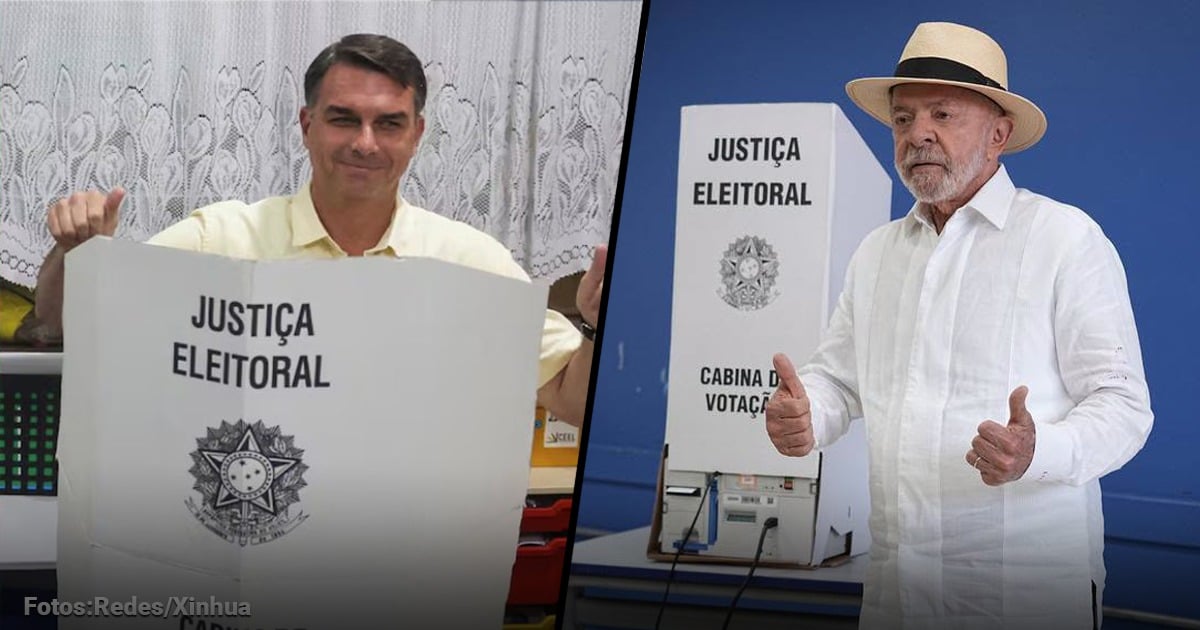
As voting centers opened on Sunday, early exit polls and initial tabulations from the Southeast pointed toward a shock wave. Flávio Bolsonaro initially opened up a commanding lead, at one point threatening to sweep the election outright in the first round by a margin of nearly 11 points over the incumbent.
However, as night fell and votes from the Northeast were fully tabulated, Lula’s machine closed the gap significantly. By the time all precincts were reported, Bolsonaro’s lead had shrunk to a perilous two percentage points, setting up the dramatic runoff announcement.
The Three-Week Sprint
The period between the October 4 first round and the October 25 runoff represents a high-intensity political sprint. Both campaigns have activated crisis teams to court the nearly 9 million voters who cast ballots for eliminated candidates, while simultaneously targeting the country’s sizable abstention demographic.
Supporting Data and Polling Analysis
The first-round results have triggered an intense post-mortem within Brazil’s polling industry, as virtually every major survey house failed to predict Flávio Bolsonaro’s first-place finish.
The Polling Disconnect
For weeks leading up to the vote, leading polling firms consistently showed the incumbent president maintaining a stable lead:
- Datafolha: The final Datafolha survey, released just days before the election, projected Lula securing 45% of valid votes in the first round against 42% for Bolsonaro. Their previous poll showed a similar three-to-five-point spread.
- AtlasIntel: Conducted between September 23 and 28, AtlasIntel’s tracking gave Lula 45.3% and Bolsonaro 42.2%.
- PoderData: Their final metrics reflected a tightening race but still placed Lula ahead at 42% to Bolsonaro’s 41%.
- VoxBrasil: Standing as a notable outlier, a VoxBrasil poll conducted between September 29 and October 1 gave a razor-thin advantage to Bolsonaro (41.2% to 40.8%), though within the margin of error and far short of the actual spread.
Alternative Predictors: Prediction Markets
In stark contrast to traditional polling firms, decentralized prediction markets correctly identified the shifting momentum. On October 4, 2026, the prediction platform Polymarket reflected a clear advantage for Bolsonaro. Bettors had increasingly positioned the conservative challenger as the favorite, aligning closely with the final, official distribution of votes and calling into question the traditional methodologies employed by mainstream polling institutions.

Official Responses and Campaign Narratives
Following the release of the final tallies, both candidates immediately pivoted to framing the national narrative for the final twenty days of campaigning.
Luiz Inácio Lula da Silva: Defending Democracy and Sovereignty
Speaking to supporters following the confirmation of the runoff, President Lula framed the upcoming election as an existential battle for the soul of Brazilian democracy. He issued a passionate plea to unite against what he termed "barbarie" (barbarism) and "negacionismo" (negacionism)—direct jabs at the ideological heritage of his opponents.
Lula has anchored his platform on the defense of national sovereignty. In his speeches, he has increasingly warned against foreign interference, specifically pointing to the regional geopolitical influence wielded by U.S. President Donald Trump, whose administration has aligned with right-wing governments across South America, including Argentina, Chile, Ecuador, and Colombia. To secure victory on October 25, Lula’s campaign strategy is expected to pivot toward cementing alliances with center-left parties and appealing directly to moderate voters wary of radical political shifts.
Flávio Bolsonaro: Promising Relief and Security
Upon casting his vote in Rio de Janeiro, Flávio Bolsonaro struck a populist, grievance-driven chord, declaring that the Brazilian people could no longer endure "so much suffering, so many high taxes, and so many women killed."
Positioning himself as a unifier of the conservative base, the senator has capitalized on deep-seated public frustrations regarding soaring crime rates and cost-of-living pressures. By maintaining a disciplined, less confrontational demeanor than his father, Flávio has successfully broadened his appeal. His path to victory on October 25 relies heavily on absorbing the voter bases of eliminated center-right candidates like Ronaldo Caiado and Renan Santos, effectively consolidating the anti-PT vote into a unified electoral bloc.
Implications for Brazil and Latin America
The outcome of the October 25 runoff carries profound ramifications that extend far beyond Brazil’s borders, threatening to reshape the geopolitical architecture of Latin America.

Domestic Policy and Economic Stability
A victory for Flávio Bolsonaro would signal a definitive rightward pivot for Latin America’s largest economy, likely resulting in a push toward aggressive fiscal austerity, deregulation, privatization of state assets, and a hardline approach to public security. Conversely, a successful comeback by Lula would cement the dominance of the pink tide in the region, preserving social spending programs, strengthening environmental protections regarding the Amazon, and reinforcing state-led economic intervention.
Regional Geopolitics
Brazil’s leadership dictates the balance of power in South America. A Bolsonaro presidency would align Brasilia closely with conservative administrations in neighboring nations and shift dynamics vis-à-vis Washington and Beijing. A Lula victory would maintain Brazil’s pivotal role within multilateral blocs like BRICS, sustaining a multipolar foreign policy framework that balances relations between Western democracies and emerging global powers.
As Brazil braces for the final three weeks of campaigning, the political atmosphere is charged with anticipation. With the polls discredited, the margin razor-thin, and millions of uncommitted votes up for grabs, the October 25 runoff stands as a historic referendum on the nation’s future.



Leave a Reply