

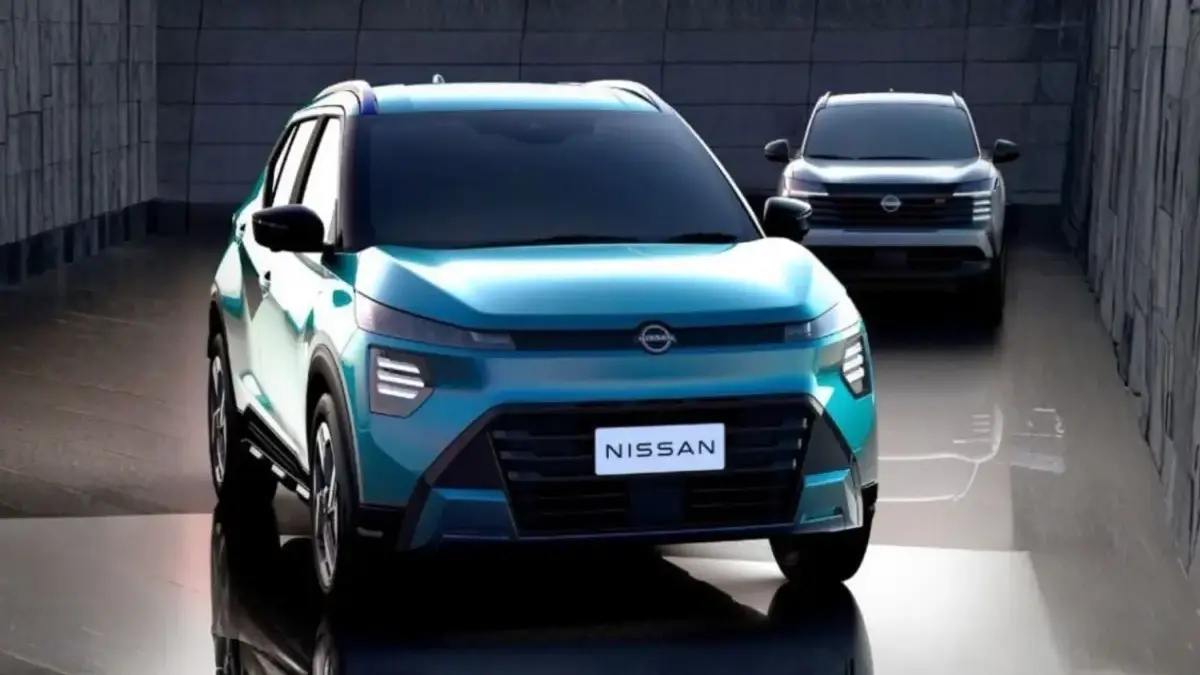
Introduction: The Gap in Nissan’s European Lineup
In the fiercely competitive landscape of the European automotive market, the hunt for an affordable, practical, and rugged urban vehicle remains a top priority for budget-conscious consumers. In Spain and across the wider European Union, the automotive hierarchy is well established. Nissan’s stalwart, the Qashqai, continues to be a top-selling compact SUV, commanding a starting price of roughly €27,600. Just beneath it sits the Nissan Juke, a pioneer of the B-SUV segment, which still breaches the €20,000 threshold for its entry-level trims.
This pricing dynamic leaves a glaring vacuum at the more accessible end of the market—a territory currently dominated by low-cost titans like the Dacia Sandero Stepway and an influx of budget-friendly Chinese models. Enter the Nissan KAIT. Measuring roughly 4.3 meters in length, the KAIT exists and is actively sold in international markets like Mexico. Yet, despite its ideal positioning to capture the hearts and wallets of cost-sensitive European buyers, the Japanese manufacturer has kept its cards close to its chest, refusing to confirm whether this budget-oriented crossover will ever cross the Atlantic.
Main Facts: What is the Nissan KAIT?
To understand the discussions surrounding the KAIT, one must examine its core specifications and design philosophy. Positioned firmly within the B-SUV segment, the KAIT spans 4.3 meters long—putting it shoulder-to-shoulder with models like the Nissan Kicks, the MG ZS, and the BYD Atto 2.
However, its philosophical positioning is entirely unique. While the Nissan Kicks leans toward a more sophisticated, rugged, and stylized aesthetic, the KAIT is engineered with simplicity, economy, and austerity at its core. It serves as Nissan’s functional answer to the high-volume formula that has made vehicles like the Dacia Sandero Stepway a runaway success across Europe, where the crossover-styled variant commands roughly two-thirds of the Sandero’s total sales volume.
Mechanical Configuration and Features in International Markets
In markets such as Mexico, the KAIT is offered across three distinct trim levels: Advance, Exclusive, and Platinum.
- Powertrain: All variants rely on a straightforward, naturally aspirated 1.6-liter four-cylinder gasoline engine that produces 122 horsepower and 114 lb-ft of torque.
- Transmission: Power is sent to the wheels exclusively via an automatic CVT (Continuously Variable Transmission).
- Technology & Connectivity: Eschewing overly complex or flashy luxuries, the KAIT focuses on practical tech. All versions feature wireless compatibility with Apple CarPlay and Android Auto. Furthermore, the lineup integrates the smart key (i-Key) system, NissanConnect, and the MiNissan smartphone application, allowing owners to remotely check vehicle status, maintenance history, and warranty details.
- Design Language: Penned under Nissan’s global design leadership—marking one of the final chapters of Alfonso Albaisa’s tenure—the KAIT adopts the "Emotional Geometry" design language. Key exterior elements include an integrated V-Motion front grille, full-LED headlights, 17-inch dual-tone alloy wheels, and bold "KAIT" lettering sprawled across the tailgate.
Chronology: The Evolution of Nissan’s Compact Strategy
The conceptualization and global rollout of Nissan’s sub-compact utility vehicles have unfolded over several years, culminating in the current dual-strategy between the Kicks and the KAIT.
- Pre-2024: Nissan establishes dominance in the European B-SUV market with the aging yet popular Juke, while simultaneously expanding its global compact footprint with models like the Kicks in North and South America.
- Late 2024 to 2025: As inflationary pressures squeeze household budgets across Europe, demand for low-cost, high-utility crossovers spikes. Competitors from China (such as MG) and local budget brands (Dacia) capture massive market share. Nissan begins evaluating ultra-affordable regional products.
- September 2026: Nissan officially rolls out pricing and promotional structures for the KAIT in Mexico. Promotional pricing via CrediNissan lists the Advance CVT at 439,990 pesos, the Exclusive CVT at 460,990 pesos, and the top-tier Platinum CVT at 475,990 pesos (with standard list prices ranging higher, from 479,990 to 515,900 pesos).
- Late 2026: Automotive media outlets across Europe begin aggressively questioning whether the KAIT can serve as the brand’s long-awaited "cheap SUV." While the Kicks is given the green light for select Western markets, the KAIT remains conspicuously absent from European roadmaps.
Supporting Data: Market Realities and Pricing Comparisons
A closer look at current pricing structures illuminates why European consumers are so eager to see the KAIT land on their shores. In Mexico, even at standard retail prices, the KAIT positions itself as an exceptionally cost-effective mobility solution. Converted directly, its base international price hovers well below the typical entry thresholds seen in European showrooms for traditional brand-name crossovers.
| Market Metric / Feature | Nissan Qashqai (Spain) | Nissan Juke (Spain) | Nissan KAIT (Mexico – Promo) |
|---|---|---|---|
| Segment | C-SUV | B-SUV | B-SUV (Budget-focused) |
| Length | ~4.43 meters | ~4.21 meters | ~4.30 meters |
| Starting Price | From ~€27,600 | From >€20,000 | ~€23,500 equivalent (MXN converted) |
| Powertrain Focus | Mild-Hybrid / e-Power | Hybrid / ICE | Simple 1.6L ICE / CVT |
| Target Consumer | Families / Mainstream | Style-conscious urbanites | Practical, cost-sensitive buyers |
The glaring gap between a €20,000+ Juke and the sub-€20,000 price point occupied by Dacia highlights the exact commercial window that the KAIT could exploit—if only regulatory hurdles could be cleared.
Official Responses and Industry Stance
Despite the overwhelming logic of product placement, Nissan has steadfastly refused to make an official announcement regarding the KAIT’s sale in Europe.
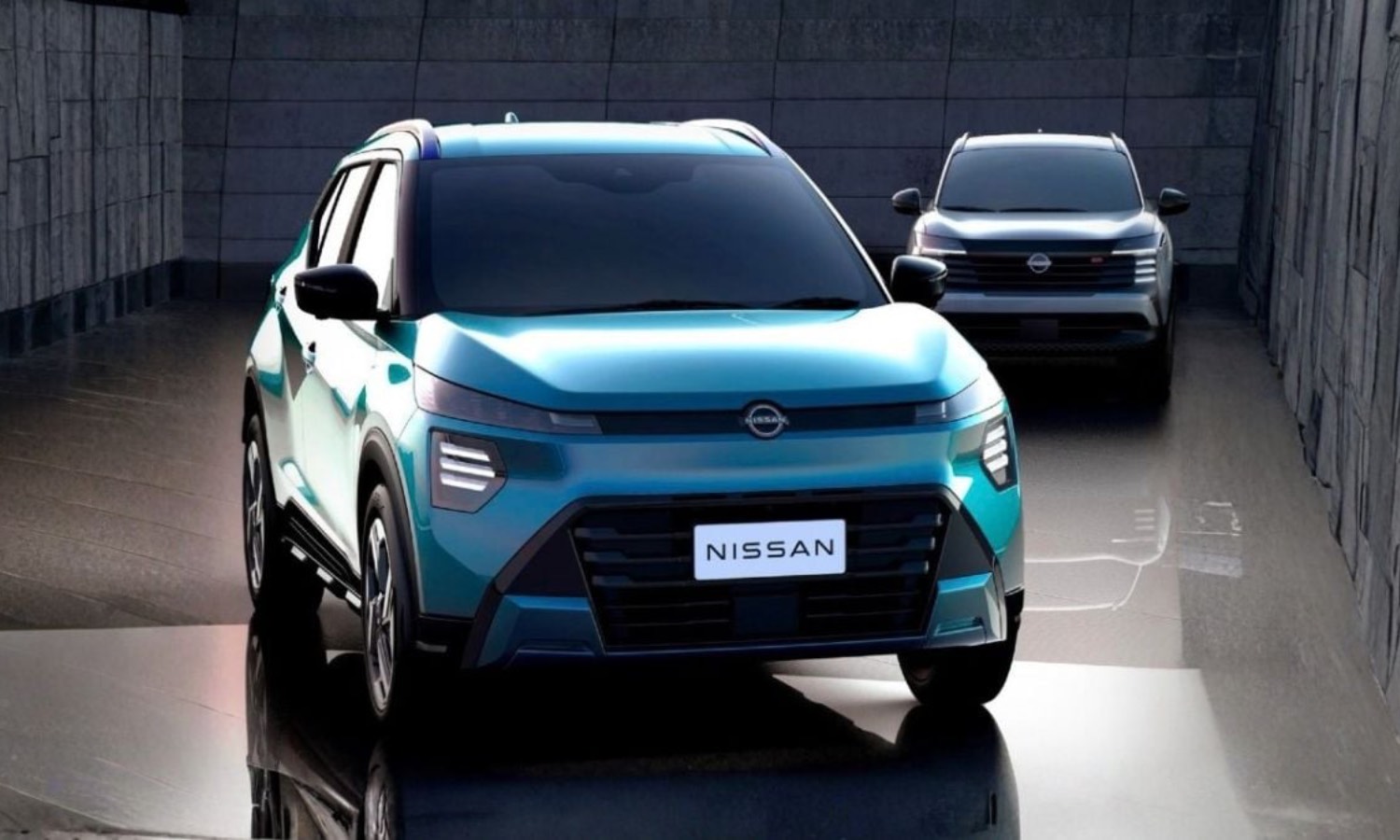
Industry insiders and corporate sources have repeatedly noted that there are no active, closed plans to introduce the urban SUV to European dealerships. While the slightly larger Nissan Kicks has secured a confirmed path to Western markets, the KAIT remains strictly a hypothesis.
Executives within the brand emphasize that automotive manufacturing and distribution are not merely exercises in dropping an existing model into a new territory. The ball rests squarely in Nissan’s court, and leadership is exercising extreme caution before committing resources to a low-margin segment already plagued by regulatory complexities.
Implications: Why the KAIT Faces an Uphill Battle in Europe
Bringing the Nissan KAIT to Spain and the rest of Europe is easier said than done. Several formidable barriers stand between the Mexican-built crossover and European showrooms:
1. The Emissions and Homologation Hurdle
The primary roadblock is not the manufacturing of an affordable SUV, but rather meeting stringent European environmental regulations. The 1.6-liter naturally aspirated gasoline engine that powers the KAIT in Mexico and Brazil cannot easily pass the European Union’s rigid emissions filters in its current form.
To comply, Nissan would need to heavily revise or electrify the powertrain. While the Kicks manages this via Nissan’s sophisticated e-Power hybrid technology, adding hybrid or fully electric systems to the KAIT would inherently drive up manufacturing costs. In a hyper-sensitive budget segment where every single euro dictates a sale, inflating the price tag defeats the entire purpose of an "affordable" vehicle.
2. Regulatory Uncertainty and EV Pressures
Brussels continues to enforce strict fleet emission targets for 2027 and beyond, even as consumer demand for expensive, entry-level electric vehicles struggles to catch fire. Automakers find themselves walking a tightrope between compliance fines and consumer affordability.
3. The Litmus Test: The Kicks
Market analysts suggest that the European launch of the Nissan Kicks will act as a critical bellwether for the brand. If the Kicks performs exceptionally well and proves that consumers are willing to embrace Nissan’s lower-cost SUV architecture, the argument for bringing the KAIT over becomes significantly stronger. Conversely, if the Kicks stumbles, the KAIT will likely remain permanently locked away in international markets as an unfulfilled European "what-if."
Conclusion
The Nissan KAIT represents a fascinating paradox in the modern automotive world. On paper, it is precisely the vehicle that European drivers—particularly in markets like Spain, where household purchasing power is constantly stretched—are crying out for. With its practical 4.3-meter footprint, robust styling, straightforward technology, and low price point, it checks every box for a modern utilitarian crossover.
Yet, until Nissan decides to tackle the monumental task of European emissions homologation and cost-effective electrification, the KAIT remains a ghost in the catalog: a brilliant idea currently confined to international asphalt, waiting to see if its sibling, the Kicks, can clear the path for a future European invasion.




Leave a Reply