

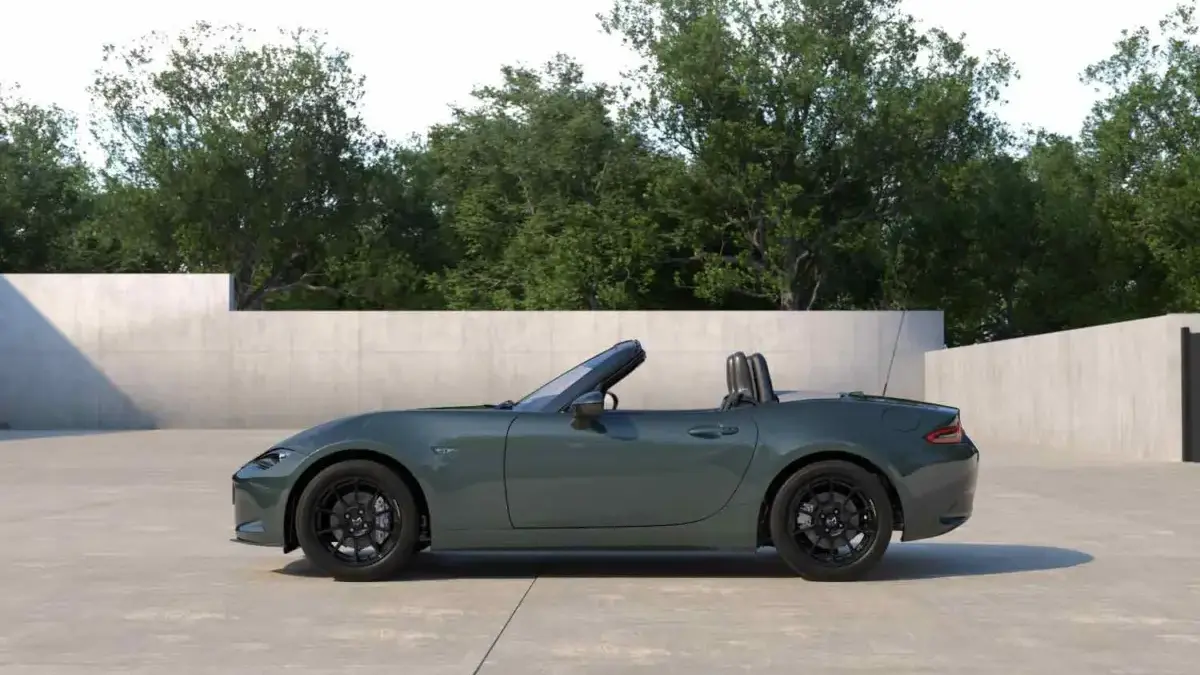
MADRID — In an era where the classic, lightweight, rear-wheel-drive roadster faces an almost certain extinction event due to tightening emissions regulations and shifting consumer tastes toward electrification, Mazda is refusing to let its crown jewel fade quietly into the night. The Japanese manufacturer has officially detailed the updated lineup for its iconic sports car, introducing a streamlined mechanical range, refined trim levels, and an exclusive new styling package dubbed the Yakudo Edition.
While rumors and industry speculations continue to circle regarding a potential future "NE" generation or an eventual fully electric successor, Mazda is ensuring the current-generation MX-5 remains a vibrant, deeply engaging option for European driving enthusiasts. Available in both traditional Soft Top and Retractable Fastback (RF) body styles, the refreshed model brings targeted equipment enhancements and a simplified powertrain lineup designed to preserve the pure, unfiltered analog driving experience that has defined the "Miata" nameplate for over three decades.
Main Facts
The most significant headline surrounding the updated 2027 Mazda MX-5 is the definitive rationalization of its engine bay. Mazda has taken the decisive step of withdrawing the larger 2.0-liter Skyactiv-G engine, which previously produced 184 horsepower. In its place, the European lineup relies exclusively on a reworked, highly responsive naturally aspirated four-cylinder powerplant.
- Streamlined Powertrain: The range now relies solely on the 1.5-liter Skyactiv-G atmospheric engine, which has been tweaked to produce 136 horsepower and 155 Nm of torque.
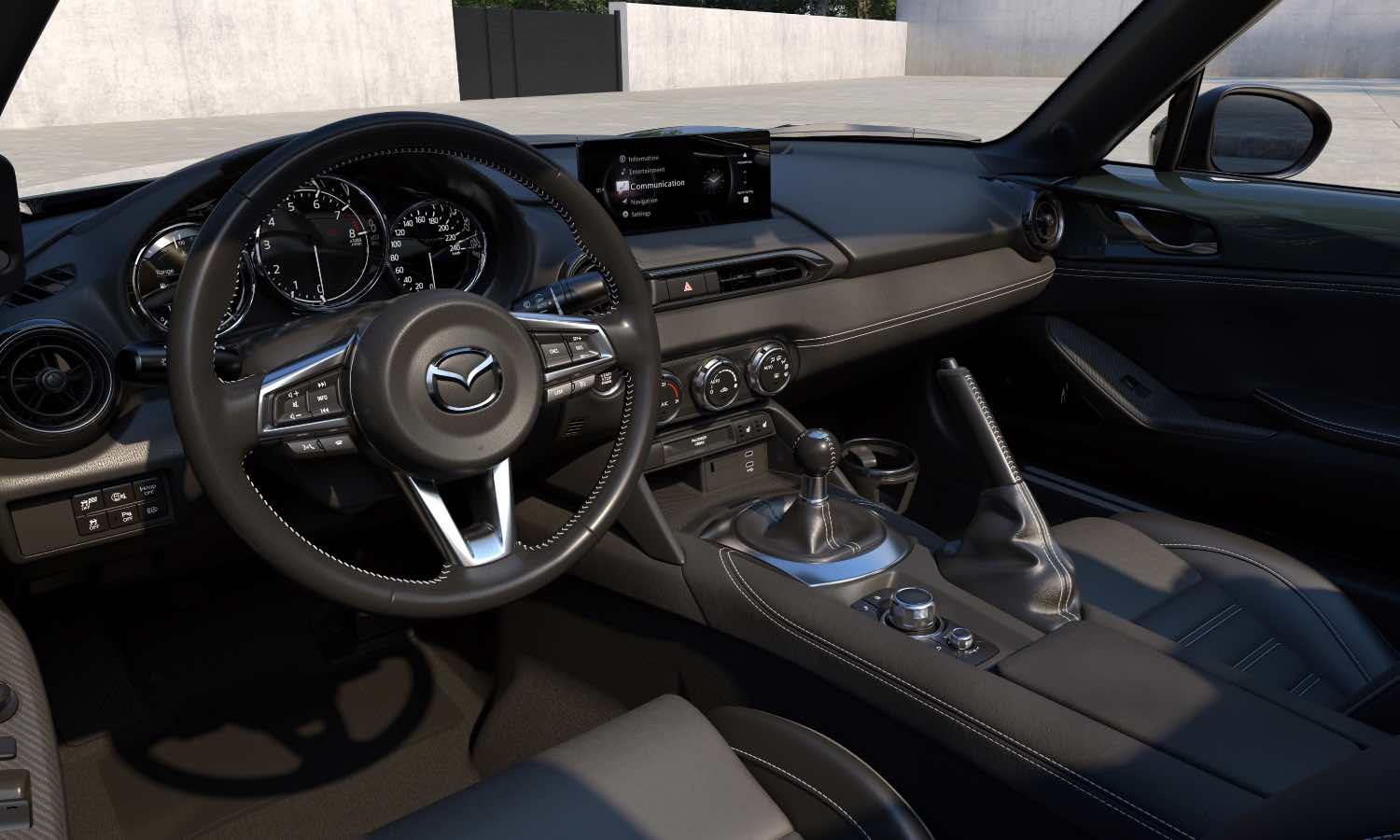
- Purist Configuration: Remaining entirely faithful to its roots, the revised MX-5 continues to send its power exclusively to the rear wheels via a crisp, short-throw six-speed manual transmission.
- Body Styles: Spanish buyers can choose between the classic manual Soft Top or the sleek, targa-like Retractable Fastback (RF) hardtop.
- Trim Structure: The lineup has been restructured into five distinct tiers: Prime-Line, Exclusive-Line, Kazari, Homura, and the brand-new Yakudo Edition.
- Pricing & Availability: Base pricing in Spain starts at 33,500 euros (before localized dealership discounts or promotional offers), with official order books reflecting a market rollout aligned with the brand’s mid-cycle repositioning.
Chronology of the MX-5’s Modern Evolution
To understand the weight of Mazda’s 2027 updates, it is essential to trace how the current fourth-generation (ND) roadster has navigated the stormy waters of modern automotive compliance without losing its soul.
2014–2019: The Purest Birth of the ND Generation
When Mazda first introduced the ND-generation MX-5, it was lauded by automotive journalists globally for reversing the bloat of previous generations and returning to the featherweight dimensions of the original 1989 NA model. Initially launched with a 1.5-liter engine and later complemented by the punchy 2.0-liter variant, it captured the hearts of purists.
2020–2025: The Digital Integration and Safety Mandates
As European Union regulations tightened—particularly regarding cyber security, advanced driver-assistance systems (ADAS), and crash safety standards—Mazda continuously updated the car’s electronics. The introduction of modern touchscreen interfaces, Apple CarPlay, Android Auto, and mandatory safety suites kept the vehicle legally viable in European showrooms while preserving its core chassis dynamics.
Late 2026: The Rationalization Phase
Faced with strict upcoming Euro 7 emissions proposals and fleet-average carbon targets, Mazda made the hard mathematical choice. The discontinuation of the beloved 2.0-liter 184-hp engine marked the end of an era for the higher-output naturally aspirated setup in Europe. However, rather than killing the car outright, Mazda focused on optimizing the 1.5-liter platform, enhancing its daily usability, injecting fresh aesthetic packages like the Yakudo, and prepping the model for its final years of production before a suspected electrified successor takes the torch.
Supporting Data & Equipment Breakdown
Despite downsizing the engine options, Mazda has substantially upgraded the standard equipment list and interior technology across the board, ensuring that even the entry-level models feel modern and well-appointed.
Trim-by-Trim Overview
-
Prime-Line (Entry Level):
- Exterior: 16-inch alloy wheels, full LED headlamps, LED daytime running lights, LED rear tail lamps, automatic light sensing, rain-sensing wipers, and electrically adjustable, heated exterior mirrors.
- Interior & Tech: 8.8-inch central touchscreen infotainment display, integrated satellite navigation, wireless Apple CarPlay and Android Auto compatibility, air conditioning, electric windows, central locking, and cloth upholstery.
- Safety & Assist: Leather-wrapped multi-function steering wheel (adjustable for height and reach), cruise control, speed limiter, intelligent speed assistant, rear parking sensors, driver fatigue detection, traffic sign recognition, hill-launch assist, autonomous emergency braking with pedestrian detection, lane-keep assist, tire pressure monitoring, and e-Call emergency response.
-
Exclusive-Line:
- Upgrades: Smart Full LED headlights with "Coming and Leaving Home" lighting animations, auto-dimming rearview mirror, automatic climate control, smart keyless entry, perforated leather upholstery, heated front seats, and an advanced blind-spot monitoring system (BSM) paired with rear cross-traffic alert.
-
Kazari:
- Focus: Exclusively paired with the RF (Retractable Fastback) body style, this trim features a striking Piano Black hardtop roof paired with luxurious tan beige leather upholstery, giving the car a classic British sports car aesthetic.
-
Homura (The Enthusiast’s Choice):
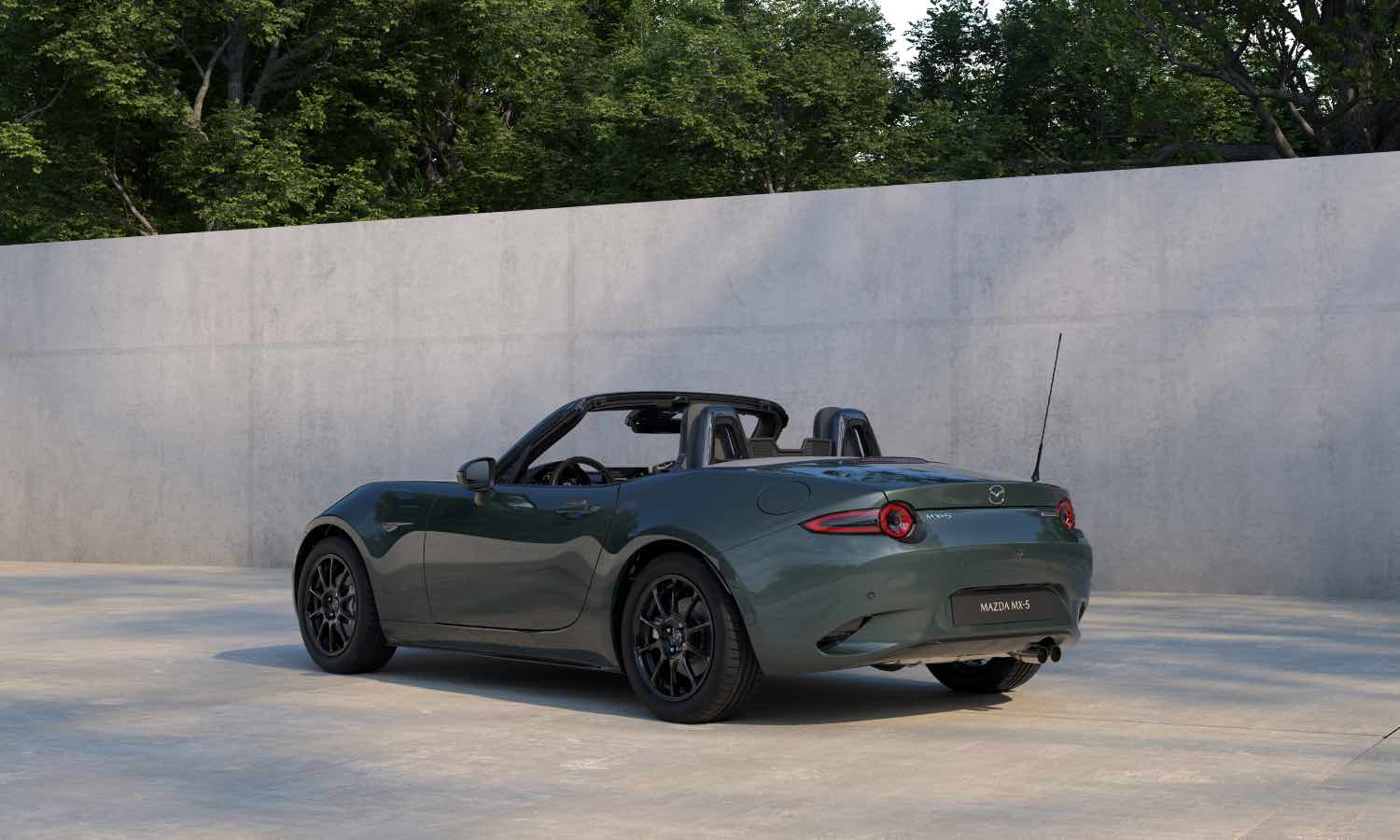
- Focus: Geared heavily toward spirited driving, the Homura introduces heated Recaro sport seats designed to clamp the driver securely during high-g cornering maneuvers. It also equips dedicated mechanical upgrades, including Bilstein sports suspension, a front strut tower brace, high-performance Brembo brakes, reinforced front stabilizer bars, and lightweight RAYS 16-inch forged alloy wheels.
-
Yakudo Edition (The Flagship Special):
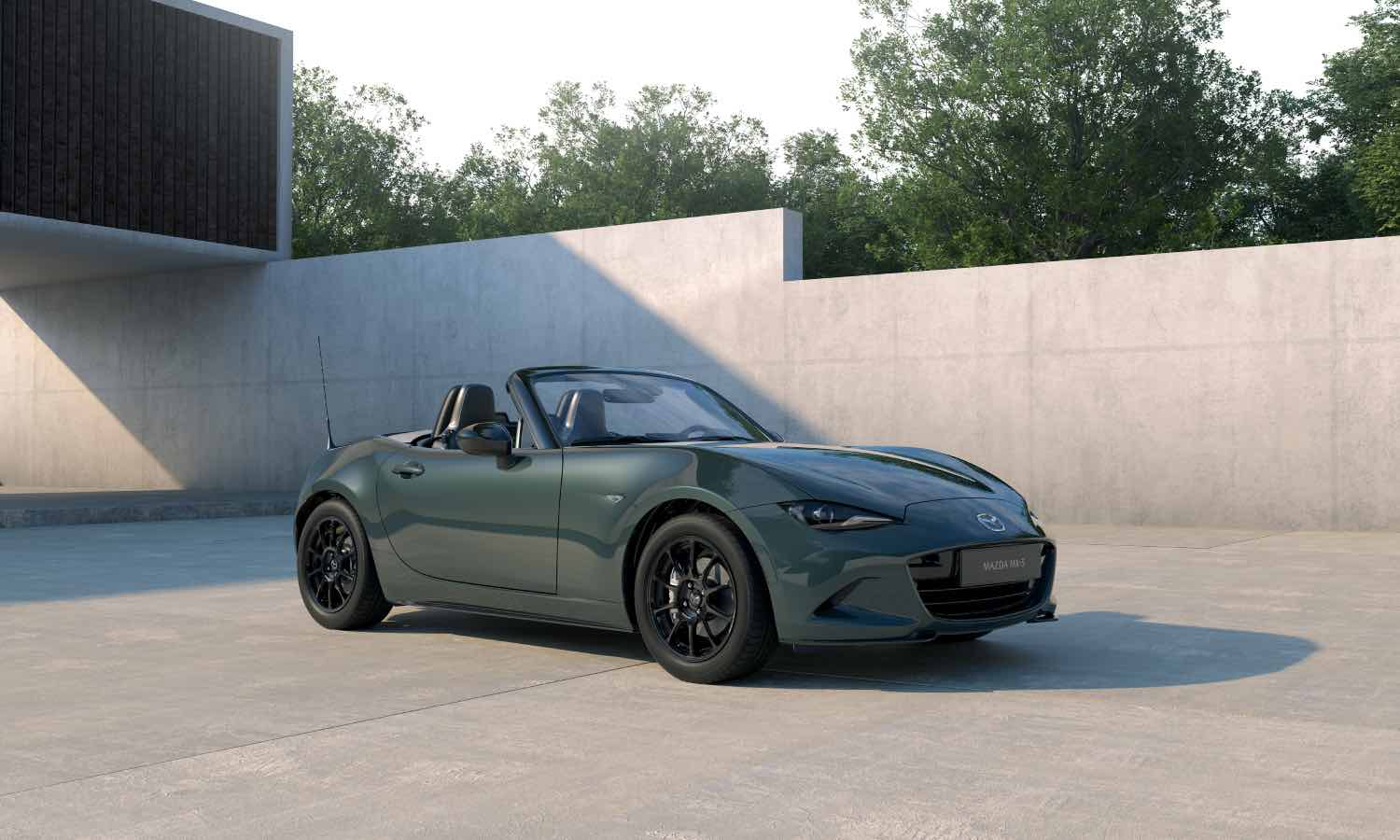
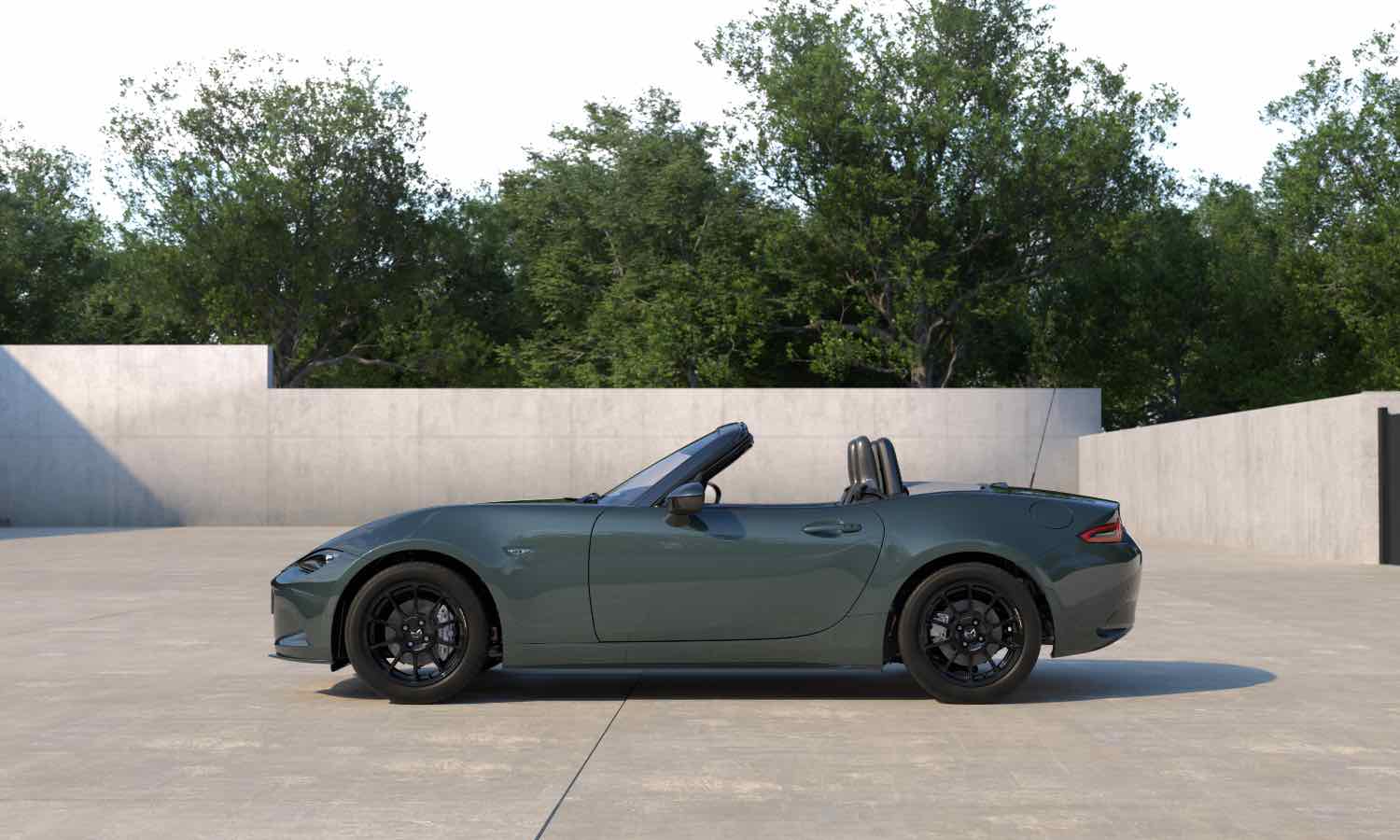
- Focus: Building upon the sporty foundation of the Homura, the Yakudo is restricted exclusively to the soft-top body style. Visually, it stands out with a unique grey fabric roof, a suede-trimmed center console featuring contrast grey stitching, illuminated floor mats with exclusive badges, and a silver-accented key fob. It also adds silver-finished Brembo brake calipers, high-end Alcantara upholstery, and interior door panels that blend body-color accents with suede and grey contrast stitching.
Technical and Efficiency Metrics
| Metric | Specification |
|---|---|
| Engine Type | 4-cylinder, naturally aspirated Skyactiv-G |
| Displacement | 1.5 liters |
| Max Power | 136 CV (hp) |
| Max Torque | 155 Nm |
| Transmission | 6-speed manual |
| Drivetrain | Rear-wheel drive (RWD) |
| Fuel Consumption (WLTP) | 6.1 L / 100 km |
| CO2 Emissions (WLTP) | 139 g/km |
| Environmental Badge (Spain) | DGT Label C |
Official Responses and Market Positioning
Mazda’s strategy with the 2027 MX-5 is a balancing act between regulatory survival and brand heritage. Speaking on the positioning of the revised vehicle, company representatives have emphasized that the abolition of the 2.0-liter engine was a necessary sacrifice to keep the lightweight sports car alive in European markets where CO2 penalties are punishingly high.
By focusing on the 1.5-liter block—which has been carefully optimized to deliver crisp throttle response and a willing upper-rev range—Mazda believes the car retains its playful character. The inclusion of components like Bilstein dampers and Brembo brakes on higher trims proves that engineering priorities remain firmly centered on handling agility rather than straight-line drag racing numbers.
In the Spanish market specifically, the entry price of 33,500 euros places the MX-5 in a fascinating vacuum. With direct competitors like the Toyota GT86/GR86 having exited various European markets due to safety regulations, and small European roadsters virtually extinct, the MX-5 faces almost no direct peer competition at its price point. Furthermore, specialized dealer network data indicates that prospective buyers utilizing official brand financing or dealer comparison platforms can secure average savings exceeding 4,000 euros, softening the blow of the base MSRP.
Implications for Enthusiasts and the Future
The release of the revised 2027 Mazda MX-5 carries deep implications for the automotive landscape:
- The End of an Era for Big-Block NA: Purists mourning the loss of the 184-hp 2.0-liter engine will undoubtedly flock to the remaining used market or race to snap up remaining stock. However, driving dynamics experts note that the lighter nose weight of the 1.5-liter engine often yields a more agile, communicative front-end turn-in, restoring the delicate balance found in earlier generations.
- The "Label C" Dilemma: In Spain and other European nations with aggressive urban low-emission zones (ZBE), the car’s lack of hybrid or mild-hybrid electrification means it receives the DGT Label C. This places certain restrictions on daily commuting in major metropolitan centers compared to Eco or Zero-emission vehicles, cementing the MX-5’s status as a dedicated weekend toy rather than a daily commuter.
- A Bridge to the Future: As the automotive industry barrels toward total electrification, the current MX-5 serves as the last bastion of analog mechanical purity. Whether the rumored future "NE" generation arrives as a hybrid or an EV, the 2027 model stands as a polished, definitive expression of internal-combustion roadster tradition—proving that sometimes, less power combined with exceptional chassis tuning is the ultimate recipe for driving nirvana.



Leave a Reply