

By Global News Desk
Published: October 2026
Main Facts: Transforming the Heart of La Heroica
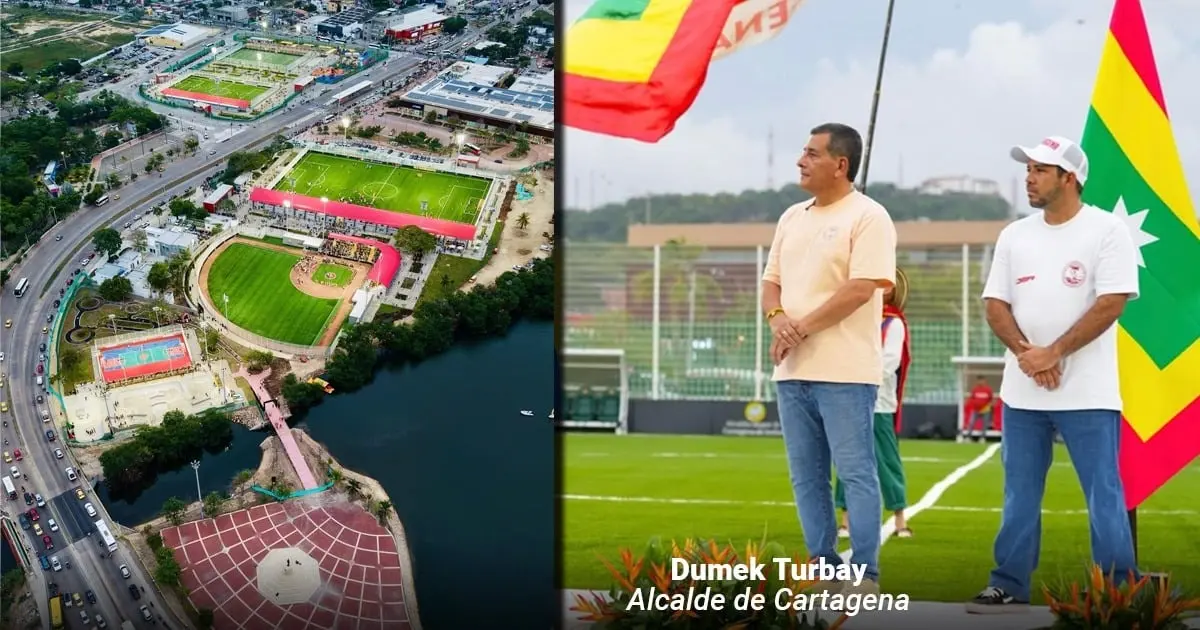
After years of anticipation, administrative roadblocks, and community perseverance, the city of Cartagena has officially rewritten a neglected chapter of its urban history. Led by Mayor Dumek Turbay, the Distrito de Cartagena has inaugurated the final phase of the Nuevo Chambacú Sports Complex (Complejo Deportivo Nuevo Chambacú). Spanning an impressive 64,000 square meters, this mega-project represents a total capital investment of approximately COP $68,000 million.
Situated just a stone’s throw away from Cartagena’s iconic, UNESCO-protected Historic Center, the newly minted sports city stands as a stark contrast to its predecessor. Once plagued by dense underbrush, accumulated construction debris, and severe urban blight, the central Chambacú sector has been entirely revitalized. The complex is designed not merely as a cluster of athletic fields, but as a comprehensive social equalizer, bringing high-tier sports infrastructure directly to the heart of the city.
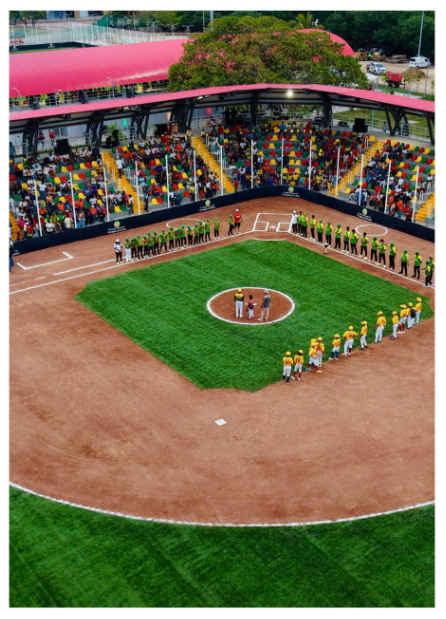
The modern facility boasts specialized arenas for traditional favorites like football, baseball, and softball, alongside a multi-purpose court tailored for volleyball, indoor soccer (microfútbol), and basketball. Furthermore, addressing the needs of contemporary urban youth and alternative sports enthusiasts, the complex features a dedicated skatepark and a specialized push-bike track.
By bridging the gap between historical preservation zones and modern urban development, the Nuevo Chambacú project signals a monumental shift in how Cartagena utilizes its prime real estate, prioritizing public wellness, community engagement, and athletic excellence over urban decay.
Chronology: The Roadmap from Licit Tendering to Grand Opening
The journey toward the realization of Nuevo Chambacú was methodical, navigating through rigorous public contracting phases, construction adjustments, and phased openings to ensure structural integrity and quality execution.
1. The Genesis of the Contract (June – September 2024)
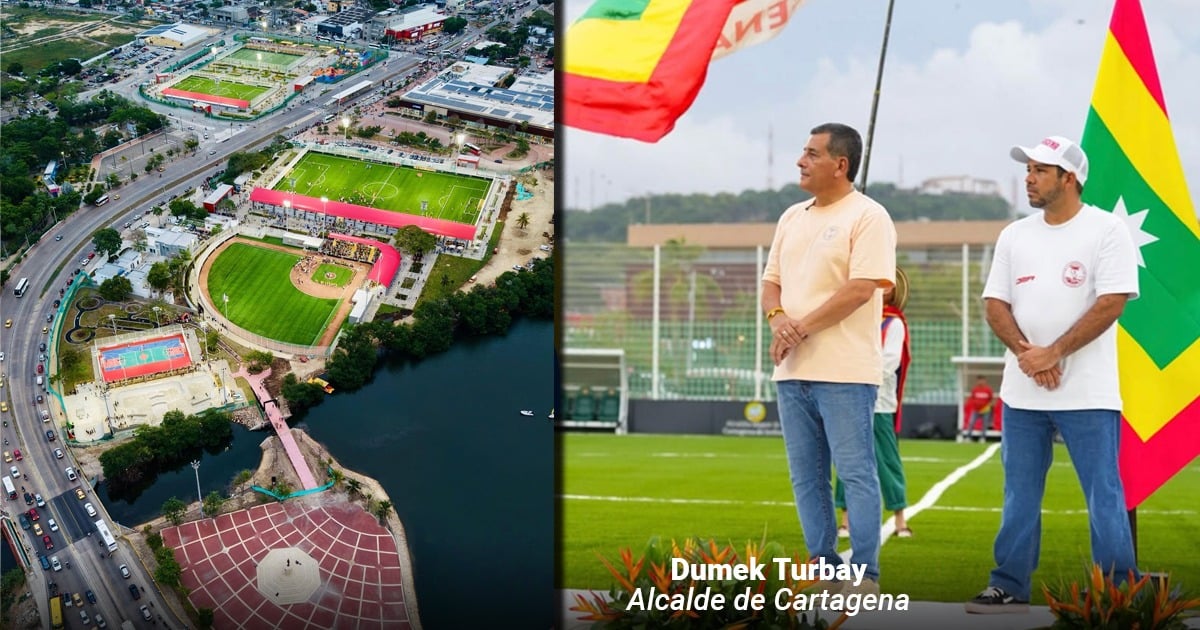
The formal administrative process commenced under Mayor Dumek Turbay’s mandate. On June 12, 2024, the District Mayor’s Office officially launched the public tender to construct the ambitious complex. Following a competitive evaluation process, the multi-million-peso contract was awarded to the Consorcio Complejo Deportivo 2024.
The consortium was structured with a 90% stakeholder share held by Medellín-based firm Toron S.A.S. (legally represented by Diana Carolina Cardona) and a 10% share managed by Fundación Nuevo Construir (represented by Iván David Vanegas). Giovanny Alexis Arroyo Vanegas assumed the overarching legal representation for the consortium. The initial baseline value of the tender was established at COP $47,564,268,713.27, though subsequent adjustments and expansions brought total investments close to the final $68,000 million mark.
Physical construction officially broke ground on September 4, 2024, with an initial projected timeline of 17 months.
2. Schedule Adjustments and Phased Deliveries (2025 – 2026)
As construction progressed, the District Mayor’s Office evaluated site dynamics and incorporated enhancements to guarantee a world-class finish. In December 2025, the administration formally modified the construction timeline, shifting the final completion target to June 30, 2026.

Rather than waiting for the entire site to reach completion, the administration opted for a strategic, phased rollout to provide immediate relief and recreational outlets to the community:
- First Milestone (May 15, 2026): The District unveiled the initial wave of amenities. This included a modern children’s playground alongside fully equipped football fields (Football 11 and Football 9), complete with covered grandstands, high-standard locker rooms, and contemporary restrooms.
- Final Milestone (October 1, 2026): Mayor Dumek Turbay cut the ribbon on the second and final stage of the project. This phase completed the baseball, softball, and multi-purpose courts, alongside the skatepark and push-bike tracks, officially bringing the entire 64,000-square-meter complex to full operational capacity.
Supporting Data: Financial Breakdown and Structural Metrics
To understand the sheer magnitude of the Nuevo Chambacú project, one must examine the quantitative metrics that define its infrastructure. The development is not only notable for its aesthetic integration near the Historic Center but also for its heavy economic footprint and spatial efficiency.
- Total Surface Area: 64,000 square meters of reclaimed urban land.
- Total Investment: Approximately COP $68,000 million, scaling up from an initial base tender of ~COP $47.56 billion.
- Core Contractor: Consorcio Complejo Deportivo 2024 (Toron S.A.S. at 90%, Fundación Nuevo Construir at 10%).
- Contractual Timeline: Initiated September 4, 2024; finalized with the complete opening in October 2026.
- Key Athletic Amenities:
- Professional-grade Baseball and Softball diamonds with spectator seating.
- Football 11 and Football 9 pitches featuring roofed grandstands and player facilities.
- A versatile multi-purpose court for basketball, volleyball, and microfútbol.
- Specialized extreme sports zones, including a contemporary skatepark and a push-bike circuit for toddlers and young cyclists.
+-------------------------------------------------------------------------+
|                  NUEVO CHAMBACÚ COMPLEX AT A GLANCE                     |
+--------------------------+----------------------------------------------+
| Total Area               | 64,000 m²                                    |
| Total Investment         | ~$68,000 million COP                         |
| Construction Period      | Sept 2024 – Oct 2026                         |
| Lead Consortium          | Toron S.A.S. (90%) & Fundación Nuevo Construir|
| Primary Disciplines      | Football, Baseball, Softball, Basketball,    |
|                          | Skateboarding, Push-Bikes                    |
+--------------------------+----------------------------------------------+
Official Responses and Stakeholder Perspectives
The revitalization of Chambacú has triggered widespread dialogue among municipal leaders, urban developers, and local residents, shifting the narrative from past neglect to civic pride.
The Administration’s Vision
For Mayor Dumek Turbay’s administration, the project represents a foundational element of urban redemption. For decades, the land adjacent to Chambacú sat in a state of chronic underutilization. Municipal spokespeople emphasized that leaving such a massive, centrally located plot in a state of abandonment was an affront to Cartagena’s potential.
By converting the expansive earth plots—historically plagued by informal settlements, the legacy of "Las Pesebreras," old horse stables, and irregular dirt tracks—into a state-of-the-art sporting hub, the District has signaled a proactive approach to city planning. The official stance underscores that urban spaces adjacent to tourist corridors must actively serve the local population, offering equitable access to recreation, mental wellness, and physical education.

Community Reception
Local athletes, families, and neighborhood leaders have voiced overwhelming approval. Longtime residents who grew up navigating the mud, darkness, and safety hazards of the old Chambacú playón have lauded the transformation. Youth organizations, particularly those dedicated to cultivating grassroots baseball and football talent in Cartagena, have highlighted that the modern facilities will serve as safe havens, keeping children and teenagers engaged in positive, structured activities rather than falling victim to urban vulnerabilities.
Implications: A New Era for Urban Development in Cartagena
The successful completion of the Nuevo Chambacú Sports Complex extends far beyond the boundaries of its 64,000 square meters. It establishes a vital precedent for future public works across Colombia’s Caribbean coast.
1. Bridging the Gap Between Tourism and Local Welfare
Cartagena is globally renowned for its walled Historic Center and booming tourism industry. However, urban planners have frequently criticized historical policies that focused heavily on beautifying tourist enclaves while neglecting surrounding neighborhoods. By establishing a world-class mega-project directly bordering the historic zone, the city has successfully bridged the gap. Chambacú now acts as a buffer and a connecting tissue, proving that municipal investments can simultaneously cater to global visitors and local working-class families.
2. Catalyzing Athletic Excellence
Cartagena and the broader Bolívar department have historically been powerhouses for Colombian sports, particularly producing elite baseball players, boxers, and track-and-field athletes. Yet, many of these athletes have historically trained under precarious conditions with subpar infrastructure. The integration of professional-grade baseball diamonds, multi-sport courts, and specialized tracks provides a robust incubator for the next generation of professional athletes, aligning municipal infrastructure with the region’s rich athletic heritage.
3. Urban Reclamation and Security
From an environmental and sociological standpoint, the eradication of dark, unlit, waste-accumulating lots in favor of brightly lit, highly frequented public spaces dramatically improves urban safety. Active civic zones naturally deter crime and social degradation.
As Cartagena looks toward future urban renewal initiatives, the Chambacú model—characterized by transparent public-private execution, phased public deliveries, and high-impact social investments—serves as a blueprint for how cities can reclaim their territory, lifting neighborhoods out of the shadows and into the light of sustainable progress.

Leave a Reply