MADRID / TOURISM INNOVATION SUMMIT (TIS26) — In an era defined by a relentless deluge of technological advancements, the travel and hospitality sector finds itself grappling with a transformative force unlike any seen before. Artificial Intelligence (AI) has swept across legacy infrastructures, promising unprecedented efficiencies while simultaneously triggering a dizzying wave of over-offerings in the vendor marketplace.
Amidst this tech-driven whirlwind, industry giants Iberostar, Soltour, and Riu Hotels have drawn a firm line in the sand: strategic vision and human oversight must take absolute precedence over the hasty, uncalculated implementation of AI tools.
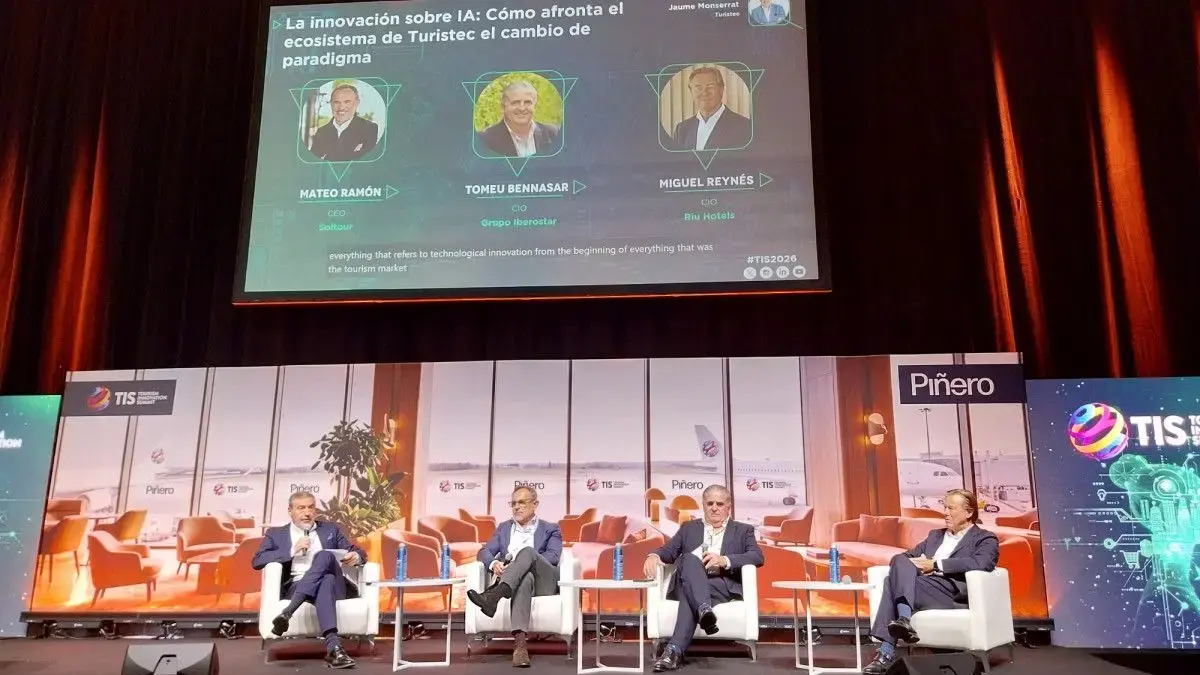
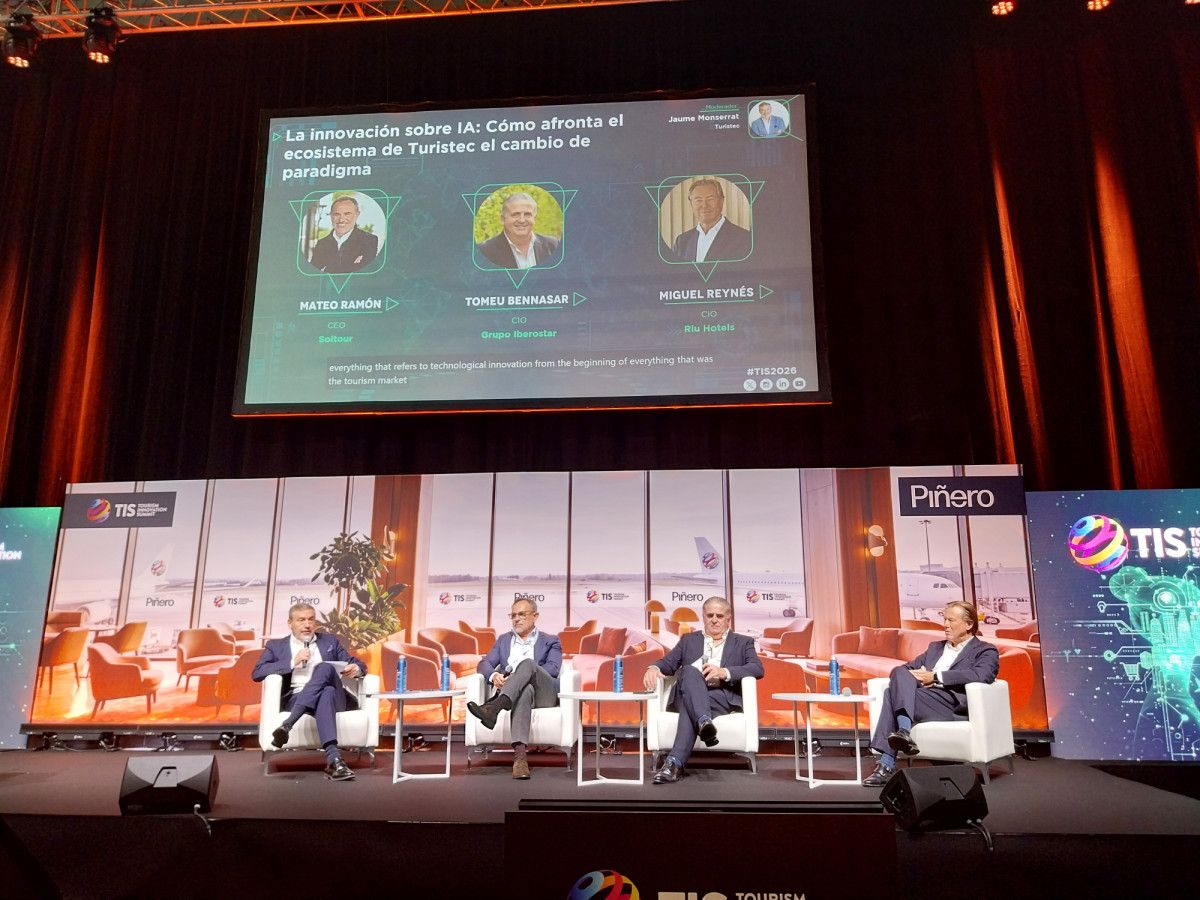
During a high-profile panel discussion at the Tourism Innovation Summit (TIS26)—aptly moderated by Jaume Montserrat, president of Turistec—top technology and executive leaders dissected the realities of surviving and thriving in the current tech climate. Featuring Tomeu Bennasar, CIO of Iberostar; Mateo Ramón, CEO of Soltour; and Miguel Reynés, CIO of Riu Hotels, the debate offered a masterclass in separating genuine innovation from corporate buzzwords.
1. Main Facts
The central thesis emerging from the TIS26 panel is that the tourism and hospitality sectors must move away from reactionary tech-adoption cycles. Key takeaways from the discussion include:
Strategic Alignment Over Haste: Corporate strategy must dictate AI integration, rather than letting the mere existence of new technologies force hasty, disruptive deployments.
The Danger of "Canned" AI: Standardized or off-the-shelf AI solutions offer little competitive advantage. Real value stems from collaborative AI that automates routine tasks, freeing human employees to focus on creative, high-value problem-solving.
Vendor Accountability: Hoteliers and tour operators are shifting away from building proprietary AI models in-house. Instead, they are relying on third-party partners and startups, provided those vendors can rigorously prove their worth and seamlessly integrate into existing enterprise ecosystems.
The Human-in-the-Command Principle: Industry leaders overwhelmingly agree that AI remains a tool, not a replacement. Human responsibility, oversight, and empathy must anchor every operational layer.
Regulatory Frameworks as Catalysts: European regulatory frameworks, such as the EU AI Act, are being actively leveraged by major chains to establish internal governance boards and control risk across all corporate departments.
2. Chronology: The Evolution from "Digital Transformation" to the AI Tsunami
To understand how the tourism industry arrived at its current crossroads, the panel traced the rapid evolution of technology adoption over the past decade.
Phase 1: The Buzzword Era of Digital Transformation
For years, "digital transformation" served as an umbrella term for companies striving to modernize legacy systems, move data to the cloud, and establish a digital footprint. It was a planned, deliberate journey aimed at adapting traditional business models to changing consumer behaviors in an increasingly connected world.
Phase 2: The AI Tsunami Hits the Market
Without warning, the emergence of generative AI and large-scale machine learning tools hit the travel sector like a tidal wave. Companies that had spent years meticulously planning digital roadmaps suddenly found their priorities upended. What was once a methodical march toward modernization transformed overnight into a chaotic sprint to evaluate, test, and implement AI capabilities.
Phase 3: The Over-Offer and Vendor Boom
The market quickly became oversaturated with tech vendors, startups, and software providers pushing proprietary AI solutions. Hospitality brands found themselves flooded with pitches, forcing executives to filter through massive amounts of noise.
Phase 4: The Pivot to Rigorous Governance (Present Day)
Recognizing the risks of unvetted tech adoption, hospitality leaders at TIS26 noted that the industry is now entering a maturity phase. Companies are establishing strict governance frameworks, relying on EU regulatory guidelines, and demanding empirical proof of value from third-party vendors before writing any checks.
3. Supporting Data and Industry Context
The challenges highlighted by Bennasar, Ramón, and Reynés reflect broader structural shifts within the global travel technology market:
The Seduction of Automation: According to recent enterprise tech studies, while over 70% of hospitality companies have experimented with AI tools, less than 25% have successfully integrated them into core, mission-critical business processes without risking data silos or security vulnerabilities.
The Cost of "In-House" Failure: Historically, major hotel chains attempted to build bespoke technological infrastructure internally. However, mounting maintenance costs, rapid AI obsolescence, and a shortage of specialized talent have driven a massive industry-wide pivot toward external partnerships. Both Iberostar and Riu Hotels explicitly confirmed moving away from 100% in-house software development in favor of carefully curated third-party ecosystems.
Regulatory Compliance: With the European Union setting strict boundaries on high-risk AI applications through legislation like the EU AI Act, compliance has shifted from an IT concern to a boardroom priority. Riu’s establishment of strategic governance organs directly mirrors the industry’s need to navigate these legal realities safely.
4. Official Responses and Direct Insights
The debate provided profound insights directly from the architects of travel technology. Here is how the key figures frame the current AI landscape:
Mateo Ramón, CEO of Soltour
Describing the arrival of AI as a sudden natural disaster, Ramón emphasized the necessity of distinguishing between generic tech and true differentiators:
"The AI has entered us like a tsunami, but we need it from a competitive point of view. The market currently offers standardized or ‘canned’ products, as well as collaborative AI. However, the AI that truly brings you differential value, that gives you the capacity for resilience, is the one that can be incorporated into automated tasks so that people can dedicate themselves to creating value."
Addressing the role of human beings in distribution, Ramón added:
"Behind everything is the business. AI on its own does not do business; we need human beings. We can rely on it; it is a complement… As tour operators and agencies, we must focus on becoming an ‘inspiring channel’ with a greater capacity to convince AI systems through our offerings."
Tomeu Bennasar, CIO of Iberostar
Bennasar stressed the importance of cautious, secure integration aligned strictly with overarching corporate strategy:
"Our position is to align with strategic partners, ensuring what they truly contribute in each case… Every tool incorporated must be able to be implemented within the framework of business processes, always knowing the results and how much it is going to cost you."
On the shift away from in-house development, Bennasar noted:
"We have a vision of orchestrating relationships at different levels. We have no intention of growing in AI with proprietary products, but rather with suppliers. To the extent that they add value to our various KPIs, we are willing to let them in."
Miguel Reynés, CIO of Riu Hotels
Reynés highlighted the organizational changes Riu has implemented to manage risk under new European regulations:
"We have decided to take advantage of the framework established by the new European Regulation to create strategic bodies that will allow us to respond to a market that was already experiencing a transformation—changes that have been accelerated by AI—and with which it is necessary to control risks across all departments."
Regarding the temptation to over-rely on algorithms, Reynés issued a stark warning:
"It is going to be a long time before we leave the entire operation to AI; for now, we must put human beings above it… A priori, we may have the temptation to believe that it can replace any task, but it remains a technology that we must know how to use. We cannot make long-term plans based solely on what AI offers at this exact moment."
Jaume Montserrat, President of Turistec (Moderator)
Synthesizing the panel’s takeaways, Montserrat warned against the erosion of institutional knowledge:
"If we leave everything in the hands of AI, we will ultimately lose our knowledge debt."
5. Implications for the Future of Hospitality
The consensus reached at TIS26 carries profound implications for travel brands, tech providers, and travelers alike.
For Hospitality Enterprises
Hotels and tour operators must resist the FOMO (Fear Of Missing Out) driving the current tech cycle. Implementing AI simply for the sake of marketing a "smart" hotel or agency is no longer sufficient. Moving forward, digital strategies must evaluate AI solutions based on three strict criteria:
Measurable ROI: Does the tool clearly impact key performance indicators (KPIs)?
Seamless Ecosystem Integration: Does the third-party software plug cleanly into existing operations without creating data security vulnerabilities?
Human Empowerment: Does the technology relieve employees of mind-numbing administrative burdens so they can deliver superior, personalized hospitality to guests?
For Tech Vendors and Startups
The era of selling unproven, shiny-object AI tools to hospitality executives is coming to a close. Vendors must now act as strategic allies capable of weathering rigorous audits, proving empirical value within complex corporate ecosystems, and operating transparently under stringent European regulatory frameworks.
The Ultimate Takeaway
As the tourism industry continues to navigate the turbulent waters of the AI era, the message from Iberostar, Soltour, and Riu is unequivocal: technology is a powerful compass, but human beings must always hold the steering wheel. Strategic discipline, calculated vendor selection, and an unwavering commitment to human creativity will ultimately determine who survives the storm and who gets swept away.




Leave a Reply