

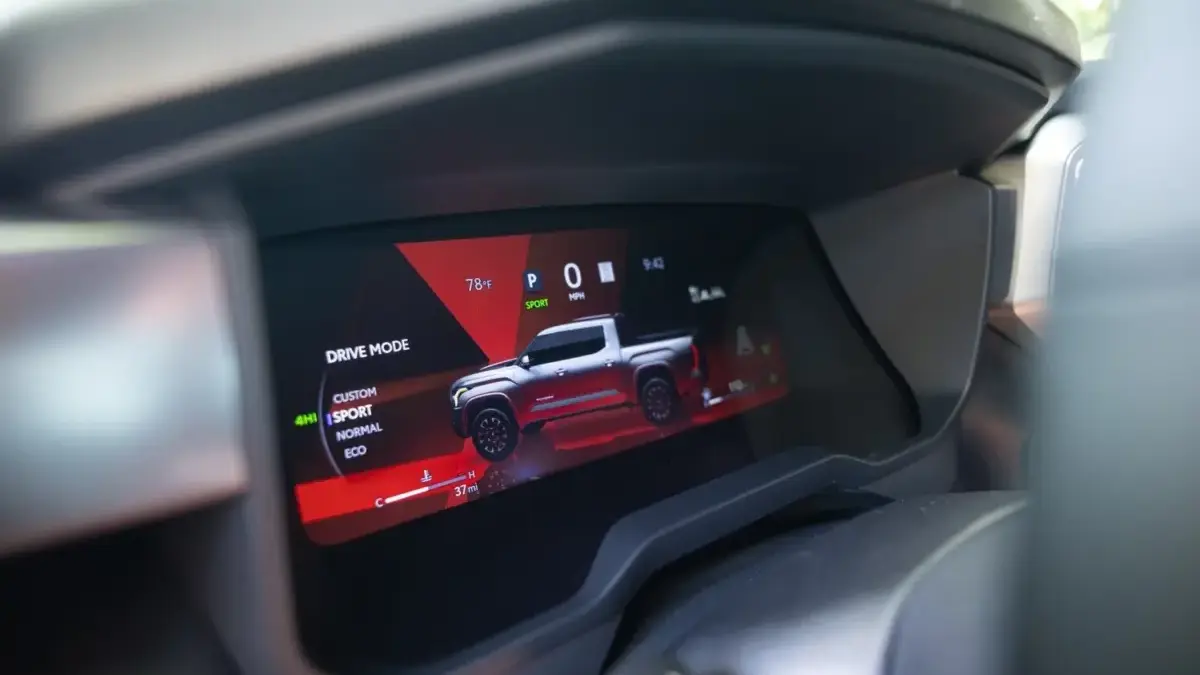
Introduction: The Paradigm Shift in Automotive Engineering
For decades, purchasing a vehicle meant investing in a depreciating mechanical asset. The moment a car rolled off the dealership lot, its technical capabilities were permanently capped by the hardware and software installed at the factory. Age immediately began eroding its value and relevance, and remedying flaws or adding features required physical trips to the workshop for manual part swaps or diagnostic console reprogramming.
Today, that paradigm has fundamentally collapsed. Modern automobiles are no longer just mechanical machines powered by internal combustion engines or battery packs; they are sophisticated, mobile data centers. At the heart of this transformation lies the Over-the-Air (OTA) update—a mechanism long familiar to smartphone and personal computer users that has now permeated the global automotive ecosystem.
By transmitting software updates wirelessly via cellular networks or Wi-Fi, manufacturers can alter a car’s behavior, enhance its safety protocols, and unlock new performance dimensions while it sits parked in a garage. However, while this digital evolution offers unprecedented convenience and capability, it simultaneously introduces complex challenges surrounding cybersecurity, system stability, user privacy, and long-term technological obsolescence.
1. Main Facts: The Mechanics and Capabilities of OTA Architecture
To comprehend the impact of OTA updates, one must first understand how they operate beneath the surface. An OTA update is essentially a remote software deployment. When a manufacturer identifies a bug, optimizes an algorithm, or develops a new infotainment feature, the compiled code is uploaded to secure cloud servers.
The Delivery and Installation Process
- Detection: The vehicle’s telematics control unit (TCU)—via a built-in 4G/5G connection or home Wi-Fi—detects that a new software package is available.
- Download: The update downloads in the background while the car is driven or parked, utilizing robust encryption protocols to prevent interception or tampering.
- Verification: Before installation, the system performs an integrity check using digital signatures to verify that the software originated directly from the certified manufacturer.
- Execution: To prevent catastrophic errors or safety hazards, most manufacturers mandate that the vehicle be completely stationary, powered down, and equipped with a sufficiently charged 12-volt auxiliary battery before the installation sequence (often called "flashing") can begin.
Scaling Capabilities: From Infotainment to Powertrain
OTA updates are generally categorized into two distinct types:
- SOTA (Software-over-the-Air): Typically focused on the infotainment system, navigation maps, Bluetooth connectivity, and user interface tweaks. These are fast, lightweight, and carry minimal operational risk.
- FOTA (Firmware-over-the-Air): Far more profound, FOTA updates target deep vehicle modules, including the Powertrain Control Module (PCM), Battery Management System (BMS), Advanced Driver Assistance Systems (ADAS), and braking electronics.
FOTA updates can fundamentally alter the physical behavior of a vehicle. In modern Electric Vehicles (EVs), an OTA update can optimize thermal management strategies to squeeze out extra miles of range, adjust regenerative braking profiles, or—as demonstrated by pioneers like Tesla—even modify torque distribution to reduce 0-100 km/h acceleration times.
2. Chronology: The Evolution of Automotive Connectivity
The integration of software into vehicles did not happen overnight. It represents a steady, deliberate migration from isolated mechanical systems to hyper-connected digital platforms.
- Late 1990s – Early 2000s: The introduction of standardized On-Board Diagnostics (OBD-II) ports allowed technicians to plug external diagnostic tools directly into a car’s Electronic Control Units (ECUs) to read error codes and occasionally flash new firmware in a workshop setting.
- Mid-2000s: Telematics systems like General Motors’ OnStar pioneered basic cellular communication in vehicles, primarily used for emergency crash response, remote door unlocking, and basic vehicle diagnostics.
- 2012: Tesla disrupted the automotive landscape by launching the Model S, a vehicle engineered from the ground up with a centralized computer architecture capable of receiving comprehensive, deep-system OTA updates. This shifted consumer expectations permanently.
- Late 2010s: Legacy automakers, initially slow to adapt due to complex supply chains and decentralized supplier networks, began overhauling their electrical architectures (shifting from dozens of fragmented microcontrollers to centralized domain controllers) to support widespread OTA functionality.
- 2020s: Regulatory bodies recognized the shift, leading to the establishment of stringent international cybersecurity and software update frameworks, such as UNECE Regulations R155 and R156, mandating rigorous security standards for connected vehicles.
3. Supporting Data and Economic Impact
The financial and operational implications of OTA updates are staggering for both consumers and automotive manufacturers.
Reducing Recall Costs
Traditionally, discovering a software glitch or minor component flaw in millions of vehicles meant issuing a massive physical recall. Dealerships had to mail notification letters, service departments had to allocate physical bay space and labor hours, and owners faced severe inconvenience. According to industry analyses, executing a physical recall costs a manufacturer an average of several hundred dollars per vehicle in labor, parts distribution, and administrative overhead.
By contrast, an OTA patch can remediate a software-based defect across millions of vehicles simultaneously overnight, with marginal distribution costs approaching zero.
Performance and Efficiency Gains
Data collected from major EV fleets indicates that continuous software refinement can yield tangible real-world benefits:
- Battery Longevity: Optimized charging curves and thermal management algorithms deployed via OTA have been shown to reduce lithium-ion battery degradation rates by up to 5–10% over a five-year lifecycle.
- Range Optimization: Aerodynamic adjustments (via active grille shutters or suspension height modifications) and inverter efficiency tweaks delivered remotely have yielded incremental range increases of 2% to 4% post-purchase.
4. Official Responses and Industry Standards
As software increasingly dictates vehicle safety, regulatory authorities and automotive executives have had to establish robust governance to protect consumers.
Regulatory Intervention
The United Nations Economic Commission for Europe (UNECE) introduced landmark regulations that have become global benchmarks:
- UNECE R155 (Cybersecurity Management System): Requires automotive manufacturers to implement rigorous frameworks to identify, analyze, and mitigate cyber threats across a vehicle’s entire lifecycle.
- UNECE R156 (Software Update Management System): Mandates that manufacturers maintain clear records of software versions installed in every vehicle, ensure the authenticity and integrity of updates, and provide transparent communication to vehicle owners regarding what an update modifies.
Manufacturer Perspectives
Industry leaders acknowledge both the immense potential and the profound responsibility of OTA technology. Chief Technology Officers across legacy and pure-play EV brands emphasize that software-defined vehicles (SDVs) require a cultural shift within engineering departments.
"We are no longer just building cars; we are maintaining a dynamic platform," notes a leading systems architect from a major European automotive group. "Our primary obligation is ensuring that the speed of digital innovation never compromises the absolute baseline of mechanical and cyber safety."
5. Implications: Risks, Privacy Concerns, and the Future
Despite the glowing advantages, the widespread adoption of OTA updates introduces complex societal and technical hurdles that require careful navigation.
Cybersecurity Vulnerabilities
Opening a vehicle to wireless communication inherently expands its attack surface. If a manufacturer fails to implement end-to-end encryption, multi-factor authentication, and secure boot architectures, malicious actors could theoretically intercept wireless data packets or inject malicious code (malware). A compromised vehicle could face compromised steering, braking, or propulsion systems, presenting catastrophic safety risks.
System Instability and "Bricking"
Just as a interrupted computer BIOS update can render a motherboard useless (commonly referred to as "bricking"), an interrupted or corrupted FOTA installation can leave a car completely inoperable. Real-world incidents involving brands like Ford and Volkswagen have demonstrated that bugs in update deployment scripts can temporarily crash vehicle gateway modules, trapping drivers with unresponsive dashboards, immobilized gear selectors, or disabled climate control systems. Mitigating this requires fail-safe secondary partitions (dual-bank memory) that allow the vehicle to revert to a stable previous software version if an update fails.
Privacy and Data Harvesting
To continually improve software algorithms, autonomous driving systems, and predictive maintenance models, connected cars constantly harvest vast arrays of telemetry data. This includes real-time GPS coordinates, driving habits, speed profiles, cabin camera feeds, and voice commands. While manufacturers insist this data is anonymized and used exclusively for product enhancement, it raises valid privacy concerns regarding who owns vehicular data and whether third parties—such as insurance companies or law enforcement—can access it.
Technological Obsolescence and the Digital Divide
As cars age, their physical computing hardware (processors, RAM, and internal storage) remains fixed, whereas software demands continually escalate. This creates a new form of technological obsolescence. Eventually, older vehicle models reach a hardware threshold where they can no longer support modern security patches or advanced feature sets. When manufacturers inevitably phase out support for legacy platforms, owners face a digital divide, left with vehicles that stop evolving or lose cloud-dependent functionalities.
Conclusion: The New Normal of Automotive Maintenance
The transition to software-defined vehicles is irreversible. Today, keeping a car’s software up to date is just as critical to its ongoing health as traditional preventative maintenance tasks, such as checking fluid levels, inspecting brake pads, and monitoring tire pressures.
As regulatory frameworks mature and cybersecurity protocols tighten, OTA updates will continue to redefine the automotive landscape. They promise vehicles that adapt, improve, and secure themselves over time, transforming the car from a static industrial product into an evolving, intelligent companion on the road.

Leave a Reply