

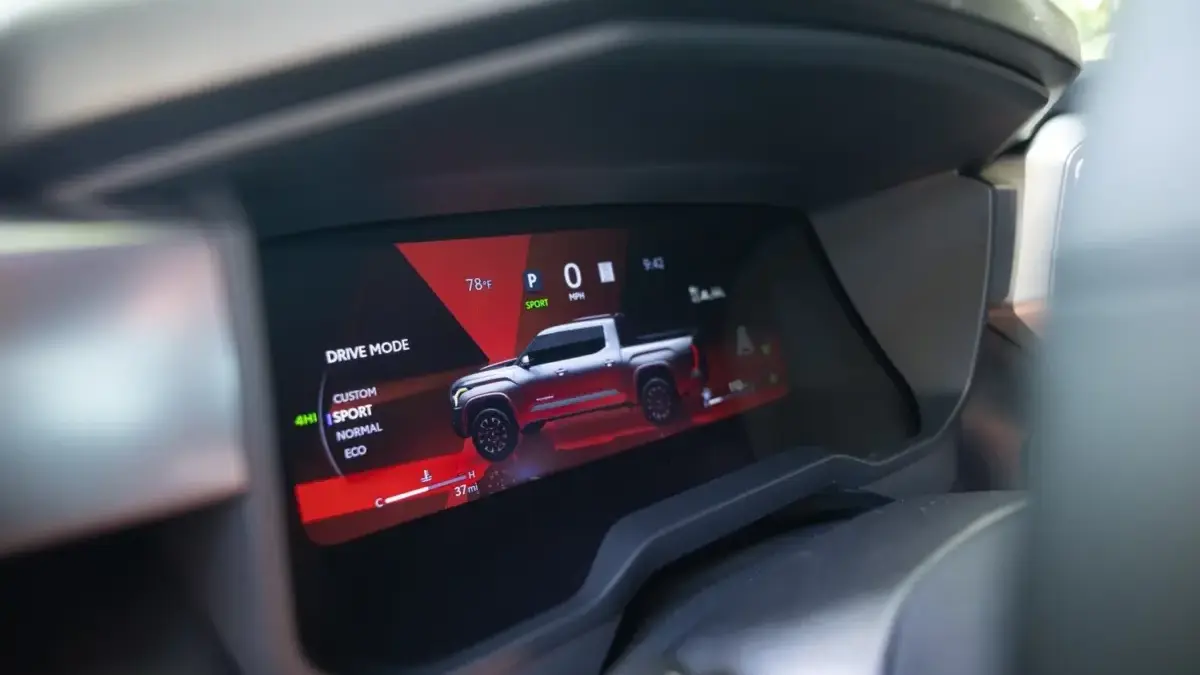
Just as smartphones routinely update themselves overnight to fix critical bugs, patch vulnerabilities, or introduce exciting new features, the automotive industry has undergone a radical paradigm shift. Modern vehicles are no longer purely mechanical machines driven solely by internal combustion and physical linkages; they are sophisticated, rolling supercomputers. In this new era, lines of code dictate vehicle dynamics just as much as displacement, suspension geometry, or mechanical braking systems.
At the heart of this transformation are OTA (Over-the-Air) updates. These wireless software transmissions allow vehicles to evolve dynamically while parked in a garage, fundamentally altering the traditional lifecycle of a car. Rather than being a static product that begins depreciating and aging the moment it leaves the dealership floor, a modern connected vehicle can continuously improve its capabilities, safety profiles, and efficiency long after purchase.
Main Facts: The Anatomy of Modern Vehicle Software
The integration of OTA update capabilities represents a complete restructuring of automotive engineering, manufacturing, and consumer expectations.
- The Evolution of the Machine: Modern vehicles feature dozens of Electronic Control Units (ECUs) managing everything from infotainment and climate control to core powertrain functions and advanced driver-assistance systems (ADAS). OTA updates allow these distributed systems to be modified remotely.
- Dual Nature of Updates: Updates generally fall into two categories: minor, non-critical patches (such as navigation database refreshes or Bluetooth stability fixes) and major, deep system updates that touch multiple ECUs simultaneously, altering core vehicle behavior.
- Performance Enhancements Beyond Aesthetics: Unlike consumer electronics where updates primarily affect software interfaces, automotive OTAs can physically alter how a vehicle drives. In electric vehicles (EVs), software optimizations can maximize battery thermal management, increase overall driving range, or even decrease 0–100 km/h acceleration times through finer torque vectoring and inverter management.
- Economic Efficiency for Manufacturers: For automakers, pushing a digital patch to millions of vehicles simultaneously eliminates the immense financial and logistical burden of mandatory, physical recall campaigns for software-related glitches.
Chronology: From Static Machinery to Connected Ecosystems
The journey toward software-defined vehicles did not happen overnight. It is the result of decades of gradual electronic integration within the automotive sector.
1. The Era of Dedicated Diagnostics (Late 20th Century)
Before computers dictated vehicle performance, maintenance was strictly mechanical. The introduction of On-Board Diagnostics (OBD) in the 1980s and the standardized OBD-II port in the mid-1990s marked the first time technicians could plug external hardware into a car to read engine error codes. However, any software modification still required a physical visit to a certified workshop.
2. The Rise of Telematics and Early Flashing (2000s–2010s)
As cellular networks expanded and vehicle telematics systems (such as early iterations of connected services) emerged, manufacturers began experimenting with remote diagnostics. While critical safety systems remained strictly offline, luxury manufacturers began allowing minor navigation updates via USB drives or early cellular links.
3. The Tesla Disruption and the Standardisation of OTAs (2012–2020)
Tesla revolutionized the industry by designing its vehicles from the ground up as vertically integrated software platforms capable of complete, end-to-end OTA updates. This capability captured public imagination when Tesla began deploying remote patches that improved braking distances, unlocked extra battery capacity during natural disasters, and added autonomous driving features overnight. Traditional legacy automakers quickly realized they had to pivot or risk technological obsolescence.
4. Regulatory Maturation and Global Compliance (Present Day)
Today, OTA updates are governed by rigorous international regulatory frameworks. Organizations and governing bodies—such as the United Nations Economic Commission for Europe (UNECE)—have introduced stringent mandates (specifically UNECE R155 and R156) that regulate cybersecurity and software update management systems, ensuring that wireless updates do not inadvertently compromise public safety.
Supporting Data: The Mechanics and Infrastructure of Remote Downloads
Understanding how an OTA update successfully transitions from a developer’s computer to a vehicle’s drivetrain requires looking closely at the underlying technical architecture.
The Download and Verification Pipeline
- Deployment: The manufacturer compiles a new software package and uploads it to secure cloud servers.
- Detection: The vehicle uses its embedded cellular module (4G/5G) or connects to a local Wi-Fi network to poll the manufacturer’s servers, signaling that an update is available.
- Download: The packet is downloaded in the background while the vehicle is driven or parked. Because these files can be large, robust error-checking protocols ensure no data corruption occurs during transmission.
- Staging and Verification: Before installation, the system uses cryptographic digital signatures to verify that the software package is authentic, untampered with, and specifically designed for that exact vehicle variant.
System Requirements and Safety Interlocks
To prevent catastrophic failures during the "flashing" process—where existing firmware is overwritten—manufacturers enforce strict safety parameters:
- The Parking Mandate: The vehicle must be safely parked, the ignition turned off, and the parking brake engaged.
- Battery State of Charge: Because an interruption in power supply can "brick" an ECU, rendering the vehicle inoperable, the system cross-checks the 12V auxiliary battery and high-voltage pack levels to ensure sufficient energy reserves before initiating the sequence.
Official Responses: Industry Perspectives and Regulatory Standards
As the automotive landscape shifts toward software-centric models, industry leaders, regulatory bodies, and cybersecurity experts have established clear positions on the opportunities and hazards of remote updates.
Automaker Consensus: Balancing Innovation with Liability
Major global automotive groups have universally embraced OTAs as a core pillar of their future business models. Executives frequently cite customer satisfaction metrics, noting that drivers deeply appreciate avoiding dealership trips for minor software bugs. Furthermore, brands view OTAs as a gateway to recurring revenue streams through "Features-on-Demand"—allowing owners to unlock heated seats, advanced autopilot capabilities, or enhanced performance packs via software subscriptions.
However, liability remains a central concern. Traditional manufacturers have had to adapt to software development life cycles (SDLC) traditionally associated with Silicon Valley tech firms, hiring thousands of software engineers to manage continuous integration and deployment (CI/CD) pipelines.
Regulatory Oversight: UNECE R155 and R156
Governments and international coalitions are stepping in to ensure that the race for digital innovation does not compromise safety.
- UNECE R155 focuses on Cybersecurity Management Systems (CSMS), requiring manufacturers to prove they have robust processes in place to identify, assess, and mitigate cyber threats across a vehicle’s entire lifecycle.
- UNECE R156 establishes frameworks for Software Update Management Systems (SUMS), mandating that automakers maintain clear records of every software version installed on every vehicle, ensure updates are secure, and provide a clear recovery mechanism if an update fails.
Implications: Cybersecurity, Privacy, and the Future of Mobility
While the advantages of a constantly improving vehicle are clear, the widespread adoption of OTA updates introduces complex societal, technical, and ethical challenges.
1. The Threat Matrix: Cybersecurity and Hacking Vulnerabilities
Connecting a two-ton vehicle to the internet inherently expands its attack surface. If a manufacturer’s cloud infrastructure lacks robust encryption or multi-factor authentication, malicious actors could theoretically intercept update packages, inject malware, or gain unauthorized control over critical driving systems like steering and braking. Maintaining rigorous end-to-end encryption and secure hardware enclaves inside the vehicle’s computer architecture is no longer optional—it is a matter of national and public safety.
2. System Stability and "Bricking" Risks
Hardware or software glitches during an update can lead to catastrophic failures. High-profile incidents involving major legacy brands, where minor code errors locked out electrical management systems or disabled infotainment and climate controls, highlight the risks of rushed deployments. When a smartphone crashes during an update, the user reboots it; when an ECU fails mid-flash, the vehicle often requires a physical tow to a specialized service center.
3. Data Privacy and Surveillance Concerns
To optimize vehicle performance and diagnose software bugs efficiently, connected cars continuously harvest vast amounts of telemetry data: driving styles, GPS coordinates, cabin telemetry, and component wear indicators. While manufacturers assert this data is anonymized and used exclusively for research and development, it raises significant privacy concerns. Owners must navigate dense privacy policies to understand who owns, stores, and monetizes their driving habits.
4. Technological Obsolescence and the Right to Repair
Just as older smartphones eventually stop receiving operating system updates due to processor limitations, modern cars face a similar fate. If an automaker decides to sunset support for an older platform, or if the physical hardware lacks the computational power to run newer software iterations, older vehicles will experience a technological plateau. This creates a widening digital divide between brand-new models and those just a few years old, raising questions about longevity and the traditional "right to repair."
Conclusion
The integration of Over-the-Air updates represents an irreversible turning point in automotive history. Vehicles are no longer static consumer goods; they are dynamic platforms defined by the quality and agility of their software.
For drivers, this means a driving experience that becomes safer, more efficient, and more feature-rich over time. For the industry, it demands an unprecedented commitment to cybersecurity, rigorous testing protocols, and ethical data management. Ultimately, keeping a car’s software up to date has rightfully joined the ranks of traditional maintenance tasks—sitting comfortably alongside checking tire pressures, replacing brake pads, and changing fluids—as an essential pillar of modern vehicle ownership.

Leave a Reply