

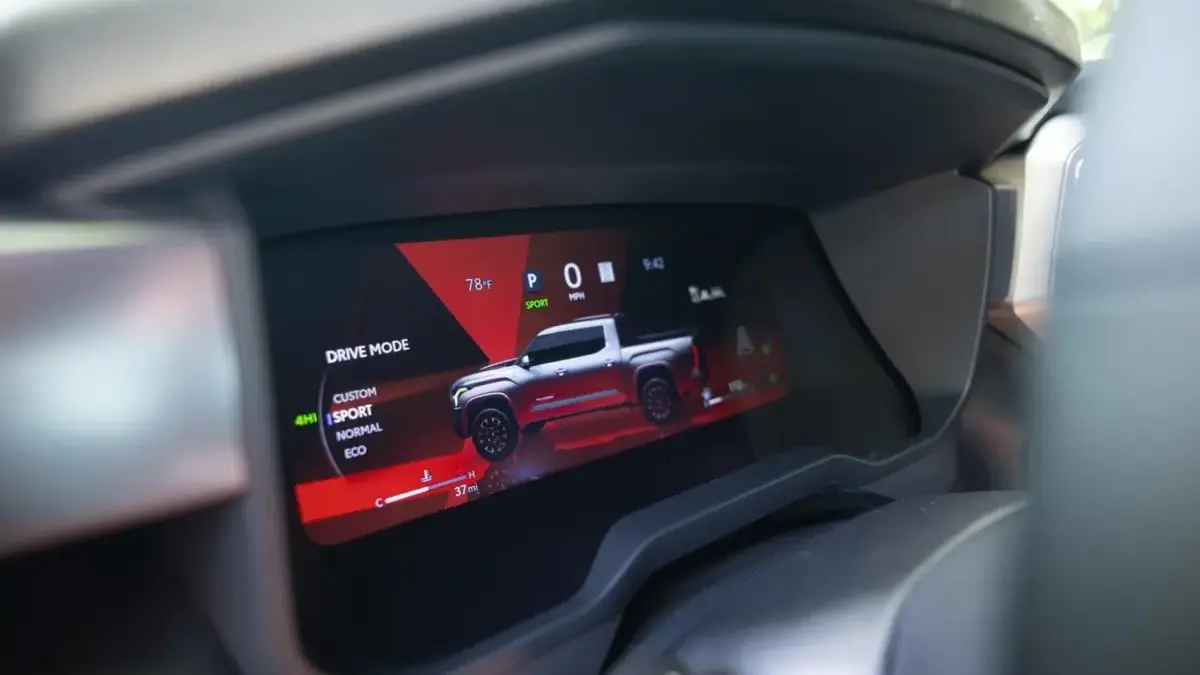
The paradigm of automotive ownership is undergoing a fundamental shift. For over a century, purchasing a car meant investing in a static, closed consumer product—a mechanical asset that began its inevitable depreciation and technological obsolescence the moment its tires rolled off the dealership floor. Today, however, that dynamic has been entirely rewritten. Modern vehicles are no longer purely mechanical machines driven by pistons and combustion; they are sophisticated, rolling supercomputers where lines of code hold as much sway over the driving experience as horsepower, suspension geometry, and braking systems.
At the heart of this digital transformation lies the OTA (Over-the-Air) update. Much like a smartphone quietly downloading a package overnight to patch a security vulnerability or introduce a fresh interface feature, contemporary cars can now evolve while parked securely in a garage. This capability has upended the traditional relationship between driver and machine, turning automobiles into dynamic assets capable of gaining performance, expanding utility, and rectifying structural flaws remotely.
Yet, this shift introduces complex layers of engineering challenges, profound cybersecurity risks, evolving regulatory frameworks, and shifting consumer expectations. As the automotive industry sprints toward an increasingly software-defined future, understanding the mechanics, benefits, and perils of OTA updates has become essential for every driver.
Main Facts: The Anatomy of Modern Automotive Software
To grasp the impact of OTA updates, one must first understand what they are and how deeply software penetrates modern vehicle architecture. A typical modern vehicle can contain up to 100 individual Electronic Control Units (ECUs) managing everything from fuel injection and transmission mapping to infotainment, active driver assistance systems (ADAS), and thermal management.
What Are OTA Updates?
OTA updates are wireless deliveries of software packages transmitted via cellular networks (such as 4G and 5G) or local Wi-Fi connections. Rather than requiring a physical visit to a dealership service center to plug a diagnostic tool into an OBD-II port, manufacturers can deploy patches, feature unlocks, and performance enhancements directly to the vehicle’s central computer.
The Mechanics of Remote Deployment
The process is designed to be seamless yet secure:
- Distribution: The manufacturer compiles a new software build and deploys it to secure cloud servers.
- Notification: The vehicle’s telematics control unit pings the server or receives a push notification indicating that a new update is ready.
- Download: The car downloads the package, often utilizing Wi-Fi networks to avoid consuming mobile data allowances.
- Verification: Before installation, the system verifies the digital signature of the package to ensure it is authentic and has not been intercepted or tampered with.
- Execution: Most manufacturers mandate that the vehicle be parked, powered down, and equipped with a sufficiently charged 12-volt battery before the installation sequence ("flashing") can begin. This prevents catastrophic power failures mid-update.
Chronology: From Diagnostic Ports to Cloud-Connected Fleets
The journey toward widespread OTA adoption spans over two decades, transitioning from localized hardware diagnostics to continuous, cloud-driven fleet management.
- Early 2000s — The Era of the Diagnostic Port: Early automotive computers were largely isolated islands. Updating software required a technician to physically connect a proprietary laptop to the car’s under-dash diagnostic port. Updates were rare, usually restricted to critical emissions fixes or severe transmission shifting bugs, and almost always incurred a service fee if the car was out of warranty.
- Mid-2010s — The Tesla Disruption: While luxury brands occasionally experimented with telematics updates for navigation systems, Tesla fundamentally changed the industry baseline. By engineering vehicles with centralized computing architectures designed from scratch for connectivity, Tesla began pushing remote updates that radically altered vehicle dynamics, introduced "Autopilot" capabilities, and optimized battery range overnight. Traditional manufacturers watched in awe as cars improved value after purchase.
- Late 2010s to 2020s — Mass Adoption and Regulatory Pressure: As electric vehicles (EVs) gained market share and infotainment systems grew more complex, legacy automakers scrambled to restructure their electronic architectures. Moving away from decentralized, supplier-specific ECUs toward centralized domain controllers became an existential priority.
- The Present Day — Regulatory Standardization: Recognizing both the immense potential and the severe risks of unvetted wireless connections, international regulatory bodies stepped in. Frameworks such as the United Nations Economic Commission for Europe (UNECE) Regulations R155 (Cybersecurity) and R156 (Software Update Management System) entered into force, forcing manufacturers to implement rigid, certified protocols for managing software lifecycles.
Supporting Data: The Tangible Impact on Performance and Efficiency
The most mesmerizing aspect of OTA updates is their ability to alter the physical world through pure logic. Software can manipulate thermodynamics, electrical resistance, fluid dynamics, and kinetic energy management.
Battery Optimization and Range Extension
In the realm of electric vehicles, software is just as important as chemistry. OTA updates frequently refine battery management systems (BMS). By optimizing thermal conditioning cycles—how aggressively the car heats or cools the battery pack during extreme weather—manufacturers have successfully squeezed extra miles of driving range out of existing hardware packs. Furthermore, refined inverter algorithms can improve energy conversion efficiency during regenerative braking.
Dynamic Performance Tweaks
Performance is no longer locked into the specifications sheet printed on the day of purchase. Numerous instances have demonstrated how remote code adjustments can shave fractions of a second off a car’s 0-to-60 mph acceleration times by unlocking higher peak torque curves from electric motors. Similarly, active suspension tuning can be adjusted remotely; algorithms can analyze anonymized fleet data regarding road conditions and push suspension stiffness calibrations to improve ride comfort or cornering agility across an entire model lineup.
The Economics of Recall Avoidance
For automakers, OTAs represent a massive financial safeguard. Historically, issuing a safety recall meant printing notifications, mailing letters, shipping physical replacement parts to thousands of dealerships, and paying labor costs for technicians to fix a defect. A software bug that previously required a costly physical recall campaign can now be neutralized in minutes via a silent background download. According to industry analyses, software-based fixes reduce remediation costs by up to 90% compared to traditional mechanical recalls.
Official Responses and Industry Perspectives
Major automotive stakeholders view the rise of software-defined vehicles (SDVs) through a dual lens of unprecedented commercial opportunity and daunting operational responsibility.
The Automaker Perspective: Unlocking New Revenue Streams
Traditional original equipment manufacturers (OEMs) are aggressively transforming into tech-centric service providers. Executives frequently emphasize that OTAs allow brands to maintain a continuous, direct relationship with the consumer long after the initial sale. This opens the door to subscription-based features—such as heated seats, enhanced semi-autonomous driving packages, or premium streaming services—that can be enabled instantly via an in-app purchase and an OTA handshake.
The Cybersecurity Community: Raising the Red Flag
Conversely, cybersecurity experts and ethical hackers offer a sobering perspective. Opening a permanent digital pipeline into a multi-ton machine hurtling down a highway at 75 mph creates an attractive target for malicious actors.
Industry security specialists stress that traditional automotive engineering cultures—which historically prioritized physical durability over digital resilience—must undergo a cultural revolution. Without military-grade encryption, strict public-key infrastructure (PKI), and isolated network segmentation (sandboxing), an exploited infotainment system could theoretically bridge the gap to critical safety systems like steering or braking architecture.
Implications: Risks, Privacy Concerns, and the Future of Mobility
While the conveniences of OTA updates are undeniable, the transition to software-dominated vehicles carries profound societal, legal, and operational implications.
1. Cybersecurity Vulnerabilities and System Instability
The most immediate risk is catastrophic system failure. A corrupted file, an interrupted download, or an unforeseen code conflict can "brick" a vehicle, rendering it completely inoperable. High-profile incidents involving major global brands have already seen software glitches freeze instrument clusters, disable climate controls, or lock drivers out of essential vehicle functions.
On the security front, researchers have repeatedly demonstrated that vulnerabilities in telematics gateways can allow remote execution of malicious code. Ensuring that vehicles possess robust intrusion detection systems (IDS) and secure boot mechanisms is no longer optional; it is a matter of public safety.
2. Privacy and Data Harvesting
To optimize software performance and diagnose remote bugs, modern cars act as relentless data-gathering engines. They log precise GPS coordinates, driving habits, braking intensity, cabin telemetry, and voice commands. While manufacturers argue this telemetry is anonymized and strictly used for product improvement, it blurs the lines of consumer privacy. Drivers are frequently left in the dark regarding who owns this data, where it is stored, and whether it is shared with third parties or insurance providers.
3. Technological Obsolescence and the Right to Repair
OTAs introduce a new form of automotive stratification. Just as older smartphones eventually stop receiving operating system updates because their processors cannot handle modern software demands, cars face a similar fate. If a manufacturer decides to sunset support for a specific legacy platform, or if the physical computing hardware becomes outdated, vehicles will experience rapid technological aging.
Furthermore, this dynamic intersects heavily with the "Right to Repair" movement. As cars become closed digital ecosystems protected by digital rights management (DRM) and proprietary encryption, independent mechanics find it increasingly difficult to diagnose or repair electronic faults without official manufacturer authorization.
Best Practices for Safe OTA Management
To navigate this new digital frontier without risking mechanical headaches, vehicle owners and fleet managers should adopt proactive maintenance habits:
- Park with Purpose: Always perform significant software updates while parked in a secure area with a stable, high-speed Wi-Fi connection to prevent dropped packets during downloading.
- Monitor Battery Health: Ensure your vehicle’s 12-volt battery is in optimal condition. Because the 12V battery powers the low-voltage electronics during the "flashing" process—even in electric cars—a weak battery can cause a voltage drop that corrupts the installation.
- Never Interrupt a Flash: Once an update installation has been initiated, never attempt to turn on the ignition, disconnect components, or force a shutdown unless explicitly instructed by the manufacturer’s manual.
- Review Privacy Settings: Take time to audit the data-sharing permissions within your vehicle’s infotainment settings, opting out of non-essential telemetry tracking if privacy is a primary concern.
- Stay Informed: Pay attention to safety bulletins and recall notices regarding software versions. Ignoring critical safety patches can leave your vehicle exposed to known vulnerabilities.
Conclusion
The evolution of the automobile into a software-defined asset is an irreversible milestone in industrial history. OTA updates have fundamentally redefined what a car is: no longer a static assembly of metal and combustion, but a living, breathing ecosystem that grows smarter, safer, and more capable over time.
However, this immense power demands rigorous stewardship. As regulatory bodies enforce stricter cybersecurity standards and manufacturers refine their deployment protocols, the ultimate success of the software-defined vehicle will depend on striking a delicate balance between rapid technological innovation, absolute system stability, and uncompromising protection of driver privacy and safety. Maintaining code is now just as critical to the health of your vehicle as checking the oil pressure or monitoring tire tread—ushering in a thrilling, hyper-connected era of modern mobility.

Leave a Reply