

By Automotive Technology Desk
Published: July 2026
Main Facts
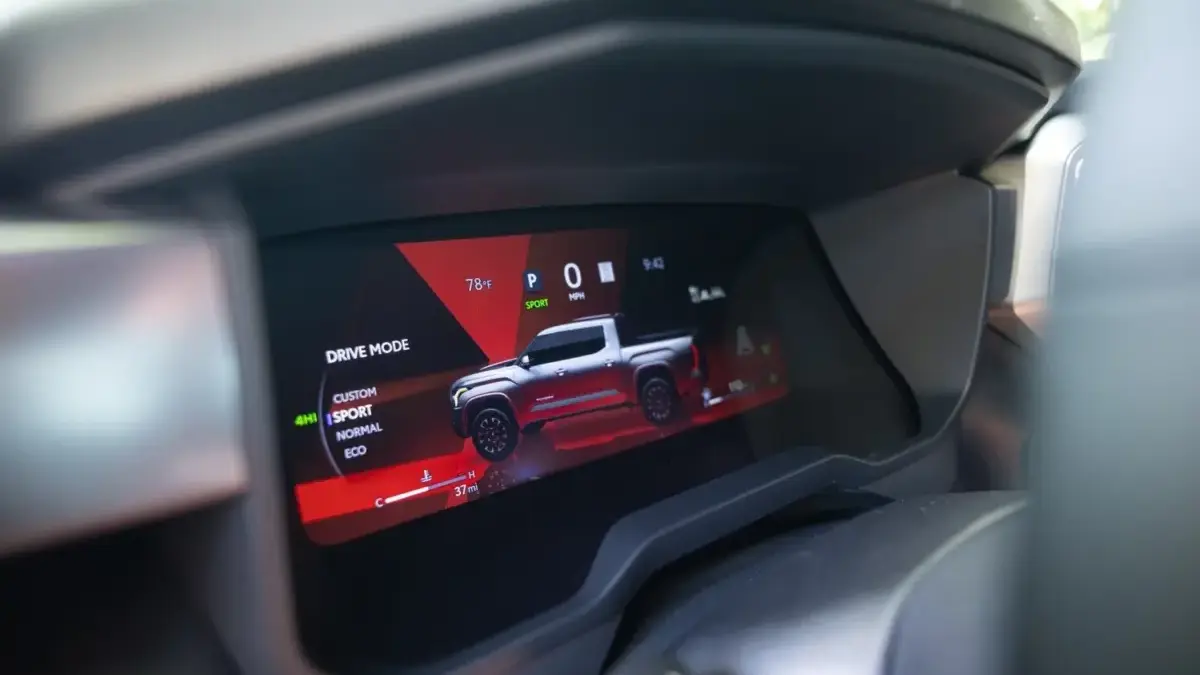
The modern automobile has officially transcended its identity as a purely mechanical apparatus. Today’s vehicles are, for all practical intents and purposes, high-performance computers outfitted with wheels, powertrains, and braking systems. At the heart of this transformation lies the Over-the-Air (OTA) update—a mechanism that allows manufacturers to transmit software patches, feature expansions, and performance tunings directly to a vehicle via cellular networks or Wi-Fi while it sits parked in a driveway.
Unlike traditional ownership models where a car begins depreciating and aging technologically the exact moment it rolls off the dealership floor, OTA-enabled vehicles are dynamic. They can improve over time. A software revision can optimize battery chemistry management in an EV to extend range, calibrate driver-assistance sensors for improved safety, or entirely overhaul the infotainment interface.
However, this paradigm shift introduces unprecedented complexities. As cars become increasingly reliant on lines of code, the automotive industry faces a steep learning curve regarding cybersecurity vulnerabilities, system stability during flashing sequences, data privacy, and technological obsolescence. Regulatory bodies worldwide are stepping in, implementing stringent frameworks like the UNECE R155 and R156 regulations to ensure that remote updates do not inadvertently turn a convenience into a liability.
Chronology: The Evolution of Automotive Software
To understand how we arrived at an era where a car’s horsepower can be altered via a remote server download, it is necessary to examine how software crept into the automotive space over the decades.
- The Late 20th Century (The Mechanical-Electronic Transition): Electronic Control Units (ECUs) began replacing carburetors and mechanical distributors. Adjustments, diagnostics, and software flashes required a physical technician, a proprietary OBD port, and a wired connection inside a dedicated service bay.
- The Early 2000s (Telematics and Infotainment): Early connected services emerged, primarily focused on emergency calling (such as GM’s OnStar) and basic cellular-linked navigation. Software updates remained strictly manual and localized to dealership visits.
- The 2010s (The Tesla Disruption): Tesla revolutionized the consumer mindset by proving that entire vehicle architectures could be governed by centralized operating systems capable of receiving continuous, wireless firmware improvements. Other manufacturers quickly realized that the traditional product lifecycle model was unsustainable in the face of consumer electronics expectations.
- The 2020s (Mainstream Adoption and Regulation): OTA updates expanded from luxury and electric-only segments to mass-market internal combustion engine (ICE) vehicles. Simultaneously, cyberattacks on connected vehicle fleets prompted governments to draft binding international standards (UNECE WP.29) regulating software updates and cyber management systems.
- The Present Day (The Software-Defined Era): Software parity with consumer tech is now a baseline expectation. OTA updates dictate everything from minor user interface tweaks to critical safety recalls handled entirely without a physical dealer appointment.
Supporting Data: The Mechanics and Metrics of OTA
The technical architecture behind an OTA update is deceptively complex. When a manufacturer pushes a new firmware package, it travels from secure cloud servers down to a telematics control unit (TCU) inside the car.
Types of Updates
- Infotainment and App-Level Updates: These are lightweight, frequent patches addressing navigation maps, Bluetooth pairing stability, streaming apps, and graphical user interfaces. They rarely impact core vehicle dynamics and often download in the background while the car is driven.
- Deep System / Firmware-Over-The-Air (FOTA) Updates: These modify deep-level ECUs controlling powertrain management, regenerative braking curves, ADAS (Advanced Driver Assistance Systems) suites, and battery thermal regulation. Because of their invasive nature, these updates require the car to be safely parked, switched off, and monitored for adequate voltage.
Key Metrics in the OTA Ecosystem
- Battery Voltage Thresholds: Most systems mandate that the vehicle’s 12-volt battery maintains a minimum charge level (often above 70%) before initiating a FOTA installation. A drop in power mid-update can corrupt the memory flash.
- Bandwidth and Download Times: Depending on whether the update is delivered via 4G/5G cellular networks or home Wi-Fi, heavy firmware packages ranging from 500 MB to several gigabytes can take anywhere from 15 minutes to several hours to download and verify.
- Recall Avoidance Cost Reduction: According to automotive industry analysts, resolving a software bug via an OTA patch costs a fraction of a penny compared to a physical recall, which involves mailing notices, tying up dealership service bays, and paying technician labor hours.
Official Responses and Industry Perspectives
Major global automakers, software developers, and regulatory agencies hold varying viewpoints on the rapid expansion of OTA capabilities.
Automotive Manufacturers:
Traditional legacy automakers—ranging from the Volkswagen Group to Ford and Toyota—have heavily invested in transitioning their vehicle architectures from decentralized networks of dozens of minor microcontrollers to centralized domain controllers. Executives emphasize that OTAs provide unprecedented customer satisfaction by eliminating mundane trips to the service center. Furthermore, they view connected services as a recurring revenue stream through subscription-based features unlocked digitally.
Regulatory Bodies (UNECE):
The United Nations Economic Commission for Europe has taken a firm stance on cybersecurity and software updates through regulations UNECE R155 (Cybersecurity Management System) and UNECE R156 (Software Update Management System). These guidelines legally compel manufacturers to prove that their OTA infrastructure is impenetrable to malicious actors, that vehicle configurations are accurately tracked, and that drivers are given explicit, transparent notice before any safety-critical software is modified.
Cybersecurity Experts:
Independent security researchers continually warn that every open digital door is an invitation for exploitation. While manufacturers utilize advanced cryptographic signing and asymmetric encryption to verify update authenticity, experts stress that human error, unpatched legacy codebases, and supply-chain vulnerabilities in third-party software components still pose genuine threats to connected vehicle fleets.
Implications: The Future of Vehicle Ownership
The normalization of OTA updates brings profound implications for both consumers and the broader automotive landscape, touching upon performance enhancement, hidden risks, and long-term value retention.
1. Performance on Demand and Physical Alterations
The most striking capability of modern OTAs is their capacity to alter the physical laws governing a vehicle’s behavior. Electric vehicle manufacturers have famously used software updates to fine-tune inverter efficiencies, unlocking extra miles of driving range or shaving vital tenths of a second off a 0–100 km/h acceleration time. While exciting for consumers, this introduces a novel economic model: feature-gated hardware, where buyers purchase physical components upfront that remain locked behind a software paywall until a digital subscription is activated.
2. Cybersecurity Risks and System Stability
Connectivity is a double-edged sword. While it keeps cars modern, it exposes them to potential cyber threats. A poorly encrypted channel could theoretically allow bad actors to intercept communications or inject malicious code.
Equally pressing is the risk of "bricking"—a scenario where an update fails halfway through installation due to a sudden power drop or a corrupted file write, leaving the vehicle completely immobile. High-profile incidents involving major automakers have demonstrated that an unstable update can paralyze a vehicle’s electrical infrastructure, requiring emergency towing and specialized technician intervention.
3. Data Privacy and Technological Obsolescence
To tailor updates and diagnose faults, modern connected cars constantly harvest telemetry data—recording driving habits, geolocation patterns, diagnostic trouble codes, and cabin interactions. This creates a regulatory gray area regarding user privacy and corporate data ownership.
Additionally, the lifecycle of automotive software creates a new form of class divide: technological obsolescence. Just as an aging smartphone eventually stops receiving operating system upgrades because its hardware processor is too weak, older vehicles will eventually reach a threshold where manufacturers cease supporting their cloud services, creating a technological gulf between vintage connected cars and brand-new models.
Best Practices for Vehicle Owners
To navigate this digital automotive era safely, drivers should adopt proactive habits:
- Perform deep system updates while parked at home with a stable Wi-Fi connection.
- Never ignore safety-critical firmware patches, as failing to update can lead manufacturers to deprecate older, vulnerable software versions.
- Regularly check vehicle privacy settings to understand what data is being transmitted back to the manufacturer’s servers.
Ultimately, keeping a car’s software updated has become just as vital to routine maintenance as changing the engine oil, monitoring tire pressures, or replacing brake pads. The car of the 21st century is no longer a static machine; it is a living, breathing digital asset designed to grow safer, smarter, and more efficient with every passing download.

Leave a Reply