

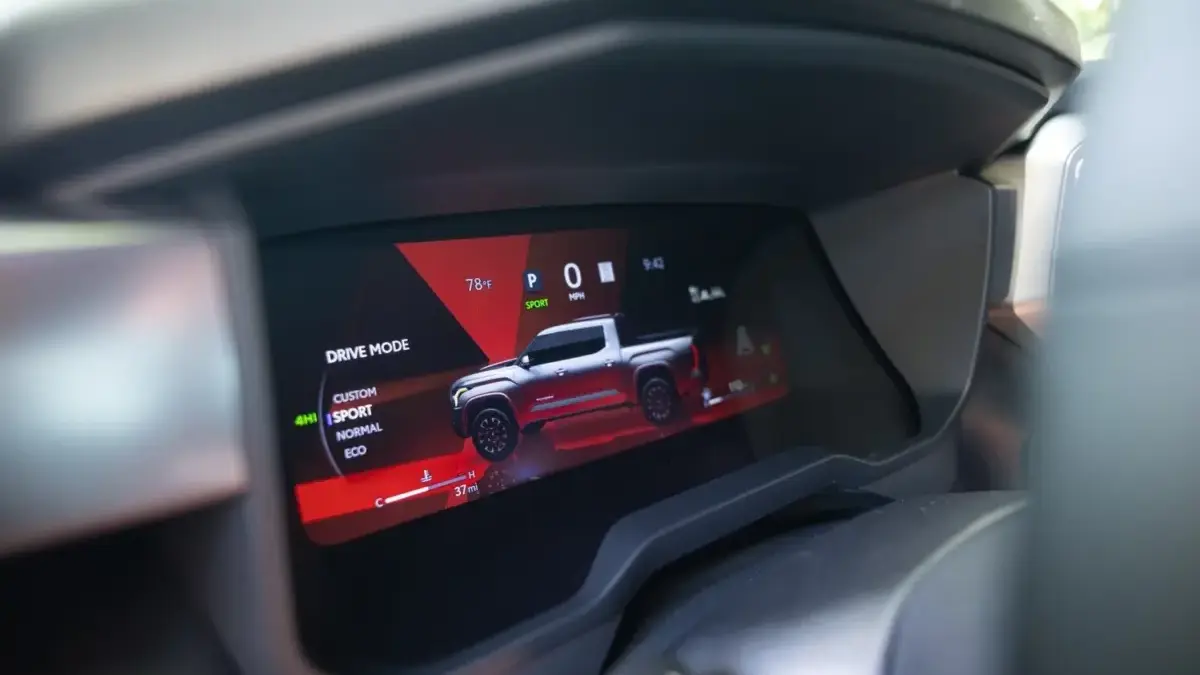
Just as smartphones routinely update themselves overnight to patch security vulnerabilities, optimize battery consumption, or introduce fresh user interfaces, modern motor vehicles have adopted the exact same paradigm. The contemporary car is no longer merely a mechanical assembly of pistons, gears, and hydraulic lines; it is an ultra-sophisticated, mobile computer network where software commands just as much authority as the internal combustion engine or the braking system.
Over-the-Air (OTA) updates—wireless downloads that allow a vehicle to evolve while parked safely in a residential garage or corporate parking lot—have fundamentally altered the lifecycle of the modern automobile. Rather than suffering from immediate depreciation and functional stagnation the moment it rolls off the dealership floor, today’s car is capable of improving its dynamic capabilities, enhancing cabin tech, and patching critical safety flaws years after its initial purchase.
However, this paradigm shift introduces profound complexities. While drivers reap the benefits of continuous enhancements and avoid tedious dealership visits, automakers and regulatory bodies grapple with unprecedented cybersecurity threats, the risk of "brick-frozen" systems, and questions regarding data privacy and long-term technological obsolescence.
Main Facts: The Anatomy of Modern OTA Architecture
To understand the profound impact of OTA updates, one must first dissect how these remote modifications operate under the hood. When a manufacturer develops a new version of its vehicle operating system, the package is uploaded to secure cloud servers. Utilizing the vehicle’s onboard cellular connection (typically 4G LTE or 5G) or a local Wi-Fi network, the car continuously polls for available improvements.
Once the package is fully downloaded, the vehicle’s central computer prompts the owner for installation permission. To prevent catastrophic mid-process failures, the vast majority of original equipment manufacturers (OEMs) enforce strict prerequisites:
- The Vehicle Must Be Parked: Installation is universally locked out while the vehicle is in motion or transmission is engaged.
- Ignition Off: Critical modules cannot be flashed while the car’s primary systems are active.
- State of Charge (SoC): The auxiliary 12-volt battery and high-voltage traction battery must maintain a high state of charge to ensure uninterrupted power delivery throughout the "flashing" sequence.
Updates generally fall into two distinct categories. Partial updates are lightweight, rapid deployments that target discrete infotainment functions, Bluetooth pairing protocols, or navigation map databases. Conversely, deep system updates simultaneously rewrite code across multiple Electronic Control Units (ECUs)—including powertrain controllers, battery management systems (BMS), and Advanced Driver Assistance Systems (ADAS). These deep updates require extended installation windows and, should an error occur, necessitate professional intervention at a specialized service center.
Chronology: From Static Hardware to Fluid Software-Defined Vehicles
The integration of remote software updates into consumer vehicles did not happen overnight. It represents a steady, deliberate evolution driven by the consumer electronics sector and pioneered by Silicon Valley disruptors.
- The Early 2000s (Infotainment Infancy): Luxury and mainstream automakers began utilizing USB drives and CD-ROMs to update GPS navigation maps and fix minor radio bugs. Owners were forced to visit dealerships or manually download files onto physical media.
- 2012 (The Tesla Disruption): Tesla revolutionized the industry by deploying comprehensive OTA updates that extended far beyond infotainment. For the first time, vehicle suspension firmness, regenerative braking profiles, and powertrain outputs could be modified wirelessly.
- The Mid-2010s (Regulatory Wake-Up Calls): High-profile security demonstrations—most notably the 2015 remote hacking of a Jeep Cherokee by cybersecurity researchers—proved that connected vehicles were vulnerable to malicious intrusion. This catalyzed a global push toward secure over-the-air communication channels.
- 2020–Present (Mainstream Adoption and Regulation): Legacy automotive giants (including Volkswagen, Ford, BMW, and Toyota) restructured their electrical architectures from decentralized networks of isolated microcontrollers into centralized domain controllers. Concurrently, international governing bodies introduced stringent regulatory frameworks, such as UNECE Regulations R155 (Cybersecurity) and R156 (Software Update Management System), making rigorous testing mandatory for all connected vehicles.
Supporting Data: Performance Amplification and Economic Efficiency
The most fascinating aspect of OTA technology is its capacity to alter the fundamental physical behavior of a vehicle. In the realm of electric vehicles (EVs), an optimized OTA update can radically reshape thermal management protocols, directly translating into extended driving ranges and faster peak charging speeds.
Furthermore, performance figures are no longer strictly bound to factory specifications. Prominent manufacturers have successfully deployed software algorithms that reduce 0-to-100 km/h acceleration times or increase torque output dynamically, demonstrating that mechanical hardware is often intentionally detuned to be unlocked later via software tiers or performance packages.
Economic and Operational Impact
- Reduced Warranty and Recall Costs: For manufacturers, issuing a digital patch is exponentially cheaper than executing a physical recall campaign that requires mailing physical notices, allocating dealership technician hours, and processing millions of warranty claims.
- Downtime Minimization: Consumers save countless hours by bypassing routine service appointments for minor electronic glitches.
- The Feature-on-Demand Economy: OTAs enable subscription models, allowing owners to remotely activate heated seats, autonomous driving capabilities, or enhanced performance modes long after purchasing the vehicle.
Official Responses and Regulatory Standards
The rapid proliferation of connected vehicles has forced governments and international organizations to step in, shifting the automotive industry from a self-regulated domain to a heavily monitored digital sector.
The United Nations Economic Commission for Europe (UNECE) established two landmark regulations that now dictate how global automakers handle digital infrastructure:
- UNECE Regulation R155 (Cybersecurity Management): Requires manufacturers to prove they have robust risk management systems in place to identify, analyze, and mitigate cyber threats across a vehicle’s entire lifecycle.
- UNECE Regulation R156 (Software Update Management System – SUMS): Mandates that automakers maintain rigorous traceability of all software versions installed on every vehicle, ensuring that updates cannot compromise vehicle safety, type approval, or emissions compliance.
Major automotive groups have responded by establishing dedicated Cyber Security Operations Centers (CSOCs) that monitor vehicle fleets 24/7, deploying rapid patch protocols the moment an operational vulnerability is detected in the wild.
Implications: Risks, Privacy Concerns, and Technological Obsolescence
Despite the undeniable convenience and performance benefits, the transition to software-defined vehicles is fraught with hidden dangers, ethical dilemmas, and structural vulnerabilities.
1. Cybersecurity Threats and Malicious Infiltration
Connecting a multi-ton vehicle to the internet creates an attack vector for malicious actors. If a manufacturer fails to implement end-to-end encryption, digital signatures, and multi-factor authentication, hackers could theoretically intercept update packages, inject malicious code, or compromise safety-critical systems like steering and braking.
2. System Stability and "Bricking"
An interruption during a deep ECU flash—such as a sudden loss of auxiliary battery power or a corrupt data packet—can leave a vehicle completely inoperable, a phenomenon known in tech circles as "bricking." Real-world incidents involving major manufacturers have seen vehicles rendered useless in customer driveways, requiring flatbed towing to a dealership for manual hard-resetting.
3. Data Privacy Dilemmas
To deliver personalized software updates and diagnostic insights, connected cars continuously harvest massive amounts of telemetry data: driving styles, precise geolocation coordinates, cabin audio, and component wear metrics. While manufacturers cite product improvement as the justification, this practice raises severe privacy concerns regarding who holds ownership of this data and how securely it is stored.
4. Technological Obsolescence and the Digital Divide
Just as an old smartphone eventually stops receiving operating system updates, modern cars face a similar fate. If a manufacturer decides to sunset support for an aging vehicle architecture—or if the onboard processor lacks the computational headroom required for next-generation software—the car enters a state of technological stagnation. This creates an unyielding digital divide between legacy models and newly manufactured fleets.
Best Practices for a Secure OTA Experience
To navigate this new digital frontier without risking mechanical failure or data exposure, vehicle owners should adhere to a few foundational maintenance principles:
- Stable Environments: Always perform deep system updates while parked at home with a reliable Wi-Fi network and a fully charged 12V battery.
- Never Ignore Safety Patches: Treat safety-critical software updates with the same urgency as mechanical fluid changes; ignoring them can leave safety systems compromised.
- Review Privacy Settings: Take the time to audit the vehicle’s infotainment privacy menus, opting out of non-essential data collection where regional regulations permit.
Ultimately, the evolution toward the software-defined car is irreversible. Keeping a vehicle’s operating system up to date has become just as vital to modern automotive maintenance as checking tire pressures or replacing engine oil—ensuring that your vehicle remains safer, more efficient, and progressively more capable with every passing mile.

Leave a Reply