


WASHINGTON, D.C. — In an era defined by rapid habitat fragmentation, accelerating climate change, and declining biodiversity, academic institutions are increasingly stepping up as frontline sanctuaries for local flora and fauna. Bridging the gap between higher education and large-scale environmental stewardship, the National Wildlife Federation (NWF), in dynamic partnership with the iconic television program Mutual of Omaha’s Wild Kingdom, has officially unveiled the selected projects for its prestigious 2026 grant cycle.
This year’s cohort of grants—awarding up to $8,500 per institution—directs targeted financial support toward four distinct American universities. The initiatives span from the restoration of fragile pine forests in the American South and high-tech physiological research on reptiles in the desert Southwest, to urban pollinator restoration in Appalachia and advanced aquatic biology infrastructure for vulnerable amphibians in Kentucky.
By combining rigorous academic research with hands-on, community-driven habitat restoration, the Wild Kingdom college grants seek not only to alter the ecological trajectories of vulnerable species, but also to train the next generation of conservation scientists.
Main Facts: The 2026 Wild Kingdom University Grants
The intersection of academic campuses and wildlife conservation holds immense potential. Universities often manage substantial acreage, ranging from manicured grounds to sprawling, undeveloped natural tracts that serve as vital ecological corridors for regional wildlife. Recognizing this, the NWF and Mutual of Omaha’s Wild Kingdom designed their collaborative grant program to alleviate the financial barriers that often stall localized conservation works.
The selected projects for the 2026 funding cycle represent a diverse cross-section of American ecosystems and scientific methodologies:
- Fort Valley State University (Georgia): Utilizing funds to restore 100 acres of endangered longleaf pine forest on campus, creating an outdoor classroom and expanding native wildlife corridors.
- University of Texas at El Paso (Texas): Funding high-tech behavioral and physiological research on the eastern black-tailed rattlesnake within the Franklin Mountains, examining the impacts of human disturbance.
- West Virginia University (Morgantown, Virginia): Financing the complete overhaul and greening of a 362-square-meter rooftop terrace into a native-plant sanctuary specifically tailored for monarch butterflies and the critically declining rusty patched bumblebee.
- Thomas More University (Kentucky): Modernizing campus biology laboratories with specialized life-support infrastructure, quarantine tanks, and incubators to safeguard and breed the eastern hellbender salamander—North America’s largest amphibian.
Each institution approaches conservation through a different lens—ranging from forestry and entomology to herpetology and behavioral ecology—yet all share a unified goal: mitigating human impacts on fragile natural systems.
Chronology: The Evolution of Campus-Based Conservation
The partnership between the NWF and Mutual of Omaha’s Wild Kingdom builds upon a rich, multi-decade history of public wildlife education and direct action. Wild Kingdom, originally hosted by legendary zoologist Marlin Perkins, has spent generations bringing the realities of wildlife management into living rooms across America. In recent years, the program’s modern iteration has pivoted heavily toward empowering grassroots and institutional efforts that bridge public awareness with tangible fieldwork.
The Roadmap of the 2026 Initiative:
- Late 2025: Universities across the United States submit innovative proposal outlines focusing on campus habitat restoration, endangered species protection, and field research.
- Early 2026: A joint panel of experts from the NWF and Wild Kingdom evaluates applicants based on ecological impact, educational value, and long-term sustainability.
- Current Phase (Mid-2026): Project funding is disbursed, allowing institutions to break ground on infrastructure improvements, acquire tracking technology, and deploy restoration teams.
- 2027 and Beyond: Scheduled evaluation periods to monitor the ecological milestones of the funded projects, measuring increases in native species counts, successful breeding cycles, and student engagement metrics.
Deep Dive: The Four Pillar Projects of 2026
1. Restoring the Longleaf Pine Savannas at Fort Valley State University
Occupying the second-largest land footprint of any university in the state of Georgia, Fort Valley State University is uniquely positioned to act as a regional ecological anchor. Historically, the American Southeast was dominated by vast, biodiverse longleaf pine ecosystems that supported hundreds of native plant and animal species. Today, less than 5% of that original old-growth ecosystem remains.
With its share of the Wild Kingdom grant, Fort Valley State will spearhead the active restoration of 100 acres of longleaf pine forest situated directly on campus grounds.
- Ecological Impact: Reintroducing native longleaf pines and restoring the understory will re-establish habitats for numerous endemic species, bolstering local biodiversity.
- Educational Integration: Project leaders emphasize that the recovered forest will serve as a living, breathing "outdoor classroom" for undergraduate students, fostering a direct tactile and emotional connection between the student body and regional conservation challenges.
2. High-Tech Behavioral Ecology in the Franklin Mountains
While habitat restoration forms the backbone of many conservation efforts, understanding how wildlife reacts to the constant pressures of human encroachment is equally vital. At the University of Texas at El Paso (UTEP), researchers are diving deep into the hidden lives of one of the desert’s most misunderstood residents: the eastern black-tailed rattlesnake.
The UTEP research team is investigating how environmental stressors and human-induced disturbances alter the physiology and behavioral patterns of these reptiles.
- The Technology: Grant funds will be deployed to purchase advanced field equipment, including high-precision GPS telemetry trackers, biological data-logging sensors, and remote signal retransmission stations.
- Field Application: Deployed within the rugged terrain of the Franklin Mountains State Park, these devices will allow scientists to monitor snake movement, thermoregulation, and stress responses across different seasonal shifts and varying degrees of human interaction.
3. Urban Pollinator Refuges atop West Virginia University
In Morgantown, West Virginia University (WVU) is looking upward to solve a creeping crisis: the dramatic decline of vital insect pollinators, including the monarch butterfly and the critically endangered rusty patched bumblebee.
Urbanization and industrial development have systematically paved over the native forage grounds that these insects rely upon for migration and feeding. WVU’s solution is both innovative and space-efficient.
- The Green Roof Initiative: The university will completely renovate a sprawling 362-square-meter rooftop terrace located adjacent to its Department of Agricultural Sciences.
- Flora Selection: The barren roof will be transformed into a lush, elevated ecosystem planted exclusively with native perennial species known to attract and sustain pollinators—including aromatic asters, native heathers, and lanceleaf coreopsis. This serves as an urban stepping stone, helping migratory species bridge fragmented habitats.
4. Rescuing North America’s Goliath Salamander in Kentucky
Aquatic ecosystems face some of the most severe degradation pressures in the world. In Kentucky, Thomas More University is taking bold steps to prevent the silent extinction of the eastern hellbender, North America’s largest salamander species.
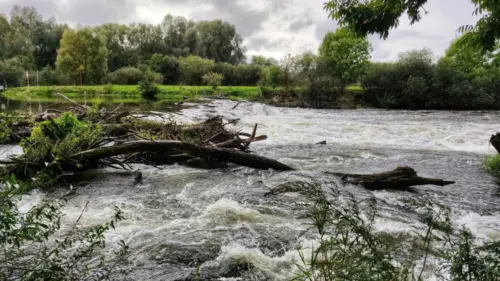
Listed as a species of concern and facing localized endangerment by the U.S. Forest Service, the eastern hellbender requires pristine, highly oxygenated fast-flowing streams to thrive—conditions that have been severely compromised by agricultural runoff, siltation, and damming.
- Laboratory Modernization: Thomas More University will upgrade its campus biology laboratories to build a sophisticated, closed-loop life-support system specifically calibrated for amphibian husbandry.
- Breeding and Rearing: The new infrastructure will feature specialized quarantine tanks, auxiliary water-treatment systems, and precise environmental incubators. These additions will allow researchers to safely support the delicate reproductive cycle of the hellbender, care for sensitive egg clutches, and head-start juveniles before safely releasing them back into wild river systems.
Supporting Data and Environmental Metrics
The urgency driving these four distinct projects is underscored by mounting environmental data regarding North American biodiversity loss:
- Habitat Fragmentation: According to recent ecological assessments, over 40% of terrestrial wildlife habitats in the United States have been severely altered or fragmented by agricultural and urban expansion.
- Pollinator Collapse: Populations of the monarch butterfly (Danaus plexippus) have experienced historic lows over the past two decades, while the rusty patched bumblebee (Bombus affinis) has lost more of its historic range due to pesticide use and habitat loss, prompting its classification under the Endangered Species Act.
- Amphibian Vulnerability: Freshwater ecosystems support nearly 10% of all animal species despite occupying less than 1% of Earth’s surface. Yet, freshwater species—including apex aquatic salamanders like the hellbender—are going extinct at a rate four to six times faster than terrestrial animals.
By directing funds directly to universities, the NWF leverages existing institutional infrastructure, academic research talent, and student volunteer bases to maximize the return on investment for every conservation dollar spent.
Official Responses and Perspectives
Leaders from both the National Wildlife Federation and the academic institutions involved have underscored the unique collaborative nature of the Wild Kingdom grants, emphasizing that grassroots and academic partnerships are the bedrock of modern conservation success.
"Our universities are not isolated bubbles; they are integral parts of the local ecosystems in which they reside," noted representatives from the National Wildlife Federation. "By empowering these institutions with the resources they need—whether it is restoring 100 acres of pine forest, building high-altitude pollinator roofs, or deploying telemetry gear in the desert—we are planting the seeds for long-term ecological resilience across the United States."
Program coordinators for Mutual of Omaha’s Wild Kingdom echoed these sentiments, highlighting the vital role of education in shifting cultural attitudes toward wildlife:
"For decades, Wild Kingdom has shown audiences the raw wonder of the natural world. But watching wildlife on a screen is only the first step. Through these grants, we are helping students transition from passive viewers to active protectors of the environment. The work happening at Fort Valley State, UTEP, West Virginia University, and Thomas More University proves that local action can generate national ripples of change."
Implications: A Blueprint for Future Conservation
The 2026 Wild Kingdom university grants offer more than just localized improvements—they serve as a scalable, highly replicable blueprint for how higher education can directly combat the global extinction crisis.
As climate patterns shift and human populations continue to grow, traditional protected areas alone will not be enough to preserve biodiversity. Wildlife corridors must weave through our agricultural lands, cities, and suburban campuses. By turning college grounds into functional habitats, outdoor classrooms, and high-tech research hubs, these four universities are demonstrating that conservation is not just something that happens in distant, untouched wildernesses—it is something that can, and must, happen right in our own backyards.
To stay informed on climate science, energy analysis, and global nature conservation news, subscribe to weekly updates from environmental networks tracking these critical developments.

Leave a Reply