

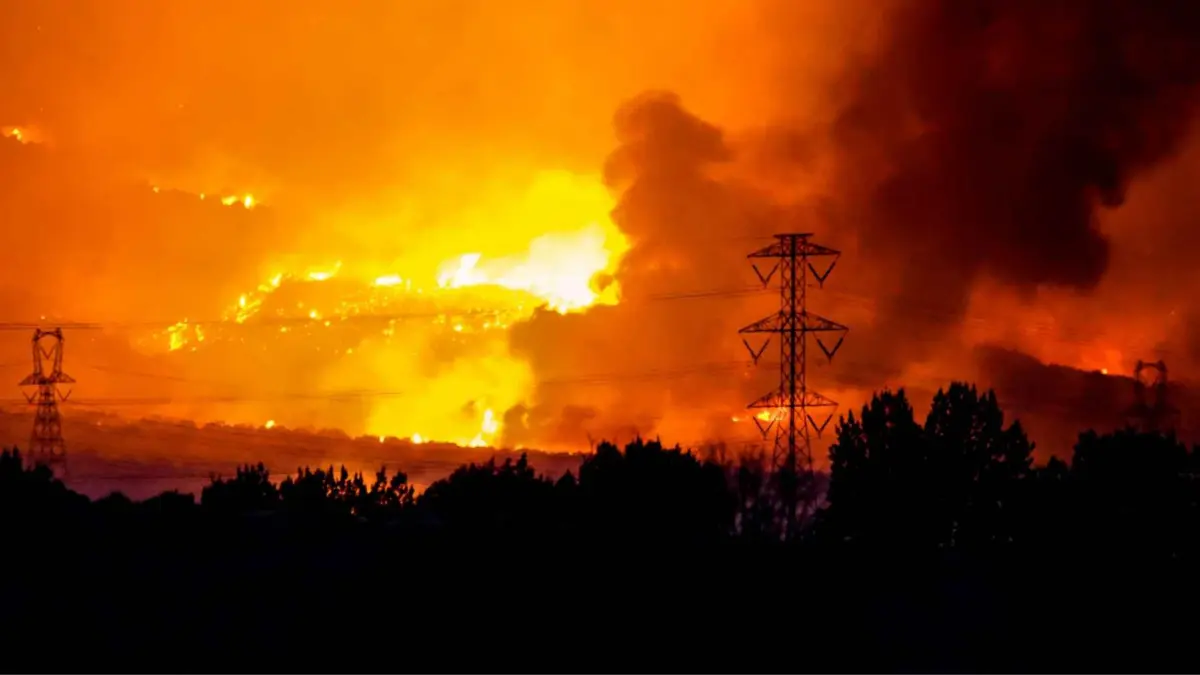
LOS ANGELES, CALIFORNIA — Southern California is once again locked in a fierce battle against nature as a dangerous convergence of extreme weather events threatens the region. Following the rapid outbreak of new wildfires sparked by brush burning near Santa Clarita, Governor Gavin Newsom has officially declared a state of emergency.
The crisis is compounded by an exceptionally volatile wildfire season fueled by prolonged droughts, severe heatwaves, and critical water shortages. Simultaneously, the southern portions of the Golden State are grappling with flash floods and severe property damage driven by the remnants of a tropical storm. As emergency response teams stretch thin across multiple fronts, state and local authorities are urging residents to remain vigilant, heed evacuation orders, and participate actively in wildfire prevention initiatives.
Main Facts: The Escalating Crisis in Los Angeles County
The immediate catalyst for the state of emergency is the sudden eruption of the "Bike Fire," which ignited in the hills just outside Santa Clarita. According to reports from the Los Angeles Times, thick columns of smoke became visible over the local hillsides around 1:30 p.m. Powered by dry brush, high temperatures, and shifting winds, the aggressive blaze tore through 100 acres of land in a matter of minutes.
Recognizing the catastrophic potential of the fire—particularly given its proximity to residential zones and critical infrastructure—local officials declared a state of emergency within just one hour of the initial ignition.
- The Epicenter: Santa Clarita Valley, near the outskirts of Los Angeles.
- Rapid Spread: The Bike Fire quickly outpaced initial containment efforts, consuming more than 130 acres by late afternoon.
- Simultaneous Threats: The state is fighting multiple major blazes, including the persistent Bouquet Fire, which has been burning for over a week across the Santa Clarita Valley, the Angeles National Forest, Bouquet Canyon, and the Interstate 5 corridor.
- The Weather Paradox: While wildfire threats escalate in the north and west of the greater Los Angeles area, Southern California is simultaneously battling torrential downpours and flooding caused by the remnants of Tropical Storm Rachel.
Chronology: How the Emergency Unfolded
Phase One: The Prolonged Threat of the Bouquet Fire
For over a week, firefighting agencies in Los Angeles County have been locked in a grueling war of attrition against the Bouquet Fire. This stubborn blaze established a stronghold across rugged terrain, threatening the Angeles National Forest and vital transportation arteries like the Interstate 5 corridor. The fire severely strained regional firefighting capabilities, serving as a grim reminder of the region’s vulnerability heading into the peak of summer.
Phase Two: Sunday Afternoon — The Birth of the Bike Fire
On Sunday, conditions deteriorated rapidly. At approximately 1:30 p.m., new ignition points—linked preliminarily to the illegal or accidental burning of malezales (brush/weeds)—triggered the outbreak of the Bike Fire in the hills surrounding Santa Clarita. The fire capitalized on extremely dry vegetation and local wind patterns, exploding across 100 acres almost instantly.
Phase Three: Emergency Declaration and Immediate Mobilization
Within sixty minutes of the first emergency call, local authorities escalated the response, prompting Governor Gavin Newsom’s office to step in with a formal state of emergency declaration. Evacuation warnings were instantly upgraded to mandatory orders for high-risk neighborhoods.
Phase Four: Aerial and Ground Deployments Face Resistance
As night approached, the Los Angeles County Fire Department and the U.S. Forest Service flooded the area with ground crews, heavy-duty water tenders, and specialized aerial firefighting aircraft. Despite dropping thousands of gallons of water and retardant, erratic winds and heavy brush kept the fire largely uncontained as night fell, pushing the total burned acreage past the 130-acre threshold.
Supporting Data: Climate Stressors and Wildfire Statistics
The severity of the current crisis is not an isolated anomaly, but rather the manifestation of systemic environmental pressures that have plagued California for years.
The Fuel Load and Climate Factors
California’s summers have evolved into protracted, high-risk periods characterized by:
- Megadrought Conditions: Years of below-average precipitation have left deep-soil moisture depleted, turning regional flora into ideal kindling.
- Extreme Heatwaves: Record-breaking temperatures bake the landscape daily, lowering relative humidity and accelerating the evaporation of any remaining water reserves.
- Water Scarcity: Municipalities and agricultural sectors face stringent water allocations, occasionally complicating the rapid sourcing of water for massive aerial drops.
Historical Context
Last year’s fire season left deep scars across the state, destroying thousands of residential properties and scorching hundreds of thousands of acres of green spaces. Los Angeles and its surrounding valleys bore the brunt of those losses. Officials note that the current fuel loads in 2024 mirror or exceed those of previous catastrophic years, heightening the urgency behind the state’s defensive posture.
Official Responses and Mitigation Campaigns
In response to the escalating danger, the state government has mobilized on both operational and educational fronts.
Government Actions and Evacuation Protocols
Governor Gavin Newsom’s administration has assured residents that all state-level resources—ranging from California National Guard assets to specialized CAL FIRE strike teams—are on standby or actively deployed.
The Governor’s Office issued a clear directive to the public:
"We ask everyone to take prevention measures seriously, because with our wildfire prevention and response system, we can keep our community safe."
Authorities have reiterated that life safety remains the absolute priority. Mandatory evacuation orders require immediate compliance. Residents living in vulnerable canyon and hillside communities have been urged to monitor emergency broadcast systems, pack emergency go-bags, and evacuate at the first sign of official notification.
The "One Less Spark" Campaign
Recognizing that a vast majority of California wildfires are human-caused—ranging from faulty electrical equipment to illegal or careless brush burning—Governor Newsom launched the statewide "One Less Spark" campaign.
This public awareness initiative targets everyday behaviors that can accidentally trigger a catastrophe. By educating citizens on proper equipment usage, landscaping clearance (defensible space), and the absolute prohibition of open burning during high-risk red flag warnings, the state hopes to significantly reduce human-ignited blazes compared to previous seasons.
Implications: A Dual Threat of Fire and Water
The unfolding crisis highlights a deeply ironic and hazardous meteorological phenomenon currently gripping California: the state is being hammered simultaneously by extreme fire and extreme water.
The Tropical Storm Factor
While Northern and Central Los Angeles County counties fight the Bike and Bouquet fires, the southern reaches of the state are dealing with the punishing aftermath of tropical storm remnants associated with former Tropical Storm Rachel.
- Infrastructure Damage: Heavy rains and flash flooding have battered coastal communities such as Newport Beach, damaging homes and commercial properties.
- Coachella Valley Impact: Significant flooding has also disrupted parts of the Coachella Valley, stranding motorists and overwhelming local drainage systems.
A Lack of Relief for Firefighters
Ordinarily, significant precipitation systems offer natural containment assistance to firefighters battling active blazes. However, data from the National Weather Service confirms that these storm systems and their heavy rainfall are tracking far to the south of Santa Clarita and the greater Los Angeles basin. Consequently, the rain will provide zero relief to the crews battling the Bike Fire, leaving firefighters entirely reliant on mechanical suppression, air support, and natural firebreaks.
Long-Term Outlook
As climate volatility continues to redefine California’s seasons, the events in Santa Clarita serve as a sobering reminder of the new normal. The intersection of human activity, urban sprawl into high-risk wildland-urban interfaces (WUI), and increasingly erratic weather patterns means that emergency response agencies must remain permanently mobilized.
For the residents of Los Angeles County, the days ahead will require absolute adherence to safety protocols, constant monitoring of local advisories, and a collective commitment to wildfire prevention as the state navigates the most dangerous months of the year.



Leave a Reply