


Main Facts
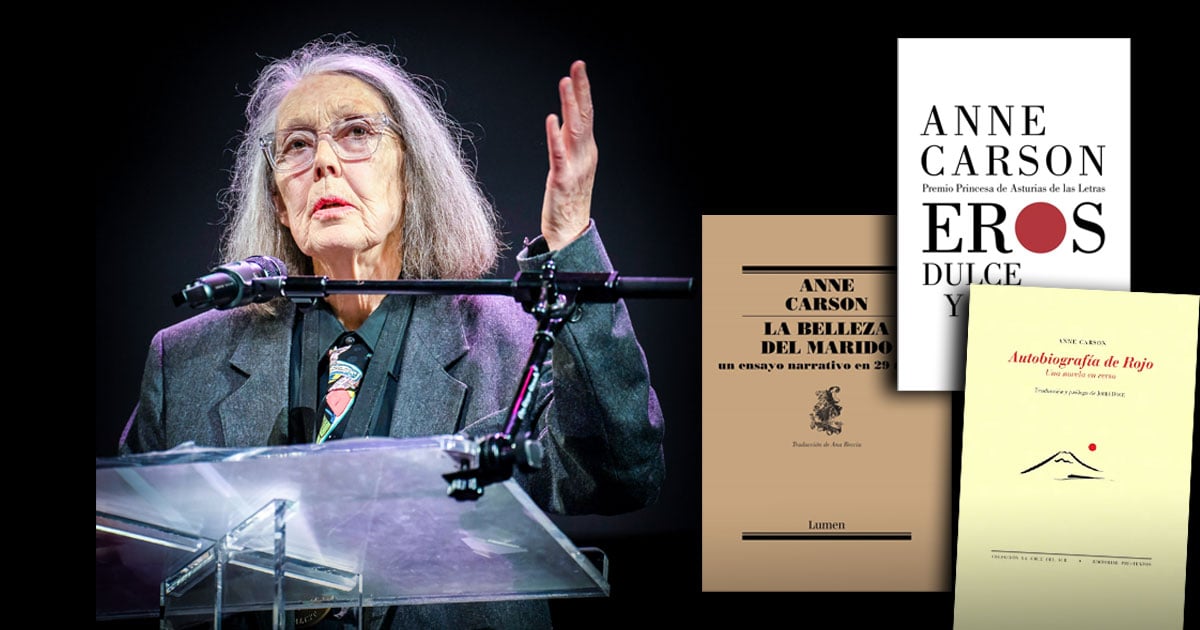
On October 8, 2026, the Swedish Academy awarded the Nobel Prize in Literature to Canadian poet, essayist, and classicist Anne Carson. At 75 years old, Carson became only the 19th woman to receive the prestigious distinction in its 123-year history. True to her iconoclastic reputation, the author was not waiting by the phone. At the exact moment the Academy attempted to break the news, Carson was in her home in Reykjavik, Iceland, quietly drinking tea, eating biscuits, reading the London Review of Books, and—fittingly—sweeping the floor.
When the telephone rang, she did what she routinely does: she ignored it and turned it off. It required the gentle persistence of her husband, Robert Currie, to convince her to return the call. When she finally connected with Stockholm, Carson responded with characteristic understatement, later remarking to those who informed her of the win that "everyone is crazy" for selecting her.
The Nobel Committee recognized Carson for an audacious, genre-defying body of work that continuously bridges the gap between classical antiquity and contemporary human experience. The award carries a cash prize of 11 million Swedish kronor (approximately $1.1 million USD), a sum Carson immediately indicated she plans to share with friends in need and humanitarian organizations like Médecins Sans Frontières (Doctors Without Borders). Rather than basking in the immediate media blitz, Carson briefly acknowledged the commercial boon—joking that "a sticker on the cover helps sell books"—before turning off her phone once more and walking out into the Icelandic woods with her husband.
Chronology: From a Toronto Classroom to the Icelandic Wind
The Early Years and the Discovery of Greek
Born in Toronto, Canada, in 1950, Carson’s literary awakening was both precocious and unconventional. During her adolescence at a school in Port Hope, Ontario, she stumbled upon a bilingual edition of the archaic Greek poet Sappho at the age of fifteen. Captivated by the fragmented, passionate, and centuries-surviving verses, Carson sought out a way to understand the original language. A year later, she successfully convinced her Latin teacher, Alice Cowan, to teach her ancient Greek during their lunch breaks.
This linguistic discovery laid the foundation for her intellectual trajectory. Carson went on to study classical literature at the University of Toronto, eventually earning a PhD and building a distinguished academic career that took her to classrooms at McGill University, Princeton, and New York University. Yet, her scholarly rigor never stifled her artistic output; rather, it fueled a radical approach to writing that synthesized poetry, translation, visual art, essay, and performance.
Milestones in an Irreverent Oeuvre
Throughout her career, Carson has consistently dismantled traditional genre boundaries:

- 1998 (Autobiography of Red): Carson published her breakthrough work, a novel-in-verse that reimagines the ancient Greek myth of Geryon—a red-winged monster slain by Hercules—transforming him into a contemporary, sensitive young boy navigating love and self-discovery.
- 2010 (Nox): Following the sudden death of her estranged brother, Carson produced an extraordinary book-object. Styled as a facsimile of a sentimental scrapbook, Nox combines torn pages, photographs, translations of Latin elegies, dictionary entries, and handwritten memories, capturing the impossibility of fully grieving or knowing the deceased.
- October 8, 2026: While listening to the wind in Reykjavik, Carson is announced as the recipient of the Nobel Prize in Literature, cementing her status as a towering figure in contemporary global letters.
Supporting Data and Context
The Gender Gap at the Nobel Prize
Carson’s victory highlights a long-standing historical imbalance within the Nobel Prize in Literature. Since the inception of the award in 1901, the Swedish Academy has predominantly honored male authors. With Carson’s inclusion as the 19th female laureate, women account for roughly 15% of all literature laureates—a statistic that underscores how institutional recognition has historically sidelined women writers, even as contemporary committees work to rectify the gap.
Breakdown of the Nobel Honor
- Year of Award: 2026
- Age at Recognition: 75 years old
- Monetary Award: 11 million SEK (approx. $1.1 million USD)
- Designation: 19th female laureate in 123 editions of the prize
- Residence at Time of Announcement: Reykjavik, Iceland
Philanthropic Intentions
True to her lifelong ethos of artistic and personal modesty, Carson’s first impulse upon learning of the multimillion-dollar prize was not personal acquisition. In interviews following the announcement, she noted that a close friend had long been in housing distress and would receive assistance. Furthermore, she and her husband reaffirmed their ongoing commitment to philanthropic entities, specifically highlighting Médecins Sans Frontières for its frontline medical relief in war zones and humanitarian crises.
Official Responses and Perspectives
The Swedish Academy’s View
Ingrid Carlberg, Permanent Secretary of the Swedish Academy, noted the striking serendipity of the moment she reached Carson in Iceland. According to Carlberg, when the call finally went through, Carson was simply listening to the wind outside her window—a detail that resonated deeply with the committee members, who view Carson’s verse as a meditative space existing somewhere between the chaotic noise of modern civilization and an inner, unyielding quietude.
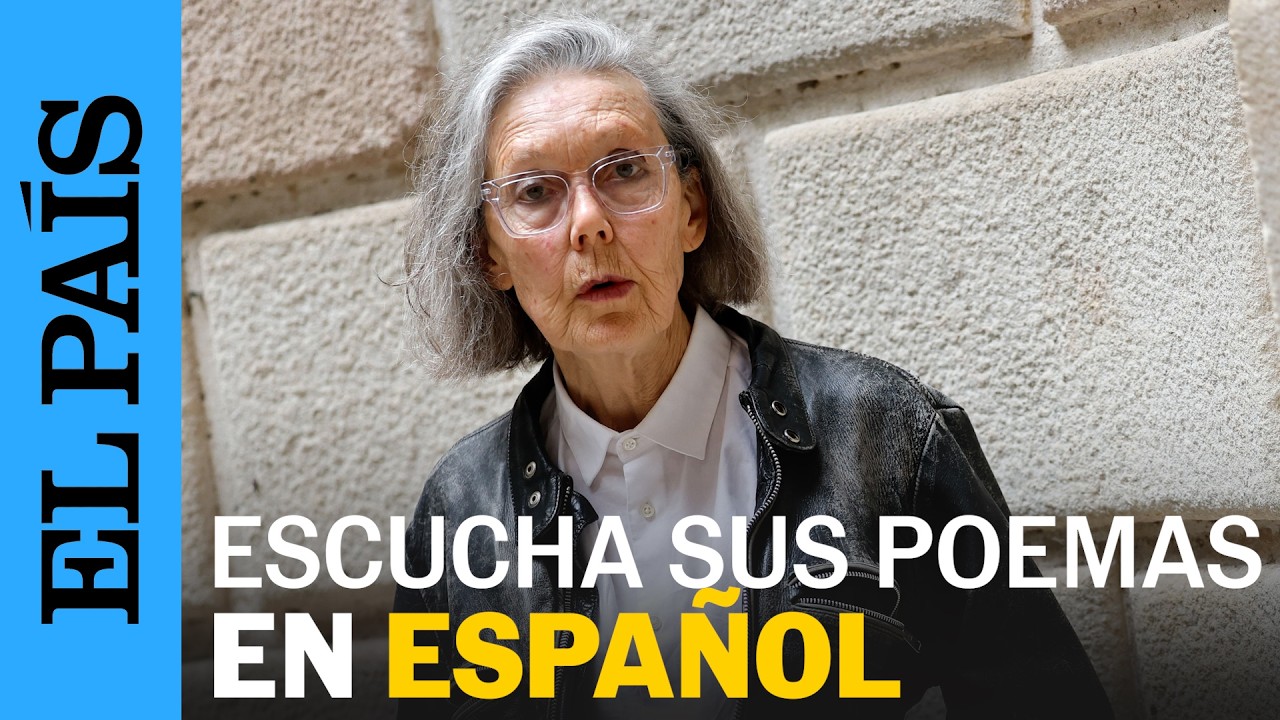
The Academy’s citation praised Carson for her ability to make the ancient world speak directly to modern anxieties, praising her "erudite reinventions" and her refusal to settle into comfortable literary categories.
Carson’s Own Reflections
Carson has notoriously maintained a low profile throughout her career, shunning the relentless self-promotion expected of modern literary figures. Her reaction to the Nobel Prize was characteristically dry and self-effacing. When informed that the selection committee considered her a literary titan, she reportedly quipped that "everyone is crazy" for choosing her.
In past lectures and essays, Carson has frequently offered a simple, disruptive piece of life and writing advice: "Start in the middle." For Carson, writing and living are inextricably linked processes that require no exhaustive blueprint or grandiose preamble. One simply finds the emotional or intellectual center of a problem and steps inside, trusting that meaning will emerge in transit.

Implications: The Legacy of an Unclassifiable Voice
Redefining Contemporary Poetics
The 2026 Nobel Prize awarded to Anne Carson carries profound implications for the future of global literature. By honoring a writer who effortlessly slips between translation, classical scholarship, visual collage, and poetic narrative, the Swedish Academy has signaled a shift away from traditional, linear storytelling toward hybrid, exploratory forms. Carson proves that poetry does not need to occupy a safe, marginalized corner of literature; it can be a battering ram, an archive, an autobiography, and a classical excavation all at once.
The Triumph of Anonymity in an Age of Hyper-Exposure
In an era defined by constant digital connectivity, social media branding, and 24-hour news cycles, Anne Carson’s reaction to winning the world’s most coveted literary prize serves as a radical manifesto for privacy. By turning off her phone, sweeping her floor, and walking into the Icelandic woods, she reclaimed a fundamental right that modern celebrity routinely strips away: the right to disappear into one’s own life.
As publishers scramble to print new editions adorned with the coveted Nobel laureate sticker, the woman behind the words remains unbothered. Whether contemplating a mythological red monster, mourning a lost brother, or simply listening to the North Atlantic gale rattle her windows, Anne Carson reminds us that true art is born not in the noisy spotlight of public adulation, but in the quiet, focused spaces where the human soul speaks to itself.




Leave a Reply