

By Global Science and Workplace Correspondent
For generations, modern corporate culture has harbored an implicit, yet pervasive, anxiety regarding aging. As we cross various thresholds—our late thirties, our mid-forties, and beyond—a lingering cultural narrative whispers that our professional faculties are inherently on the decline. We internalize the fear that our best problem-solving days are behind us, that our capacity to learn is slowing down, and that the modern workplace belongs exclusively to the digital natives and twenty-something innovators.
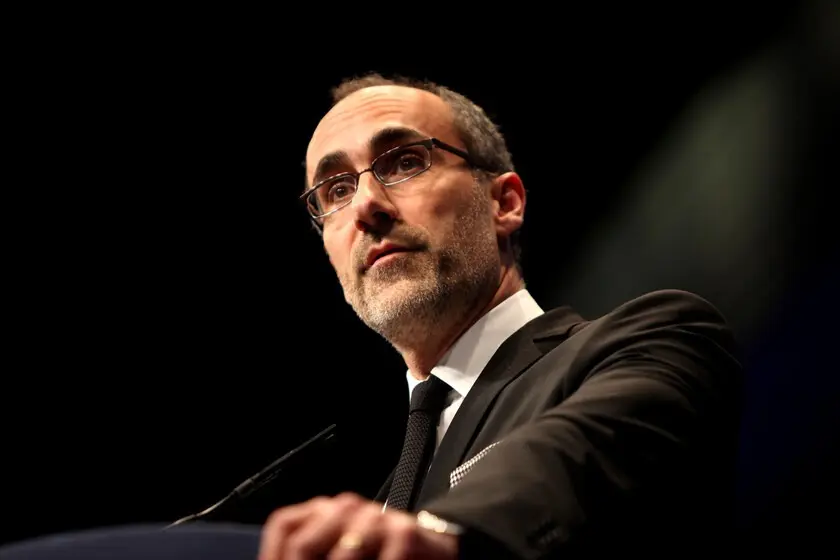
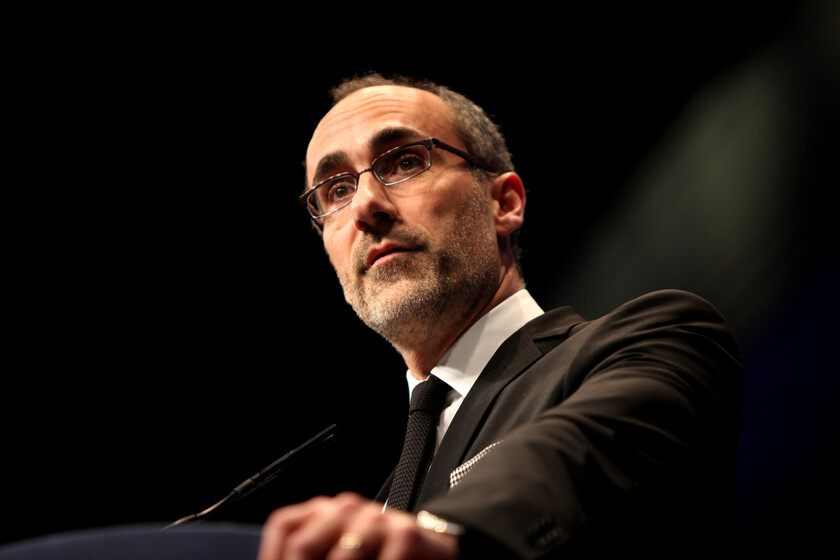
However, Arthur C. Brooks, a professor at the Harvard Kennedy School and the Harvard Business School, urges us to pivot away from this deficit-based mindset. According to Brooks, we do not simply lose our intelligence as we age; rather, the very type of intelligence in which we excel undergoes a profound, natural transformation.
By understanding this cognitive shift, professionals can stop fighting a losing battle against their fading youth and instead lean into the formidable strengths that come with maturity. This evolutionary reframing is not merely a philosophical comfort; it is a strategic roadmap for navigating a sustainable, fulfilling career that spans decades rather than years.
Main Facts: The Dual Engine of Human Intelligence
The core of Brooks’ thesis rests upon a foundational, classical model in psychology: the distinction between fluid intelligence and crystallized intelligence, originally formulated by British psychologist Raymond Cattell.
Fluid Intelligence: The Spark of Youth
Fluid intelligence represents our raw computational power—the cognitive engine that allows us to reason, adapt, and solve novel problems with speed and agility.
"People under the age of about 40 have a lot of what’s called fluid intelligence," Brooks explains. "It’s working memory, the ability to concentrate, problem-solving."
This form of intelligence is characterized by brute-force mental processing. It requires minimal accumulated background data and relies instead on immediate focus and cognitive elasticity. It is the raw material that makes younger individuals exceptionally lethal in executing individualized, highly technical tasks requiring rapid execution and innovative bursts.
Crystallized Intelligence: The Library of Experience
In stark contrast, crystallized intelligence is the art of leveraging what we already know. It is the distillation of knowledge, wisdom, and pattern recognition accumulated over a lifetime.
Crystallized intelligence does not materialize overnight at age 40; rather, it is methodically constructed from childhood onward. However, it truly begins to yield massive dividends during middle age and beyond. Brooks illustrates this phenomenon through a vivid metaphor: having an "enormous library in your head" and, crucially, knowing precisely how, when, and why to pull the right volume from the shelf.
Chronology: The Trajectory of a Career and Cognitive Shift
To understand how these two forms of intelligence dictate our professional lives, we must examine the timeline of our cognitive evolution. The journey from youthful innovation to seasoned leadership is mapped out across distinct biological and professional milestones.
Phase 1: The Ascent of Fluid Intelligence (Ages 18–39)
For decades, researchers and thinkers have attempted to pinpoint the exact window in which fluid intelligence peaks. In a widely read 2019 essay for The Atlantic, titled "Your Professional Decline Is Coming (Much) Sooner Than You Think," Brooks initially suggested that professional decline sets in rapidly during the early thirties. In subsequent discussions—including his 2022 book From Strength to Strength and a viral Instagram videopodcast—he adjusted this benchmark slightly, noting that fluid intelligence typically reaches its zenith around age 39.
During this window, professional life often feels like a frictionless ascent. Complex tasks are managed with high processing speed, and relentless hours of deep concentration yield immediate results. However, as this peak approaches, a distinct friction begins to emerge. As Brooks describes it: "What used to be easy is now hard, what used to be hard now feels impossible, and you get tired of not making progress."
Phase 2: The Mid-Career Crisis and Burnout (Ages 40–50)
This cognitive inflection point—where fluid intelligence begins its inevitable descent—frequently coincides with what many experience as mid-career burnout. Brooks argues that professionals often hit a wall in their mid-forties because they continue trying to compete on the terrain of fluid intelligence. When seasoned workers attempt to maintain the exact same pace, memory retention, and hyper-concentrated output of their younger peers, frustration sets in.
Note on Terminology: While Brooks links this cognitive mismatch directly to professional burnout, institutional definitions—such as that provided by the World Health Organization (WHO)—classify burnout primarily as a syndrome resulting from chronic, unmanaged workplace stress rather than a direct biological consequence of cognitive aging. Nevertheless, the experiential overlap is undeniable: pushing against one’s own changing biology creates profound professional distress.
Phase 3: The Ascendancy of Crystallized Intelligence (Ages 50 and Beyond)
Fortunately, nature operates on a compensatory principle. While the curve of fluid intelligence dips, the curve of crystallized intelligence rises.
Brooks observes that crystallized intelligence "grows astronomically during your 40s and 50s, and stays high in your 60s, 70s, 80s, and beyond," provided that baseline physical health is maintained. This phase is entirely detached from the need for raw processing speed, restless innovation, or grueling hours of isolated focus. Instead, it thrives on completely different currencies: the ability to teach, sophisticated pattern recognition, strategic coaching, and high-level mentorship.
Supporting Data: What the Science Actually Says
While Brooks provides an intuitive and compelling framework for career longevity, empirical research reveals a landscape that is both more nuanced and more complex.
Dissecting the Peaks: The Harvard and MIT Studies
In a landmark 2015 study published in Psychological Science, researchers Joshua Hartshorne and Laura Germine analyzed data from nearly 50,000 participants to determine precisely when various cognitive faculties peak. Their findings, summarized by the Association for Psychological Science, demonstrated that there is no single, monolithic peak for human intelligence at age 39.
Instead, every distinct cognitive capability follows its own individualized developmental calendar:
- Processing Speed: Reaches its zenith very early, typically between ages 18 and 19.
- Short-Term Memory: Peaks around age 25 before beginning a slow, steady decline.
- Vocabulary (Crystallized Intelligence): Reaches its apex much later in life, often holding strong into the late 60s or early 70s.
Furthermore, historical shifts influence these timelines. Studies tracking vocabulary peaks between 1974 and 1987 initially placed the zenith in the early 40s, whereas contemporary data pushes that peak deep into the senior years. Researchers attribute this upward shift to societal advancements, prolonged formal education, and the intellectual demands of modern knowledge-work.
The Nuance of Cognitive Compensation
Another critical nuance highlighted in modern psychometrics is that the acquisition of crystallized intelligence does not automatically or effortlessly cancel out the losses in fluid intelligence.

A comprehensive longitudinal study directed by Elliot Tucker-Drob in 2022 revealed that individuals who experience the steepest declines in fluid capabilities tend to show smaller gains in crystallized domains. Conversely, those who retain their mental agility best are also the ones who accumulate the most robust conceptual knowledge. Cognitive aging tends to be a systemic, whole-brain process; thus, moving smoothly from a fluid-reliant career phase to a crystallized-reliant phase is a useful mental model, but it manifests differently across individual physiologies.
Official Responses and Expert Perspectives
The conversation surrounding cognitive evolution in the workplace has drawn commentary from economists, organizational psychologists, and productivity experts alike.
Labor economists note that modern corporate structures are increasingly forced to adapt to aging workforces. As birth rates decline and retirement ages are pushed outward across North America and Europe, companies can no longer afford to discard employees who have crossed the 45-year threshold.
Organizational psychologists emphasize that intergenerational teamwork—pairing the high fluid intelligence of younger workers with the high crystallized intelligence of senior veterans—yields the most robust business outcomes. When organizations implement structured reverse-mentoring and traditional coaching frameworks, they effectively bridge the cognitive gaps identified by researchers like Hartshorne and Germine.
Implications: Adapting the Career Arc
Ultimately, the insights championed by Arthur C. Brooks offer less of a rigid biological law and more of a vital, strategic philosophy for professional survival and fulfillment: adapt your career trajectory to match the capabilities of your current life stage.
Brooks encapsulates this transition in a remarkably straightforward mandate: "Be the innovator when you’re 30. Be the instructor when you’re 60."
This prescription aligns seamlessly with historical productivity research. As studies by Dean Keith Simonton have long indicated, professional success and creative output typically compound over a roughly 20-year window from the inception of a serious career. A professional who commits to a rigorous track in their late twenties or early thirties will naturally hit their stride—in terms of raw output and tactical dominance—by their late forties.
Once that peak is crossed, the key to avoiding professional stagnation is an intentional pivot. Rather than attempting to out-innovate twenty-somethings on metrics of speed and disruption, the mature professional must lean into what ages best: experience, moral and strategic judgment, and the profound capacity to lift up others through mentorship.
It is within this domain of wisdom and instruction that the seasoned worker transitions from being merely competitive to becoming truly indispensable.




Leave a Reply