

By Global Science Desk
Published: October 2026
Main Facts
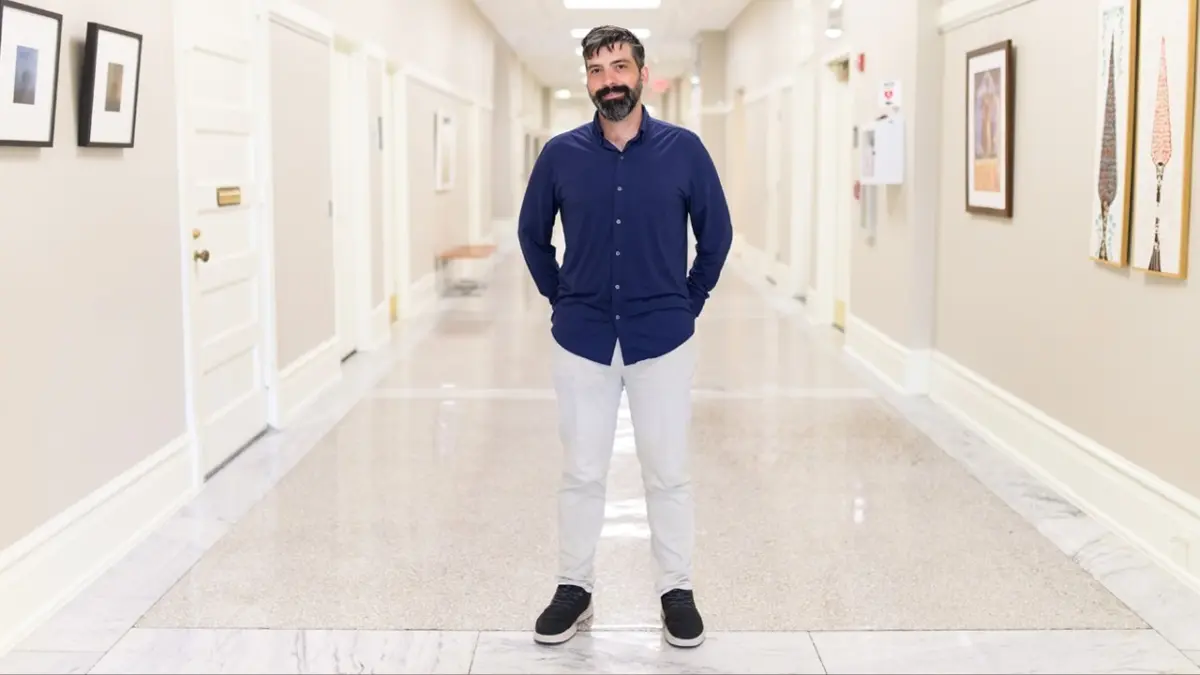
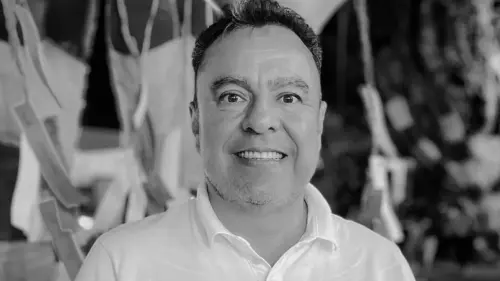
In a moment that bridges high-level academic achievement with deep human empathy, Colombian philosopher and cognitive scientist Felipe De Brigard has been named a 2026 MacArthur Fellow. At 47 years old, the Bogotá-born researcher—who currently serves as a professor at Duke University—joins an elite, globally recognized circle of innovators, creators, and intellectuals.
The distinction, widely known as the "Genius Grant," comes with an unrestricted award of $800,000 (approximately 2.67 billion Colombian pesos), distributed in quarterly installments over five years. Unlike traditional academic grants that require rigid budgeting and predetermined deliverables, the MacArthur Fellowship offers complete autonomy, allowing recipients to direct the funds wherever their intellectual curiosity leads them.
For De Brigard, a significant portion of this windfall will be funneled directly into his work at the Modal Cognition and Imagination Laboratory at Duke University. There, he investigates the intricate mechanics of human memory, focusing on a deeply resonant question for his home country: What happens inside the human mind when a victim of severe violence decides to forgive?
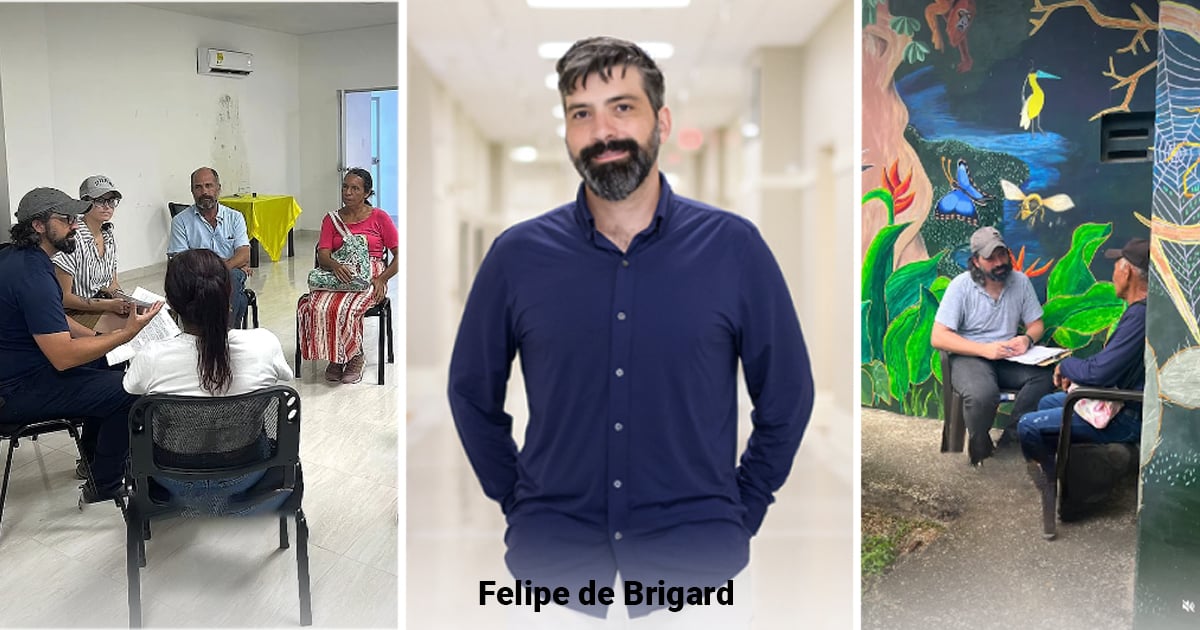
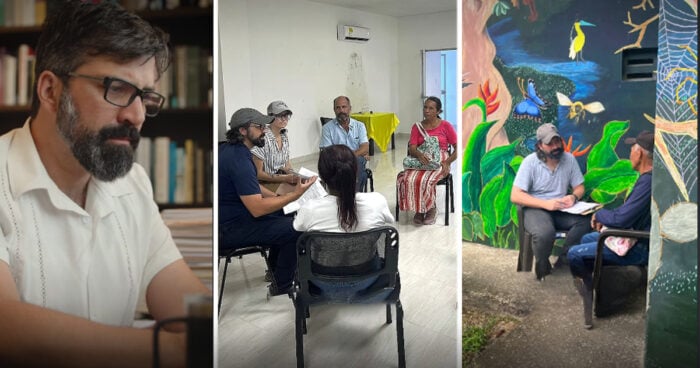
Through rigorous empirical research—ranging from urban laboratories in North Carolina to conflict-scarred communities like the Montes de María in Colombia—De Brigard and his interdisciplinary team are mapping the neurological and psychological landscape of forgiveness. Their findings challenge conventional wisdom, proving that true forgiveness does not require erasing the past, but rather rewiring how the brain processes trauma, anger, and vengeance.
Chronology: From Bogotá to the Global Stage
Felipe De Brigard’s journey to receiving one of the most prestigious intellectual accolades in the United States is rooted in a lifelong fascination with how the human mind constructs reality.
Early Foundations in Colombia
Long before receiving a life-altering phone call in a quiet hotel room in Asheville, North Carolina, De Brigard’s intellectual awakening took place in Bogotá. He pursued his undergraduate studies in Philosophy and Neuropsychology at the prestigious Universidad Nacional de Colombia. It was during these formative years that the malleability of human memory first captured his academic imagination.
The North American Academic Ascent
Seeking to expand his methodological toolkit, De Brigard moved to the United States to pursue advanced graduate degrees. He earned master’s degrees from Tufts University and the University of North Carolina at Chapel Hill before completing his Ph.D. in Philosophy in 2011.

His trajectory continued upward when he secured a highly competitive postdoctoral fellowship at Harvard University, a global epicenter of scientific and philosophical research. In 2013, he joined the faculty at Duke University, establishing himself at the vibrant intersection of philosophy, psychology, and neuroscience.
The "Genius" Phone Call
The announcement of the 2026 MacArthur Fellowship unfolded like a cinematic thriller. De Brigard was attending a work retreat at a hotel in Asheville, surrounded by academic colleagues. His phone rang persistently with an unknown caller ID. Initially, he ignored it. When he finally answered, the voice on the other end instructed him to find a private space immediately.
It was the MacArthur Foundation, notifying him that he had been selected as one of the 2026 Fellows. Bound by strict confidentiality rules, De Brigard had to return to his colleagues and maintain complete composure, permitted to share the life-altering news with only one person: his wife.
Supporting Data and Scientific Framework
To understand the weight of De Brigard’s research, one must first understand his core hypothesis: human memory is not a passive filing cabinet, but an active, creative reconstruction.

The Fluidity of Memory
Traditional views of memory assumed that experiences were recorded like video files and retrieved intact. De Brigard’s work demonstrates that every time a person recalls an event, the brain actively reconstructs the episode. Factors such as current emotional states, subsequent information, and environmental cues dynamically alter the memory. In essence, remembering shares deep neurological parallels with imagining the future.
The Memory and Forgiveness Project
Taking this premise into the field, De Brigard co-initiated the Memory and Forgiveness project, working directly with survivors of political and structural violence in Colombia’s Montes de María region. By combining qualitative interviews with advanced physiological and psychological measurements, the research team sought to answer a profound societal question: How do individuals process recurring, painful memories of abuse?
Key data points and insights from De Brigard’s lab indicate that:
- Forgetting is not a prerequisite for forgiving: Subjects who reported genuine forgiveness did not erase the historical facts of the transgression from their minds.
- Reduction of emotional intensity: Participants who forgave experienced subsequent recollections of the traumatic event with significantly diminished emotional volatility.
- Decline in rumination and vengeance: Forgiveness correlated with a notable drop in cyclic, obsessive rumination, a weakening of the link between the memory and the individual’s core identity, and a marked reduction in the desire for retribution.
Official Responses and Selection Process
The MacArthur Fellowship is shrouded in a veil of secrecy that elevates its prestige. There are no public applications or open submissions. Instead, an anonymous pool of nominators, evaluators, and selectors—drawn from diverse professional fields—identifies candidates based on three explicit criteria:
- Exceptional creativity.
- Promising tracks of ongoing or anticipated significant work.
- The potential for the fellowship to facilitate subsequent breakthroughs.
When the 2026 cohort was announced, the MacArthur Foundation highlighted De Brigard not merely as a neuroscientist, but as a humanist scientist capable of bridging empirical rigor with existential philosophy.
While academic institutions rarely comment immediately on private foundation awards outside of formal institutional press releases, colleagues at Duke University and intellectual circles in Colombia have celebrated the appointment. The recognition places De Brigard alongside a diverse group of 2026 fellows spanning forensic anthropology, bioengineering, mathematics, and the arts, cementing his status as a global intellectual leader.
Implications: Science in the Service of Society
The broader implications of Felipe De Brigard’s MacArthur Fellowship extend far beyond the academic halls of Duke University or the financial cushion of an $800,000 stipend. They strike at the heart of transitional justice, national healing, and the global understanding of human resilience.
Healing a Divided Society
For Colombia, a nation continuously grappling with the legacies of internal armed conflict, the scientific validation of how forgiveness operates within the brain offers profound societal value. De Brigard’s work provides empirical backing to the notion that restorative justice and psychological reconciliation are not just abstract moral imperatives, but tangible cognitive processes that can alter trauma responses at a neurological level.

Redefining Cognitive Science
By refusing to separate philosophy from empirical neuroscience, De Brigard models a modern interdisciplinary approach to science. His lab demonstrates that philosophical inquiries into the nature of the self and the ethics of forgiveness can be quantified, tested, and applied to alleviate human suffering.
With five years of unrestricted funding and the global validation of the MacArthur Foundation, Felipe De Brigard stands at the threshold of his most impactful decade. For a scientist who has dedicated his life to understanding how we rebuild our painful pasts, the grant is not just a personal triumph—it is a vital resource for helping individuals, and nations, learn how to live with their histories without being imprisoned by them.


Leave a Reply