

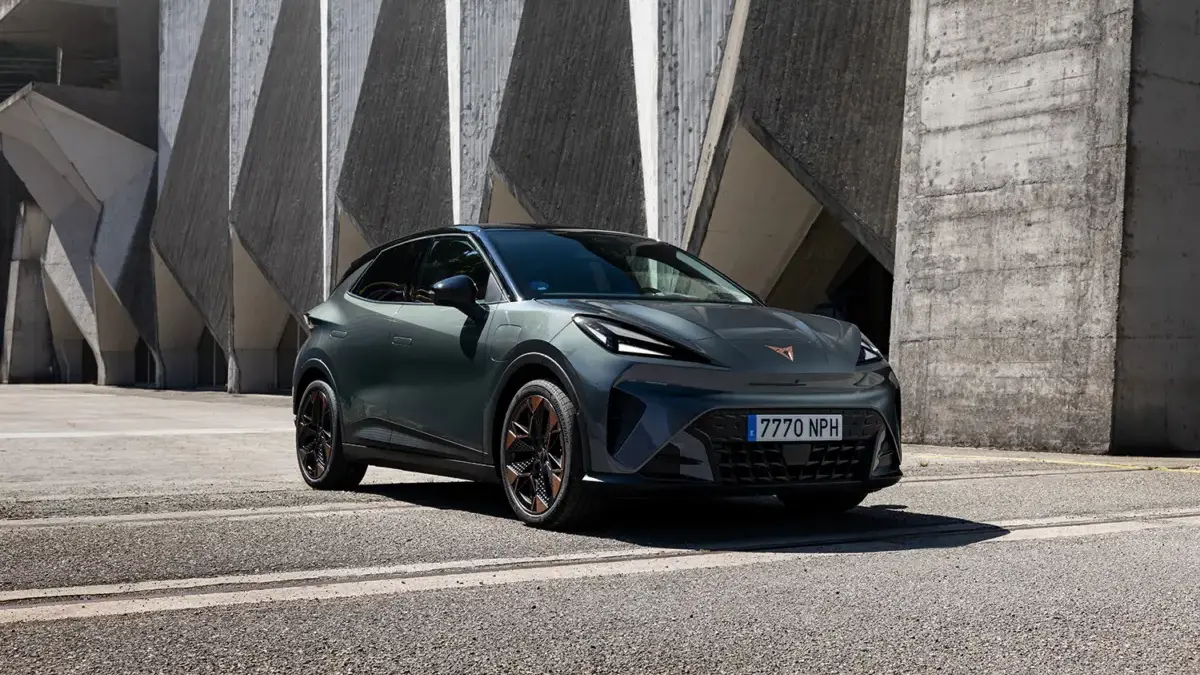
ASTURIAS, Spain — In the rapidly evolving landscape of European electric mobility, manufacturers often struggle to strike a harmonious balance between raw performance, daily usability, and accessible pricing. Enter the CUPRA Raval Endurance, a vehicle engineered to cut precisely through the noise of the compact EV segment.
Positioned comfortably in the middle of CUPRA’s burgeoning urban electric lineup, the Raval Endurance does not chase the absolute title of the most powerful or the cheapest model. Instead, it aims for the elusive sweet spot: a combination of engaging driving dynamics, competitive range, and pragmatic value. Most importantly, it carries profound industrial significance. Manufactured at the SEAT plant in Martorell, Catalonia, the Raval holds the historic distinction of being the very first all-electric vehicle conceptualized, developed, and assembled entirely on Spanish soil.
To evaluate whether this newcomer can live up to its ambitious billing, CUPRA invited automotive journalists to a rigorous first-drive press event across the varied topography of Asturias. Steering clear of standard urban test routes, the manufacturer orchestrated a demanding itinerary that began at an industrial coal mine, wound past a major hydroelectric facility, and culminated at the technical asphalt of the Circuito Museo Fernando Alonso. Across tight mountain switchbacks, sweeping country roads, and high-speed motorways, the Raval Endurance made one thing abundantly clear: it has zero intention of remaining confined to the city center.
Main Facts: The Anatomy of the CUPRA Raval Endurance
Measuring 4.05 meters in length, 1.78 meters in width, and 1.51 meters in height, with a generous wheelbase of 2.60 meters, the CUPRA Raval sits firmly in the B-segment hatchback category. It utilizes the Volkswagen Group’s scalable MEB+ platform—sharing its architectural DNA with sibling models like the Volkswagen ID. Polo—yet CUPRA has engineered a bespoke suspension and chassis setup to distinguish its driving personality.
The Raval lineup is structured around three primary performance tiers:
- The Plus: Features a 135-horsepower motor paired with a 37 kWh LFP battery, offering a WLTP-certified range between 305 and 328 kilometers.
- The Endurance: The volume-seller focus, boasting a front-mounted electric motor that generates 211 horsepower and 290 Nm of torque routed to the front axle. It delivers a WLTP range spanning 413 to 446 kilometers, depending on configuration.
- The VZ: The flagship performance variant, pushing 226 horsepower and equipped with advanced chassis enhancements and an aggressive dynamic profile.
(Note: CUPRA has also confirmed a forthcoming entry-level variant boasting 116 horsepower and a 37 kWh battery pack to lower the barrier of entry further).
Performance-wise, the 211-hp Endurance model dashes from 0 to 100 km/h in a brisk 7.1 seconds and tops out at an electronically governed 160 km/h. When it comes time to replenish energy, the vehicle supports direct current (DC) fast charging at up to 105 kW, allowing the battery to charge from 10% to 80% in approximately 24 minutes. For home or destination charging, an 11-kW alternating current (AC) onboard charger completes a full charge in roughly five and a half hours.
Chronology: From Concept to Asturian Realities
The genesis of the Raval traces back to CUPRA’s aggressive electrification strategy, first previewed by the UrbanRebel concept. As the project transitioned from a design study to a production reality, the Volkswagen Group designated Martorell as the epicenter for its small EV platform architecture, investing heavily in local battery assembly lines and manufacturing retooling.
- Phase 1: Conceptualization and Design (2021–2023): CUPRA revealed its vision for an entry-level urban electric vehicle, utilizing sharp, rebellious styling cues inspired by Barcelona’s Raval district.
- Phase 2: Industrial Integration (2024–2025): The Martorell facility underwent extensive modernization to accommodate the MEB+ platform. Prototypes began winter and hot-weather testing, ensuring structural and thermal durability for production.
- Phase 3: Market Launch and Dynamic Debut (Late 2026): Official pricing structures, trim specifications, and dynamic media drives were scheduled. The Asturian launch event served as the definitive stress test for the vehicle’s dynamic capabilities, pitting pre-production and early production units against demanding elevation changes, wet surfaces, and technical track driving.
Supporting Data: Specifications at a Glance
| Feature / Metric | CUPRA Raval Endurance Specifications |
|---|---|
| Motor Output | 211 HP (155 kW) / 290 Nm torque |
| Drivetrain | Front-wheel drive (FWD) |
| Acceleration (0-100 km/h) | 7.1 seconds |
| Top Speed | 160 km/h |
| Battery Type / Capacity | Lithium-ion (exact capacity scaled for Endurance variant) |
| WLTP Range | 413 km – 446 km |
| Max DC Charging Speed | 105 kW (10% to 80% in ~24 minutes) |
| Max AC Charging Speed | 11 kW (~5.5 hours for a full charge) |
| Dimensions (L / W / H) | 4.05 m / 1.78 m / 1.51 m |
| Wheelbase | 2.60 m |
| Boot Capacity | 441 liters |
| Base Price (Spain, pre-incentives) | €35,010 |
| Effective Price (with promos/grants) | From €25,490 |
Official Responses and Engineering Philosophy
Speaking on the sidelines of the Asturian launch event, CUPRA engineers emphasized that the brand refused to let the Raval fall into the trap of becoming a sterile, appliance-like city car.
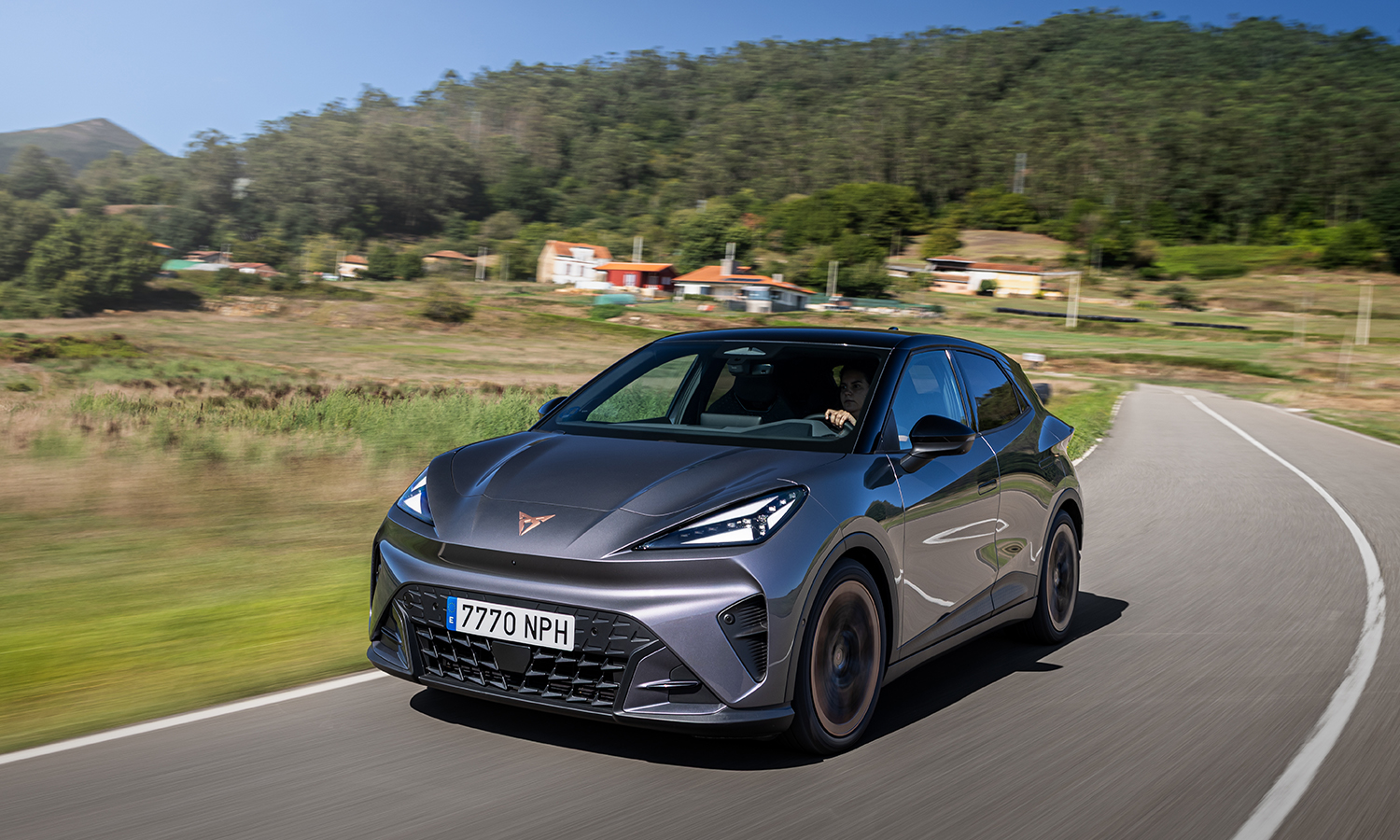
"We didn’t just want another urban EV sharing generic driving dynamics," remarked a senior vehicle dynamics engineer during the technical briefing. "By dropping the ride height by 15 millimeters compared to standard platform siblings, widening the track by 10 millimeters, and introducing bespoke steering calibrations, we ensured the Raval retains the pulse-raising identity that defines CUPRA. The Endurance model represents the rational heart of this philosophy—it gives drivers ample power and serious battery range without requiring them to step up to the track-focused extremism of the VZ."
Design director representatives also highlighted the interior layout, which aims to reconcile modern digital demands with driver ergonomics. While the cockpit features a prominent 10.25-inch digital instrument cluster and a sweeping 12.9-inch central infotainment display, CUPRA notably retained physical buttons on the steering wheel and strategic points across the dashboard. This tactile approach was a deliberate decision based on customer feedback, ensuring critical functions can be operated safely without forcing drivers to navigate complex touchscreen sub-menus while on the move.
Implications: Market Position and Industry Impact
The arrival of the CUPRA Raval Endurance carries significant ramifications for both the brand and the broader European automotive market.
Industrial Nationalism and Economic Impact
By anchoring production in Martorell, CUPRA and its parent company, the Volkswagen Group, are sending a powerful message about the viability of domestic European EV manufacturing. In an era where imported electric vehicles from Asian markets are putting immense pricing pressure on legacy automakers, localized production helps secure supply chains, safeguard local employment, and streamline logistics.
Commercial Competitiveness
Priced at a recommended retail price of €35,010 before incentives, the Raval Endurance becomes highly competitive when factored alongside government programs like Spain’s Plan Auto+ and manufacturer financing campaigns. CUPRA’s marketing division has structured aggressive entry points—such as the €25,490 promotional starting price or flexible subscription models like CUPRA Flex (quoted at roughly €200 per month over 48 months)—making EV ownership digestible for younger demographics and modern families.
Rivalry in the B-Segment EV Arena
The Raval does not enter a vacuum. It faces fierce competition from established and upcoming urban electric heavyweights, including the Renault 5 E-Tech, the Nissan Micra, the Lancia Ypsilon, its platform sibling the Volkswagen ID. Polo, and the BYD Dolphin Surf.
Where the Raval aims to separate itself is through packaging efficiency and driver engagement. Despite its compact footprint, the vehicle boasts an impressive 441-liter cargo capacity—a cavernous volume for a car measuring just over four meters. Combined with comfortable rear passenger accommodations for four average-sized adults, it bridges the gap between a pure city runabout and a capable weekend cruiser.
Conclusion
The CUPRA Raval Endurance proves that transitioning to electric mobility does not require sacrificing driving pleasure or spatial practicality. While its natural habitat remains the urban and periurban sprawl, its robust 211-hp powertrain, dependable 440+ km range, and sharp chassis tuning ensure it is more than capable of handling spirited weekend getaways. As it rolls off the Martorell production lines, the Raval Endurance stands ready to anchor CUPRA’s electric future while flying the flag for Spanish automotive engineering.



Leave a Reply