

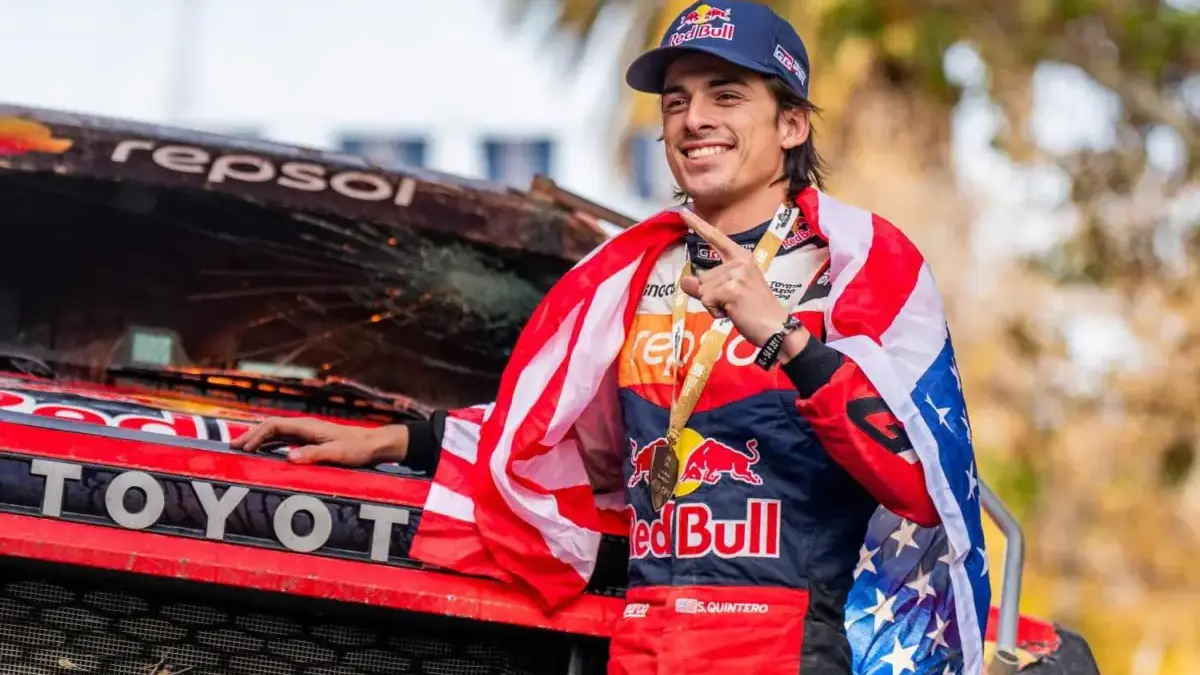
AGADIR, Morocco — The unforgiving desert terrain of Morocco has once again served as the ultimate crucible for off-road motorsport. The penultimate round of the prestigious World Rally-Raid Championship (W2RC)—spanning the demanding route from Agadir to Zagora—concluded with a dramatic masterclass in endurance, navigation, and raw speed.
When the dust finally settled across the Moroccan dunes, American driver Seth Quintero had clinched a monumental victory in the car category, anchoring a dominant podium lockout for Toyota. Meanwhile, in the motorcycle division, 21-year-old Spanish prodigy Edgar Canet etched his name into the history books, delivering a stunning, watershed victory on his RallyGP debut to become the youngest-ever winner in the rally’s storied history.
With the championship titles now hanging in the balance, the 2026 Rally of Morocco has set the global motorsport community on high alert as teams look ahead to the season finale.
Main Facts: Toyota’s Car Dominance and Canet’s Motorcycle Miracle
The narrative of the 2026 Rally of Morocco was defined by calculated consistency in the car class and fearless youth in the motorcycle ranks.
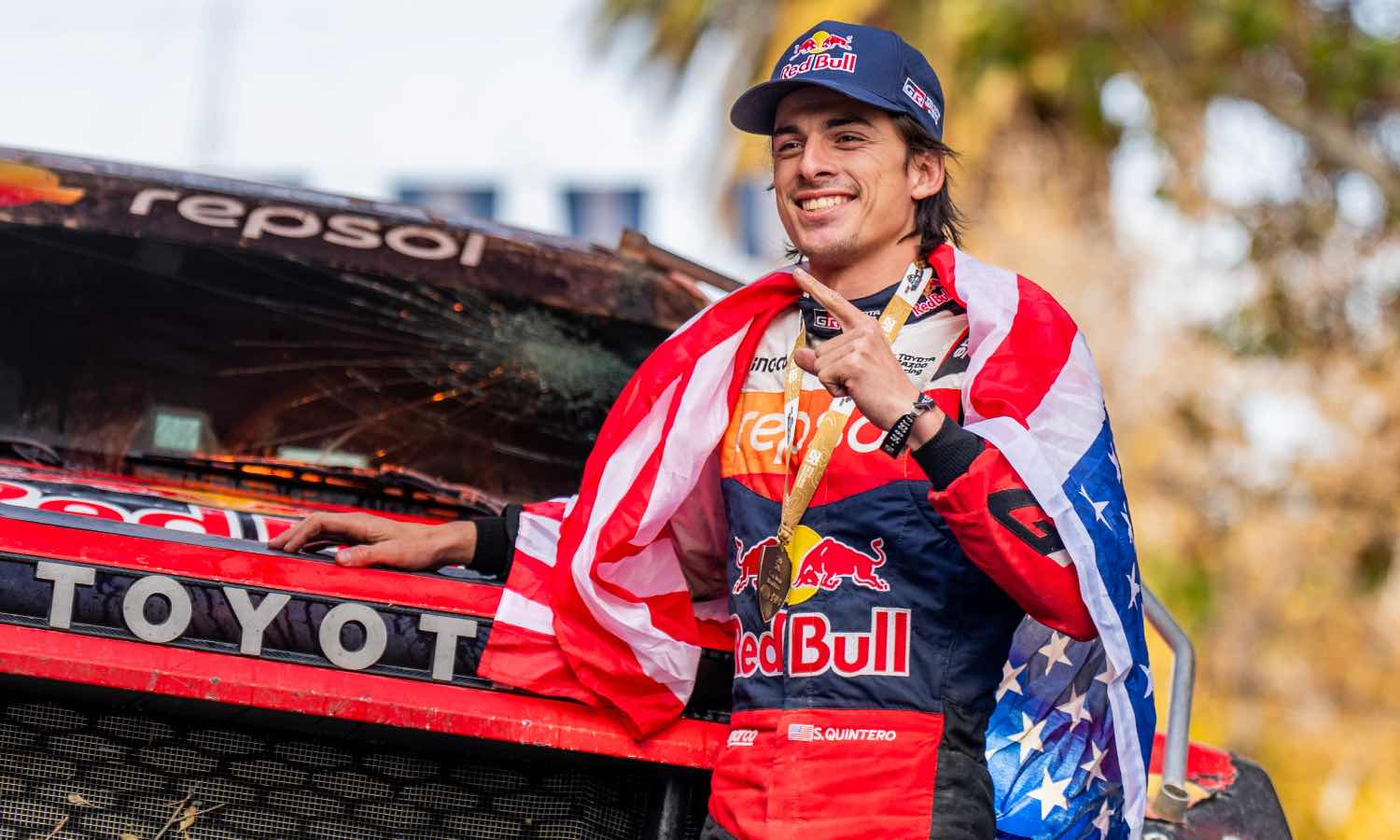
In the premier car category, Toyota Gazoo Racing delivered a tactical masterclass. Seth Quintero secured the overall victory with a cumulative time of 16 hours, 34 minutes, and 5 seconds. Remarkably, the young American claimed the top step of the podium without winning a single individual stage, relying instead on relentless reliability, precision navigation, and the frailties of his rivals. He finished just 4 minutes and 23 seconds ahead of teammate João Ferreira, with Henk Lategan rounding out a clean sweep of the podium for the Japanese manufacturer.
The motorcycle division, however, belonged entirely to Edgar Canet. At just 21 years, 6 months, and 18 days old, the Catalan rider transitioned from his previous successes in the Rally2 class to conquer the elite RallyGP category. Battling against seasoned veterans and championship favorites, Canet outmaneuvered KTM stablemate Daniel Sanders on the final day, cementing a dream weekend for the Austrian manufacturer and signaling the arrival of a new generation in cross-country rallying.
Chronology of the Race: High Drama from Agadir to Zagora
The Opening Stages: Setting the Trap
The rally kicked off under blistering North African suns in Agadir, immediately testing machine and man with a treacherous mix of jagged stones and fine, blinding silt. Early stages saw aggressive driving from the usual suspects. Carlos Sainz, piloting his way to the front of the pack, seized the overall lead by the end of the third day. The veteran Spanish champion looked poised to control the rally, showcasing the formidable pace of his machinery.
The Turning Point: Navigation Nightmares and Speed Traps
However, the Moroccan desert is notoriously unforgiving to leaders. Opening the track on the fourth day proved to be a poisoned chalice. Navigational complexities caught out the frontrunners, forcing them to sweep the line for chasers. Carlos Sainz fell victim to a costly navigation error compounded by a speed limit penalty in a designated zone. The time lost plummeted the Madrid native down the order, allowing the opportunistic Quintero—who had maintained a clean, mistake-free rhythm just behind the leaders—to inherit the psychological and physical advantage.
The Final Push to Zagora
The concluding leg into Zagora was a high-stakes sprint. In the motorcycle class, Daniel Sanders faced the daunting task of opening the track. The Australian suffered under the weight of navigation, hemorrhaging precious minutes. Canet seized the moment, maintaining a blistering yet controlled pace that neutralized Sanders’ late-race charges and carried him across the finish line to claim his historic victory. In the car category, Eryk Goczał claimed a consolation victory on the final special stage, but Quintero’s lead remained entirely unassailable.
Supporting Data and Final Standings
The final classification tables reflect a grueling week of competition that heavily penalized mistakes and rewarded disciplined endurance.
Car Category Final Top 10:
- Seth Quintero (USA) / Toyota – 16:34:05
- João Ferreira (PRT) / Toyota – +4:23
- Henk Lategan (ZAF) / Toyota – +4:42
- Nani Roma (ESP) / Ford – +7:01
- Mitch Guthrie Jr. (USA) / Toyota – +8:23
- Carlos Sainz (ESP) / Ford – +9:25
- Mathieu Serradori (FRA) / Century – +12:40
- Eryk Goczał (POL) / Taurini – +15:12
- Cristina Gutiérrez (ESP) / Santana – +18:50
- Martin Prokop (CZE) / Ford – +24:40
Championship Implications
With this victory, Seth Quintero surges to the top of the World Rally-Raid Championship standings with 134 points. The title fight, however, remains mathematically wide open. Quintero holds a fragile 14-point cushion over Sebastien Loeb, with Dakar legend Nasser Al-Attiyah lurking just 19 points adrift.
In the motorcycle standings, Daniel Sanders retains his championship lead despite being pipped to the rally win by Canet. Luciano Benavides maintains second place in the championship chase, while Spain’s Tosha Schareina—who endured a frustrating week plagued by the disadvantages of opening the track—sinks back in the title hunt after finishing seventh overall in Morocco.
Official Responses and Perspectives
The paddock at Zagora was a mix of exhaustion, jubilation, and strategic relief as teams reflected on a race that served as the ultimate dress rehearsal for the upcoming Dakar Rally.
Seth Quintero, visibly moved by his triumph, emphasized the importance of mental resilience over outright stage-hunting:
"We didn’t come here to win every single day; we came here to win the race. The team gave us a phenomenal car, and keeping our nose clean when everyone else was making mistakes in the dust and the rocks was the key. To lock out the podium with Toyota is a dream come true, but the job isn’t finished yet. All eyes are on the title."
Edgar Canet, reflecting on his record-breaking achievement at just 21 years of age, remained grounded despite the magnitude of his feat:
"Stepping up to RallyGP is a massive jump, and to be fighting against guys like Daniel [Sanders] is something I still need to process. I just tried to focus on my roadbook, ride my own race, and not think about the history books. KTM gave me a bike that allowed me to push safely. This is for everyone who believed in me."
For the Spanish contingent, the reactions were varied. Cristina Gutiérrez, who drove a brilliant and progressive rally to finish ninth overall aboard her Santana 400 T1+ alongside co-pilot Marc Solà, expressed immense satisfaction:
"We started deep in the pack and climbed step by step every single day. After being away from the cockpit for months, finding this rhythm right away is deeply encouraging. The Santana team has done extraordinary work, and this ninth position gives us a massive morale boost heading toward January."
Meanwhile, Carlos Sainz took a pragmatic view of his sixth-place finish after tasting the provisional lead mid-week:
"That’s rallying. We made a small navigational hiccup and picked up a penalty that cost us dearly when we were in the fight for the win. But the speed of the car is unquestionable. We gathered invaluable data here in Morocco, and that is what truly matters when preparing for the Dakar."
Implications: The Road to Abu Dhabi and the Dakar
The 2026 Rally of Morocco has cemented its reputation as the undisputed proving ground for cross-country endurance racing. By replicating the exact blend of high-speed gravel tracks, treacherous rock fields, complex roadbook navigation, and exhausting dune sectors that competitors will face in January, the event has exposed mechanical weaknesses and tactical flaws in real-time.
Manufacturers are leaving North Africa with plenty of homework. Toyota’s comprehensive sweep reinforces the current benchmark status of their engineering in the car category, while Ford’s competitive pace—highlighted by Nani Roma’s fighting fourth place and Carlos Sainz’s flashes of dominance—promises a titanic manufacturer war at the Dakar. In the two-wheeled theater, KTM’s strategic deployment of its factory talent highlights the enduring dominance of the Austrian marque, even as young blood like Canet violently disrupts the established hierarchy.
With the dust settled in Zagora, the W2RC circus packs its crates and turns its collective gaze toward the Middle East. The 2026 world championship crown will be decided in the scorching sands of the Abu Dhabi Desert Challenge. With Quintero, Loeb, and Al-Attiyah separated by razor-thin margins in cars, and Sanders defending a precarious lead against relentless challengers on bikes, the desert will once again decide who writes their name into motorsport immortality.

Leave a Reply