

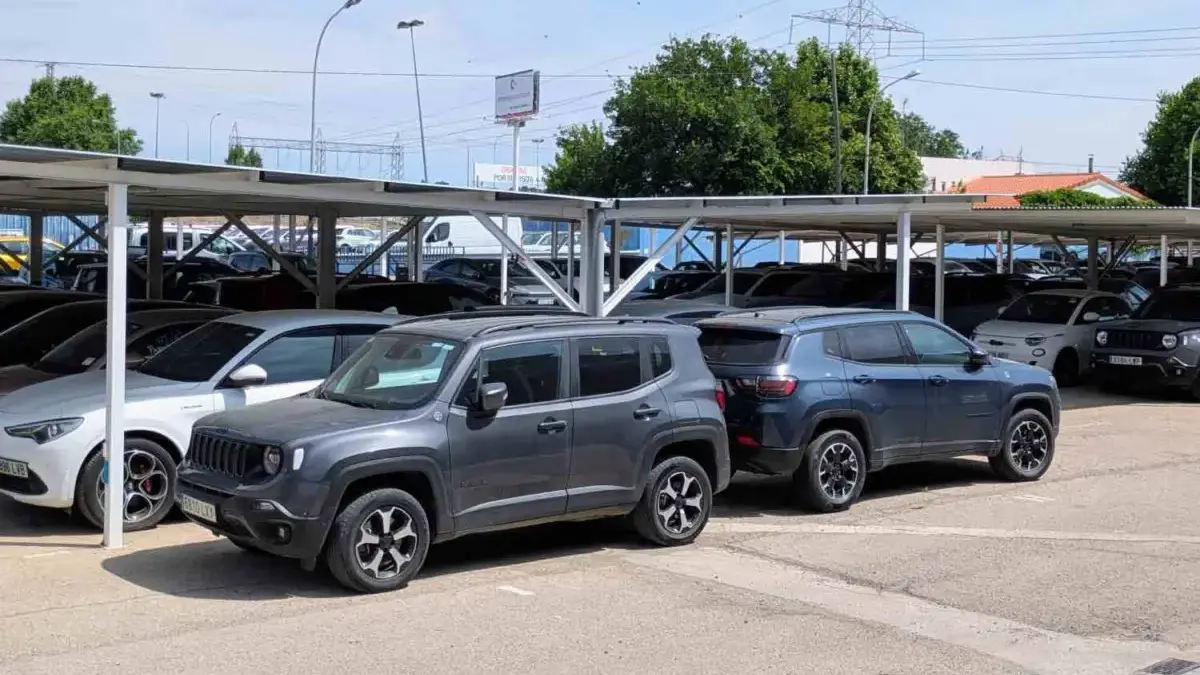
The automotive landscape in Spain is undergoing a fundamental structural transformation. No longer viewed simply as a budget-friendly fallback for financially constrained households, the market for pre-owned (OCIÓN) vehicles has evolved into the cornerstone of everyday national mobility. Generating over 38 billion euros annually and projecting close to 2.24 million transactions, the second-hand market is capturing significant ground from brand-new, unregistered vehicle sales.
Driven by immediate vehicle availability, a vast spectrum of model choices, and a widening price gap relative to factory-fresh alternatives, a rapidly growing segment of drivers is bypassing traditional new-car showrooms entirely.
Main Facts: A Paradigm Shift in Automotive Retail
The quantitative dominance of used cars over new registrations is clear, underscored by shifting economic indicators and evolving consumer preferences.
Market Proportions and Sales Volume
The chasm between new and pre-owned vehicle sales has widened significantly. During the first half of the year, official figures recorded 1,196,700 second-hand vehicle transactions compared to just 647,711 new vehicle registrations—representing a ratio of roughly 1.85 used cars sold for every new one. This ratio climbed closer to 1.9 between January and July, accumulating 1,414,355 used units against 749,656 new ones. By August, the market added another 155,532 operations (a 6% year-on-year increase), sustaining a ratio of 1.5 pre-owned transactions per new vehicle.
Projections for the full fiscal year point toward a staggering 2.24 million units sold, eclipsing the 38-billion-euro economic milestone. While diesel mechanics continue to command nearly half of all operations due to their durability and long-distance efficiency, petrol variants maintain a robust share. Meanwhile, electrified models are steadily carving out a niche: plug-in hybrids surged by 44.7% to reach 5,987 units in specific monthly counts, establishing a 4.8% market share of all second-hand passenger vehicles.
Affordability: Prices Fall as Wages Rise
Financial accessibility has notably improved. In the first half of the year, the average asking price for a pre-owned vehicle dropped by 4.4% to 16,945 euros. Concurrently, the average offered gross salary increased by 1.8% to 28,093 euros.
Consequently, the financial burden required to purchase a used car—measured as a percentage of the average annual gross salary—fell from 64% to 60%, granting families critical disposable breathing room. By July, the average used car price stabilized at 17,080 euros, marking a 4.9% year-on-year decline.
The sharpest price corrections are concentrated in near-new vehicles. Units aged up to three years with fewer than 30,000 kilometers dropped by 7.9% year-on-year, shaving roughly 2,660 euros off their previous price tags. Regional disparities remain pronounced: Cantabria stood out with an 8.5% surge in average wages (reaching 28,230 euros) alongside a 4.8% drop in used car prices, whereas La Rioja led price deflation with an 8% drop, bringing average pre-owned prices down to 15,206 euros.
Chronology: The Digital Evolution and Retail Integration
The secondary automotive market has matured through distinct historical and technological phases over the past three decades, transitioning from localized classifieds to sophisticated, digitally native e-commerce ecosystems.
- Late 1990s – Early 2000s: The foundation of digital classifieds. Platforms like Coches.net emerged as digital classified boards, fundamentally changing how private sellers and buyers connected. In 2003, Coches.com entered the ecosystem, later integrating sophisticated tools for renting and financing.
- 2016: The birth of the 100% digital, native used car retailer. Startups like Clicars introduced fixed pricing, home delivery, 15-day return policies, and dedicated reconditioning centers, scaling rapidly before acquisition by major automotive conglomerates like Stellantis’s Aramis Group.
- 2019–2023: Deep institutional integration. Financial giants such as Banco Santander Consumer Finance acquired prominent automotive portals, bridging the gap between vehicle acquisition, digital banking, and instant credit authorization. Concurrently, tech-forward platforms like Motoreto launched in 2019 to act as digital personal shoppers, aiding traditional brick-and-mortar dealerships in modernizing their stock management.
- Present Day: The fusion of physical trade fairs and digital marketplaces. Regional events—such as the long-running Torrelavega Vehicle Fair hosted by ASECOVE and the 15th edition of the Motoralba Fair in Albacete—bridge the gap between screen-based browsing and hands-on, guaranteed physical inspection.
Supporting Data: Regional Metrics and Market Demographics
A granular look at Spain’s regional economies highlights how wage growth and used vehicle pricing intersect across different territories:
| Autonomous Community | Average Salary (Base Year) | Average Salary (Current) | Salary Variance | Used Car Price (Base Year) | Used Car Price (Current) | Price Variance |
|---|---|---|---|---|---|---|
| Andalusia | 27,667 € | 27,877 € | +0.8% | 17,135 € | 16,400 € | -4.3% |
| Aragon | 27,912 € | 29,012 € | +3.9% | 17,273 € | 16,107 € | -6.8% |
| Asturias | 28,633 € | 29,009 € | +1.3% | 17,679 € | 16,410 € | -7.2% |
| Canary Islands | 26,763 € | 26,300 € | -1.7% | 16,177 € | 15,743 € | -2.7% |
| Cantabria | 26,012 € | 28,230 € | +8.5% | 16,575 € | 15,783 € | -4.8% |
| Castilla-La Mancha | 26,294 € | 28,245 € | +7.4% | 15,656 € | 14,604 € | -6.7% |
| Castile and León | 25,660 € | 27,178 € | +5.9% | 17,937 € | 16,965 € | -5.4% |
| Catalonia | 27,723 € | 28,537 € | +2.9% | 18,759 € | 17,899 € | -4.6% |
| Valencian Community | 27,451 € | 27,364 € | -0.3% | 17,450 € | 16,415 € | -5.9% |
| Extremadura | 24,248 € | 26,020 € | +7.3% | 15,328 € | 14,855 € | -3.1% |
| Galicia | 25,668 € | 25,950 € | +1.1% | 17,295 € | 16,642 € | -3.8% |
| Balearic Islands | 28,082 € | 29,304 € | +4.3% | 16,107 € | 15,022 € | -6.7% |
| La Rioja | 26,709 € | 27,445 € | +2.8% | 16,525 € | 15,206 € | -8.0% |
| Madrid | 28,089 € | 28,138 € | +0.2% | 18,992 € | 18,550 € | -2.3% |
| Murcia | 26,677 € | 27,014 € | +1.3% | 16,952 € | 15,933 € | -6.0% |
| Navarre | 28,852 € | 30,716 € | +6.5% | 17,503 € | 17,025 € | -2.7% |
| Basque Country | 29,487 € | 29,387 € | -0.3% | 19,215 € | 18,546 € | -3.5% |
| National Average | 27,600 € | 28,093 € | +1.8% | 17,719 € | 16,945 € | -4.4% |
Vehicle Age and Fleet Aging Realities
Despite strong performances in the near-new segment—where vehicles under five years old grew by 13.5% in recent periods to account for 26.3% of sales—Spain’s overall used fleet remains stubbornly aged.
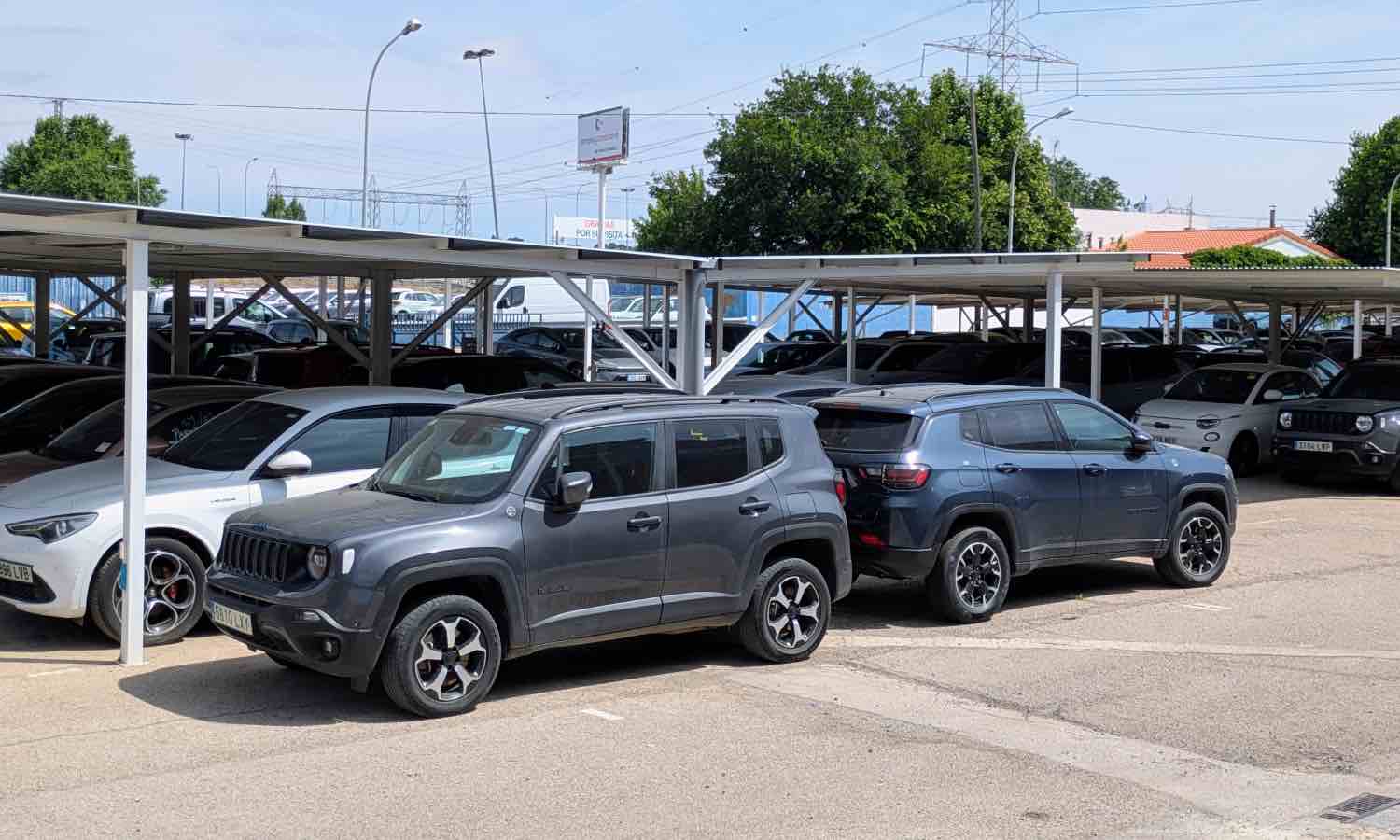
Vehicles older than 15 years accounted for over 64,000 sales in peak periods, representing more than 40% of all market transactions. The average age of a used car sold in Spain hovers around 11 years, stretching to 15 years for peer-to-peer transactions between private individuals (which still constitute over six out of every ten sales).
Top-selling legacy models like the Volkswagen Golf, Seat Ibiza, and Renault Megane dominate these older brackets, with average operational ages frequently exceeding 15 to 16 years.
Official Responses and Stakeholder Perspectives
Industry leaders, regional authorities, and trade associations have been vocal regarding the structural evolution of the secondary automotive sector.
- Javier López Estrada, Mayor of Torrelavega: Emphasized the vital commercial and economic impact of regional used vehicle expositions, noting that physical fairs provide critical face-to-face reassurance for buyers navigating complex financial commitments.
- Eduardo Arasti, Regional Councillor: Highlighted the synergy between public renewal incentives—such as the Renove V Plan, whose budget expanded significantly from 600,000 to 1.2 million euros—and the increased availability of certified zero-kilometer vehicles.
- Natalia de los Arcos, President of ASECOVE: Stressed that professionalized used vehicle sales, complete with rigorous mechanical checks and transparent after-sales guarantees, are essential to protecting consumers from hidden mechanical liabilities.
Implications: Risks, Sustainability, and Future Outlook
While the pre-owned market offers a pragmatic solution to modern mobility, several critical challenges and structural implications loom over the sector’s long-term trajectory.
Consumer Protection and Mechanical Integrity
Data from vehicle history verification agencies like CARFAX indicate that approximately 33% of all used cars sold present some form of hidden risk, often stemming from unrecorded cross-border imports or heavy prior fleet usage (such as car rentals).
To counter this, specialized inspection services (NeedCarHelp, Checkar, CarTrustChain) are gaining traction by offering traceable historical certifications. Regulatory bodies continue to urge buyers to carefully inspect maintenance records, tire wear, and odometer authenticity before signing purchase agreements.
The Circular Economy and Electrified Fleets
The electrification of the used market brings unique mechanical considerations. While pure electric vehicles (BEVs) saw transactions spike by over 30% and plug-in hybrids surged by more than 50%, buyers are advised to rigorously assess battery health, degradation metrics, real-world driving range, and home-charging infrastructure compatibility.
Concurrently, the circular economy surrounding automotive components is scaling up. Specialized firms like Recomotor and Desguace Suspiro are championing recovered spare parts, while cutting-edge facilities—such as the Novolitio lithium-ion recycling plant in Cubillos del Sil, backed by Endesa and Urbaser—successfully recover up to 90% of electric battery components.
Final Buyer Recommendations
For consumers navigating today’s market, experts recommend looking beyond the initial sticker price. Total cost of ownership—factoring in ongoing maintenance, fuel efficiency, insurance classes, and parts availability—remains paramount.
Models renowned for mechanical resilience and low upkeep costs, such as the Toyota Yaris Hybrid, Dacia Sandero, Seat Ibiza, Suzuki Swift, and Honda Jazz, continue to anchor sensible consumer demand. Ultimately, purchasing through verified professional channels equipped with comprehensive warranties and transparent financing remains the most reliable safeguard in Spain’s booming pre-owned automotive market.


Leave a Reply