

By Global Environmental Desk
Published: March 2026
Main Facts
The latest Living Planet Report 2026, published by the World Wide Fund for Nature (WWF), has delivered an alarming verdict on the state of global biodiversity. Between 1970 and 2022, monitored wildlife populations experienced a staggering 95% average decline across Latin America and the Caribbean. This catastrophic drop marks the most pronounced regional reduction recorded by the organization anywhere on the planet.
To compile these findings, the Living Planet Index analyzed an unprecedented 35,803 population trends spanning 5,790 vertebrate species, including mammals, birds, amphibians, reptiles, and fishes. Environmental scientists and WWF representatives have emphasized a crucial clarification regarding these numbers: the 95% figure represents the average proportional change in the size of monitored populations over time. It does not mean that 95% of all individual animals or entire species have vanished entirely from Latin America, but rather that the vast majority of tracked animal communities are a mere fraction of the size they were five decades ago.
On a global scale, the average reduction in monitored wildlife populations stands at 73%. Following Latin America and the Caribbean, Africa recorded the second-largest regional decline at 80%, followed by Asia-Pacific at 49%, North America at 28%, and Europe and Central Asia at 23%. When broken down by ecosystem types, freshwater habitats have suffered the most catastrophic damage globally, experiencing an average population drop of 85% due to intense human pressures, pollution, and water diversion projects.
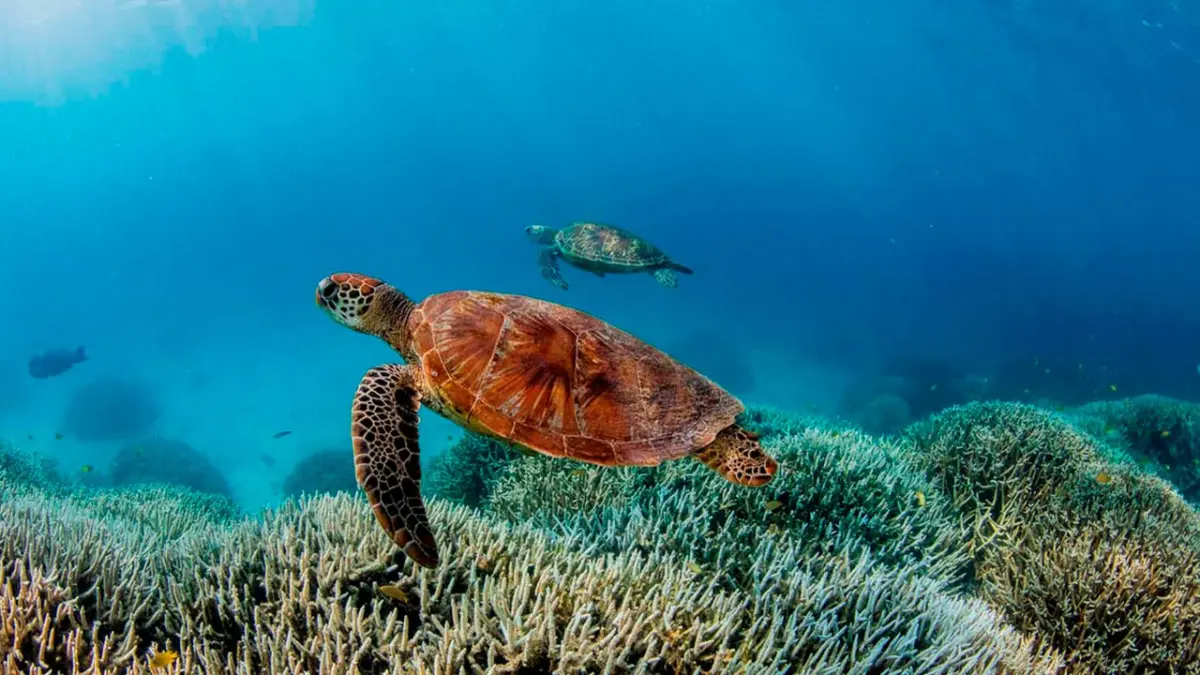
Despite these grim metrics, the report uncovers a more nuanced ecological reality. Approximately 50% of the populations monitored within the index are currently stable or increasing, proving that targeted conservation interventions can work. Furthermore, landmark global recoveries—such as a dramatic rebound in wild tiger numbers and positive trends for the Atlantic bluefin tuna and green sea turtle—demonstrate that environmental degradation is not an irreversible fate.
Chronology of the Crisis: A 52-Year Trajectory of Ecological Decline
Understanding the magnitude of the 2026 Living Planet Report requires looking back at the half-century timeline that shaped these trends. The methodology of the Living Planet Index has tracked ecological shifts globally since 1970, mapping out an era defined by unprecedented industrialization, climate disruption, and ecosystem fragmentation.
- The 1970s – The Baseline Era: Marked by the dawn of modern environmentalism and the establishment of foundational conservation laws. At this stage, baseline populations of global vertebrates were significantly more robust, though early industrial agriculture and post-war economic expansions were already beginning to strain natural habitats.
- The 1980s and 1990s – Accelerating Deforestation and Extraction: Rapid agricultural conversion in the tropics, particularly across the Amazon basin and Southeast Asia, accelerated habitat loss. The commercial overexploitation of marine fisheries and timber extraction outpaced regulatory frameworks, leading to sharp initial drops in tropical vertebrate curves.
- The 2000s – Climate Change and Fragmentation: The turn of the millennium introduced compounding pressures. Climate change began shifting weather patterns, altering seasonal migrations, and intensifying droughts and wildfires. Fragmented ecosystems made it difficult for wildlife populations to migrate or adapt.
- The 2010s to 2020 – The Deepening Trough: Monitoring capabilities expanded drastically, revealing steeper downward trajectories than previously estimated. Freshwater systems faced severe collapses due to damming, pollution, and over-extraction. The Living Planet reports from this decade routinely highlighted global declines crossing the 60% and 68% thresholds.
- 2022 to 2026 – The Current Assessment: The closing year of the index data (2022) combined with the finalized analysis presented in the 2026 Living Planet Report reveals the worst-case scenario for Latin America and the Caribbean. While localized conservation success stories began bearing fruit during this period, the macroeconomic drivers of environmental destruction continued to outpace protective measures, driving the regional index down to its historic low of 95%.
Supporting Data and Ecosystem Breakdown
The comprehensive metrics provided by the WWF Living Planet Report 2026 outline a stark picture of planetary health. The data is structured around rigorously peer-reviewed trends that evaluate ecosystem resilience, economic misalignments, and geographical variations.
Regional and Habitat Reductions at a Glance
- Latin America and the Caribbean: 95% average population decline (Highest globally).
- Africa: 80% average population decline.
- Asia-Pacific: 49% average population decline.
- North America: 28% average population decline.
- Europe and Central Asia: 23% average population decline.
- Freshwater Ecosystems (Global): 85% average population decline (The hardest-hit biome on Earth).
The Drivers of Destruction: Habitat Loss and Overexploitation
WWF identifies habitat loss and degradation—primarily driven by unsustainable agricultural expansion, mining, and infrastructure development—as the single most frequently reported threat to wildlife populations globally. Following closely behind are:
- Overexploitation: Unsustainable hunting, poaching, illegal wildlife trade, and overfishing.
- Climate Change: Shifting temperatures, prolonged droughts, and habitat unsuitability.
- Pollution: Chemical runoff, plastic waste, and heavy metal contamination in terrestrial and aquatic networks.
- Invasive Species and Diseases: Introduction of non-native species and pathogens that devastate immunologically naive native populations.
The Financial Disconnect: Nature vs. Harmful Subsidies
The 2026 report draws a direct line between global financial architecture and the collapse of biodiversity. In 2023 alone, international tracking revealed a staggering economic imbalance:
- US$7.3 trillion was funneled globally into financial activities, subsidies, and industries directly detrimental to nature (such as fossil fuels, intensive monoculture agriculture, and industrial logging).
- By contrast, only US$220,000 million (US$220 billion) was directed toward initiatives aimed at protecting, managing, or restoring natural ecosystems. This financial disparity underscores why conservation efforts continually struggle against structural economic incentives to exploit the environment.
Official Responses and Perspectives
The release of the Living Planet Report 2026 has prompted reactions from conservationists, international bodies, and national governments. While the tone is overwhelmingly sober, experts stress that despair is not a viable strategy.
The Global Perspective: Reversing the Trend is Possible
Despite the 95% decline in Latin America, WWF emphasizes that biodiversity loss is not a permanent endpoint. Approximately half of all monitored populations are holding steady or growing, proving that where intervention occurs, nature rebounds.
The report highlights several major international wins:
- The Global Tiger Recovery: Between 2010 and 2025, the global population of wild tigers increased by more than 70%, climbing from an estimated 3,200 individuals to nearly 5,700.
- Marine Success Stories: Decades of strict international quotas and protected marine areas have led to the notable recovery of the Atlantic and Pacific bluefin tuna populations, as well as the global resurgence of the green sea turtle.
"The recovery of population numbers in flagship species such as tigers, marine turtles, and tuna proves beyond a doubt that it is still possible to reverse the loss of nature if we commit to sustained, science-backed conservation," noted WWF spokespersons during the launch of the 2026 findings.
Colombia’s Localized Conservation Triumphs
While Colombia’s specific ecosystem metrics are not standalone drivers within the broader regional index of the 2026 report, the country serves as a beacon of hope through targeted national recovery programs that demonstrate what localized action can achieve.
- The Llanos Caiman (Crocodylus intermedius): Within El Tuparro National Natural Park, an intensive reintroduction program successfully released 96 llanero caimans between 2015 and 2024, bolstering a critically endangered apex predator population in its native savanna habitat.
- The Andean Bear (Tremarctos ornatus): A decade-long conservation strategy yielded remarkable results by 2026. Monitoring data showed that Andean bear occupancy in prioritized landscapes along Colombia’s Western Cordillera jumped from 52% to 76%, while reaching 61% in the Central Cordillera.
- The Yellow-eared Parrot (Ognorhynchus icterotis): In a historic milestone for ornithology, the species was formally documented again in the municipalities of Cáchira and Ábrego, Norte de Santander, marking its return after 167 years of complete absence in the department.
Implications for the Future
The implications of the Living Planet Report 2026 extend far beyond the conservation community; they strike at the heart of human survival, economic stability, and planetary resilience.
Ecological and Economic Ramifications
When freshwater ecosystems decline by 85% and Latin American wildlife populations shrink by 95%, the functional integrity of Earth’s life-support systems is severely compromised. Forests lose their pollinators, soil health degrades, carbon sinks weaken, and the natural resilience of ecosystems against extreme weather events diminishes. Economically, the continuation of the US$7.3 trillion flow into environmentally destructive industries risks collapsing the very natural capital upon which global agriculture, pharmaceutical development, and freshwater security depend.
A Call for Systemic Reform
The 2026 report issues a clear directive to global policymakers, financial institutions, and civil society. Conservation can no longer be treated as an isolated, underfunded afterthought. Reversing the trajectory requires:
- Redirecting Subsidies: Dismantling financial incentives for activities that degrade the environment and reallocating capital toward restorative, regenerative economies.
- Expanding Protected Areas: Scaling up indigenous-led conservation, national parks, and biological corridors that grant wildlife the space to migrate and adapt to a changing climate.
- Rigorous Monitoring: Expanding local and international tracking networks—such as those utilized in Colombia and across global biomes—to measure the real-time efficacy of environmental policies.
The message of the Living Planet Report 2026 is ultimately dual-edged. It exposes an ecological emergency of historic proportions in Latin America and across the globe, yet it simultaneously proves that human intervention, political will, and robust funding can pull species back from the brink of extinction. Whether global leaders will act on these lessons before the remaining margins of biodiversity disappear remains the defining question of our decade.



Leave a Reply