

By Global News Desk
Published: May 2026
Main Facts
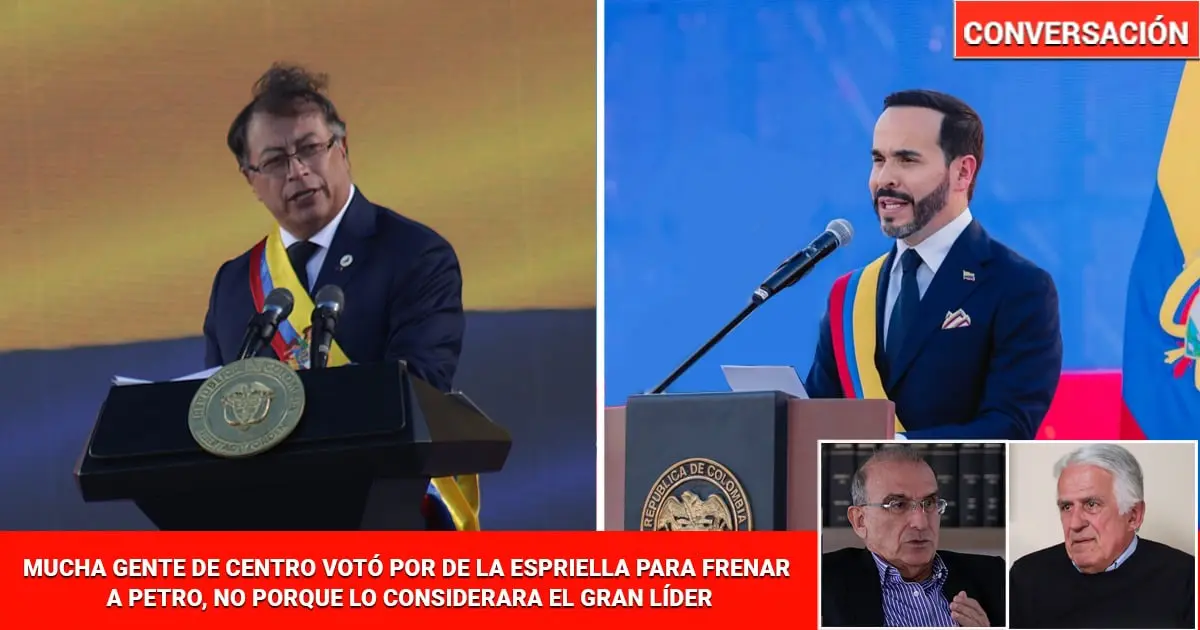
Colombia stands today at a precarious political crossroads, characterized by radical ideological shifts, institutional erosion, and deep societal fatigue. In his latest book, La democracia fatigada (Fatigued Democracy), veteran statesman, constitutionalist, and former chief peace negotiator Humberto de la Calle diagnoses the structural decay of the Colombian political system. He argues that the rise of right-wing figurehead Abelardo de la Espriella—famously nicknamed "El Tigre"—to the presidency is not an isolated political anomaly, but rather a glaring symptom of a democratic apparatus exhausted by unrelenting polarization and institutional distrust.
Within a remarkably short span, Colombia has swung violently across the ideological spectrum. The nation transitioned from electing Gustavo Petro, the first leftist president in its modern history, to handing power to a hardline, right-wing populist who campaigned aggressively on promises of absolute order, security, and a heavy-handed state apparatus.
The core elements defining this new political reality include:
- The Pendulum Effect: The swift, uncompromising rejection of the left in favor of a polar opposite figure on the right, bypassing any moderated transitional phase.
- A Fragile Mandate: President de la Espriella secured victory by a narrow margin, entering office with modest popular backing and immediately alienating key economic sectors, industry guilds, and major media outlets within his first weeks in office.
- The Collapse of the Political Center: Once touted by pollsters as the potential majority block capable of bridging historic divides, the moderate center was crushed and effectively rendered voiceless between the two entrenched extremes during the recent electoral cycle.
- The Metamorphosis of the Left: Stripped of executive power, former President Petro has transitioned into the principal voice of the opposition, serving as the unifying glue for a left-wing coalition that remains tightly bound despite its electoral defeat.
Chronology of a Political Earthquake
To understand how Colombia arrived at the doorstep of the "El Tigre" administration, it is necessary to retrace the accelerated chronology of its recent political upheavals. Few figures are better positioned to chart this trajectory than Humberto de la Calle, whose decades-long public service includes stints as a government minister, member of the 1991 National Constituent Assembly, senator, and the architect of the historic 2016 peace accord with the FARC.
1. The Historical Turn: The Rise of Gustavo Petro (2022–2025)
For generations, Colombian politics was dominated by traditional liberal and conservative elites, punctuated by decades of internal armed conflict. The election of Gustavo Petro in 2022 shattered this paradigm. For the first time, a leftist movement captured the executive branch, promising sweeping structural reforms in healthcare, pension systems, labor laws, and environmental policy. However, Petro’s tenure was marked by legislative friction, ideological rigidity, and intense resistance from traditional economic powers. Rather than bridging historic inequalities, the administration often exacerbated cultural and political divides.
2. The Erosion of the Center and Growing Disillusionment
As Petro’s administration advanced its agenda, the political center attempted to position itself as a viable, pragmatic alternative. Promising institutional stability and fiscal responsibility, moderate voices argued that Colombia needed a respite from ideological warfare. Instead, as economic anxieties mounted and public security concerns resurfaced across urban and rural centers, voters increasingly viewed moderation as weakness. The polarization stoked by both radical fringes squeezed the center out of relevance, leaving citizens with a binary choice: radical transformation or reactionary restoration.
3. The Campaign and Triumph of "El Tigre" (Late 2025 – Early 2026)
Capitalizing on public fatigue with Petro’s reforms and growing anxieties regarding crime and governance, Abelardo de la Espriella—widely known as "El Tigre"—emerged as the standard-bearer for a rejuvenated, aggressive right. Eschewing traditional diplomatic language, de la Espriella ran a high-octane campaign centered on unapologetic nationalism, law-and-order rhetoric, and a direct challenge to the political establishment. His narrow victory signaled a profound public hunger for authority, even if it meant embracing populist authoritarian tendencies.
4. The First Weeks in Power: Early Confrontations (2026)
In his opening weeks as president, de la Espriella has wasted no time consolidating his posture, though not without immediate friction. Breaking with standard honeymoon periods traditionally afforded to incoming executives, his administration has already engaged in public spats with powerful economic guilds, business associations, and major journalistic institutions. The rapid escalation of these conflicts underscores a governance style that relies heavily on confrontation rather than consensus-building.
Supporting Data and Context: De la Calle and Ospina in Dialogue
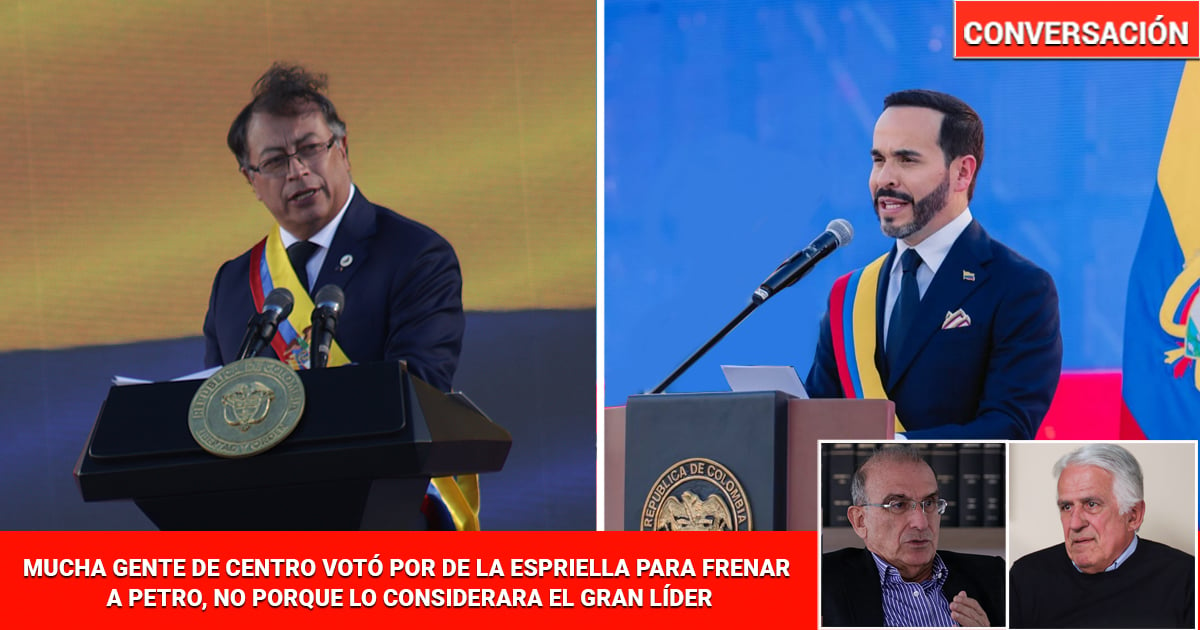
The release of La democracia fatigada served as the catalyst for an unvarnished, highly critical public conversation between Humberto de la Calle and fellow political thinker Juan Manuel Ospina. Stripping away diplomatic pleasantries, the two intellectuals dissected the pathologies currently plaguing the Colombian state.
According to data cited in institutional and sociological analyses accompanying the book’s launch:
- Electoral Polarization Index: Voter turnout in recent elections reflects a deeply divided electorate, where negative partisanship (voting against a candidate rather than for one) reached historic highs.
- Institutional Trust Metrics: Public confidence in traditional branches of government—including Congress, the judiciary, and political parties—hovers near historic lows, creating a fertile breeding ground for populist saviors who claim to bypass institutional checks and balances.
- The Ideological Pendulum: Historical data from Latin American political transitions show that rapid oscillations between ideological extremes typically result in systemic policy instability, where incoming administrations spend their mandates dismantling the decrees of their predecessors rather than building long-term state capacity.
During their discussion, De la Calle emphasized that the phenomenon of "El Tigre" cannot be understood merely as a victory for conservatism, but rather as an indicator of an institutional burnout. When the state fails to deliver basic security, economic mobility, and administrative competence, the citizenry—exhausted by endless debates and incrementalism—inevitably turns to figures who promise swift, definitive, and often disruptive solutions.

Official Responses and Stakeholder Reactions
The seismic shift in Colombia’s political landscape has elicited sharp, deeply polarized responses from across the institutional and societal spectrum.
The Administration’s Defense
Defenders of President de la Espriella argue that his aggressive posture and early confrontations with the status quo are not only necessary, but long overdue. Government spokespersons maintain that Colombia has spent years paralyzed by bureaucratic inertia and ideological hesitation. According to administration insiders, "El Tigre" was elected precisely to break through institutional deadlocks, confront entrenched interest groups, and restore unyielding public authority. Proponents argue that the president’s direct communication style and refusal to appease traditional elites represent a refreshing authenticity that resonates directly with a neglected citizenry.
Pushback from Economic Guilds and Media
Conversely, organized business associations, industrial federations, and major journalistic outlets have expressed deep alarm over the administration’s early trajectory. Representatives from key economic sectors have warned that executive hostility toward the private sector and the press risks triggering unnecessary market volatility and undermining legal certainty. In recent statements, leadership from several major guilds emphasized that sustainable governance requires dialogue, regulatory predictability, and respect for institutional counterweights—values that appear strained under the current executive style.
The Left and Civil Society
For his part, former President Gustavo Petro has embraced his new role as leader of the opposition. Utilizing digital platforms and public assemblies, Petro has positioned himself as the primary guardian of social gains achieved during his tenure, warning that the new administration represents a dangerous regression toward authoritarianism and social exclusion. Civil society organizations, meanwhile, have voiced concern over the shrinking space for independent dissent and the potential erosion of human rights protections under a administration fixated on "mano dura" (heavy-handed) security policies.
Implications for the Future of Colombian Democracy
As Colombia navigates this volatile new chapter, the broader implications for its democratic framework are profound and far-reaching. Humberto de la Calle’s La democracia fatigada serves as an urgent cautionary tale for a nation trapped in a recurring cycle of political whiplash.
1. The Risk of Permanent Polarization
When political systems swing violently from the extreme left to the extreme right without periods of consolidation or centrist synthesis, governance degrades into a zero-sum game. Every four years, the nation faces an existential crisis where the incoming government treats the state as conquered territory, seeking to erase the legacy of its predecessor. This dynamic prevents the formation of long-term state policies in critical areas such as education, health, infrastructure, and peacebuilding.

2. The Crisis of Representation
The sidelining of the political center leaves millions of Colombians politically homeless. A democracy cannot thrive when its citizenry is forced to choose between competing brands of populism. If moderate, institutionalist voices fail to reinvent themselves and connect with the material anxieties of the working and middle classes, the country risks sliding further into populist volatility.
3. Institutional Resilience vs. Executive Overreach
The ultimate test of Colombia’s 1991 Constitution—a charter designed precisely to check absolute power and protect pluralism—will be its ability to withstand the pressures of an executive branch that favors confrontation and centralized authority. The judiciary, autonomous regulatory bodies, regional governors, and a free press will serve as the primary buldrarks against democratic backsliding.
Ultimately, as De la Calle warns, the victory of "El Tigre" is not the final destination, but a milestone on a road defined by exhaustion. Whether Colombia can recover its democratic equilibrium, or whether it will continue to lurch from crisis to crisis, remains the defining question for the nation’s political future in the post-Petro era.




Leave a Reply