

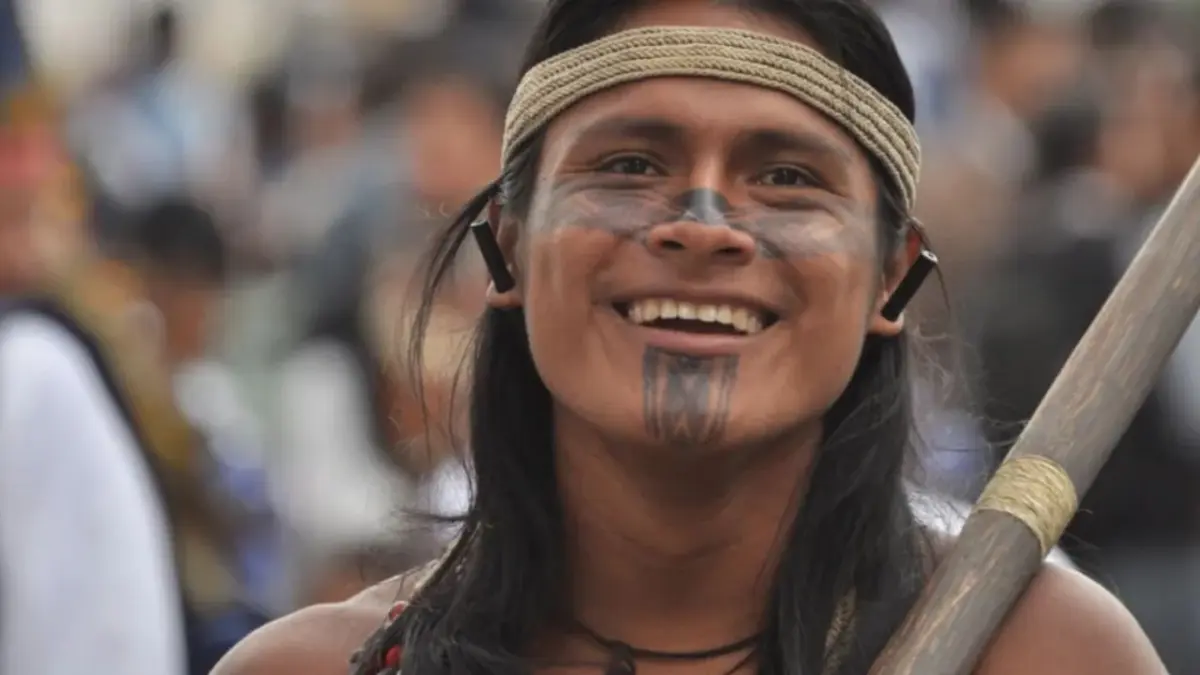
BOGOTÁ — As Colombia observes the Day of Ethnic and Cultural Diversity, the nation’s cultural authorities, indigenous leaders, and international partners have renewed their commitment to protecting one of the hemisphere’s most complex linguistic landscapes. Transcending symbolic celebration, the occasion highlights Colombia’s profound multicultural composition—comprising Indigenous, Afro-Colombian, Raizal, Palenquero, and Rrom communities—while bringing into sharp focus the precarious status of the country’s 68 native languages.
From the high-altitude peaks of the Sierra Nevada de Santa Marta to the dense rainforests of the Amazon and the Caribbean archipelago of San Andrés, Colombia’s native tongues serve as living repositories of ecological knowledge, spiritual philosophies, and collective memory. However, experts warn that without sustained state intervention, intergenerational transmission, and cross-border cooperation within the Andean region, dozens of these languages face the irreversible threat of extinction.
Main Facts: Colombia’s Linguistic Landscape and Heritage
Colombia’s recognition of its multicultural identity is rooted in its constitutional framework, which acknowledges the nation’s pluralistic identity. According to data from the Ministry of Cultures, Arts, and Knowledge (Ministerio de las Culturas, las Artes y los Saberes), Colombia is home to 68 distinct native languages still spoken today.
                          COLOMBIA'S 68 NATIVE LANGUAGES
                                        │
         ┌──────────────────────────────┼──────────────────────────────┐
         │                              │                              │
  65 Indigenous                  2 Creole                        1 Rrom
    Languages                    Languages                      Language
(e.g., Nasa Yuwe,              (Palenquero &                   (Shib Romaní)
 Embera, Tikuna)              San Andrés Creole)
This diverse linguistic ecosystem includes:
- 65 Indigenous Languages: Spoken by diverse ethnic groups across various biomes, including Nasa Yuwe, Embera, Kogui, Tikuna, Achagua, Ette Naka, Pisamira, and Yurutí.
- 2 Creole Languages: Palenquero, spoken in San Basilio de Palenque (the first free African town in the Americas, located in the Department of Bolívar), and Creole, spoken by the Raizal population in the archipelago of San Andrés, Providencia, and Santa Catalina.
- 1 Rrom Language: Shib Romaní, spoken by the Romani people settled in various urban centers across the country.
Linguists and anthropologists emphasize that these languages are not merely tools for basic communication. They embody intricate systems of understanding nature, managing ecosystems, resolving community conflicts, and preserving oral histories that have endured for centuries. When a native language falls silent, an entire worldview, along with irreplaceable environmental knowledge, risks disappearing forever.
Chronology: The Evolution of Indigenous and Cultural Rights in Colombia
The path toward recognizing and safeguarding Colombia’s linguistic diversity has evolved significantly over the past three decades, shifting from historical policies of forced assimilation to formal constitutional protections and international cooperation.
┌─────────────────────────────────────────────────────────────────────────────┐
│                            HISTORICAL TIMELINE                              │
└─────────────────────────────────────────────────────────────────────────────┘
  1886–1990  │ Era of Monoculturalism: Spanish enforced as sole national
             │ language; native tongues suppressed in public institutions.
  ───────────┼─────────────────────────────────────────────────────────────────
    1991     │ Promulgation of the New Constitution: Articles 7 & 10 declare
             │ Colombia a pluri-ethnic nation and make native tongues official.
  ───────────┼─────────────────────────────────────────────────────────────────
    2010     │ Enactment of Law 1381 (Native Languages Act): Establishes state
             │ obligations to protect, document, and revitalize native tongues.
  ───────────┼─────────────────────────────────────────────────────────────────
    2019     │ UN International Year of Indigenous Languages: Colombia conducts
             │ comprehensive national sociolinguistic mapping.
  ───────────┼─────────────────────────────────────────────────────────────────
    2021     │ Redefinition of October 12: Ministry of Culture renames "Día de
             │ la Raza" to "Día de la Diversidad Étnica y Cultural".
  ───────────┼─────────────────────────────────────────────────────────────────
 2022–2032   │ UNESCO Decade of Indigenous Languages: Active participation in
             │ the regional work of IIALI and the Andean Community (CAN).
1. The Pre-1991 Era: Hegemony and Assimilation
For much of the 19th and 20th centuries, Colombian state policy prioritized cultural homogenization. Under the 1886 Constitution, Spanish was recognized as the sole language of public administration, education, and judicial proceedings. Indigenous and Afro-descendant languages were frequently marginalized, stigmatized, or systematically discouraged within religious and state educational institutions.
2. The 1991 Constitution: A Watershed Moment
The adoption of the 1991 Political Constitution fundamentally reshaped the nation’s legal landscape. Article 7 established that the State recognizes and protects the ethnic and cultural diversity of the Colombian nation. Crucially, Article 10 decreed that while Spanish remains the official language of Colombia, the languages and dialects of ethnic groups are also official within their respective territories, establishing a legal framework for bilingual education.
3. Law 1381 of 2010: The Native Languages Act
To operationalize constitutional mandates, the Colombian Congress passed Law 1381 of 2010 (Ley de Lenguas Nativas). This landmark legislation established clear legal rights for speakers of native languages, including the right to use their mother tongue before public administration bodies, receive native-language education, and access primary health and judicial services with institutional translation support. It also mandated that the state produce periodic sociolinguistic assessments and support community-led preservation initiatives.
4. Resolution 0138 of 2021: Re-signifying National Identity
In May 2021, through Resolution 0138, the Ministry of Culture officially changed the designation of October 12 from Día de la Raza ("Day of the Race") to El Día de la Diversidad Étnica y Cultural de la Nación Colombiana ("Day of Ethnic and Cultural Diversity of the Colombian Nation"). The shift was designed to move away from colonial-era notions of "race" and focus on equity, recognition, and the celebration of the country’s pluralistic roots.
5. 2022–2032: The International Decade of Indigenous Languages
Aligned with UNESCO’s global call to action for the International Decade of Indigenous Languages (2022–2032), Colombia integrated its national strategy into regional mechanisms, including the Ibero-American Institute of Indigenous Languages (Instituto Iberoamericano de Lenguas Indígenas – IIALI) and the Andean Community (Comunidad Andina – CAN).
Supporting Data: Demographics, Vulnerability, and the Andean Context
Colombian Linguistic Breakdown
Colombia’s linguistic wealth is distributed across a population of more than 1.9 million Indigenous citizens, nearly 4.7 million Afro-Colombian, Raizal, and Palenquero individuals, and several thousand members of the Rrom community, according to data from the National Administrative Department of Statistics (DANE).
| Region / Biome | Key Native Languages Spoken | Dominant Language Families / Origins | Primary Threats & Status |
|---|---|---|---|
| Amazon Basin | Tikuna, Yurutí, Pisamira, Cubeo, Uitoto | Tukanoan, Arawakan, Isolated families | High geographical isolation; pressure from illegal mining and shift to Spanish |
| Orinoco Plains | Achagua, Piapoco, Sikuani | Arawakan, Guahiban | Encroachment by agribusiness, territorial displacement |
| Sierra Nevada de Santa Marta | Kogui, Wiwa (Damana), Arhuaco (Ika) | Chibchan | Encroachment on sacred sites, pressure from tourism |
| Pacific & Western Andes | Embera (Katío, Chamí), Nasa Yuwe, Waunana | Paezan, Chocoan | Internal armed conflict, forced displacement, loss of youth speakers |
| Caribbean & Insular | Palenquero, San Andrés Creole, Wayuunaiki | Spanish-Bantu Creole, English-based Creole, Arawakan | Socioeconomic marginalization, dominance of standard Spanish/English |
| Urban Centers (Nationwide) | Shib Romaní | Indo-Aryan (Indo-European) | Urban dispersion, discrimination, lack of dedicated educational infrastructure |
Linguistic vitality assessments conducted by the Ministry of Cultures indicate that over half of Colombia’s 68 native languages are in critical danger. Languages such as Pisamira (Vaupés department) and Tinigua (Meta department) have fewer than a dozen fluent speakers remaining, placing them on the verge of complete extinction.
       VULNERABILITY LEVEL OF COLOMBIA'S 68 NATIVE LANGUAGES

  Critical / Severe Endangerment  [██████████████████████████ 52%]
  Vulnerable / Unstable           [██████████████████ 36%]
  Relatively Vigorous            [██████ 12%]
The Andean Regional Dimension
Linguistic diversity extends across national borders within the South American continent. Colombia’s efforts align with those of neighboring nations within the Andean Community (CAN)—comprising Bolivia, Colombia, Ecuador, and Peru.
              ANDEAN COMMUNITY (CAN) LINGUISTIC STATS

  Total Indigenous Population:  > 13 Million People
  Distinct Ethnic Peoples:       239 Groups
  Originative Languages:        162 Spoken Languages
Member States: Bolivia, Colombia, Ecuador, Peru- Total Indigenous Population: Exceeds 13 million people across the four member countries.
- Ethnic Diversity: Home to 239 distinct indigenous peoples.
- Linguistic Diversity: 162 active originative languages, ranging from widely spoken languages like Quechua and Aymara to highly localized Amazonian dialects.
Official Responses: Legislative Frameworks and Government Interventions
In response to the growing challenges facing native languages, Colombian governmental bodies and regional institutions have launched several targeted policy initiatives.
                  STATE & REGIONAL INTERVENTION MATRIX

  ┌────────────────────────────────────────────────────────────────────────┐
  │ 1. MINCULTURAS (National Level)                                         │
  │    • Implementation of Law 1381 (Native Languages Act)                  │
  │    • Funding for "Educación Propia" (Indigenous Self-Education)        │
  │    • Audiovisual archiving & digital native-language content           │
  └────────────────────────────────────────────────────────────────────────┘
                                     │
  ┌────────────────────────────────────────────────────────────────────────┐
  │ 2. NATIONAL COUNCIL OF NATIVE LANGUAGES (Consultative Body)            │
  │    • Policy oversight by representatives of ethnic communities         │
  │    • Evaluation of local language-preservation proposals               │
  └────────────────────────────────────────────────────────────────────────┘
                                     │
  ┌────────────────────────────────────────────────────────────────────────┐
  │ 3. REGIONAL ALLIANCES (IIALI & CAN)                                    │
  │    • Cross-border linguistic policies                                  │
  │    • Inter-institutional technical training and linguistic mapping    │
  └────────────────────────────────────────────────────────────────────────┘
The Ministry of Cultures, Arts, and Knowledge
The Ministry of Cultures has prioritized community-led linguistic revitalization strategies over top-down interventions. The government’s main approaches focus on:
- Supporting Educación Propia (Self-Education): Integrating native languages into school curricula developed directly by indigenous councils (Cabildos) rather than relying on standardized national programs.
- Empowering Community Elders: Recognizing elders (Sabedores and Mayores) as living educational resources and providing stipends and platforms for them to pass down oral traditions to younger generations.
- Digital and Media Content Production: Funding community radio stations, podcasts, and digital literature produced in indigenous languages, Creole, and Romaní to increase language visibility among tech-savvy youth.
A senior official from the Ministry of Cultures noted:
"The protection of native languages cannot be treated as a purely academic exercise. A language survives when its speakers can safely inhabit their ancestral territories, practice their spiritual traditions, and access public healthcare and justice without abandoning their mother tongue."
The National Council of Native Languages
Formed as part of Law 1381, the National Council of Native Languages (Consejo Nacional de Lenguas Nativas) serves as an advisory body to the national government. Composed of elected representatives from indigenous, Afro-descendant, Raizal, Palenquero, and Rrom communities, the council evaluates national strategies, allocates funds for language documentation, and oversees government compliance with language rights mandates.
International and Regional Cooperation
Recognizing that linguistic groups often cross modern nation-state borders—such as the Wayuu people across Colombia and Venezuela, or the Tikuna across Colombia, Peru, and Brazil—international partnerships have become crucial.
Colombia actively collaborates with the Ibero-American Institute of Indigenous Languages (IIALI) and the Andean Community (CAN) secretariat. These regional bodies work to align language policies, support cross-border linguistic mapping, and build collective frameworks to protect endangered languages across Latin America.
Implications: Strategic Challenges and the Path Ahead
The effort to preserve Colombia’s linguistic diversity faces several interconnected structural challenges:
                            PRIMARY CHALLENGES
                                     │
         ┌───────────────────────────┼───────────────────────────┐
         │                           │                           │
  Armed Conflict &            Societal & Economic        Digital Divide &
   Displacement                  Assimilation            Educational Gaps
  (Forces communities          (Dominance of Spanish    (Lack of qualified
   from traditional lands)      in jobs & media)         bilingual educators)
1. The Impact of Conflict and Forced Displacement
Decades of internal armed conflict, illicit drug trafficking, and illegal resource extraction have disproportionately affected ethnic territories. When violence forces indigenous or Afro-descendant communities from their ancestral lands into urban centers, intergenerational transmission often breaks down. In cities, younger generations face social pressure to assimilate rapidly into Spanish-speaking environments, accelerating language loss.
2. Economic Pressures and Societal Assimilation
In many regional centers, economic advancement remains tied to proficiency in Spanish or English. Without public sector investments in multilingual services, young speakers may view their native tongues as secondary to economic survival. Reversing this perception requires integrating native languages into commercial, legal, and public sector positions in ethnic territories.
3. Educational Infrastructure Deficits
While the law mandates bilingual intercultural education (Educación Intercultural Bilingüe – EIB), many rural schools in Colombia lack qualified bilingual teachers, culturally appropriate pedagogical materials, or adequate infrastructure. Addressing this requires sustained investments in specialized teacher training and community-led curriculum design.
4. Leveraging Technology for Preservation
Despite these challenges, digital tools offer new opportunities for language preservation. Mobile applications, online dictionaries, and social media platforms are being repurposed by indigenous youth to record elders, document vocabularies, and build virtual learning spaces. When combined with territorial protection and community support, these technological tools can help safeguard native languages for future generations.
Conclusion
Colombia’s Day of Ethnic and Cultural Diversity highlights both the progress made since the 1991 Constitution and the ongoing challenges facing the nation’s 68 native languages. Preserving these languages is essential not only for honoring basic human rights, but also for safeguarding the ecological knowledge and cultural traditions that define the nation’s heritage. The future of these languages will ultimately depend on consistent state support, strong territorial protections, and sustained cross-border cooperation across the Andean region.


Leave a Reply