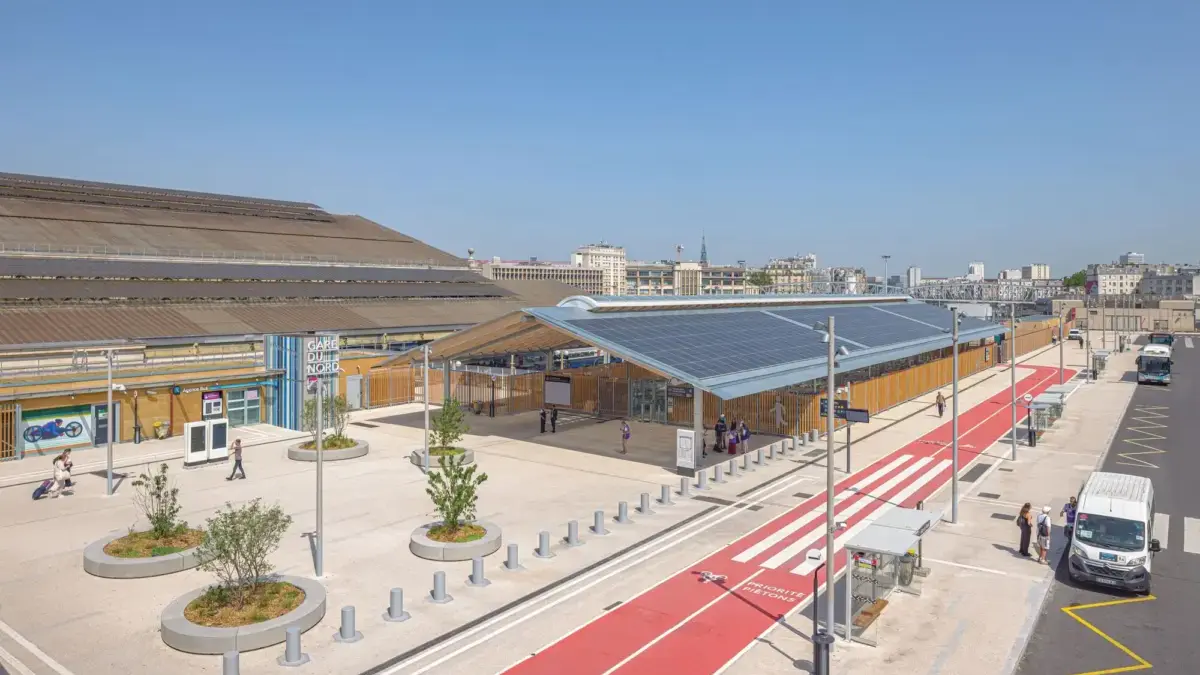
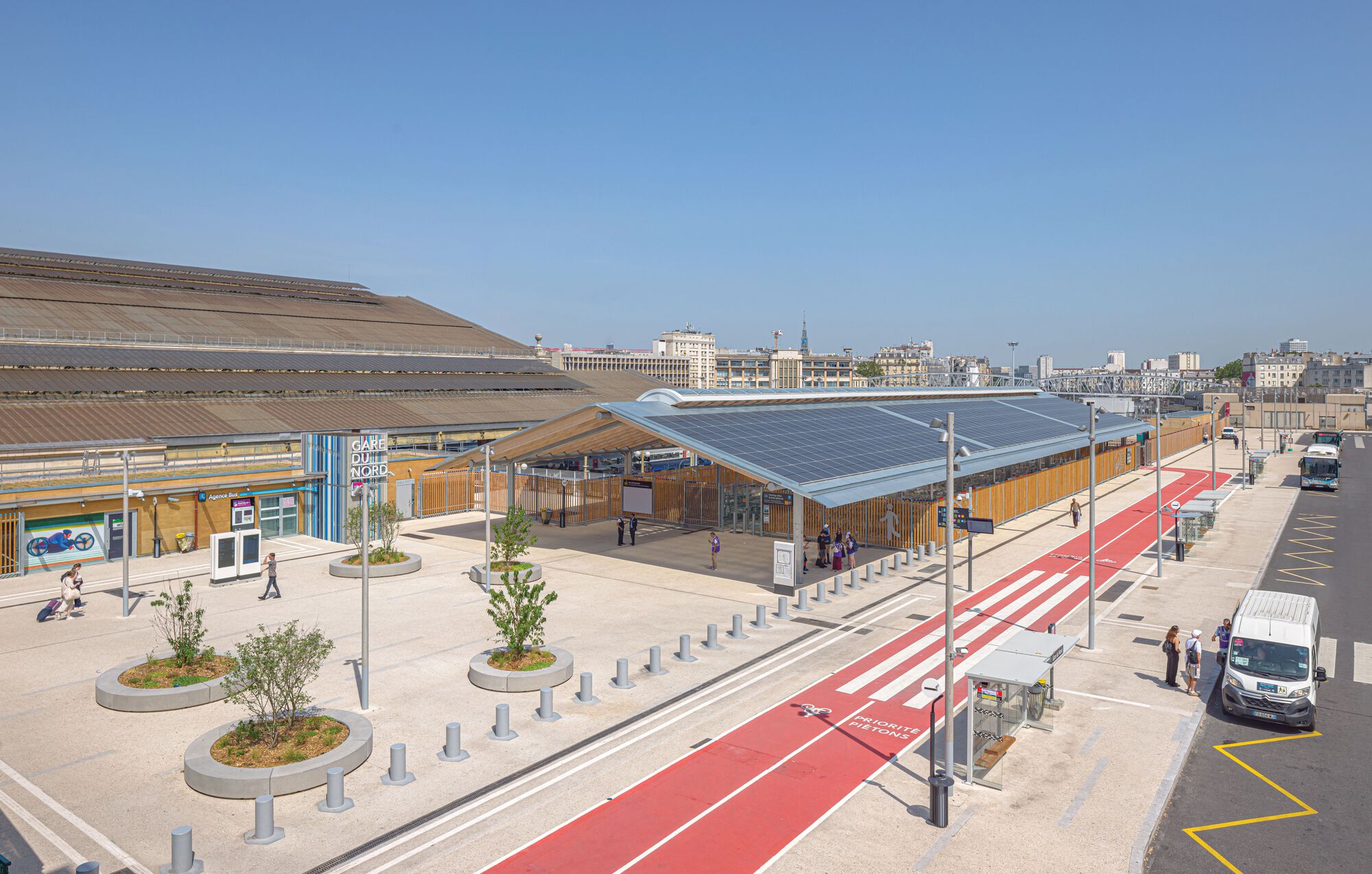
Urban transit in Europe’s densest metropolitan hubs is undergoing a profound structural metamorphosis, and the newly unveiled Solar Bicycle Hall at the Paris-Nord Station stands at the vanguard of this transformation. Designed by the multidisciplinary architecture and urban planning firm AREP, and curated by Nina Vuga, this cutting-edge infrastructure project redefines how historic transportation nodes integrate modern, sustainable mobility habits.
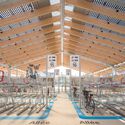
Positioned at one of Europe’s busiest railway terminals, the Solar Bicycle Hall is much more than a simple parking lot for two-wheeled vehicles. It is an architectural experiment in community-focused, energy-generating public roofing. The facility merges two critical urban imperatives: the exponential surge in everyday cycling and the urgent necessity for decentralized, on-site renewable energy generation. By providing a secure, weather-protected, and solar-paneled shelter for hundreds of bicycles, the project directly supports Paris’s ambitious municipal goals to become a fully carbon-neutral, bicycle-friendly capital.
Key physical and functional attributes of the Paris-Nord Solar Bicycle Hall include:
Location: Gare de Paris-Nord, one of the primary European rail hubs, facilitating seamless intermodal transfers between regional trains, the Métro, high-speed rail (TGV), and urban cycling networks.
Architectural Concept: Designed by AREP as an experimental community canopy that unifies public utility with ecological responsibility.
Energy Integration: Equipped with integrated photovoltaic (solar) roofing systems designed to capture clean energy, showcasing a symbiotic relationship between transportation infrastructure and renewable power generation.
Mobility Impact: Promotes a frugal, sustainable lifestyle by encouraging citizens to abandon car-dependent commuting in favor of active, intermodal transit solutions.
Chronology
The realization of the Solar Bicycle Hall at Paris-Nord Station is the culmination of years of strategic planning, urban policy shifts, and architectural iteration. While formally presented to the public in October 2026, the genesis of the project traces back to the broader restructuring of Parisian public spaces under modern ecological guidelines.
2018–2020 (The Cycling Boom): Following localized trials and the rapid expansion of temporary bike lanes (pistes cyclables) across Paris during the post-lockdown era, demand for secure parking at major transit nodes reaches an all-time high. Commuters increasingly demand reliable intermodal infrastructure where trains meet bikes.
2021–2022 (Feasibility and Design Phase): AREP is commissioned to conceptualize a high-capacity, sustainable bicycle hub at Gare du Nord. The architectural team explores innovative structural typologies that can bear solar roofing materials while respecting the historic context and spatial constraints of Europe’s busiest railway station.
2023–2024 (Engineering and Permitting): Structural engineering challenges are addressed, focusing on optimal solar panel orientation, durable lightweight framing, and safe pedestrian-cyclist segregation zones around the busy station perimeter.
2025 (Construction and Assembly): On-site construction begins, utilizing prefabricated structural elements to minimize disruption to the millions of daily commuters passing through Paris-Nord.
October 2026 (Official Launch): The project is officially completed and opened to the public. It immediately garners international architectural attention for its integration of clean energy generation and urban cycling infrastructure.
Supporting Data
To understand the necessity and magnitude of the Paris-Nord Solar Bicycle Hall, one must examine the broader quantitative trends shaping Île-de-France transportation and architectural sustainability.
Modal Share Shift: Over the past decade, cycling in Paris has seen an unprecedented surge, with daily bicycle trips increasing by over 100% since 2019. Municipal data indicates that thousands of commuters now rely on bicycles for the "first-mile, last-mile" connection to regional and national rail networks.
Intermodality at Paris-Nord: Gare du Nord handles approximately 700,000 passengers daily, making it the busiest railway station in Europe. Integrating secure bicycle storage directly into its footprint addresses a major historical bottleneck: the lack of high-capacity, weather-proof parking spaces for commuters combining cycling with train travel.
Photovoltaic Efficiency: The canopy’s solar roof is engineered to optimize the capture of diffuse urban sunlight, contributing localized green energy back to the station’s grid or powering internal lighting and charging lockers for electric-assist bicycles (VAE – Vélos à Assistance Électrique).
Architectural Footprint: AREP’s design prioritizes material efficiency and structural lightness, employing sustainable construction practices that minimize embodied carbon and align with circular economy principles.
Official Responses
The unveiling of the Solar Bicycle Hall has drawn widespread acclaim from urban planners, municipal leaders, and transportation authorities throughout France.
Representatives from AREP emphasized that the project represents a philosophical shift in how architects must approach urban infrastructure in the face of climate change. In their project statement, the design team noted:
"The solar bicycle hall is an experiment in new community roofing. It is the incarnation of the unification of uses, which encourages people to adopt more frugal and sober lifestyles, hand in hand with the rise of cycling—an essential intermodality in metropolitan stations."
Municipal transit advocates in Paris have similarly lauded the initiative. Transport authorities pointed out that building resilient, future-proof infrastructure requires moving beyond traditional parking garages to multifunctional spaces that generate resources rather than consuming them. By turning a simple bicycle shelter into a solar power generator, the project provides a tangible blueprint for transit-oriented development across Europe. Nina Vuga, curating the project documentation, highlighted how the structure bridges the gap between large-scale civic mobility and individual ecological choices, offering a calm, organized oasis amidst the chaotic energy of one of the continent’s most intense transport hubs.
Implications
The completion of the Solar Bicycle Hall at Paris-Nord Station carries significant implications for the future of European architecture, urban design, and sustainable transit networks.
1. A New Paradigm for Railway Stations
Historically, major railway terminals like Paris-Nord were designed around the automobile, the taxi, and heavy rail, treating pedestrians and cyclists as secondary considerations. The introduction of this solar bicycle hall signals a reverse of this hierarchy. By carving out prime space for active mobility directly at the threshold of the station, AREP demonstrates that sustainable transit must be given the most central, accessible locations possible.
2. Decentralized Renewable Energy in Dense Urban Fabrics
Urban centers face severe spatial limitations when attempting to install large-scale renewable energy systems. Traditional rooftop solar panels on historic station buildings are often restricted due to heritage preservation laws or structural weight limits. By creating bespoke, lightweight structures dedicated to bicycle parking that double as solar canopies, architects can bypass these limitations, turning functional transit infrastructure into micro-power plants.
3. Fostering a Culture of "Frugal" Modernity
As noted by the design team, the project encourages a more "sober and frugal" lifestyle. In an era marked by climate anxiety and resource scarcity, architecture must actively guide human behavior toward sustainable choices. When a commuter parks their bicycle under a clean, sun-harvesting roof at a major transit hub, they are reminded of their active participation in a collective ecological transition.
4. Replicability Across Global Metropolises
The success of the Paris-Nord experiment provides a scalable template for other global cities grappling with congestion and decarbonization targets. From London to Tokyo, major transit hubs face identical pressures to increase bike parking while expanding green energy portfolios. AREP’s innovative fusion of shelter, solar generation, and intermodal connectivity proves that climate-conscious design can be both aesthetically compelling and intensely practical, setting a gold standard for the future of urban mobility architecture.




Leave a Reply