

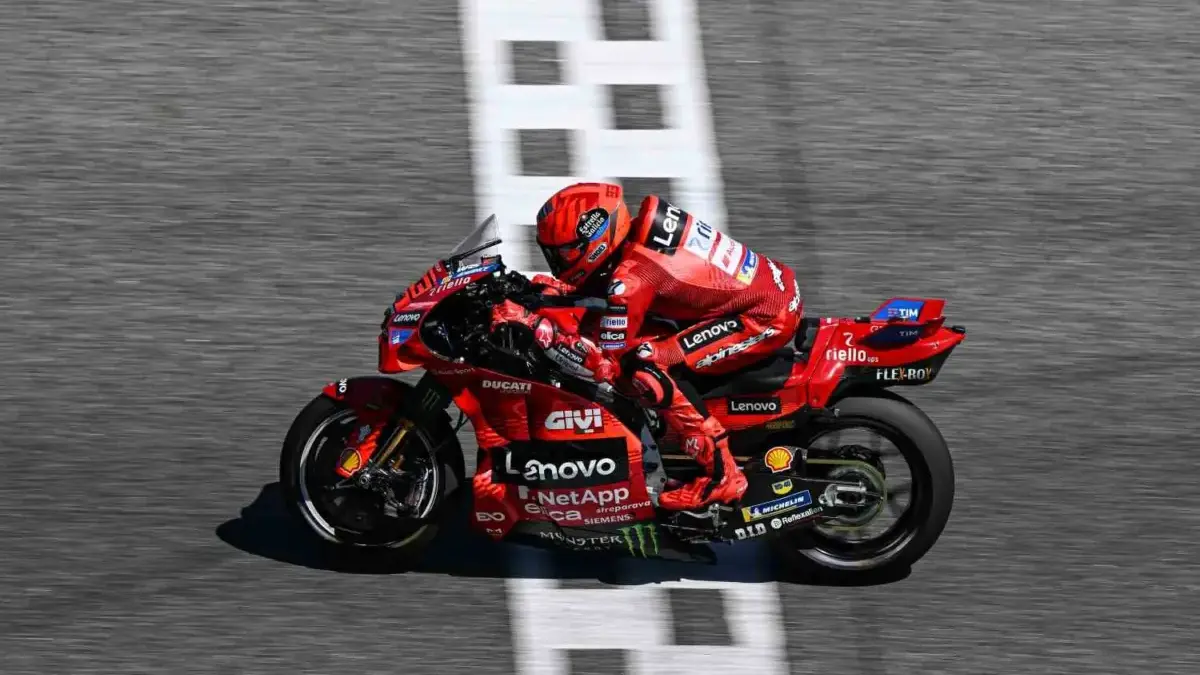
The intricate web of global automotive finance, national pride, and industrial strategy has collided in Northern Italy, turning what was once a quiet corporate rumor into a full-scale geopolitical and economic battle. At the epicenter of this storm is Ducati, the crown jewel of Italian motorcycle engineering and one of the most profitable subsidiaries under the vast umbrella of Germany’s Volkswagen Group.
Driven by an urgent need for liquidity and severe financial pressures weighing down the Volkswagen parent group, speculation surrounding a potential sell-off of Ducati has rapidly evolved from speculative whispers into a matter of high-stakes state interest. Rome has drawn a clear line in the sand: if Ducati is to change hands, the Italian government is fully prepared to use its formidable legal arsenal to ensure the legendary brand returns to entirely domestic ownership.
1. Main Facts: The Anatomy of a High-Stakes Industrial Tug-of-War
The financial fragility of the Volkswagen Group has placed its non-core and luxury assets under intense internal scrutiny. While the German conglomerate works frantically to optimize its balance sheet, streamline operations, and free up capital for the monumental transition toward electrification, Ducati has emerged as a prime candidate for divestment.
For months, industry insiders whispered that Volkswagen—via its luxury subsidiary Audi, which directly owns Ducati—might cash in on the Italian motorcycle maker. The rationale is clear: Ducati commands a stellar market valuation, enjoys elite status within the global motorcycle industry, and boasts unmatched profitability relative to its size. A sale could inject billions of euros into Volkswagen’s coffers.
However, this corporate calculus completely underestimated the political sensitivity of the asset. Ducati is not merely a profit center; it is an irreplaceable pillar of Italy’s mechanical identity, industrial heritage, and national pride.
The turning point occurred during a high-profile institutional visit by Adolfo Urso, Italy’s Minister of Enterprise and Made in Italy. Standing inside the historic Borgo Panigale factory alongside trade union representatives, regional leaders, and Ducati executives, Minister Urso issued a stark, unambiguous warning: the time has come for Ducati to return fully to Italian control. This declaration transformed a corporate balancing act into a national crusade.
2. Chronology of Events: From Whispers to State Intervention
To understand how a corporate asset review escalated into a governmental showdown, it is necessary to trace the timeline of events leading up to Rome’s intervention.
- Late 2023 – Mid-2025: Rumors and Restructuring. As Volkswagen faces mounting economic headwinds in both European and Chinese markets, analysts begin flagging Audi-owned Ducati as an attractive, highly marketable asset that could be spun off or sold to alleviate financial pressures. Throughout this period, Volkswagen maintains an official stance of denial, while local Italian authorities quietly monitor the situation to protect local employment and production lines.
- Late 2025: Executive Confirmations. Cracks appear in the official narrative when Audi CEO Gernot Döllner acknowledges during internal strategic reviews that a divestment of Ducati is at least a theoretical possibility under ongoing portfolio evaluations. Although no formal sales process or timeline is established, the acknowledgment triggers immediate concern across Emilia-Romagna.
- Early 2026: The Political Escalation. Spurred by increasing union anxieties and the risk of losing a national icon to foreign private equity or international conglomerates, the Italian government steps out of the shadows.
- July 2026: Minister Urso’s Borgo Panigale Ultimatum. Minister Adolfo Urso visits the Borgo Panigale manufacturing plant. Flanked by Confindustria President Emanuele Orsini, Emilia-Romagna President Michele de Pascale, Bologna Mayor Matteo Lepore, and Ducati CEO Claudio Domenicali, Urso publicly shifts Italy’s official position. Instead of merely asking for employment guarantees, the state demands full repatriation of ownership. Urso explicitly confirms that Rome is evaluating all legal mechanisms—specifically highlighting the Golden Power legislation—to oversee, shape, or restrict any potential transaction.
3. Supporting Data and Financial Realities: Why Ducati is So Desirable
The fierce battle over Ducati is deeply rooted in its exceptional financial health. Unlike many automotive brands that require constant restructuring or state bailouts during economic downturns, Ducati enters this political tug-of-war from a position of absolute strength.
Financial Autonomy and Profitability
Ducati is not a struggling asset in need of rescue; it is a cash-generating machine. Financial audits and internal reports consistently show that the brand is fully capable of self-financing its future R&D initiatives, factory expansions, and technological transitions without relying on capital injections from Wolfsburg or external debt. Its operating margins are among the highest in the two-wheeled sector, driven by a successful premium pricing strategy, high demand for high-end models (such as the Panigale and Multistrada), and global prestige cemented by dominance in premier motorsport championships like MotoGP and WorldSBK.
The Value of Heritage and Engineering
Headquartered in Bologna, Emilia-Romagna—Italy’s renowned "Motor Valley"—Ducati supports an extensive ecosystem of local component suppliers, specialized engineers, artisans, and technicians. Moving the brand’s ultimate ownership outside of Italy is viewed by Rome not just as a financial transaction, but as a severe brain drain and a cultural loss that threatens the integrity of the region’s industrial ecosystem.
4. Official Responses and the "Golden Power" Mechanism
At the center of the Italian government’s strategy lies a powerful and controversial legal instrument known as the Golden Power (Potere d’Oro).
Understanding the Golden Power
Originally designed to protect national security, public safety, and strategic economic sectors (such as energy, telecommunications, and high-tech manufacturing), the Golden Power grants the Italian government sweeping veto rights and regulatory oversight over corporate transactions involving strategic assets.
While the mechanism is technically a defensive shield rather than an offensive weapon—meaning it cannot legally force Volkswagen to sell Ducati, dictate a specific sale price, or hand-pick a buyer—its mere invocation fundamentally alters market dynamics.
Any non-Italian investor or corporate buyer eyeing Ducati would have to navigate a rigorous government vetting process in Rome. This regulatory hurdle inherently drives up transaction costs, introduces profound legal uncertainty, and deters speculative foreign bidders. In short, the Golden Power serves as a powerful deterrent, ensuring that any future structural changes must align with Italian national interests.
Corporate Stance: Volkswagen and Audi
Officially, the Volkswagen Group continues to maintain that Ducati is not currently for sale. However, the corporate reality dictated by Audi’s leadership leaves room for interpretation. Executives in Wolfsburg and Ingolstadt recognize Ducati’s immense market value, and while no formal sales prospectus has been circulated, the option remains on the table as a strategic lever to generate liquidity should the parent company’s restructuring demands intensify.
Meanwhile, Ducati’s local management and domestic industrial associations have tried to calm jittery markets. CEO Claudio Domenicali and regional stakeholders have repeatedly emphasized that the company’s operational foundations are rock-solid, its factories are humming, and its technological roadmap remains fully funded regardless of the corporate shareholder residing at the very top of the corporate hierarchy.
5. Broader Implications for the Market, Industry, and Consumers
For motorcycle enthusiasts, industry analysts, and everyday consumers across Europe, this high-stakes political standoff carries significant practical implications that will ripple across the market for years to come.
Strategic and Product Implications
A change in ownership—whether the brand remains under German supervision, transitions to an Italian consortium, or falls into the hands of international private equity—will inevitably shape Ducati’s long-term product roadmap. While a sudden, radical alteration of the motorcycle lineup is unlikely in the short term, corporate priorities regarding electrification, R&D investments, and market expansion will be directly influenced by the ideology and financial backing of the ultimate owner.
Dealership Networks, Parts, and After-Sales Service
Over a five-to-ten-year horizon, shifts in corporate parentage can alter dealership stability, supply chain logistics for spare parts, and warranty support structures. However, because Ducati operates with a high degree of operational independence from Audi and Volkswagen, its core manufacturing and engineering divisions in Borgo Panigale remain largely insulated from day-to-day corporate turbulence.
A Defining Moment for European Industrial Policy
Beyond motorcycles, the Ducati saga serves as a watershed moment for European industrial sovereignty. It highlights a growing trend where national governments are increasingly willing to intervene directly in cross-border corporate transactions to protect strategic domestic brands from being absorbed by foreign capital during periods of macroeconomic strain.
As the ball remains firmly in Wolfsburg’s court, Rome has sent an unmistakable message: the soul, heritage, and future of Borgo Panigale are not up for casual negotiation. The unfolding battle for Ducati will not only dictate the future of one of Italy’s most cherished cultural and industrial treasures, but it will also set a crucial precedent for how European nations safeguard their strategic economic assets in an increasingly volatile global economy.

Leave a Reply