

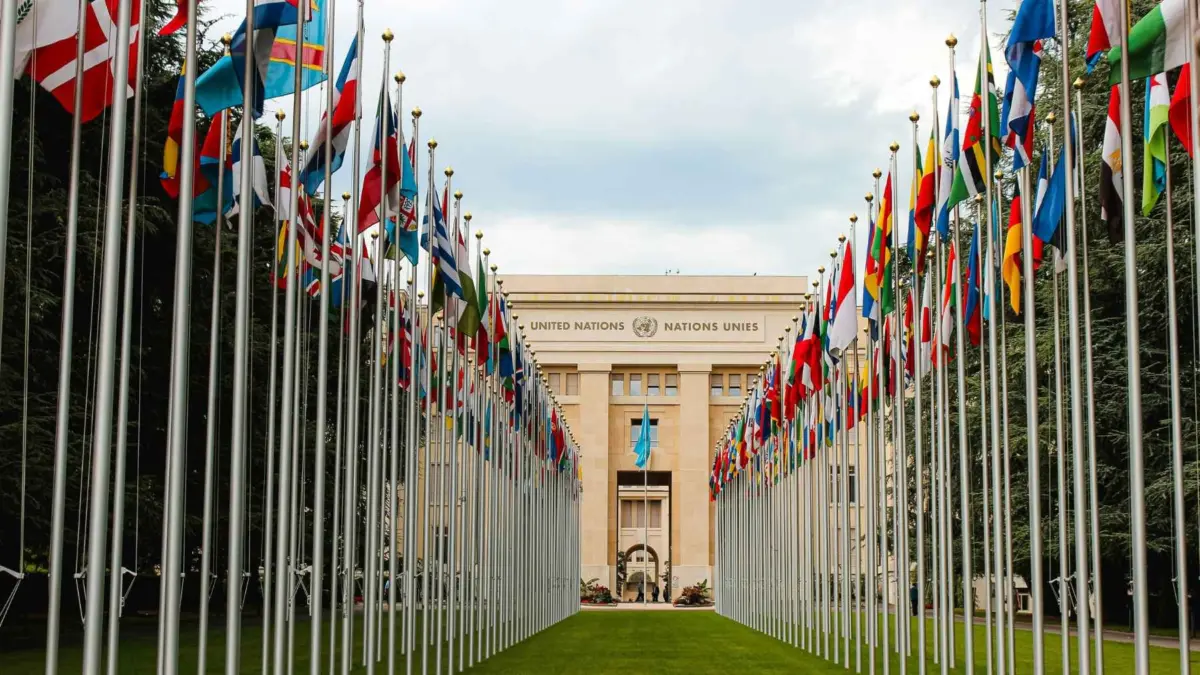
NEW YORK — As the high-level debates of the United Nations General Assembly entered their second day at UN Headquarters in Manhattan, the towering geopolitical challenges of ongoing international conflicts and the unregulated proliferation of artificial intelligence were temporarily eclipsed by an even more existential threat: the global climate crisis.
While the formal agenda initially prioritized international security and technological governance, a powerful coalition of developing nations seized the global stage to redirect the conversation toward environmental justice. Representatives from across Africa, Asia, Latin America, and the Caribbean delivered a unified and urgent message to the international community: the climate emergency is no longer a distant theoretical threat for vulnerable nations, but an immediate, daily catastrophe fueled by historical global inequality and exacerbated by a severe shortfall in international climate financing.
1. Main Facts
The central narrative of the second day of the UN General Assembly revolved around a stark dichotomy: the nations that have historically contributed the least to global greenhouse gas emissions are disproportionately bearing the catastrophic costs of global warming.
- The Injustice Gap: Developing nations, particularly Small Island Developing States (SIDS) and Least Developed Countries (LDCs), emphasized that economic inequality acts as a multiplier of climate vulnerability. Without robust financial cushions, upgraded infrastructure, or emergency response reserves, communities in the Global South face total economic devastation from routine weather events.
- The Call for Immediate Capital: Leaders from nations such as Timor Oriental, Palau, the Dominican Republic, and Ethiopia underscored that current climate financing mechanisms are fundamentally broken. Funds arrive too slowly, carry prohibitive bureaucratic or financial hurdles, and fall woefully short of the trillions required for meaningful adaptation and mitigation.
- The Water and Energy Nexus: Beyond rising temperatures and extreme weather, delegates brought critical attention to the compounding crises of water scarcity and inadequate sanitation, particularly across the African continent. Sustainable infrastructure projects, such as large-scale clean energy and water management initiatives, are stalling due to a lack of international investment and technological support.
2. Chronology of Events: Day Two at the General Assembly
The trajectory of the second day of the General Assembly shifted dramatically during the morning plenary sessions, transforming what was expected to be a routine diplomatic gathering into an impassoned referendum on global climate equity.
Morning Session: The Shift in Agenda
As delegates convened in the iconic General Assembly Hall, initial statements touched upon geopolitical flashpoints in Eastern Europe and the Middle East, alongside urgent warnings regarding the ethical deployment of artificial intelligence. However, the tone shifted decisively when delegations from the Global South took the podium.
Breaking away from traditional diplomatic pleasantries, representatives from island nations and developing economies reframed the debate. They argued that discussing global stability and technological advancement is an exercise in futility if the physical foundations of human habitation—habitable land, stable weather patterns, and access to fresh water—are collapsing in real time.
Midday Plenary: Island Nations Sound the Alarm
By midday, leaders of climate-vulnerable archipelagos and coastal states presented harrowing accounts of their current realities. Representatives from Timor Oriental and Palau detailed how rising sea levels and intensifying tropical cyclones are eroding coastlines, destroying arable land, and displacing local populations. They stressed that adaptation is no longer a policy choice, but a matter of national survival.
The Dominican Republic added a Latin American perspective, noting that the frequency and intensity of Atlantic hurricanes have placed an unsustainable burden on national treasuries. Rebuilding infrastructure after each disaster consumes the fiscal space needed for education, healthcare, and long-term economic development, locking these nations into a cyclical trap of debt and destruction.
Afternoon Session: The African Continent and the Fight for Water and Energy
The afternoon speeches brought the focus squarely to the African continent, where delegates linked the climate crisis directly to severe socio-economic vulnerabilities. Leaders from nations including Ethiopia took center stage to address the twin crises of water scarcity and energy poverty.
Ethiopian representatives highlighted the crippling reality of water insecurity that affects millions across the region. They argued that addressing this requires more than emergency food and water aid; it demands transformative, large-scale infrastructural investments. Pointing to major regional engineering feats, such as the Grand Ethiopian Renaissance Dam (GERD), they demonstrated how African nations are attempting to spearhead their own sustainable energy solutions. However, they explicitly warned that the realization of these green energy transitions is being throttled by a severe lack of international financial backing and geopolitical friction over shared water resources.
3. Supporting Data and Environmental Realities
The impassoned pleas of the Global South are heavily supported by a growing body of scientific research, economic data, and environmental monitoring reports from international bodies like the United Nations Environment Programme (UNEP) and the Intergovernmental Panel on Climate Change (IPCC).
- Historical Emissions vs. Vulnerability: According to cumulative data on global carbon dioxide emissions, industrialized nations in North America and Europe are responsible for the vast majority of historical greenhouse gas emissions since the industrial revolution. Conversely, the entire continent of Africa accounts for less than 4% of historical global emissions, yet suffers some of the most devastating impacts of desertification, extreme droughts, and erratic monsoons.
- The Adaptation Finance Gap: UNEP’s Adaptation Gap Report indicates that annual adaptation needs in developing countries are currently in the range of $215 billion to $387 billion. However, international public adaptation finance flows remain stubbornly low, hovering around a fraction of that amount. This leaves an astronomical deficit that forces developing nations to borrow at high interest rates just to repair climate-induced damages.
- The Water Crisis: Data highlighted during the General Assembly underscores that water and sanitation crises are intricately linked to climate change. In parts of sub-Saharan Africa, changing precipitation patterns have rendered traditional water sources unreliable, threatening public health, agriculture, and regional stability. Without targeted investments in water infrastructure, millions remain at risk of acute water stress.
- Economic Retardation: Economic studies presented by regional coalitions at the UN indicate that recurring climate disasters shave off percentage points of GDP annually from vulnerable economies. When a country loses 10% to 20% of its GDP in a single hurricane or drought season, its capacity to service national debt or invest in green technologies is effectively neutralized.
4. Official Responses and Diplomatic Posturing
The polarization between the demands of the Global South and the commitments of the Global North was palpable throughout the day’s proceedings, revealing deep-seated tensions regarding financial accountability and historical responsibility.
The Voices of the Vulnerable
The collective stance of the developing world was articulated through a series of firm demands. Leaders insisted that climate finance must no longer be disguised as traditional, interest-bearing loans that exacerbate the debt crises of poor nations. Instead, they demanded grants and concessional financing delivered with unprecedented speed and minimal red tape.
"We are drowning in bureaucracy while our islands are literally drowning in the sea," remarked one Pacific Island delegate during a press briefing on the sidelines of the assembly. "When financial pledges are made, they take years to materialize. But when a super-storm hits our shores, the destruction takes minutes. The architecture of international finance is entirely misaligned with the reality of the crisis."
The Position of the Industrialized Nations
While wealthy nations routinely pay lip service to the gravity of the climate crisis and reaffirm their commitments to the Paris Agreement targets—such as the elusive goal of mobilizing $100 billion annually in climate finance—representatives from the Global North faced mounting scrutiny over delivery mechanisms.
Critics within civil society and developing delegations pointed out that a significant portion of previously promised climate funds has been delivered in the form of market-rate loans rather than new, additional public grants. Furthermore, donor nations often redirect existing foreign aid budgets into climate categories rather than providing fresh capital, leaving developing nations to choose between funding health and education or paying for climate adaptation.
5. Global Implications and the Road Ahead
The impassoned debates at the United Nations General Assembly serve as a critical bellwether for the upcoming global climate summits, including the UNFCCC Conference of the Parties (COP). The message sent by the Global South is clear: without structural reform of the global financial architecture, trust between developed and developing nations will completely fracture.
The Imperative of Structural Financial Reform
The current model of international finance, largely anchored by institutions created in the post-World War II era such as the World Bank and the International Monetary Fund (IMF), is increasingly viewed as obsolete in the face of twenty-first-century planetary emergencies. Developing nations are demanding a comprehensive overhaul of these institutions to allow for debt relief clauses in the wake of climate disasters, lower cost of capital for green energy projects, and the full capitalization of the newly established Loss and Damage Fund.
Local Solutions Requiring Global Partnerships
As Ethiopia and other regional leaders emphasized, the Global South is not merely waiting for charity; it is actively conceptualizing and executing massive regional development and green energy projects. Initiatives like the Grand Ethiopian Renaissance Dam represent a shift toward self-reliance in renewable energy generation. However, these monumental engineering and ecological projects require complex international cooperation—ranging from fair transboundary water agreements to foreign direct investment in green infrastructure—to ensure they foster regional stability rather than conflict.
A Test of Multilateralism
Ultimately, the UN General Assembly highlighted that the climate crisis is the ultimate stress test for modern multilateralism. If the international community fails to bridge the chasm between the financial power of the Global North and the climate vulnerability of the Global South, the consequences will extend far beyond environmental degradation. Widespread displacement, economic collapse, and resource scarcity threaten to ignite geopolitical conflicts on an unprecedented scale.
As the second day of debates drew to a close, the consensus in the halls of the United Nations was unmistakable: time is running out. The rhetoric of solidarity must urgently transition into tangible, scalable, and equitable financial flows if the international community is to successfully navigate the defining crisis of our era.


Leave a Reply