

By: Global Investigative Desk
Published: September 2026
Main Facts: A Region Held Hostage by Infrastructure Stagnation
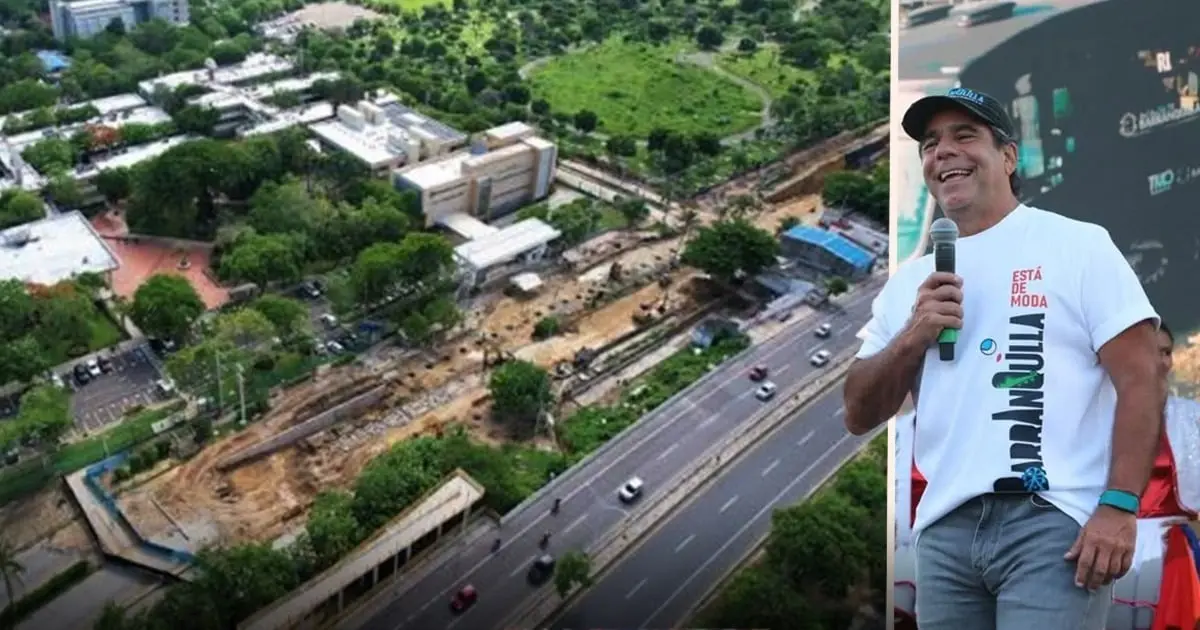
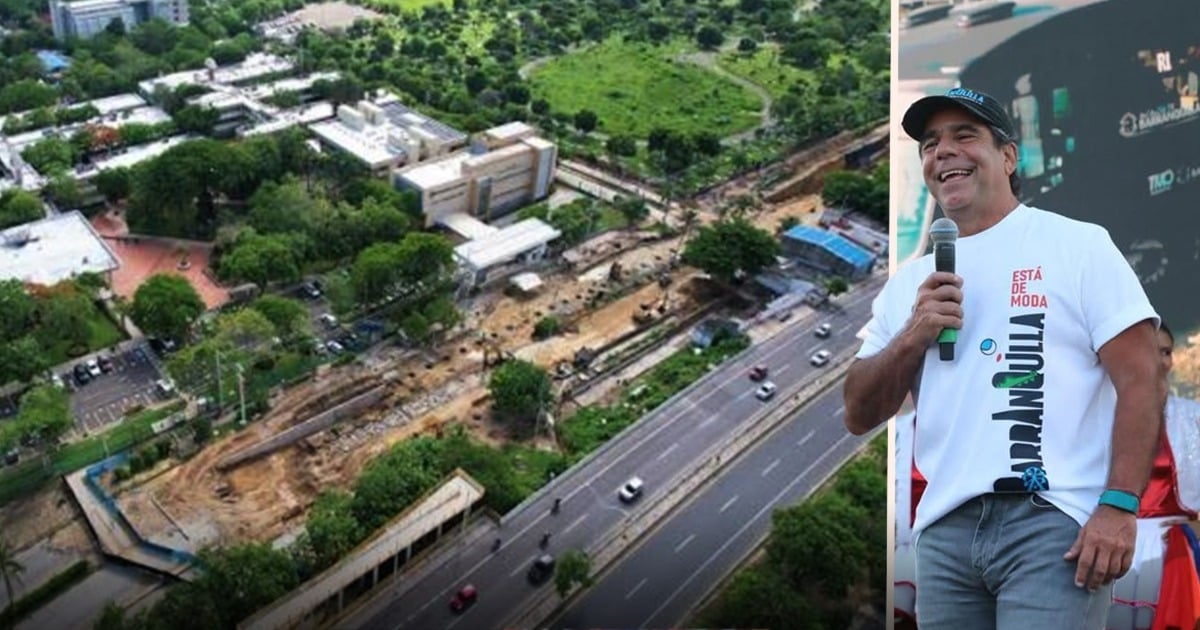
Nearly four years into a project that was originally promised as a transformative milestone for the region, the construction of the ambitious Gran Vía de Barranquilla remains incomplete. What was conceived as a modern, high-capacity arterial corridor meant to ease congestion and stimulate regional development has instead become a textbook case of infrastructural paralysis.
Despite multiple deadline extensions, persistent political spin, and a fresh financial injection of 3.650 billion pesos ($3.650 million COP) granted to the primary contractor, the project has still not crossed the finish line. At the center of this prolonged operational limbo is the Consorcio Unidad Funcional 2—represented legally by César Augusto Caro—alongside a web of subcontracting entities, public utility complications, and spiraling administrative costs.
To date, total public investment in the Gran Vía has ballooned to approximately 185.371 million pesos, split strategically across two primary structural phases:
- Unidad Funcional 1: Absorbing roughly 77.205 million pesos.
- Unidad Funcional 2: Escalating dramatically from an initial budget near 94.000 million pesos to a staggering 108.166 million pesos.
For the hundreds of thousands of commuters, students, and business owners navigating the heavily trafficked Corredor Universitario daily, these numbers do not represent progress; they represent a compounding failure of execution, oversight, and planning.
Chronology of a Delayed Dream: From Launch to Limbo
To understand how the Gran Vía devolved into a bureaucratic quagmire, one must retrace its operational timeline—a timeline marked by repeated shifts, optimistic projections, and broken promises.
Phase 1: The Contractual Inception (Late 2022 – Early 2023)
The saga officially began on November 28, 2022, when the project was formally adjudicated. Public enthusiasm was high, buoyed by promises of modernization and regional connectivity. A few months later, on March 13, 2023, the official acta de inicio (act of commencement) was signed.
The contractual framework dictated an aggressive execution window of just 18 months, setting a theoretical completion target for late 2024. However, structural realities quickly clashed with political optimism. Almost immediately, the ambitious timeframe began to fracture under the weight of unforeseen logistical barriers.
Phase 2: The Cascading Extensions (2024 – Mid 2026)
As months turned into years, the original completion deadlines faded into memory. Milestone after milestone was missed, prompting a sequence of administrative extensions and schedule recalibrations.
By mid-2026, the target had been pushed to September 30, 2026. Yet, as that date approached, project supervisors confirmed what many local residents already suspected: the September target would inevitably be missed. The inauguration was quietly deferred once again, this time pushed outward into October 2026.
Phase 3: The Mid-Year Financial Cushion (June 2026)
Adding insult to injury for local taxpayers, the consortium successfully lobbied for a significant financial bailout. On June 30, 2026, authorities authorized a direct budgetary addition of 3.650 billion pesos, driving the total cost of Unidad Funcional 2 past the 108-billion-peso threshold.
Supporting Data: Dissecting the Consortium and the Budget
A critical examination of the Gran Vía reveals a complex corporate structure behind the consortium tasked with delivering Unidad Funcional 2. The project’s execution is divided among three distinct private entities, each bearing a specific percentage of responsibility and financial exposure:

- Compañía de Trabajos e Ingeniería (Cotraing): Holds the lion’s share of the project with a 50% participation stake. It is legally represented by César Caro Pinilla.
- Planeta Proyectos y Obras: Controls 45% of the consortium, operating under the managerial leadership of Yesenia Barrera Gómez.
- Mavicon Construcción e Ingeniería: Holds a minor 5% stake, represented legally by Pedro Luis Terán Ruiz.
Despite this tripartite distribution of labor and capital, critics argue that accountability has been diffused among the partners, leaving regional oversight bodies with little leverage to enforce strict compliance.
From a financial perspective, the initial projections for Unidad Funcional 2 have been thoroughly rewritten. Starting at a baseline expectation of roughly 94 billion pesos, continuous change orders, technical adjustments, and the recent mid-2026 financial addition have inflated the final expenditure to 108.166 million pesos. When combined with Unidad Funcional 1, the total public capital committed to the corridor now rests at an eye-watering 185.371 million pesos.
Official Responses and Justifications: Why the Delay?
Faced with mounting public criticism, investigative journalism reports, and legislative pressure, the contractors and regional authorities have offered a litany of explanations for the protracted timeline. According to official statements issued by the consortium, the delays are not the result of administrative negligence, but rather an accumulation of unavoidable structural and logistical hurdles.
1. Land Acquisition (Predios)
One of the primary bottlenecks cited by project managers has been the complex legal and administrative process required to acquire private land along the designated right-of-way. Delays in property negotiations and expropriation proceedings directly stalled heavy machinery deployment across several critical stretches of the highway.
2. Public Utilities Interoperability
Coordination failures between the civil engineering contractors and regional utility providers—specifically Air-e (electricity), Triple A (water and sewage), and Gases del Caribe (gas)—created severe scheduling conflicts. Relocating subterranean and aerial utility grids frequently required halting roadwork entirely while legacy infrastructure was uninstalled, upgraded, or rerouted.
3. Unforeseen Geotechnical Realities
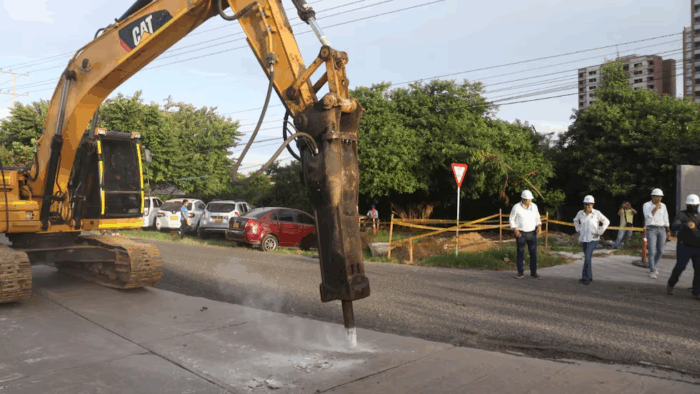
Engineers encountered unexpected subterranean obstacles, including severe topographical desniveles (uneven terrain) and massive underground rock formations. These geological surprises demanded specialized extraction equipment and redesigns of structural sub-bases, slowing down the pace of excavation and paving.
4. High-Traffic Corridor Pressures
Unlike rural highway projects where construction zones can be entirely isolated, the Gran Vía cuts through the bustling Corredor Universitario—a high-density urban sector characterized by immense vehicular flow. Because the road could not be fully closed without paralyzing regional commerce and daily commuting, construction had to occur under continuous traffic conditions. This limitation exacerbated vehicular congestion, heightened accident risks, and severely constrained the operational efficiency of heavy machinery.
5. Internal Financial Friction
Beyond external logistics, the consortium acknowledged internal financial strains that trickled down to affect sub-contractors, equipment rentals, and material procurement cycles during critical phases of the project.
Implications: The Social, Economic, and Political Fallout
The protracted saga of the Gran Vía de Barranquilla carries profound implications for the department of Atlántico, its citizens, and its political leadership.
Economic Strain on Taxpayers
For a region with pressing social needs, the continuous absorption of budget overruns—such as the recent 3.650-billion-peso addition—diverts public funds away from healthcare, education, and social development. Every extension translates into increased operational costs, administrative overhead, and lost economic productivity for businesses operating along the bottlenecked corridor.
Erosion of Institutional Trust
Public cynicism regarding public-private infrastructure contracts continues to deepen. When major public works routinely miss deadlines by years rather than weeks, it fosters a pervasive public perception of regulatory laxity and weak oversight by state entities. Citizens are left questioning the efficacy of project feasibility studies conducted prior to contract adjudication.
The Political Stakes for Local Leadership
With the current municipal and regional administrations under intense scrutiny, completing the Gran Vía has become a high-stakes political imperative. Current projections suggest that if the consortium avoids any further unforeseen shocks, the infrastructure might finally be inaugurated before the conclusion of Mayor Alejandro Char’s term on December 31, 2027.

However, given the project’s track record of missed deadlines—from the initial 18-month window in 2023 to the broken promises of late 2024, mid-2025, and September 2026—local residents and business owners remain understandably skeptical.
Current Status and Outlook
Despite the gloom, project contractors maintain an optimistic posture, claiming that physical progress has crossed the 95% completion threshold. Remaining tasks include finalizing select sections of the sewage network, completing the integral underground passage (el deprimido), installing dry utility lines, and applying final asphalt layers and urban beautification details.
Whether the Gran Vía de Barranquilla will finally emerge as the modern infrastructural jewel it was promised to be, or remain a monument to bureaucratic delay, depends entirely on whether the consortium can cross the finish line before public patience—and regional financial reserves—are completely exhausted.




Leave a Reply