

Global Technology Desk
Updated: October 2025
The era of accessible high-end mobile technology is facing an unprecedented inflection point. For years, consumers grew accustomed to a predictable rhythm in the smartphone market: with each annual generation, devices would offer superior cameras, brighter displays, faster processors, and larger memory capacities, all while maintaining relatively stable price points. Manufacturers routinely absorbed minor supply chain fluctuations, treating component cost increases as the cost of doing business in a fiercely competitive global landscape.
Today, that paradigm is collapsing.
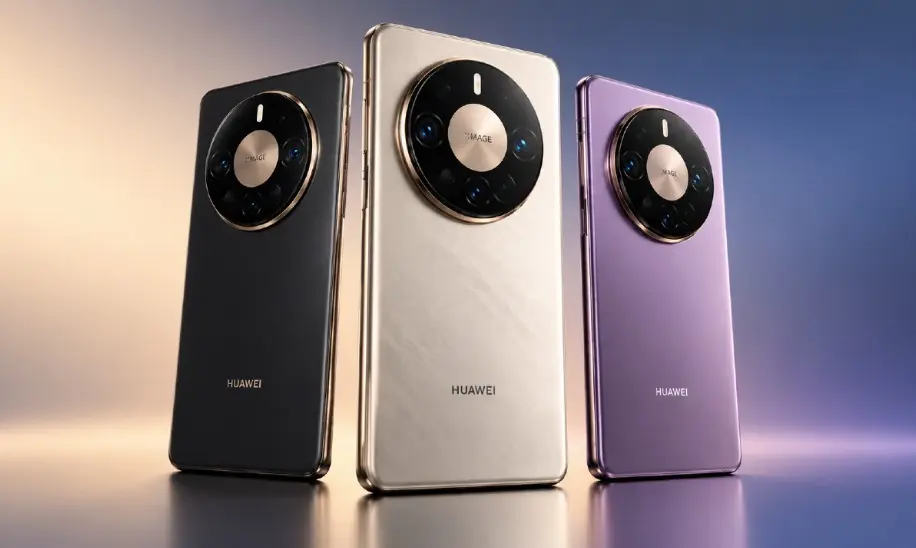
The surging global demand for artificial intelligence infrastructure has triggered a monumental bottleneck in the semiconductor and memory markets. What began as a localized supply chain constraint has now manifested directly at the consumer level, fundamentally altering the economics of mobile manufacturing. Huawei, one of the industry’s most resilient and prominent players, has become an early bellwether for this seismic shift. As memory costs skyrocket, the tech giant has been forced to recalibrate the retail pricing of its flagship devices, offering a cautionary tale for the entire consumer electronics ecosystem.
1. Main Facts: The Anatomy of a Price Hike
The direct correlation between rising component costs and consumer price tags is no longer a theoretical projection; it is an established reality. According to recent reports from industry tracker DIGITIMES, select premium models within Huawei’s flagship lineup have seen price jumps of up to $200 USD.
Richard Yu, the executive leading Huawei’s consumer business group, provided critical context to contextualize the scale of the crisis. According to Yu, memory components alone have added an average of roughly $200 USD to the manufacturing cost of each flagship device, though he did not specify the exact baseline period for this calculation.
This dramatic escalation in production overhead is starkly visible when examining consecutive generations of Huawei’s marquee Mate series, utilizing launch prices in the domestic Chinese market as a benchmark:
- The Base Models: The Huawei Mate 80 debuted at an entry price of 4,699 yuan (approximately $660 USD). Its successor, the Mate 90, starts at 5,999 yuan (roughly $843 USD). This represents a raw gap of 1,300 yuan—about $183 USD. However, analysts note that this gap also encapsulates generational hardware upgrades, meaning the delta cannot be attributed solely to memory.
- The Pro Variants: The Huawei Mate 80 Pro launched at 5,999 yuan ($843 USD), while its direct successor, the Mate 90 Pro, climbs to 6,999 yuan ($984 USD).
- The Pro Max Tier: At the absolute pinnacle of the lineup, the price movement becomes even more pronounced. The Mate 80 Pro Max transitioned from 7,999 yuan ($1,124 USD) to a staggering 9.499 yuan ($1,335 USD).
These figures confirm that while manufacturing pressures are universal across the product family, the final retail adjustment varies depending on the specific tier, configuration, and internal hardware allocations chosen by the consumer.
2. Chronology of a Crisis: How Memory Became the Ultimate Bottleneck
To understand how high-end smartphones arrived at this juncture, it is necessary to trace the timeline of supply and demand pressures that have gripped the semiconductor industry over the past twenty-four months.
The Rise of Generative AI and Data Centers
The root cause of the current memory crunch extends far beyond the mobile sector. The explosive, global race to deploy generative artificial intelligence models has necessitated the construction and expansion of massive enterprise data centers. These facilities rely heavily on high-bandwidth memory (HBM) and enterprise-grade solid-state storage to train and operate complex large language models (LLMs).
Major memory manufacturers—such as SK Hynix, Samsung, and Micron—have strategically pivoted their production lines and capital investments toward these high-margin enterprise products. Consequently, the manufacturing capacity allocated to standard LPDDR RAM and mobile-grade storage has been squeezed, precipitating a classic supply-and-demand imbalance.
The Ripple Effect on Consumer Electronics
By mid-2024, warning signs were flashing across the consumer electronics supply chain. While server-grade memory and mobile memory do not always share identical production lines, the competition for raw silicon, packaging facilities, and foundry resources created a zero-sum game.
By late 2024 and into 2025, component suppliers began passing rising input costs down the line. For smartphone makers, who rely on predictable, high-volume component procurement, the sudden upward spike in memory pricing proved impossible to completely ignore. Huawei’s late-2025 release cycle for the Mate 90 series served as the first major public validation of these pressures, forcing consumers to absorb costs that previously would have been mitigated by corporate margins.
3. Supporting Data: The Economics of High-Capacity Configurations
A critical nuance in understanding modern smartphone pricing is the distinct vulnerability of flagship devices to memory price fluctuations. Unlike budget or mid-range phones, which typically ship with modest RAM and storage configurations (such as 6GB or 8GB of RAM and 128GB of storage), flagship devices are defined by excess.
The Burden of Premium Specs
Modern flagship smartphones are expected to feature 12GB, 16GB, or even 24GB of high-speed LPDDR5X RAM, paired with internal storage capacities stretching from 512GB to 1TB. Furthermore, as on-device artificial intelligence processing becomes a baseline expectation—requiring local neural processing units (NPUs) and substantial RAM to run lightweight AI models locally—the demand for memory per device has escalated.
As Richard Yu pointed out, when the base cost of memory spikes, variants equipped with massive storage and RAM capacities absorb a disproportionately higher share of the financial blow compared to entry-level or mid-range handsets. A device requiring quadruple the memory footprint of a budget phone feels the sting of a memory market crunch fourfold.
Absorbing vs. Passing Costs
A common misconception is that a $200 increase in manufacturing cost mandates a strict $200 increase in the retail price. Yu was careful to clarify Huawei’s corporate strategy: the company must elevate its retail tariffs at a pace inferior to the total growth of its internal expenses.
This indicates that Huawei—and likely its competitors—is deliberately absorbing a portion of the memory price hike through squeezed profit margins. However, there is a hard financial ceiling to how much margin a corporation can sacrifice before a product line becomes financially unviable. Once that threshold is breached, the remainder of the cost must inevitably be passed on to the end consumer.
4. Official Responses and Industry Outlook
As the ripples of the memory crisis spread across the technology sector, industry leaders and market analysts have begun voicing concerns over the long-term sustainability of current pricing models.
Executives within Huawei have emphasized that navigating this inflationary environment requires unprecedented supply chain agility. Rather than purely relying on passing costs to buyers, manufacturers are aggressively negotiating long-term supply contracts, diversifying their vendor base, and optimizing software to extract maximum performance from more modest hardware footprints where possible.
However, external analysts warn that manufacturing jujitsu can only achieve so much. Navin Shenoy, a veteran semiconductor analyst, notes that "the structural shift in fab allocation toward AI infrastructure is not a temporary blip; it represents a multi-year realignment of global semiconductor priorities. Consumer hardware manufacturers will have to adapt to a permanently higher cost floor for silicon and memory."
Furthermore, regulatory bodies and consumer advocacy groups are beginning to monitor the situation, mindful of potential price-fixing vulnerabilities or anti-competitive behaviors in concentrated semiconductor markets. Yet, for now, the consensus remains that macroeconomic supply dynamics—not corporate profiteering—are driving the price adjustments.
5. Implications: Beyond the Flagship Tier
While high-end devices like Huawei’s Mate series dominate the headlines, the true casualties of the memory and processor crunch may lie at the exact opposite end of the pricing spectrum: the budget and entry-level markets.
The Squeezing of the Ultra-Affordable Segment
In the premium tier, brands possess a degree of pricing elasticity. Consumers buying a $1,000+ phone have higher disposable incomes and are often willing to absorb marginal price increases in exchange for prestige or bleeding-edge features.
The budget sector ($200 USD and under), however, operates on razor-thin margins where every single cent counts. In these devices, manufacturers have virtually zero financial room to absorb a sudden surge in component costs. If memory and processors become too expensive, brands cannot simply raise the retail price without alienating their core demographic; instead, they are forced to compromise on specifications, strip out popular features, or cancel entire product lines altogether.
Counterpoint Research Projections
The data supporting this grim outlook is stark. According to comprehensive market projections from Counterpoint Research, global shipments of smartphones priced under $200 USD are projected to plummet by approximately 40% between 2025 and 2030.
This contraction translates to an astonishing reduction of more than 230 million units annually by the end of the decade. The systematic encarecimiento (cost inflation) of foundational components—chiefly memory and entry-level processors—is a primary catalyst for this trend. The result will likely be a severe narrowing of affordable alternatives in the global market, potentially locking low-income consumers out of the digital upgrades they rely on for daily life, education, and work.
A New Framework for Evaluating Future Purchases
For the everyday consumer, this crisis introduces a complex new variable when shopping for technology. Moving forward, the traditional consumer habit of evaluating a new smartphone generation purely on the premise of "more for the same price" is officially obsolete.
When future device generations arrive with higher price tags, buyers can no longer safely assume that the price increase corresponds neatly to an equivalent leap in camera quality, display technology, battery life, or processing power. Discerning consumers will need to look past the marketing hype and conduct rigorous hardware audits—comparing cameras, chipsets, screens, and memory tiers directly against previous generations—to determine precisely how much of their hard-earned money is paying for genuine innovation versus the brutal math of a constrained global memory supply chain.



Leave a Reply