

By Investigative Desk
Updated and Expanded Edition
Executive Summary: The Anatomy of an Abuse of Power
In an era defined by ubiquitous digital oversight, closed-circuit television networks, and artificial intelligence-driven data harvesting, the public is frequently told that mass surveillance is a necessary shield against crime. Yet, a recent scandal in Sumter County, Florida, has laid bare a terrifying vulnerability in this architecture: what happens when the very people tasked with protecting the public weaponize state-of-the-art surveillance tools for personal vendettas?
Brandy Almany, a veteran detective with five years of service at the Sumter County Sheriff’s Office, found herself at the center of a systemic crisis after she allegedly used confidential police databases and high-tech Automated License Plate Reader (ALPR) networks to track down and monitor the ex-wife of her current husband. Driven by personal jealousy rather than professional necessity, Almany bypassed security protocols by falsifying case numbers and inventing bogus investigative justifications.
The fallout was swift and severe. Almany was suspended, terminated, and subsequently arrested, facing multiple criminal charges. However, the most striking aspect of the case was not merely the rogue detective’s actions, but the response of Sumter County Sheriff Pat Breeden. Rather than simply revoking Almany’s credentials, the Sheriff took the unprecedented step of shutting down the county’s entire automated license plate reader network.
This article explores the chilling reality of modern municipal surveillance, examining the timeline of the investigation, the mechanics of the technology exploited, the official institutional responses, and the profound implications this case holds for civil liberties and digital privacy across the United States.
Main Facts: The Sumter County Scandal
The core of the controversy rests on the intersection of personal obsession and unchecked administrative access to sensitive government and corporate data repositories.
- The Perpetrator: Brandy Almany, a 5-year veteran detective employed by the Sumter County Sheriff’s Office in Florida.
- The Target: The ex-wife of Almany’s current husband.
- The Motive: Personal jealousy and domestic friction, entirely unrelated to any active law enforcement operation or criminal investigation.
- The Tools Exploited:
- The Florida Driver and Vehicle Information Database (DAVID).
- The Comprehensive Case Information System (CCIS).
- The private ALPR camera network operated by Flock Safety.
- The Method: Almany systematically bypassed safeguards by inputting unrelated file numbers and fabricating investigative justifications to trick the audit trails into believing her queries were legitimate.
- The Legal Consequences: Almany was stripped of her badge, fired from the department, and placed under arrest. She faces official misconduct charges alongside three distinct computer-related crimes, with judicial proceedings ongoing.
- The Institutional Reaction: Sumter County Sheriff Pat Breeden ordered the complete shutdown of the county’s Flock Safety automated license plate reader network, triggering a comprehensive, forensic audit of all system accesses and user histories.
Chronology of Events: From Routine Audit to Statewide Controversy
To understand how a domestic dispute escalated into a major institutional crisis, one must trace the timeline of detection, internal investigation, and administrative retaliation.
Phase 1: The Breach of Trust (Unspecified Duration)
Over what investigators believe was an extended period, Detective Brandy Almany utilized her authorized credentials to access restricted state and local databases. Because she possessed legitimate clearance as a detective, her login credentials were valid. However, her queries were fraudulent. By attaching real file numbers from unrelated, closed, or active cases to her searches, Almany masked her illicit inquiries into the daily movements, addresses, and vehicle patterns of her husband’s ex-wife.
Phase 2: Routine Audit Discovers Anomalies
The breach was not caught in real-time by automated alarms, highlighting a critical flaw in current municipal cybersecurity models. Instead, the irregularities were flagged during a routine internal audit conducted by the Sumter County Sheriff’s Office. Investigators analyzing database query logs noticed recurring anomalies: searches executed by Almany that correlated with no active case files, suspects, or ongoing department initiatives.
Phase 3: Internal Investigation and Arrest
Once the anomalies were escalated to command staff, the internal affairs division launched a focused inquiry. Investigators quickly established that the targets of Almany’s digital surveillance had no criminal history, open warrants, or investigative connection to her caseload. The common denominator in the searches was a direct personal link to Almany’s domestic life.
Following the conclusion of the preliminary internal investigation, the department acted decisively. Almany was immediately suspended from duty. Within days, her employment was terminated, and she was taken into custody to face formal criminal charges, including official misconduct and multiple counts of unauthorized computer access.
Phase 4: The Nuclear Option – System Shutdown
Faced with a breach of public trust that compromised the integrity of the department’s surveillance apparatus, Sheriff Pat Breeden took to social media and official channels to announce a dramatic remedy. Rather than implementing a localized password reset or issuing a reprimand, Breeden ordered the entire Flock Safety camera network within Sumter County to be powered down. The network remains offline pending a granular, forensic audit of every user, access point, and search history logged by the department.
Supporting Data: The Mechanics of Modern Surveillance and Flock Safety
To fully grasp the magnitude of what Almany accessed, it is vital to understand the technological ecosystem powering modern American policing. The controversy is not merely about an officer misusing a standard police database; it is about the weaponization of automated, real-time mass tracking systems.
What is Flock Safety?
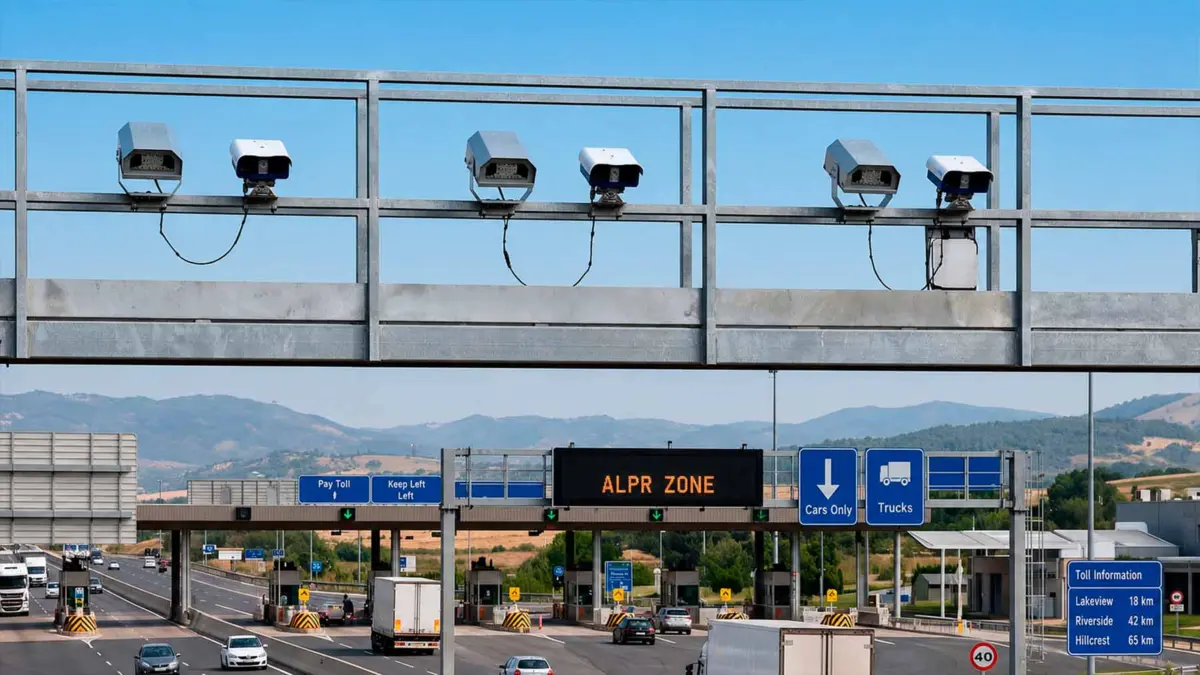
Flock Safety is a private technology company that provides automated license plate reader (ALPR) systems to thousands of cities and law enforcement agencies across the United States. Unlike traditional traffic cameras designed to catch speeders or red-light runners, Flock cameras are deployed on streets, suburban neighborhoods, and highway interchanges to capture high-definition photographs of every passing vehicle.
The cameras record:
- The exact timestamp of the vehicle’s passage.
- The precise geographic location (GPS coordinates) of the camera.
- Vehicle characteristics, including make, model, color, body type, and unique features like bumper stickers, roof racks, or minor damage.
- The vehicle’s license plate number.
The Digital Panopticon
When aggregated into cloud-based databases, this data ceases to be a collection of isolated snapshots. It transforms into a continuous, searchable timeline of human movement. Law enforcement agencies use these platforms to run "hot list" queries (e.g., alerting police if a stolen vehicle or a vehicle tied to an amber alert passes a camera).
However, because these systems compile the travel histories of ordinary, law-compliant citizens going about their daily lives—commuting to work, visiting doctors, dropping children off at school, or meeting friends—they represent a massive repository of sensitive personal data.
When a bad actor with law enforcement credentials gains unfettered access to this network without strict, real-time oversight, the technology designed to catch criminals effectively functions as a state-sanctioned stalkerware tool. Almany’s ability to track her husband’s ex-wife demonstrates that a motivated insider can easily reconstruct a citizen’s daily routine using public infrastructure.
Official Responses and Institutional Accountability
The reaction of Sheriff Pat Breeden stands in stark contrast to the standard operating procedures of many American law enforcement agencies, which typically seek to contain scandals quietly, shield officers from public scrutiny, and minimize institutional liability.
Sheriff Pat Breeden’s Hardline Stance
In a public video statement released via social media channels, Sheriff Breeden made no excuses for the actions of his former detective. He emphasized that the badge does not place anyone above the law, nor does it grant license to abuse the foundational rights of private citizens.
By pulling the plug on the entire Flock Safety camera network, Breeden sent a shockwave through the regional law enforcement community. The decision prioritized absolute accountability and public transparency over continuous tactical surveillance. In his statement, the Sheriff underscored that the network would not be restored until every single user account had undergone rigorous forensic vetting, ensuring that no other personnel were engaging in similar abuses of power.
The Problem of Reactive Auditing
Despite Sheriff Breeden’s decisive intervention, cybersecurity experts and civil liberties advocates point out a glaring systemic failure: Almany was caught only because of a routine audit after the fact.
This exposes a fundamental vulnerability in law enforcement IT architecture. In most police departments, access control models rely on "trust and verify" rather than "zero trust." Officers are granted broad, sweeping permissions to access sensitive databases because they may need them on short notice during active investigations. Audits are typically conducted retroactively—weeks, months, or even years later—meaning that an abusive user can inflict severe privacy violations, harassment, or physical harm long before an internal auditor notices a statistical anomaly.
Implications: The Delicate Balance Between Public Safety and Privacy
The Brandy Almany scandal in Sumter County is much more than a localized human interest story about a messy domestic dispute; it is a microcosm of a national crisis concerning digital rights, municipal surveillance, and institutional oversight.
1. The Illusion of Internal Ethics as a Safeguard
As AI-driven analytics, facial recognition, and automated tracking networks proliferate across American municipalities, the safeguard protecting ordinary citizens from constant government tracking often boils down to a single variable: the personal ethics of an individual clerk, dispatcher, or detective. When those ethics fail, the institutional safeguards frequently prove illusory. If a detective can bypass database filters by typing in a dummy case number, the system is fundamentally broken.
2. The Normalization of Mass Surveillance
The expansion of private-public partnerships in policing—such as police departments utilizing private networks like Flock Safety—blurs the line between public safety and commercial mass surveillance. When private corporations amass comprehensive databases of citizens’ physical locations, the legal protections governing these datasets are often far weaker than those protecting traditional wiretaps or physical searches. Scandals like the one in Sumter County prove that these massive data lakes are inherently attractive targets for abuse, not just by external hackers, but by internal insiders.
3. The Urgent Need for "Zero Trust" Architectures
The events in Florida have reignited a fierce debate among legal scholars, privacy advocates, and technologists regarding the future of police database security. Key recommendations emerging from the crisis include:
- Real-Time Anomaly Detection: Implementing artificial intelligence within police databases to flag suspicious queries instantly, rather than waiting for periodic human audits.
- Two-Party Authorization: Requiring supervisory approval or multi-factor cross-referencing before an officer can access high-resolution location history or automated license plate reader logs.
- Strict Data Minimization: Limiting how long private-public partnerships can retain the location data of non-suspect citizens, thereby reducing the pool of available data should an insider go rogue.
Conclusion
The image of a law enforcement officer utilizing state-of-the-art investigative machinery to feed personal jealousy is a profound betrayal of the public trust. Brandy Almany’s actions resulted in the loss of her career, her reputation, and her liberty, culminating in criminal prosecution for official misconduct and computer crimes.
However, the true legacy of the Sumter County scandal extends far beyond one detective’s courtroom battles. By shutting down his county’s entire license plate reader network, Sheriff Pat Breeden acknowledged a sobering reality: technology designed to protect us can easily be turned against us if the institutions wielding it fail to maintain unyielding internal controls.
As cities across the globe race to adopt smarter, more connected surveillance infrastructure, the Florida incident serves as an urgent cautionary tale. Public safety cannot come at the expense of constitutional privacy, and the systems designed to monitor the public must themselves be rigorously, continuously, and transparently monitored to ensure they serve justice rather than personal grievance.




Leave a Reply