

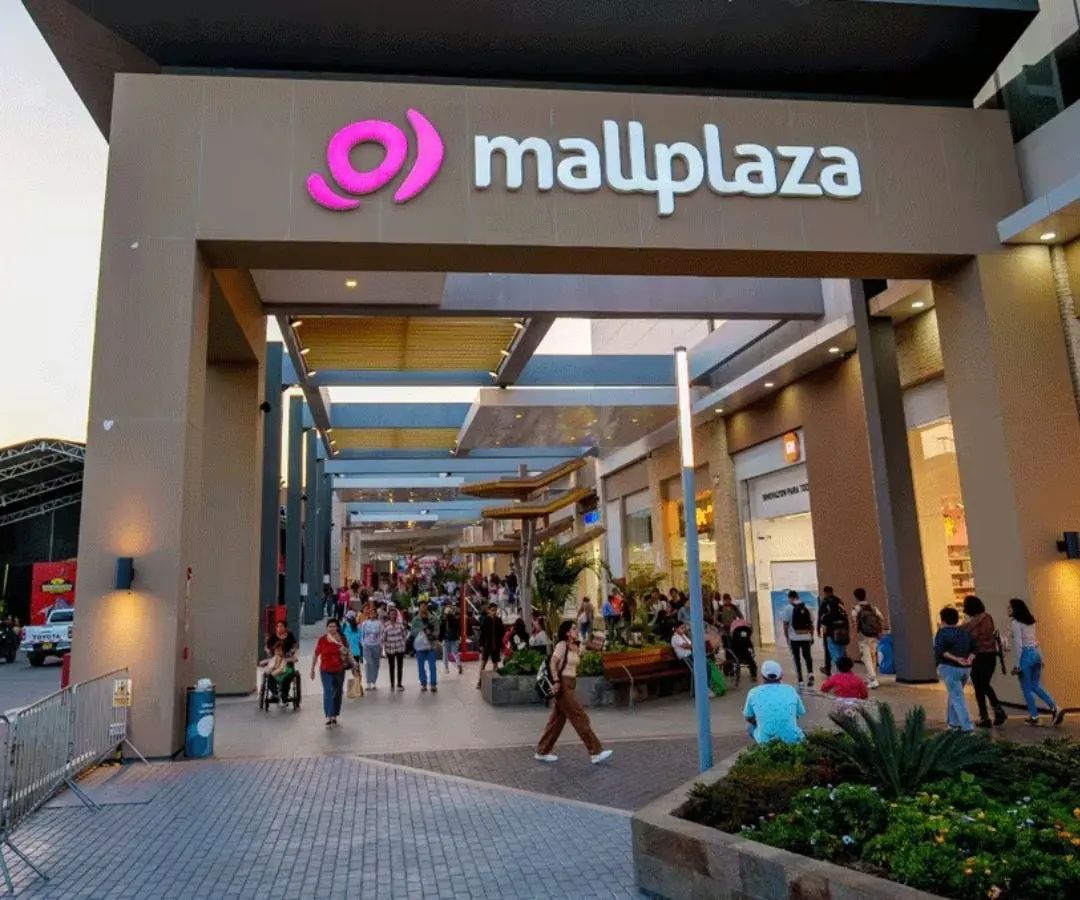
SANTIAGO, Chile — In a major move that reshapes the retail real estate landscape across the Andean region, Plaza S.A. (Mallplaza), the shopping center operator controlled by Chilean retail giant Falabella, has signed a binding agreement to acquire control and administration of eight shopping centers in Colombia. The transaction, valued at approximately COP 1.17 trillion (around USD 376 million), represents a significant acceleration of Mallplaza’s regional expansion strategy, solidifying its position as a dominant player in South America’s retail sector.
The seller, Patrimonio Autónomo Pactia—a prominent Colombian private equity and real estate venture backed by Grupo Argos and Conconcreto—has agreed to transfer 100% of the fiduciary rights of the respective autonomous trusts holding the properties. Operating under the "Gran Plaza" brand, the acquired portfolio adds approximately 180,000 square meters of Gross Leasable Area (GLA) to Mallplaza’s regional network.
Main Facts
The transaction represents one of the largest real estate deals in the Colombian retail sector in recent years. It is being executed through the Fondo de Capital Privado Mallplaza, the company’s dedicated investment vehicle in Colombia, which allows the Chilean multinational to navigate local regulatory and tax structures efficiently.
Key Elements of the Agreement:
- The Buyer: Plaza S.A. (Mallplaza), a publicly traded company on the Santiago Stock Exchange, closely linked to the multinational retail conglomerate Falabella.
- The Seller: Patrimonio Autónomo Pactia, one of Colombia’s leading real estate asset managers, co-owned by industrial conglomerate Grupo Argos and engineering firm Conconcreto.
- The Target Portfolio: Eight shopping centers operating under the "Gran Plaza" banner, located in diverse and strategically important Colombian cities.
- The Deal Value: COP 1,177,806,418,253 (approximately USD 376 million), subject to standard post-closing adjustments typical in large-scale commercial real estate transactions.
- Physical Assets: Approximately 180,000 square meters of GLA, featuring high occupancy rates and a diversified tenant mix.
- Expected Closing: The transaction is subject to regulatory approvals—including scrutiny from Colombia’s antitrust watchdog, the Superintendency of Industry and Commerce (SIC)—and is projected to finalize during the second half of the year.
Chronology of the Transaction and Mallplaza’s Regional Expansion
To understand the magnitude of this acquisition, it is essential to trace Mallplaza’s strategic entry and subsequent growth within the Colombian market over the past decade.
[2012] Mallplaza enters Colombia with Mallplaza El Castillo in Cartagena.
   │
[2018] Launch of Mallplaza Manizales, targeting mid-sized Andean cities.
   │
[2019] Opening of Mallplaza Buenavista in Barranquilla, expanding Caribbean footprint.
   │
[2020] Acquisition and remodeling of Mallplaza NQS in Bogotá (former Calima mall).
   │
[H1 2023] Negotiations with Pactia culminate in a binding agreement for 8 Gran Plaza malls.
   │
[H2 2023] Anticipated regulatory approvals and formal closing of the USD 376 million deal.- 2012 – The Beachhead in Cartagena: Mallplaza made its debut in Colombia with the opening of Mallplaza El Castillo in Cartagena. This initial step allowed the company to test the waters of the Colombian consumer market, adapting its Chilean "urban center" model to local cultural and economic dynamics.
- 2018 – Expanding to the Interior: The company opened Mallplaza Manizales, signaling a commitment to expanding outside of Colombia’s primary metropolitan areas and targeting rapidly growing mid-sized cities.
- 2019 – Strengthening the Caribbean Coast: The opening of Mallplaza Buenavista in Barranquilla added a high-end, multi-functional asset to the portfolio, incorporating extensive culinary and entertainment options.
- 2020 – Entering the Capital: Mallplaza entered the highly competitive Bogotá market by acquiring and subsequently transforming the former Calima shopping center into Mallplaza NQS, introducing the first urban IKEA store in Colombia.
- First Half of 2023 – Structural Negotiations: Recognizing the need for rapid scale to compete with local giants like Viva Malls (Grupo Éxito) and Parque Arauco, Mallplaza entered exclusive negotiations with Pactia to acquire their retail division.
- July 2023 – The Binding Agreement: On Friday, Plaza S.A. formally notified the Chilean Financial Market Commission (CMF) via an Hecho Esencial (essential fact disclosure) that a binding contract had been signed.
- Second Half of 2023 (Expected) – Closing and Integration: The transaction moves toward regulatory clearance and closing, after which Mallplaza will assume full operational control of the eight properties.
Supporting Data and Financial Metrics
The acquisition represents a massive leap in Mallplaza’s operating capacity, drastically shifting its portfolio distribution across Chile, Peru, and Colombia.
Regional Footprint Transformation
Prior to this acquisition, Mallplaza operated a highly successful but geographically concentrated network of shopping centers, heavily weighted toward its domestic market in Chile. This transaction rebalances its regional exposure:
| Country | Pre-Transaction Assets | Post-Transaction Assets | Strategic Impact |
|---|---|---|---|
| Chile | 17 | 17 | Core market; focus on organic expansion and remodeling. |
| Peru | 20 | 20 | Managed through Mallplaza Perú; stable growth. |
| Colombia | 5 | 13 | +160% asset count increase; establishes a nationwide footprint. |
| Total | 42 | 45 | Net addition of 8 assets (adjusting for consolidated joint ventures). |
Financial and Physical Scale of the Gran Plaza Portfolio
The Gran Plaza portfolio brings a unique geographic dispersion that complements Mallplaza’s existing tier-one city focus. The eight assets are located in key intermediate cities and dense metropolitan sub-markets:
- Total GLA Acquired: ~180,000 m²
- Average Occupancy Rate: Historically exceeding 90%, providing stable, immediate cash flows.
- Geographic Distribution: Properties are located in strategic hubs such as Yopal (Gran Plaza Alcaraván), Florencia (Gran Plaza Florencia), Ipiales (Gran Plaza Ipiales), Pitalito (Gran Plaza San Antonio), Soledad (Gran Plaza Soledad), and Bogotá (Gran Plaza Bosa). This footprint gives Mallplaza unprecedented access to emerging consumer classes in regions with lower formal retail penetration.
Official Responses and Executive Vision
The announcement was met with optimism from corporate leadership, who emphasized that the acquisition aligns perfectly with the company’s long-term value creation model.
In a statement filed with the Chilean CMF, Mallplaza detailed that the purchase would be financed through a combination of existing cash reserves, local debt facilities, and capital allocated specifically to the Fondo de Capital Privado Mallplaza.
Statement from Pablo Pulido, General Manager of Mallplaza Colombia:
"Growth is part of Mallplaza’s DNA, and with that premise, we look for strategic opportunities that allow us to strengthen our position as the main platform in the Andean Region. We are very proud of this agreement with Pactia because it represents a sign of confidence toward what Mallplaza is today, and projects us into the future with 45 strategic assets in the Andean Region, 13 of which will be in Colombia."
Industry analysts in Santiago and Bogotá noted that the deal represents a win-win for both corporations. For Pactia, the divestment allows the company to rotate capital, paying down debt and refocusing its investment thesis on industrial real estate, logistics, and corporate offices—sectors that have seen booming demand in post-pandemic Colombia. For Mallplaza, the acquisition provides immediate scale that would have taken a decade to achieve through greenfield developments.
Market Implications and Strategic Outlook
The acquisition of the Gran Plaza portfolio has profound implications for the commercial real estate and retail sectors across northern South America.
1. Consolidation of the Andean Retail Sector
The Latin American shopping center industry is undergoing a period of intense consolidation. Large, institutional operators with robust balance sheets are absorbing smaller, regional developers. With this move, Mallplaza positions itself to directly challenge its main regional rival, Chile’s Parque Arauco, which has also been aggressively expanding in Colombia (most notably with its investment in Parque Alegra in Barranquilla and its master-planned projects in Medellín).
2. The Shift to "Urban Centers"
Mallplaza does not view its properties merely as collections of retail stores, but rather as "urban centers" or "urban hubs." The company’s strategy involves diversifying its tenant mix away from traditional apparel and department stores toward:
- Gastronomy and Entertainment: Allocating up to 15-20% of GLA to food halls, restaurants, and experiential entertainment.
- Essential Services: Integrating medical centers, gyms, educational institutions, and government offices to guarantee daily foot traffic.
- Logistics and Omni-channel Integration: Utilizing mall basements and dark stores to facilitate last-mile delivery for e-commerce platforms, directly benefiting Falabella’s digital ecosystem.
By applying this management playbook to the eight newly acquired Gran Plaza assets, Mallplaza expects to unlock significant operational synergies, optimize lease rates, and drive higher sales-per-square-meter.
3. Macroeconomic Resilience and Regional Diversification
Operating in Colombia exposes Mallplaza to a market of over 50 million people characterized by a resilient consumer class and a growing formal retail sector. While Chile remains the financial anchor for Mallplaza, expanding in Colombia mitigates country-specific risks, such as regulatory changes or economic slowdowns in its home market. Despite recent inflationary pressures and high interest rates in Colombia, this USD 376 million bet signals strong corporate confidence in the medium- and long-term macroeconomic stability of the Colombian market.
Conclusion
As the transaction moves toward its final closing in the second half of the year, all eyes will be on how smoothly Mallplaza integrates these eight distinct properties into its corporate culture and operational matrix. If successful, this landmark acquisition will serve as a blueprint for cross-border retail consolidation in Latin America, cementing Mallplaza’s legacy as an undisputed titan of the Andean commercial real estate landscape.


Leave a Reply