

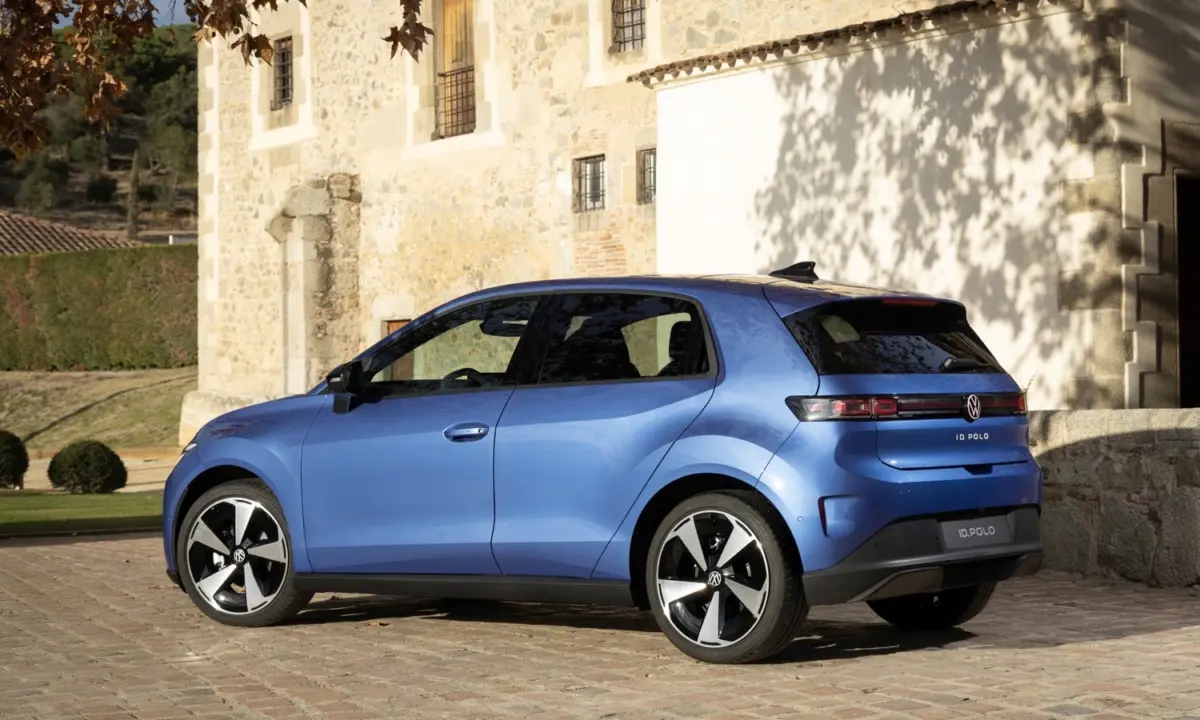
MADRID — In a definitive push to democratize electric vehicle (EV) ownership across Europe, Volkswagen has officially launched the highly anticipated Volkswagen ID. Polo in Spain. Bringing back an iconic automotive moniker with a ground-up electric reimagining, the model arrives with a heavily competitive entry-level price tag of €17,900 for the entry-level Match trim, factorizing state subsidies from Spain’s Plan Auto+ and brand-specific financing promotions.
Proudly manufactured at the Martorell plant in Barcelona, the ID. Polo represents a cornerstone for the Volkswagen Group’s industrial strategy in Southern Europe. Designed to conquer the bustling B-segment utility market, the vehicle blends heritage styling cues with next-generation electric architecture, aiming to make sustainable mobility accessible to the masses without sacrificing space, technology, or driving pleasure.
1. Main Facts: Dimensions, Packaging, and Practicality
The Volkswagen ID. Polo is built on a specialized derivative of the Volkswagen Group’s electric platforms, redefining how much interior space a compact city car can offer. Measuring 4.05 meters in length, 1.82 meters in width, and 1.53 meters in height, the ID. Polo is noticeably wider and taller than its internal combustion engine (ICE) predecessor.
Thanks to its dedicated electric layout, engineers managed to stretch the wheelbase to an impressive 2.60 meters. This engineering feat translates into an interior cabin that punches well above its weight class, offering generous legroom for rear-seat passengers.
Perhaps the most astonishing packaging triumph is the luggage capacity. The ID. Polo boasts a 441-liter boot, a figure that not only trounces legacy subcompact rivals but actually surpasses the cargo capacity of a standard Volkswagen Golf. This makes the electric hatchback exceptionally practical for daily commutes, weekend getaways, and family-oriented tasks alike.
2. Chronology of the Project: From Concept to Spanish Production
The journey of the Volkswagen ID. Polo to the showroom floor has been a multi-year masterclass in industrial adaptation and strategic pivoting.
- Early 2021: Volkswagen first hints at an entry-level battery-electric vehicle (BEV) designed to slot below the ID.3, tentatively dubbed the "ID.2all" concept. The brand sets an ambitious target price of under €25,000 for mass production.
- Late 2022 / Early 2023: Volkswagen officially confirms that the production version of its small electric car will revive a legendary nameplate—Polo—tailored for the electric era. Plans are solidified to anchor production in Spain.
- Mid-2023: The Martorell plant near Barcelona undergoes a massive multi-million-euro overhaul to prepare for the transition to the MEB+ electric vehicle platform, securing thousands of industrial jobs in Catalonia.
- Late 2024: Prototype testing enters its final phases across harsh Arctic and scorching Southern European conditions, validating thermal management and energy efficiency metrics.
- Early 2026: Order books quietly open across select European markets. The vehicle amasses over 25,000 pre-orders within weeks, signaling immense consumer demand.
- April 2026: Official commercial rollout and comprehensive pricing structure revealed in Spain, confirming the base entry price of €17,900 with government and brand incentives applied.
3. Powertrains, Battery Options, and Charging Specs
Breaking away from the tradition of rear-mounted motor setups seen in larger ID. family members, the ID. Polo features a front-motor, front-wheel-drive layout optimized for packaging efficiency and urban agility. The mechanical lineup features four distinct variants tailored to varied consumer needs:
- Entry-Level (116 CV / 85 kW): Mated to a 37 kWh net LFP (Lithium Iron Phosphate) battery, this configuration delivers between 318 and 326 kilometers of WLTP range, depending on the chosen trim level.
- Mid-Tier (135 CV / 99 kW): Utilizing the same 37 kWh LFP chemistry, this powertrain emphasizes sharper throttle response while maintaining a homologous 326 km range.
- High-Performance & Long-Range (211 CV / 155 kW and 226 CV / 166 kW): For drivers demanding higher performance and extended reach, these upper-tier variants transition to a 52 kWh net NCM (Nickel Manganese Cobalt) battery, unlocking an impressive up to 449 kilometers of autonomous driving range.
Charging Performance
Charging anxiety is actively mitigated by robust DC fast-charging capabilities. The smaller LFP battery supports rapid charging up to 90 kW, enabling a 10% to 80% charge in roughly 23 minutes. Meanwhile, the larger 52 kWh NCM battery ups the charging threshold to 105 kW, taking approximately 24 minutes to achieve the same 10%–80% state of charge.
Furthermore, the ID. Polo boasts a stellar average energy consumption rate of 13.5 kWh/100 km, making it one of the most efficient compact EVs currently on the market.
4. Trims, Equipment, and Official Pricing Structure
Volkswagen has structured the ID. Polo’s rollout into three distinct, highly cohesive trim levels: Match, Life, and Style.
Match (Entry-Level)
Starting at the headline-grabbing €17,900 (with Plan Auto+ incentives and brand financing), the Match trim is far from bare-bones. Standard equipment includes:
- LED headlights
- 10.25-inch digital instrument cluster
- 12.9-inch central infotainment touchscreen
- Electronic climate control
- Comprehensive ADAS suite featuring Adaptive Cruise Control (ACC) and Lane Assist.
Life (Mid-Tier)
Stepping up to the Life trim introduces a more upscale aesthetic and practical touches, adding:
- 18-inch alloy wheels
- Rearview parking camera
- Keyless entry and start system
- Wireless smartphone charging pad.
Style (Range-Topper)
The Style trim represents the pinnacle of luxury for the ID. Polo lineup. It incorporates:
- IQ.LIGHT matrix LED headlights
- Heated front seats
- Dual-zone automatic climate control
- Enhanced ID. Light ambient interior lighting system.
Optional Extras: Discerning buyers can further customize their vehicles with high-end options, including a 480W Harman Kardon premium sound system, a panoramic glass sunroof, and ergonomic front seats featuring integrated massage functions.
5. Market Implications and Rival Comparison
The entry of the Volkswagen ID. Polo into the Spanish and broader European marketplace intensifies competition in the exploding affordable-EV sector. It goes toe-to-toe with heavyweight competitors such as the Renault 5 E-Tech, the Cupra Raval (which shares its underlying MEB+ platform), the Opel Corsa Electric, and the rugged Fiat Grande Panda.
How it Stacks Up Against the Competition
- Versus Renault 5 E-Tech (120 CV): The Volkswagen ID. Polo undercuts its French rival by roughly €1,150 while providing a substantially larger boot capacity (441 liters versus the R5’s smaller cargo bay), though the Renault maintains a marginally sharper initial acceleration profile.
- Efficiency Crown: With its class-leading consumption figure of 13.5 kWh/100 km, the ID. Polo comfortably outperforms alternative value options like the BYD Dolphin Surf (16.0 kWh/100 km) and the Citroën ë-C3 (16.5 kWh/100 km).
Economic and Industrial Implications
The local production of the ID. Polo at Martorell anchors Spain’s status as a vital hub for European electric vehicle manufacturing. By securing over 25,000 preliminary reservations across Europe prior to its official commercial debut, Volkswagen has proven that European consumers are eager to embrace locally manufactured, reasonably priced electric alternatives.
As regulatory pressures mount and zero-emission mandates tighten across the continent, the ID. Polo is well-positioned not only to reclaim the crown once held by its combustion-powered ancestor, but also to redefine what drivers can expect from an affordable, high-volume electric car.

Leave a Reply