MADRID — Latin America is no longer just a vibrant cultural destination; it is rapidly cementing its status as the new powerhouse of the global tourism industry. According to a comprehensive new study released by the Spanish travel-tech leader Civitatis, the Spanish-speaking continent now accounts for a staggering 40% of the company’s total global revenue.
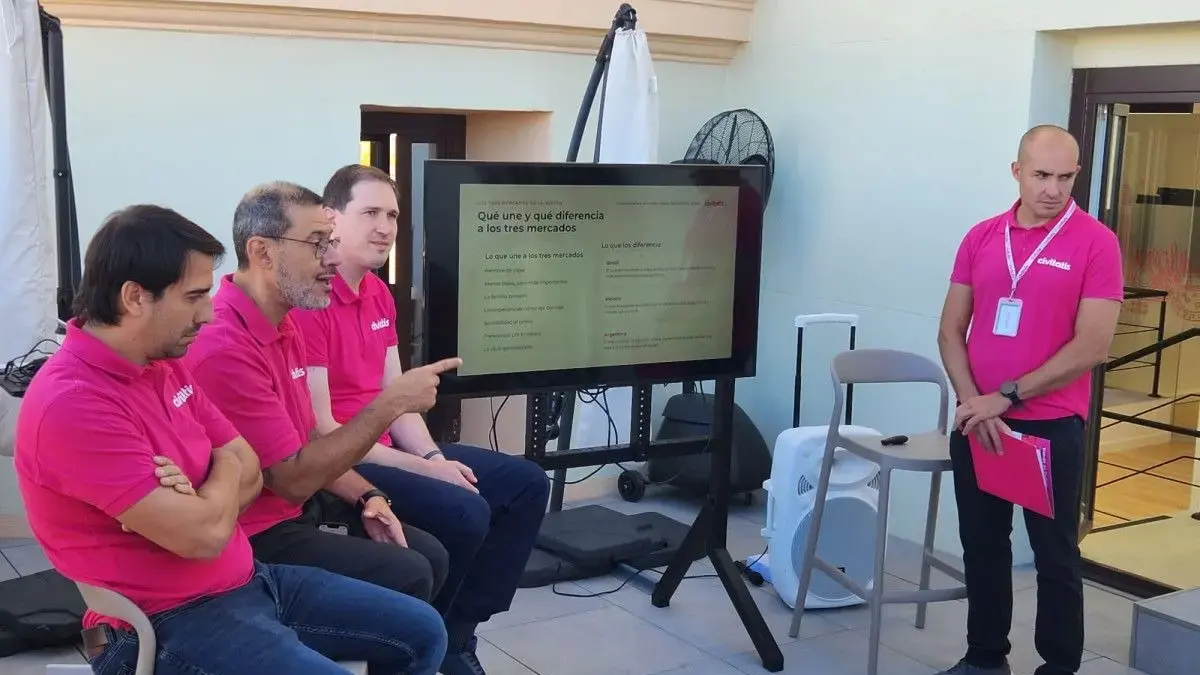
Driven by an explosive growth rate that has officially surpassed that of Europe, Civitatis executives predict that the region will soon become the single most important market for the company. The findings were unveiled during a high-profile industry presentation in Madrid, featuring key executives who dissected the shifting paradigms of modern travel, the rising dominance of experiential tourism, and the profound impact of Artificial Intelligence (AI) on consumer behavior.
1. Main Facts: The Latin American Tourism Boom
The core narrative of the Civitatis study is clear: Latin America is experiencing a tourism renaissance, characterized by high growth, shifting consumer priorities, and untapped digital potential.
Revenue Share: Latin America currently generates 40% of Civitatis’ global revenue, rivaling and outstripping historical European strongholds in terms of velocity.
Travel Frequency: The frequency of travel within the region surged by 32.53%, more than double the growth rate recorded in Spain (+14.15%) during the same comparative metrics.
The Primacy of Experiences: For 60% of Latin American travelers, the availability of unique experiences is a primary, highly influential factor when selecting a vacation destination. Once at their destination, travelers dedicate over 60% of their time to experiences, vastly overshadowing the 34% spent on accommodation and a mere 6% on air transportation.
The Offline Opportunity: Despite rapid digital adoption, the Latin American market still exhibits an "incipient" online booking ecosystem compared to Europe. More than 50% of activity bookings still occur offline—directly at the destination—representing a massive runway for future digital expansion.
The AI Paradox: While 70% of travelers use Artificial Intelligence to plan and research their trips (a figure that climbs to 80% among those under 35), only 12% use it to finalize bookings. Trust in established brands (77%) and peer reviews (72%) still heavily outweigh AI recommendations (42%) at the final checkout.
2. Chronology: The Strategic Pivot Toward LatAm
Civitatis’ ascension in Latin America is the result of a calculated, multi-year expansion strategy rather than an overnight success.
Phase I: Laying the Groundwork (Pre-2024): Civitatis initially entered the Latin American market by establishing localized operations, forging strategic B2B alliances, and building brand awareness in key Spanish-speaking hubs and Brazil.
Phase II: Accelerating Partnerships (2024–2025): The company accelerated its footprint by signing major regional agreements—such as partnerships with industry giants like Almundo—and setting its strategic radar firmly on regional airline partnerships to capture travelers at the inspiration phase.
Phase III: The Present Momentum (Late 2025–2026): During the recent presentation in Madrid, company leadership formalized the results of their joint research with The Latam Experiences Traveler (a collaborative study by Arival and Phocuswright surveying 1,200 travelers across Argentina, Brazil, and Mexico). Executives declared that the region is now the definitive engine of the company’s global expansion, with the steepest growth curves projected for the immediate future.
3. Supporting Data: Market Dynamics and Regional Nuances
To truly understand Latin America’s tourism surge, one must analyze the distinct behaviors driving its three largest economies: Argentina, Brazil, and Mexico. The study highlights stark behavioral differences across these borders, which are expertly managed by Civitatis’ respective Country Managers.
Argentina: The Resilience of Financed Travel
In Argentina, persistent macroeconomic complexities continue to shape consumer habits. According to Nicolás Posse, Country Manager for Argentina, the brand has successfully positioned itself as a local entity due to deep market penetration. However, the economic climate dictates purchasing mechanics.
"Financing activities in installments remains a decisive factor when booking an experience," Posse explains, noting that flexibility in payment structures is vital to capturing the Argentine tourist wallet.
Mexico: The Rise of the Sophisticated, Language-Conscious Traveler
Mexico represents a market of highly digitized, proactive planners. Juan Rossello, Country Manager for Mexico, points out that the modern Mexican traveler has undergone a major evolution.
"The Mexican traveler is digital, plans well in advance, and seeks to ‘fill their trip’ with authentic experiences in their native language," Rossello states. This demographic values curated, structured itineraries that eliminate language barriers and maximize vacation value.
Brazil: The Emitting Powerhouse and the Need for Omnichannel Engagement
Brazil stands out as the region’s leading outbound travel market, demonstrating staggering volume. During 2025, half a million Brazilians booked activities through Civitatis. Remarkably, in the first eight months of the current year alone, that figure has already climbed to 600,000 bookings.
However, capturing the Brazilian consumer requires a sophisticated approach. Alexandre Oliveira, Country Manager for Brazil, emphasizes that the buying journey in Brazil is multi-layered.
"Omnichannel engagement is no longer optional; it is an imperative necessity to effectively connect with the final customer," Oliveira notes, explaining that consumers require multiple touchpoints—spanning social media, digital ads, and customer service—before finalizing a purchase.
4. Official Responses and Executive Insights
The strategic importance of the region was underscored by top-tier executives during Monday’s presentation in the Spanish capital.
Enrique Espinel, Chief Commercial Officer (CCO) of Civitatis, left no room for ambiguity regarding the company’s corporate roadmap. Reflecting on the data, Espinel remarked that Latin America is rapidly becoming the undisputed core of their global strategy.
"The continent concentrates our expansion efforts, and the data corroborates this bet," Espinel stated. "The greatest growth will be seen over the coming months. It will not take long for Latin America to become the most important region for Civitatis."
Addressing the massive digital gap—specifically the 50%+ offline booking behavior observed in the region—Espinel stressed that the path forward lies in education and digital enablement.
"The opportunity is immense. Continuing to drive digitization remains the key to unlocking the region’s full potential," he added.
5. Broader Implications for the Global Tourism Industry
The seismic shift toward Latin America as a global tourism engine carries several critical implications for tour operators, travel tech platforms, and destination management organizations (DMOs) worldwide.
The Death of the Generic Itinerary
Modern Latin American travelers—and those visiting the region—are rejecting passive tourism. With over 60% of travel time dedicated to active experiences, travel providers must pivot away from traditional sightseeing models. Success now depends on offering immersive, culturally rich, and bookable activities that integrate seamlessly into the traveler’s journey from day one.
Bridging the Digital-Offline Divide
The fact that over half of all bookings still happen "offline" or at the destination points to a massive, unexploited digital goldmine. Travel-tech companies that can successfully bridge this gap—introducing user-friendly mobile apps, localized payment methods (such as Argentina’s installment systems or Brazil’s Pix integrations), and localized customer support—will capture disproportionate market share in the coming decade.
AI as an Inspirer, Not a Closer
The study’s findings regarding Artificial Intelligence provide a sobering reality check for tech evangelists. While 70% of travelers (and 80% of Gen-Z/Millennials) lean heavily on AI tools like ChatGPT or specialized travel planners for inspiration, ideation, and preliminary research, the ultimate transaction relies on traditional pillars of trust.
When it comes time to hand over credit card details, algorithms take a backseat to human validation. Brand reputation (77%) and peer reviews (72%) reign supreme, proving that technology can effectively dream up a vacation, but only trusted institutional brands and authentic human feedback can secure the sale.
Conclusion
Latin America’s rise as the new engine of global tourism is a testament to the resilience, economic dynamism, and cultural richness of the region. As digital infrastructure catches up with consumer demand, and as experiential travel permanently dethrones traditional leisure models, Latin America is poised to write the next great chapter in the history of international travel.






Leave a Reply