


By Special Investigative Desk
The political trajectory of Juan Carlos Abadía Campo once epitomized the apex of youth-driven regional power in Colombia. As the youngest governor in the history of Valle del Cauca, Abadía commanded immense political capital, vast patronage networks, and significant social influence. Today, however, that once-impenetrable empire has been reduced to a grim reality of prison walls, sweeping asset seizures, and unpayable multi-billion-peso liabilities.
Beyond the 20-plus-year prison sentence he is currently serving for criminal corruption, Abadía finds himself suffocated by a staggering web of financial liabilities. These include approximately 107 billion pesos in property embargoes and a towering 40-billion-peso fiscal debt enforced by the Office of the Comptroller General (Contraloría General de la República). The downfall of the former governor serves as a watershed moment in the accountability of regional executives in Colombia, illustrating the long, often tortuous path of judicial and fiscal justice.
Main Facts: The Anatomy of a Comprehensive Collapse
The legal collapse of Juan Carlos Abadía rests on two major pillars: a definitive criminal conviction handed down by the Supreme Court of Justice and a massive, ongoing fiscal liability stemming from irregularities during his tenure at the helm of the Valle del Cauca department.

While public attention has frequently focused on his physical confinement—most recently highlighted by his high-profile transfer from a lenient police installation to a standard prison cell—the financial penalties imposed upon him represent an equally devastating blow.
- The Prison Sentence: In February 2024, the Supreme Court of Justice sentenced Abadía to 21 years and seven months in prison. Unlike some of his earlier administrative controversies, this conviction was rooted in a criminal offense: embezzlement (peculado). The charge stemmed from a deeply irregular contract signed on January 29, 2010, designed to equip ten municipalities in the department with school libraries—a project plagued by severe contractual deviations and misappropriation of public funds.
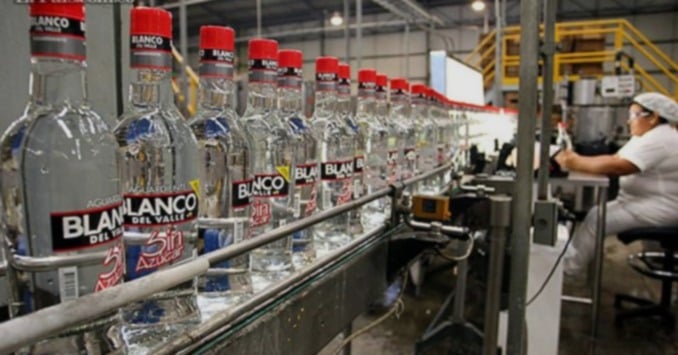
- The Fiscal Liability: Concurrently, Abadía remains a prominent figure in the Comptroller General’s bulletin of fiscal responsibilities. This stems from multiple rulings tied to the administration of the Industria Licorera del Valle (ILV) between 2008 and 2010.
- Asset Seizures: To secure the recovery of these public funds, the state has moved aggressively against his estate. Abadía faces embargoes on properties, assets, and bank accounts exceeding 107 billion pesos, effectively neutralizing his personal wealth and leaving him legally and financially incapacitated.
Chronology of a Scandal: From Regional Power to Judicial Condemnation
To understand how Abadía reached this juncture, it is necessary to trace a timeline spanning nearly two decades of administrative missteps, investigative journalism, and protracted legal battles.
2008–2010: The Licorera del Valle Contracts
During the height of Abadía’s gubernatorial term, his administration entered into controversial contractual agreements with the Unión Temporal Comercializadora Logística Integral S.A. for the distribution of products from the Industria Licorera del Valle. These agreements would later form the bedrock of the state’s fiscal accusations, characterized by unverified extensions, dramatic commission hikes, and the tax-free distribution of millions of promotional bottles.
December 7, 2015: The Hunt for the Ex-Governors
Nearly five years after the Comptroller’s Special Investigations Unit against Corruption issued its initial fiscal findings, a journalistic team from Noticias Caracol—which included the author of this report—embarked on a tracking exercise across Cali. The objective was simple: to confront the former governors of Valle del Cauca listed as fiscal debtors for a multi-billion-peso shortfall at the departmental liquor company.

The findings exposed a culture of evasion. While former governor Héctor Fabio Useche received journalists in his dental clinic in southern Cali, openly bemoaning his inability to pay a multi-billion-peso fiscal debt across three generations, other former officials hid behind locked doors, retreated to balconies, or dismissed reporters as aggressive collection agents (chepitos).
December 2016: The Doors Remain Closed
A follow-up investigation conducted a year later yielded virtually identical results. The doors remained firmly bolted, and only a single legal representative offered a guarded response from an office overlooking Plaza de Cayzedo. Despite the passage of time and shifting political landscapes, the names of the former officials remained cemented in the Comptroller’s registry without a single peso recovered by the state.
February 2024: The Supreme Court Hammer Falls
The judicial paradigm shifted decisively when the Supreme Court of Justice issued its definitive ruling on the school library embezzlement case. Rejecting appeals and defense arguments, the Court sentenced Abadía to over 21 years behind bars, transforming him from an embattled politician fighting administrative fines into a convicted felon serving a lengthy prison sentence.
Recent Developments: Prison Transfers and Strict Confinement
Abadía’s incarceration made headlines once more following executive interventions—notably associated with high-profile legal figures like Abelardo De la Espriella—which put an end to perceived privileges. Abadía was removed from the comfort of the National Police Carabiners School in Cali and transferred to a standard cell, signaling a closing window for preferential treatment.

Supporting Data: The Multi-Billion-Peso Ledger
The sheer scale of the financial penalties levied against Abadía sets his case apart even within the context of high-level Colombian corruption trials. The debt is broken down into distinct administrative and judicial phases:
+-----------------------------------+---------------------------------------------------+
| Metric / Category                 | Value / Details                                   |
+-----------------------------------+---------------------------------------------------+
| Criminal Prison Sentence          | 21 years and 7 months (Supreme Court, Feb 2024)   |
| First-Instance Fiscal Debt        | $6,879,876,162 COP (Initial Licorera ruling)      |
| Consolidated Fiscal Liability     | ~$40,000,000,000 COP (Jointly with 16 officials)  |
| Total Embargoed Assets / Accounts | > $107,000,000,000 COP (Connected proceedings)    |
| Core Offense Categories           | Embezzlement, Contractual Irregularities          |
+-----------------------------------+---------------------------------------------------+
The progression of the Industria Licorera del Valle debt highlights the complexities of Colombian administrative law. The initial first-instance ruling fixed Abadía’s individual responsibility at approximately 6.8 billion pesos. However, as the investigations deepened and factored in the full economic impact of the contract’s prorogation—including a commission increase from 4% to 8% for the distributor and the unauthorized gifting of three million promotional bottles tax-free—the collective financial penalty ballooned to 40 billion pesos, distributed among Abadía and 16 other regional public servants.
The Legal Tug-of-War Over the Debt
Abadía’s defense strategy relied heavily on administrative litigation. He filed a lawsuit for nullity before the Council of State, accompanied by a request for a provisional suspension of the fiscal liability.
Initially, the strategy bore fruit. The Council of State granted the provisional suspension after noting that the Prosecutor General’s Office (Fiscalía General de la Nación) had previously chosen not to pursue criminal action for those specific liquor distribution events. For a brief window, the fiscal ruling was legally immobilized.

However, the Comptroller General’s Office fought back with an appeal. Through a pivotal ruling penned by Magistrate María Elizabeth García, the First Section of the Council of State revoked the provisional measure. The court reaffirmed a core tenet of Colombian jurisprudence: penal and fiscal responsibilities are distinct legal domains, meaning that the absence of a criminal investigation does not automatically invalidate a fiscal finding of responsibility for public asset loss.
With the suspension lifted, the multi-billion-peso sanction snapped back into full legal force. Simultaneously, complementary judicial processes resulted in the sweeping embargo of over 107 billion pesos in assets, trapping the former governor in a permanent administrative freeze.
Official Responses and Judicial Posture
Throughout the decades-long process, the responses from the accused have evolved from defiance to legal maneuvering and, ultimately, resignation.
During the 2015 journalistic investigations, the collective posture of the accused ex-governors was one of outright rejection of the state’s moral authority to collect. They argued that the fiscal assessments were politically motivated, unjust, and impossible to satisfy.
Héctor Fabio Useche stood out by attempting to humanize his plight, welcoming reporters into his dental practice to showcase a daily grind of twelve-hour shifts intended to make ends meet while his assets remained locked down. Abadía, conversely, relied on institutional litigation, utilizing high-priced defense teams to contest every procedural milestone before the Council of State and the Supreme Court.
As judicial avenues closed—culminating in his 2024 criminal sentence and the tightening of his prison conditions—the space for legal defense contracted sharply. Today, public officials and oversight bodies point to Abadía’s case as an example of the ultimate limits of impunity, even if the actual recovery of the multi-billion-peso debt remains practically unachievable given his current state of absolute illiquidity and asset seizure.
Implications: The Legacy of Impunity and Asset Recovery
The saga of Juan Carlos Abadía carries profound implications for regional governance, public finance, and anti-corruption enforcement in Colombia.
- The Illusion of Recoverability: While the Comptroller General’s office successfully levied billions in embargoes and kept Abadía’s name permanently etched in the registry of fiscal debtors, the case underscores the chronic difficulty of recovering stolen public wealth. Securing paper judgments worth tens of billions of pesos is vastly different from liquidating real assets to refill departmental coffers.
- The Separation of Jurisdictions: The Council of State’s decision to uphold the fiscal liability despite differing prosecutorial trajectories reinforces the autonomy of fiscal control bodies. It establishes that administrative malfeasance and the dissipation of departmental assets carry standalone economic consequences that cannot be easily swept away by procedural technicalities in the criminal sphere.
- The Deterrence Factor for Regional Dynasties: Abadía’s descent from a powerful regional political kingmaker to a cellmate in a standard maximum-security environment sends an unambiguous signal to local political operators. The era when regional leaders could systematically siphon public enterprises—such as the iconic Industria Licorera del Valle—with the expectation of total impunity is facing unprecedented structural friction, however slow the judicial wheels may turn.
Ultimately, Juan Carlos Abadía remains entombed by his past. Stripped of his freedom, his political machinery, and his personal assets, the former golden boy of Valle del Cauca politics stands as a monument to institutional accountability—a cautionary tale of how unchecked power inevitably crashes against the unyielding walls of the law.




Leave a Reply