

By Global Affairs & Human Rights Desk
An enriched and expanded analysis based on original reporting from Las2Orillas.
Main Facts
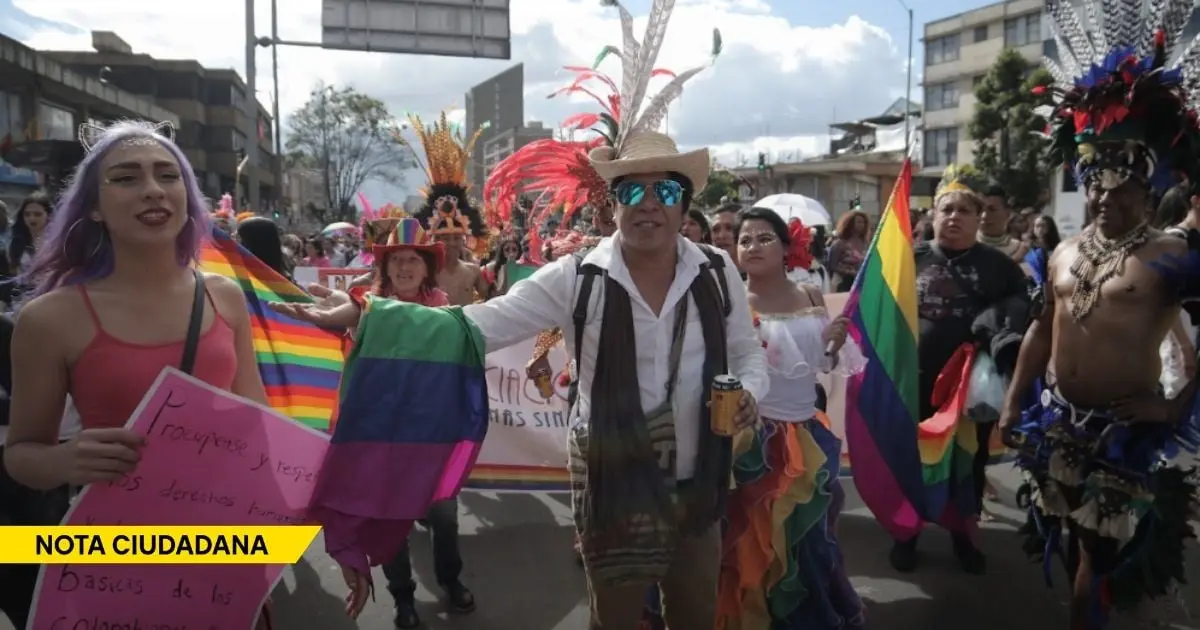
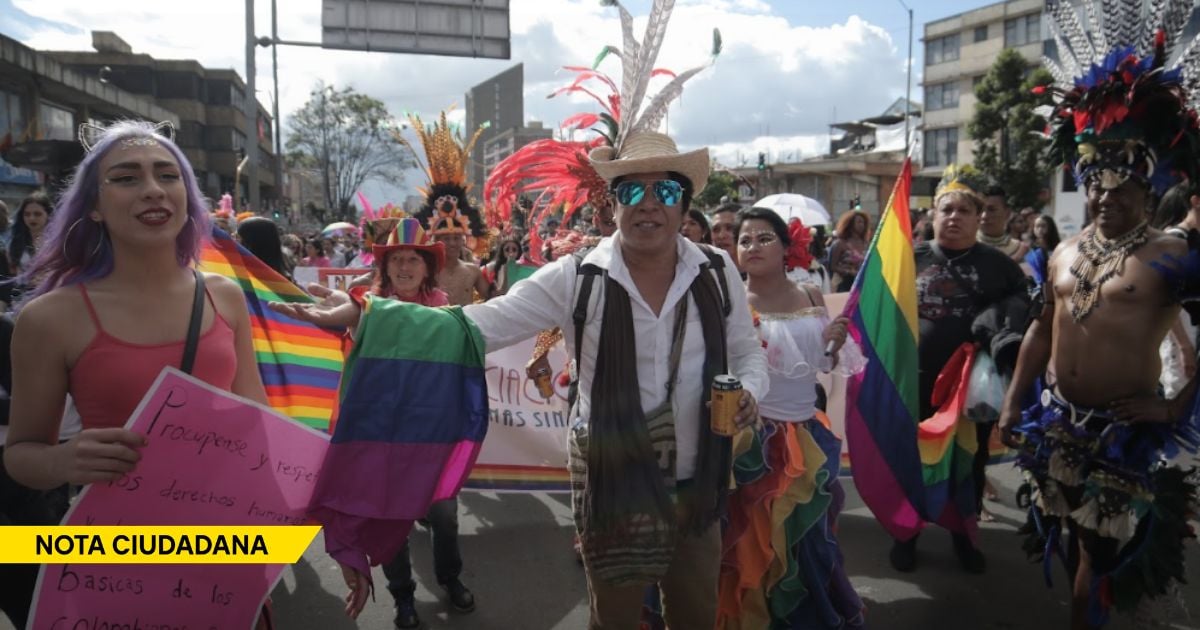
The government of Colombia has officially decided to disengage from the Equal Rights Coalition (ERC), a prominent international intergovernmental alliance dedicated to protecting the rights of LGBTQ+ individuals and eradicating violence, discrimination, and stigmatization based on sexual orientation and gender identity.
This abrupt diplomatic exit carries profound geopolitical and social ramifications, not least because Colombia’s withdrawal occurred precisely while the nation was holding the prestigious co-vice presidency of the body. For decades, Colombia has been viewed regionally as a vanguard in progressive jurisprudence regarding human rights, largely driven by landmark rulings from the Constitutional Court. By stepping away from the ERC, the current administration has triggered widespread national and international alarm, pitting state diplomacy against decades of hard-won civil rights victories.
The decision has been heavily criticized by legal scholars, human rights defenders, and civil society organizations who view the move as more than a mere administrative realignment. Rather, they interpret it as a structural assault on the constitutional framework of a pluralistic democracy—one that explicitly guarantees the protection of historically marginalized populations.
Chronology: The Trajectory of Rights and the Sudden U-Turn
To understand the gravity of Colombia’s exit from the Equal Rights Coalition, it is essential to trace the historical timeline of the nation’s legal recognition of sexual and gender diversity, contrasted with the recent political shifts.
- 1991 (The New Constitution): Following decades of civil unrest and institutional reform, Colombia promulgates a progressive new Constitution. While not explicitly detailing sexual orientation in its initial drafts, the document establishes Colombia as a "Social Rule of Law" centered on human dignity, equality, and fundamental rights, which the Constitutional Court would later use as the bedrock for LGBTQ+ protections.
- 1998–2010 (The Judicial Vanguard): Through a series of groundbreaking rulings, the Colombian Constitutional Court begins dismantling discriminatory statutes. It decriminalizes homosexuality in specific contexts, grants same-sex couples pension rights, and establishes healthcare access protections, setting a legal precedent across Latin America.
- 2011–2016 (Full Recognition and Equal Marriage): Colombia legalizes same-sex adoption (2015) and officially authorizes same-sex marriage through a landmark Constitutional Court ruling in April 2016. During this period, Colombia actively seeks international validation, aligning itself with global human rights bodies and eventually joining coalitions like the ERC.
- 2018–2022 (Consolidation of Multilateral Commitments): Colombia deepens its participation in international human rights forums, eventually ascending to leadership roles within the Equal Rights Coalition, including holding the co-vice presidency. The country is lauded internationally for bridging policy and constitutional theory in the Andean region.
- The Current Administration (The Diplomatic Retreat): Amid a rising wave of conservative rhetoric and localized "cultural wars," the current government executes a quiet yet devastating diplomatic maneuver: officially withdrawing from the Equal Rights Coalition. This abrupt exit catches international observers and domestic human rights organizations off guard, effectively sidelining Colombia from the global vanguard of LGBTQ+ advocacy.
Supporting Data and Context: The Architecture of Global and Local Protection
The Equal Rights Coalition, established in 2016 at Montevideo by the governments of Uruguay and the Netherlands, currently comprises over 40 member states committed to advancing the human rights of LGBTQ+ persons globally through diplomatic engagement and domestic policy development.
- Multilateral Standing: ERC membership grants nations access to specialized human rights funding, peer-to-peer policy exchanges, and a unified diplomatic front against state-sponsored homophobia and transphobia. By abandoning this coalition, Colombia forfeits its seat at the table where international standards are negotiated and enforced.
- Constitutional Mandates: Domestically, Colombia’s retreat challenges the spirit of Article 13 of the 1991 Constitution, which explicitly prohibits discrimination based on sex, race, national or family origin, language, religion, political or philosophical opinion.
- The Threat of Regression: Human rights monitors point out that state-level disengagement from international human rights mechanisms often serves as a precursor to domestic policy rollbacks. Critics express profound concern that the withdrawal signals a broader governmental tolerance—or active promotion—of discriminatory social practices, including the alarming resurgence of dangerous pseudoscience practices such as so-called "conversion therapies" or "teoterapias."
Official Responses and Civil Society Outcry
The administration’s decision has been met with immediate, fierce condemnation from legal experts, civil rights advocates, and political opposition leaders who question the true motivations behind the executive branch’s foreign policy shift.
Civil society organizations have released joint statements emphasizing that international human rights treaties and coalitions are not optional diplomatic accessories that can be discarded based on the personal moral or religious prejudices of temporary political leaders.
"When a government decides to walk away from international alliances designed to protect vulnerable populations, it is not simply altering its foreign policy; it is abdicating its fundamental constitutional duty to safeguard the lives and dignity of its citizens," noted a prominent Bogotá-based human rights coalition in a recent briefing.
Critics have forcefully interrogated whether the withdrawal is the manifestation of a coordinated "cultural battle" intended to impose a hegemonic, patriarchal moral code onto a diverse and secular state. Prominent commentators have drawn alarming parallels between the rhetoric of the current executive and the dangerous normalization of ideological fundamentalism, warning that substituting state protection with moralistic exclusion paves the way for institutionalized violence against sexual minorities.
Government defenders, conversely, have attempted to frame foreign policy realignments around concepts of national sovereignty and traditional values. However, these justifications have done little to appease international partners or legal scholars, who point out that state sovereignty cannot be invoked as a legal shield to bypass constitutional equality guarantees or international human rights obligations.
Implications: A Blow to Democracy and the Rule of Law
The ramifications of Colombia’s exit from the Equal Rights Coalition extend far beyond the immediate shock to the LGBTQ+ community. They strike at the very heart of the country’s democratic stability and its standing in the international community.

1. Erosion of Democratic Frameworks and International Credibility
For decades, Colombia leveraged its progressive judicial system to project an image of a modern, rights-respecting democracy on the global stage. By turning its back on the ERC—and doing so abruptly while holding a leadership position—the nation risks diplomatic isolation and a severe loss of credibility among Western democratic allies. International investors and multilateral organizations closely monitor human rights indicators as measures of political stability; signaling an official retreat from equality standards could have long-term economic and geopolitical costs.
2. The Slippery Slope of Treaty Withdrawals
Human rights advocates have raised a chilling secondary concern: if the government can unilaterally withdraw from a coalition protecting sexual minorities under the banner of moral alignment, what prevents it from abandoning other vital international frameworks? Speculation has already turned toward core human rights treaties, such as the Rome Statute of the International Criminal Court, raising fears that Colombia is entering a dangerous isolationist and anti-multilateral phase.
3. Escalation of Social Hostility and Violence
Colombia remains a historically polarized nation grappling with the fragile implementation of peace accords. Marginalized groups, including LGBTQ+ individuals, Afro-descendant communities, and indigenous populations, already face disproportionate levels of violence. When the state signals that the rights of these populations are no longer a diplomatic or domestic priority, it inadvertently greenlights social hostility. Bigotry is emboldened when it perceives state complicity or indifference.
Conclusion
The withdrawal of Colombia from the Equal Rights Coalition is far more than a bureaucratic footnote in diplomatic archives; it is a profound moral and political crisis. It exposes a dangerous vulnerability within Colombia’s democratic architecture, proving that hard-won rights can be severely undermined by shifting political tides and executive fiat. As civil society organizations mobilize to challenge this regression, the ultimate question remains whether Colombia’s robust constitutional framework will hold firm against the rising tide of exclusionary politics, or if human dignity will indeed be forced back into the closet by the simplicity of state-enforced moralism.




Leave a Reply