

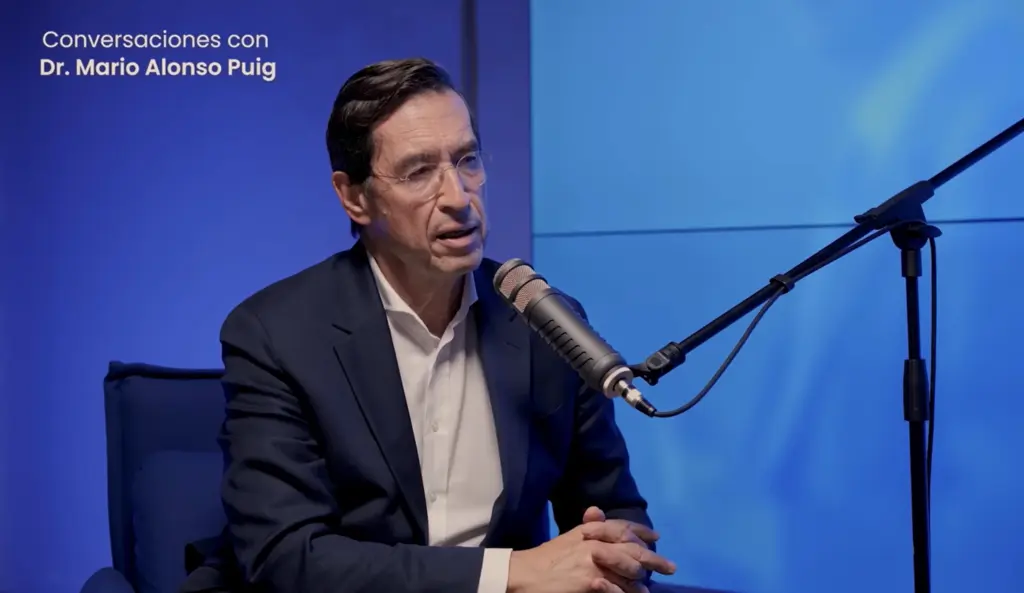
In an era defined by hyper-connectivity, endless notifications, and the relentless pursuit of productivity, society has fallen into a dangerous trap: we equate constant motion with progress. We wear our exhaustion as a badge of honor, filling every waking second with tasks, emails, and scrolling, only to reach the end of the day feeling drained and unfulfilled. Yet, according to Dr. Mario Alonso Puig, one of Spain’s most renowned experts in personal development, general surgery, and human cognition, the antidote to burnout and the catalyst for true innovation lies in a counterintuitive practice: productive silence.
In a recent deep-dive video shared on his widely followed YouTube channel, Puig tackles the modern epidemic of chronic stress and mental fatigue. His central thesis challenges the foundations of modern hustle culture: detraining ourselves from the relentless vortex of daily life is not a luxury; it is a biological and psychological necessity.
By examining Puig’s core philosophies, this article explores the science of mental pauses, the distinction between time as a metric and time as an experience, and how introducing brief moments of stillness can revolutionize our health, efficiency, and creative output.
Main Facts: Decoding "Productive Silence"
At the heart of Mario Alonso Puig’s recent discourse is the concept of productive silence—a deliberate, conscious suspension of frantic activity designed to allow the brain to recover, reorganize, and reset.
- The Biology of Need: According to neuroscientific insights highlighted by Puig, the human brain operates in cycles and naturally requires a cognitive reset approximately every 90 minutes.
- The Comfort Zone Trap: People fail to take these necessary breaks not because they lack time, but because stopping feels uncomfortable. It forces us out of our psychological comfort zone—the familiar, frantic cycle of continuous output.
- Redefining Efficiency: True productivity is not about working longer hours or moving faster; it is about working with greater intelligence. Pausing for just 10 minutes every hour or hour and a half dramatically enhances immune function, reduces cortisol levels, and sharpens focus.
- True Rest vs. Digital Distraction: Crucially, Puig emphasizes that true mental pauses do not involve looking at smartphones, checking emails, or consuming social media. True rest means giving the brain absolute space to breathe, free from digital stimuli.
Chronology: The Evolution of the Hustle and the Loss of "Kairós"
To understand why modern society struggles so profoundly with stopping, we must look at how our relationship with time has evolved, particularly in Western civilization.
Ancient Wisdom: Cronos vs. Kairós
Centuries ago, the ancient Greeks recognized that time was not a monolithic concept. They utilized two distinct words to describe time, both of which play a pivotal role in Puig’s teachings:
- Cronos: This represents quantitative time—the objective ticking of the clock. It is chronological, linear, and identical for everyone. Sixty seconds make a minute, and twenty-four hours make a day. Modern society is almost entirely obsessed with cronos, measuring our worth by how many tasks we can cram into these rigid blocks.
- Kairós: This represents qualitative time—the subjective experience of how we live and feel within that time. Everyone has experienced how an hour spent doing something deeply engaging flies by, while a tedious hour in a waiting room stretches into eternity. Kairós is about depth, resonance, and the true psychological weight of our moments.
The Industrial Revolution to the Digital Age
For generations, the structure of human labor was dictated by the sun and physical endurance. However, the Industrial Revolution shifted human output toward mechanical efficiency, laying the groundwork for the 9-to-5 grind.
In the twenty-first century, the digital revolution dissolved the boundaries between work and personal life. Smartphones turned every pocket into an office, and the concept of cronos completely overtook our lives. We stopped experiencing kairós—the moments of reflection, contemplation, and presence that foster deep human connection and original thought. We became human doings rather than human beings, trapped in a chronic cycle of motion without direction.
Supporting Data: The Neuroscience of Pausing
Why does the brain demand rest every 90 minutes? The answer lies in our biological architecture. Throughout the day, our brains operate across various neural rhythms, most notably moving from high-frequency beta waves (associated with active, focused problem-solving and stress) down to lower frequencies.
The Ultradian Rhythms
In sleep science and neurobiology, researchers have long studied ultradian rhythms—cycles that occur throughout the 24-hour day. While we are awake, these cycles typically last between 90 and 120 minutes. During this window, our capacity for high-level cognitive focus peaks and then naturally declines as cellular fatigue sets in and metabolic waste products accumulate in the neural tissue.
- Diminishing Returns: When individuals attempt to push past the 90-minute mark without a break, productivity plummets. Errors increase, problem-solving abilities degrade, and emotional regulation becomes strained.
- The Cost of Inertia: Puig uses a powerful medical analogy: "If you cut your hand, the body naturally knows how to heal the wound, provided you give it time to do so. But if you constantly keep moving, tearing, and stressing that wound, it will never heal." The brain operates under the exact same physiological law. Micro-pauses act as the biological bandage that allows neural pathways to recover and consolidate information.
The Dangers of "Busyness"
Puig poses a haunting rhetorical question to anyone returning home after a long, grueling day:
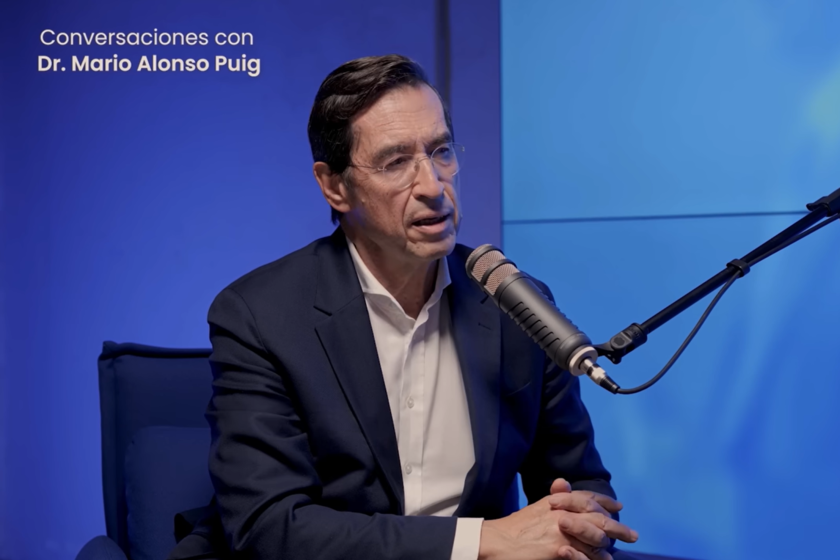
"When you arrive home, you realize you haven’t done nearly what you would have liked to do. Yet, the next day is exactly the same."
This exposes the illusion of modern productivity. We confuse motion with achievement. We are terrified of stopping because stopping forces us to confront uncomfortable truths about our priorities, our fears, and the lack of genuine purpose in our daily routines.
Official Responses and Industry Shifts: "Moving Better, Not More"
Forward-thinking organizations and high-performance institutions are beginning to take note of these biological realities. The traditional corporate model—which rewards seat time and constant availability—is slowly giving way to paradigms that prioritize cognitive health and energy management over raw hours worked.
The Forward-Thinking Workplace
Across various sectors, progressive companies are introducing designated quiet spaces, mandatory "unplugged" intervals, and flexible schedules designed to respect the human brain’s natural cycles.
- The Pause Culture: In elite environments—ranging from tech startups to medical surgical teams—leaders are implementing mandatory short breaks. The realization is simple: stopping allows teams to advance faster in the long run.
- Quality Over Quantity: As Mario Alonso Puig asserts, working smarter means recognizing that exhaustion is not a prerequisite for value creation. Companies that foster environments of "productive silence" report lower turnover rates, decreased burnout, and—most importantly—spikes in innovative problem-solving. Creativity cannot be forced under duress; it requires incubation space, which quietude uniquely provides.
Implications: How to Implement Productive Silence Today
Transforming these insights from abstract philosophy into daily practice requires deliberate intention. If you want to harness the power of productive silence starting today, consider the following actionable steps derived from Puig’s teachings:
1. Reclaim the 10-Minute Reset
Every 60 to 90 minutes, step away from your workstation. Set a gentle alarm to remind yourself that it is time to shift gears.
2. Redefine What "Stopping" Means
True rest is not scrolling through Instagram, catching up on breaking news, or clearing out low-priority emails. Those activities simply demand continued cognitive processing from different areas of the brain. Instead:
- Take a brief walk outside, letting your eyes adjust to natural light and distant horizons.
- Engage in light, non-work-related conversation with a colleague or family member.
- Practice mindful breathing, simply allowing your mind to wander without a specific objective.
3. Overcome the Fear of Inactivity
Acknowledge the psychological resistance you feel when you attempt to pause. Accept that the urge to keep working is often driven by anxiety or societal conditioning rather than genuine necessity. Remind yourself: "What is easiest is to keep going at this frantic speed; what is most intelligent is to stop."
4. Cultivate Kairós in Your Routine
Stop measuring your entire existence by the tyranny of the clock (cronos). Allow yourself moments during the day where time seems to slow down—moments of genuine observation, reflection, and appreciation.
Conclusion
Mario Alonso Puig’s teachings on productive silence serve as an urgent wake-up call for a society addicted to velocity. By understanding that our brains are biological entities requiring rhythmic care rather than unyielding machines, we can break free from the cycle of chronic stress.
Stopping is not a sign of weakness or a failure of ambition; it is the ultimate expression of self-leadership and intelligence. By introducing brief, intentional pauses into our days, we reduce stress, unlock dormant creativity, and discover that by slowing down, we can ultimately go much further.




Leave a Reply