

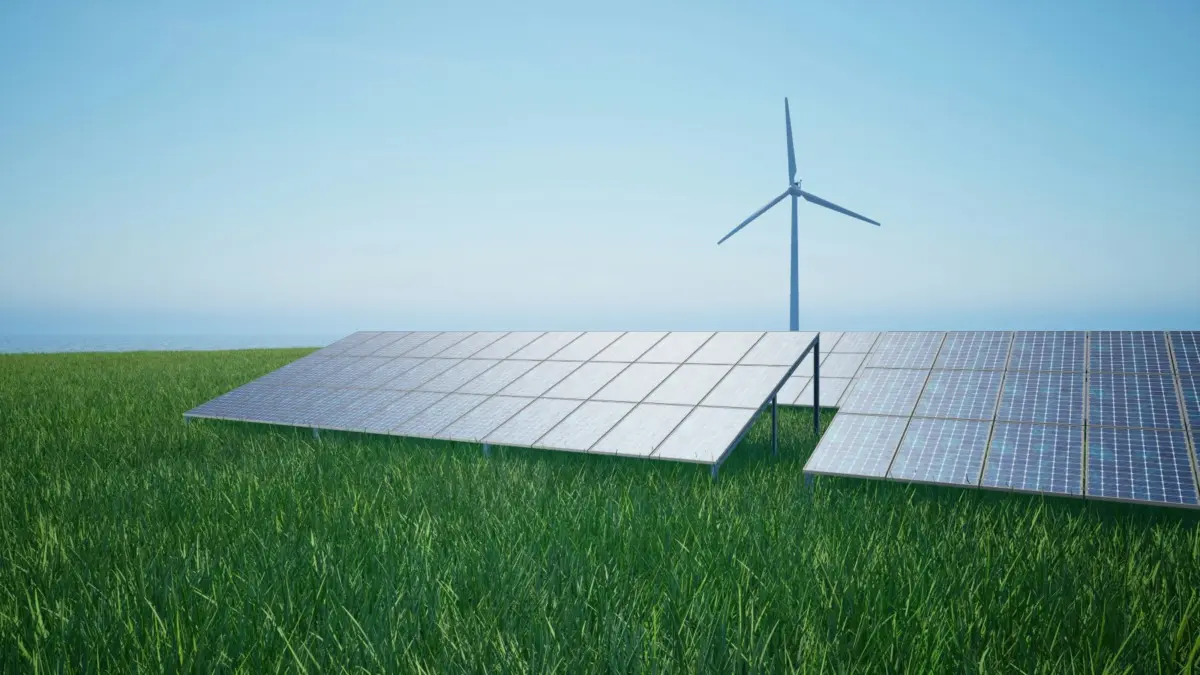
LONDON / ABU DHABI — The global transition toward a sustainable, low-carbon future has reached a significant milestone, yet it continues to face severe structural bottlenecks. According to the latest data released by the International Renewable Energy Agency (IRENA), the world achieved a record-breaking cumulative renewable energy capacity of 5.15 teravats (TW) by the close of 2025.
However, this historic achievement—bolstered by a record 693 gigavats (GW) of new renewable installations added in 2025 alone—is still deemed insufficient by international energy experts. To safeguard the global climate balance and avert catastrophic temperature rises, governments and industry leaders must dramatically accelerate their efforts. IRENA’s latest assessments indicate that the pace of renewable energy deployment must triple over the remainder of the decade, backed by massive, targeted investments in modern electrical grids and advanced energy storage systems.
1. Main Facts
The latest energy landscape report presents a dual narrative of unprecedented growth tempered by urgent warnings. While renewable technology costs have plummeted and deployment rates continue to surge, the sheer velocity of climate change demands an aggressive recalibration of global energy policies.
- Historic Milestone: Global renewable energy capacity officially stabilized at 5.15 terawatts (TW) at the end of 2025.
- Annual Additions: The year 2025 saw a record addition of 693 gigavats (GW) of new renewable power generation worldwide.
- The 2030 Target: To meet agreed international climate goals, total global renewable capacity must scale up to 11.2 TW by 2030, requiring annual additions of approximately 1,200 GW between 2026 and 2030.
- The Efficiency Gap: Global energy intensity improved by only about 2% in 2025, falling drastically short of the 4% annual improvement rate required to meet global energy-saving targets.
- Grid Investment Imperative: Modernizing and expanding electrical grids will require nearly $1 trillion annually between 2026 and 2030—more than double the investment levels recorded in 2025.
2. Chronology of the 2030 Renewable Target
The pathway to the current state of renewable deployment and the ambitious 2030 targets is rooted in a series of crucial international climate commitments and post-pandemic economic recovery strategies.
- Late 2023 (COP28 in Dubai): Nearly 200 nations formally agreed to historic targets within the UAE Consensus. The pact explicitly called for tripling global renewable energy capacity and doubling the global average annual rate of energy efficiency improvements by 2030.
- Throughout 2024: Governments worldwide began revising their National Determined Contributions (NDCs) to incorporate utility-scale solar and wind projects. Supply chain constraints began to ease, allowing manufacturing sectors in Asia, Europe, and the Americas to scale up photovoltaic and wind turbine production.
- Throughout 2025: Despite ongoing geopolitical tensions and localized supply chain disruptions, the global market responded with a record-shattering 693 GW of new capacity installations. This pushed the cumulative global total to 5.15 TW. However, transmission bottlenecks and lagging grid investments became increasingly prominent liabilities.
- Early 2026: IRENA published its comprehensive tracking report, "Delivering on the UAE Consensus: Tracking progress towards tripling renewable energy capacity and doubling energy efficiency by 2030." The report sounded the alarm that current construction and efficiency rates, while record-breaking, are not tracking fast enough to prevent a widening implementation gap.
3. Supporting Data and Analytical Insights
A granular look at the numbers reveals both the scale of the achievement and the magnitude of the challenge ahead. While generation technologies—particularly solar photovoltaic and onshore/offshore wind—have matured rapidly, supporting infrastructure has failed to keep pace.
The Mathematics of Tripling Capacity
To move from the current baseline of 5.15 TW to the required 11.2 TW by 2030, the world must add roughly 6.05 TW of new capacity in just five years. This translates to an average of 1,200 GW of new installations annually between 2026 and 2030. To place this in perspective, the 693 GW added in 2025—though a record—represents only about 57% of the annual velocity required for the rest of the decade.
The Energy Intensity Dilemma
Energy efficiency remains the "first fuel" of the transition, yet it is severely neglected in policy execution. The global economy improved its energy intensity by approximately 2% in 2025. While positive, this metric falls precisely halfway short of the 4% annual benchmark established by the international community at COP28. Without rapid improvements in industrial efficiency, building insulation, and appliance standards, rising global energy demand will outpace even aggressive renewable generation rollouts.
The Grid and Storage Bottleneck
Clean energy cannot power modern economies if it cannot be transported from generation sites to consumption centers. Furthermore, solar and wind power are inherently variable. Ensuring a stable, 24/7 power supply requires robust high-voltage transmission lines and massive battery storage capacity.
According to financial analysts and industry reports, global investment in electrical grids must surge to nearly $1 trillion per year from 2026 through 2030. This represents an unprecedented capital mobilization effort, requiring more than double the level of grid-focused capital expenditure seen in 2025.
4. Official Responses and Stakeholder Perspectives
As the implications of the IRENA report ripple through policy circles, international leaders, environmental organizations, and energy executives have weighed in on the necessary corrective actions.
IRENA’s Assessment
In official statements accompanying the release of the 2025 data, IRENA leadership emphasized that optimism must be paired with operational urgency. Representatives noted that while hitting 5.15 TW proves the commercial viability and technological readiness of renewables, it creates a dangerous illusion of comfort.
"We have proven that the world can build renewables at a scale once thought impossible," an IRENA spokesperson stated. "However, the transition is no longer just about building more solar panels and wind turbines. It is about redesigning the entire vascular system of our global energy economy—our grids, our storage, and our regulatory frameworks."
Perspectives from Developing Nations
Delegates from emerging economies have reiterated that accelerating the transition depends heavily on international climate finance. While countries in Latin America, Africa, and parts of Asia possess immense solar and wind potential, high costs of capital and underdeveloped domestic financial markets make it difficult to secure the upfront trillions needed for grid modernization and battery deployment.
5. Broader Implications for the Global Economy and Climate
The failure or success of the 2030 renewable targets will dictate the trajectory of global climate stability for generations. Beyond environmental protection, the shift carries profound geopolitical and economic ramifications.
The Role of Artificial Intelligence and Smart Systems
To bridge the gap between variable renewable supply and complex modern demand, experts emphasize the integration of cutting-edge technologies. The intersection of artificial intelligence (AI) and energy systems is rapidly evolving from a futuristic concept into an operational necessity.
AI-driven smart grids can predict weather patterns to forecast solar and wind output with high precision, automatically reroute power loads, manage decentralized microgrids, and optimize battery storage discharge cycles. Leveraging these technologies will allow grid operators to maximize the efficiency of clean energy without risking blackouts or destabilizing frequency levels.
Mitigating Environmental Impact
Every gigawatt of renewable energy successfully integrated into a modernized grid translates directly into avoided greenhouse gas emissions. By accelerating the phase-out of fossil-fueled baseload power in favor of 24/7 firm renewables (achieved via a mix of solar, wind, geothermal, green hydrogen, and advanced storage), nations can significantly curb global warming trends and fulfill commitments made under the Paris Agreement.
The Economic Imperative
Ultimately, the transition is shifting from an ideological climate debate to a hard-nosed economic strategy. Nations that successfully modernize their electrical grids and embrace comprehensive electrification will secure lower industrial energy costs, insulate themselves from volatile fossil fuel commodity markets, and position themselves at the forefront of the 21st-century green economy. Conversely, economies that delay grid investments risk severe congestion, localized energy shortages, and stranded fossil-fuel assets.
As the world steps into the critical 2026–2030 window, the mandate from international bodies is clear: the era of passive renewable growth is over. What is required now is aggressive, coordinated, and heavily capitalized systemic transformation.



Leave a Reply