

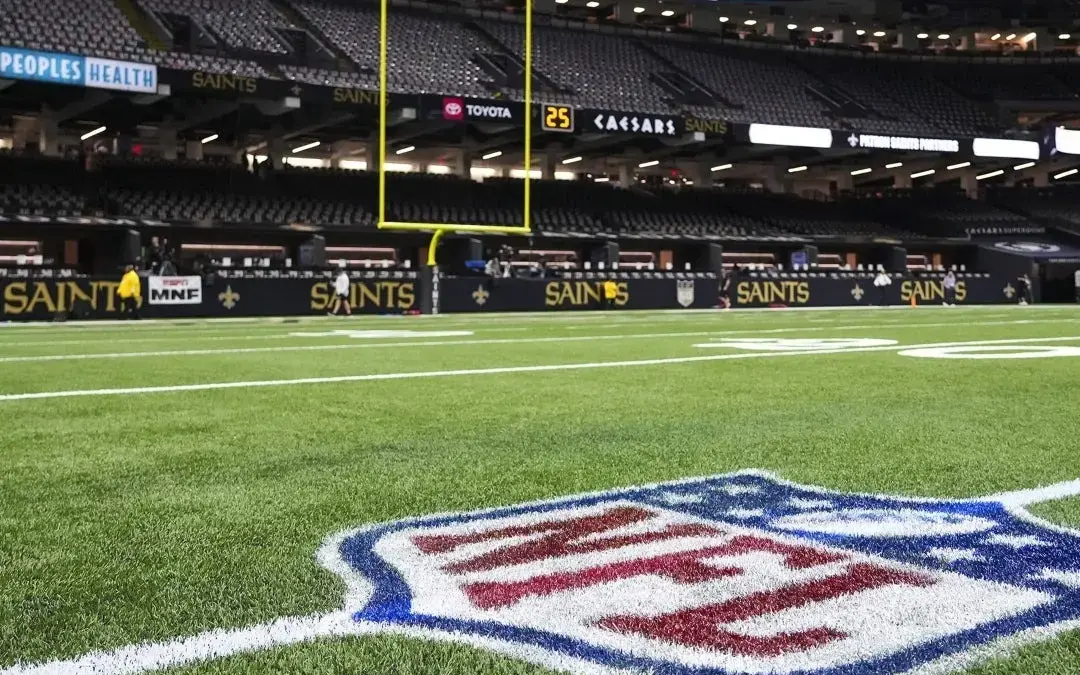
Main Facts: The $22.2 Billion NFL Surge and the Battle for Betting Supremacy
An unprecedented surge in sports speculation has driven federal prediction markets into direct conflict with state regulators, traditional sportsbooks, and professional sports leagues. Driven by the opening weeks of the National Football League (NFL) and NCAA college football seasons, leading prediction platforms Kalshi Inc. and Polymarket reached a record combined weekly trading volume of $22.2 billion.
Originally designed to allow investors to trade contracts on macroeconomic metrics—such as Federal Reserve interest rate adjustments, inflation data, and political outcomes—these platforms have rapidly pivoted toward mainstream sports wagering. Over two days during a single weekend, trading volume tied to college and professional football generated $8.56 billion across both exchanges, according to data aggregated by Dune Analytics.
This influx of capital highlights a structural shift in how Americans speculate on athletic events. By offering event-based futures contracts federally overseen by the Commodity Futures Trading Commission (CFTC), prediction markets operate under a distinct legal framework from traditional sportsbooks like DraftKings Inc. and FanDuel. This classification allows them to bypass state-level gambling taxes, age restrictions, and geographic bans.
The rapid growth of these platforms has triggered significant industry pushback:
- Market Shift: In September, more than 80% of Kalshi’s total contract volume originated from sports-related trades.
- Corporate Scale: Kalshi is evaluating an initial public offering (IPO) following a private funding round that valued the exchange at approximately $40 billion.
- Regulatory Clash: At least 44 states argue that these platforms are conducting illegal sports gambling under the guise of financial derivatives.
- League Intervention: The NFL has formally joined state efforts to halt unlicensed sports event contracts, citing concerns over insider trading and game integrity.
+-------------------------------------------------------------------------------+
|                      PREDICTION MARKETS VS. TRADITIONAL GAMING                 |
+-----------------------------------+-------------------------------------------+
| Feature                           | Prediction Markets (Kalshi/Polymarket)    |
+-----------------------------------+-------------------------------------------+
| Primary Regulator                 | Federal (CFTC)                            |
| Legal Classification              | Event Derivatives / Futures Contracts     |
| State Gaming Taxes                | Exempt (0% Direct State GGR Tax)          |
| Market Operator Role              | Peer-to-Peer Matching Exchange            |
| Non-Gambling State Access         | High (Operates in TX, CA, etc.)           |
+-----------------------------------+-------------------------------------------+
| Feature                           | Traditional Sportsbooks (DraftKings/etc.) |
+-----------------------------------+-------------------------------------------+
| Primary Regulator                 | State Gaming Control Boards               |
| Legal Classification              | Commercial Sports Wagering                |
| State Gaming Taxes                | High (Up to 51% in New York)              |
| Market Operator Role              | House / Bookmaker (Takes Counter-Position)|
| Non-Gambling State Access         | Prohibited                                |
+-----------------------------------+-------------------------------------------+
Chronology: The Evolution of Event Derivatives
[Phase 1: Financial & Political Niche]
  │  Platforms launch CFTC-regulated binary contracts focused on Fed rates, CPI,
  │  and political elections.
  ▼
[Phase 2: Sports Expansion Framework]
  │  Exchanges broaden scope to event contracts covering professional sports
  │  outcomes, framing them as risk-hedging financial derivatives.
  ▼
[Phase 3: Gridiron Volume Surge (Current Season)]
  │  NFL/NCAA kickoff pushes weekly combined volumes to a record $22.2 billion;
  │  Kalshi reports >80% volume from sports in September.
  ▼
[Phase 4: Regulatory & Legal Counter-Attack]
  │  44 State AGs oppose event contracts; CFTC initiates preemptive legal
  │  defenses; NFL files briefs citing game integrity risks.
  ▼
[Phase 5: Congressional Scrutiny & SCOTUS Horizon]
  │  Sens. Warren and Curtis launch inquiries into CFTC leadership; circuit court
  │  splits set up potential Supreme Court review.
Phase 1: Financial and Political Roots
Prediction markets built their initial user bases around binary options tied to economic indicators and political elections. Kalshi secured regulatory approval as a Designated Contract Market (DCM) under the CFTC, allowing retail and institutional traders to buy and sell "Yes" or "No" contracts on outcomes ranging from inflation prints to regulatory decisions.
Phase 2: Strategic Pivot to Sports
Recognizing the broader market potential of sports gambling, exchanges expanded their contract menus to include game outcomes, player statistics, and season standings. Framed as financial event contracts, these products were presented as peer-to-peer instruments rather than traditional house-backed wagers.
Phase 3: Football-Driven Growth
The start of the current NFL and college football seasons accelerated adoption. Across the first four weeks of the NFL schedule, retail activity increased significantly. Volume over a single two-day weekend reached $8.56 billion, far exceeding transaction levels recorded during major political or macroeconomic events.
Phase 4: State and League Opposition
As exchange volumes surged, state gaming commissions responded. Regulators in states such as New York, Arizona, and Connecticut asserted that event derivatives tied to sports constitute illegal gaming under state law. In response, the CFTC took the uncommon step of initiating legal actions against state entities seeking to enforce local gaming statutes against federally regulated exchanges. Concurrently, the NFL petitioned federal courts to allow state oversight, raising concerns about potential insider trading and market manipulation.
Phase 5: Congressional Inquiries and Legal Escalation
By early autumn, Congress began scrutinizing the sector. Members of the Senate requested internal communications from CFTC leadership regarding their supervision of these markets. With federal appeals courts issuing conflicting rulings on state versus federal jurisdiction over event contracts, the issue appears headed toward a definitive review by the U.S. Supreme Court.
Supporting Data: Volume, Product Mechanics, and Returns
Financial analysis of the sector reveals a rapid expansion driven by aggressive marketing, structural regulatory advantages, and high-margin product offerings.
  PREDICTION MARKET ACTIVITY: FOOTBALL VS. NON-FOOTBALL DAYS
  (Kalshi Average Daily Volume in USD Millions - Source: Piper Sandler)

  Football Days     | ████████████████████████████████ $1,360M
  Non-Football Days | ████████████ $550M
                    +----------------------------------+
                    0         400       800       1200
Volume Analysis and Comparative Growth
Data compiled by Piper Sandler and Dune Analytics highlights the impact of football on platform liquidity:
- Game-Day Average Volume: On days featuring active NFL and college football slates, combined daily volume on Kalshi averages $1.36 billion, more than double its volume on non-football days.
- Year-over-Year Trajectory: The volume generated during single football weekends regularly exceeds the approximately $900 million in total combined volume Kalshi recorded across the entire prior NFL regular season.
- September Asset Mix: Sports contracts accounted for over 80% of Kalshi’s total transaction volume during the month, shifting its primary business focus away from macroeconomic hedging.
Product Structure: The Emergence of Event "Combos"
To capture retail sports betting demand, prediction markets introduced multi-outcome contracts, known as "combos"—the exchange equivalent of traditional sportsbook parlays.
  WEEKLY COMBO CONTRACT VOLUME BREAKDOWN (%)

  Kalshi (US)     | ███████████████████████████████████████ 65%
  Polymarket (US) | ██████████████████████████████ 53%
According to Kalshi Communications Director Elisabeth Diana, at least 96% of all combo contracts traded on Kalshi were linked directly to sports events.
User Economics and Net Returns
Despite high user engagement, retail returns on high-probability contracts remain consistently negative. A Bloomberg News analysis tracking trading outcomes from early 2025 through settlement revealed clear structural drag on retail capital:
  RETAIL PERFORMANCE ON HIGH-PROBABILITY CONTRACTS (Settlement Loss %)

  Kalshi Platform     | ███████████████ -15%
  Polymarket Platform | ███████████████████████████ -27%
These losses are further compounded by platform trading fees, which can reach up to 7% per transaction, creating a high threshold for long-term retail profitability.
Regulatory Arbitrage and State Tax Disparities
Traditional online sportsbooks face substantial state tax burdens and regulatory requirements:
- New York State: Imposes a 51% gross gaming revenue (GGR) tax on licensed sportsbooks, along with strict geolocation and identity controls.
- Prediction Market Exchanges: Operating as CFTC-regulated DCMs, prediction exchanges do not pay state GGR taxes. This framework allows them to operate in populous states where commercial sports betting remains illegal, such as Texas and California.
"In Texas or California, where commercial gambling is not permitted, prediction markets hold a distinct structural advantage," noted Ilya Beylin, Associate Professor of Law at Seton Hall University.
This regulatory dynamic has prompted commercial operators like DraftKings and FanDuel to begin developing their own prediction-style event derivative products to retain market share in non-gambling states.
Official Responses and Political Friction
The convergence of federal financial regulation and retail sports gambling has drawn varied responses from industry analysts, corporate executives, sports leagues, and federal lawmakers.
+---------------------------------------------------------------------------------+
|                         KEY STAKEHOLDER POSITIONS                               |
+----------------------+----------------------------------------------------------+
| Stakeholder          | Primary Stance / Core Argument                           |
+----------------------+----------------------------------------------------------+
| Kalshi Execs         | Fairer peer-to-peer exchange; no house limiting winners. |
| Traditional Gaming   | Unfair regulatory advantage; evades state taxes/rules.   |
| NFL / Leagues        | Threat to game integrity; potential insider trading.     |
| State Regulators     | Unlicensed gambling operating under federal cover.       |
| CFTC Leadership      | Preempting state law to protect federal derivatives rules.|
| Senate Critics       | Concerns over lax oversight and political conflicts.     |
+----------------------+----------------------------------------------------------+
Market Analysts and Industry Perspective
Financial analysts view the expansion of prediction markets as an evolution of retail sports gambling rather than a distinct financial product.
"It’s the same strategic playbook we saw five years ago with the expansion of mobile sports betting apps," said Jordan Bender, an equity analyst at Citizens Financial Group. "From a customer acquisition perspective, the execution looks fundamentally identical."
Prediction Exchanges Defense
Prediction platforms defend their business model, arguing that peer-to-peer exchanges offer a more transparent structure than traditional sportsbooks.
"Trading sports contracts on a regulated prediction market provides consumers with a fairer execution model," stated Elisabeth Diana, Director of Communications at Kalshi. "Because we operate purely as a matching exchange, we do not take counter-positions against our users. There is no house margin designed to restrict winning traders or capitalize on customer losses."
To drive retail adoption, prediction platforms have launched high-profile marketing campaigns:
- Novig Betting Inc. launched an NFL campaign featuring actress Sydney Sweeney.
- Polymarket deployed a multi-million-dollar ad campaign featuring NBA star LeBron James alongside former NFL figures Eli Manning and Richard Sherman.
League and Regulatory Opposition
The NFL and state gaming boards argue that unregulated event contracts present significant risks to sports integrity.
In court filings, the NFL urged federal judiciary intervention to permit state regulation, warning that a light-touch federal framework could open the door to insider trading, market manipulation, and potential integrity breaches by individuals with non-public team information.
Concurrently, state attorneys general across 44 jurisdictions maintain that matching sports bets via binary contracts constitutes illegal sports gambling under local law.
Congressional Oversight and Political Connections
The industry’s expansion has also drawn bipartisan criticism in Washington. U.S. Senators Elizabeth Warren (D-MA) and John Curtis (R-UT) formally requested internal records from CFTC Chairman Michael Selig regarding the agency’s oversight of event derivatives and digital asset markets. The lawmakers expressed concern that federal oversight may be insufficiently stringent.
  POLITICAL TIES & OWNERSHIP INVESTMENTS

  Donald Trump Jr. ──► Board Advisor Role ──────────────► Kalshi Inc.

  1789 Capital     ──► Leads Venture Funding Round ──────► Polymarket
  (Trump Jr. VC)
Senators also highlighted potential conflicts of interest related to political ties within the sector. Donald Trump Jr. serves as an official advisor to Kalshi, while his venture capital firm, 1789 Capital, led a major financing round for Polymarket.
Implications: The Supreme Court and the Future of Gaming Regulation
The dispute over prediction markets represents a fundamental challenge to the U.S. sports gambling landscape. At its core is a constitutional and statutory question: Does federal preemption under the Commodity Exchange Act (CEA) override individual state police powers to regulate gambling within their borders?
                     [CIRCUIT COURT JURISDICTION SPLIT]
                                     │
         ┌───────────────────────────┴───────────────────────────┐
         ▼                                                       ▼
[Federal Preemption View]                             [State Sovereignty View]
CEA grants CFTC exclusive authority                   States retain authority to
over event derivatives, preempting                    prohibit gambling, regardless
state gaming statutes.                                of platform structure.
         │                                                       │
         └───────────────────────────┬───────────────────────────┘
                                     ▼
                     [U.S. SUPREME COURT REVIEW]
                                     │
         ┌───────────────────────────┴───────────────────────────┐
         ▼                                                       ▼
(If Platforms Win)                                      (If States Win)
 • State GGR tax models collapse.                        • Exchanges must secure state licenses.
 • Uniform national trading model preserved.             • Uniform federal coverage ends.
 • Sportsbooks shift to DCM structures.                 • Stringent state tax/age limits applied.
Potential Legal Outcomes
With federal appeals courts divided on whether CFTC designation insulates platforms from state gaming laws, legal experts expect the U.S. Supreme Court to take up the issue.
-
Ruling in Favor of Federal Preemption (Exchange Victory):
If the Supreme Court determines that CFTC-regulated event contracts are preempted from state law, the existing state-by-state sports betting regulatory framework could be rendered obsolete. Traditional sportsbooks would likely convert their operations into CFTC-regulated exchanges to eliminate state GGR tax obligations and access previously restricted markets like Texas and California. -
Ruling in Favor of State Jurisdiction (State/League Victory):
If the High Court rules that states retain the authority to prohibit sports-related event contracts within their jurisdictions, prediction markets would be forced to comply with local licensing, age requirements, state tax rates, and geographic limits. This would effectively align their operating model with that of commercial sportsbooks.
Industry Restructuring
The ultimate resolution of this jurisdictional dispute will determine how financial products and retail sports gambling interact in the United States.
"If prediction markets prevail at the Supreme Court, the state-level regulatory and tax framework for sports betting, as it exists today, could effectively cease to function," warned John Holden, Associate Professor of Business Law at Indiana University.
Until the judiciary delivers a final ruling, billions of dollars continue to flow through event derivative exchanges every weekend—collapsing the distinction between financial markets and traditional sports betting with every kickoff.



Leave a Reply