


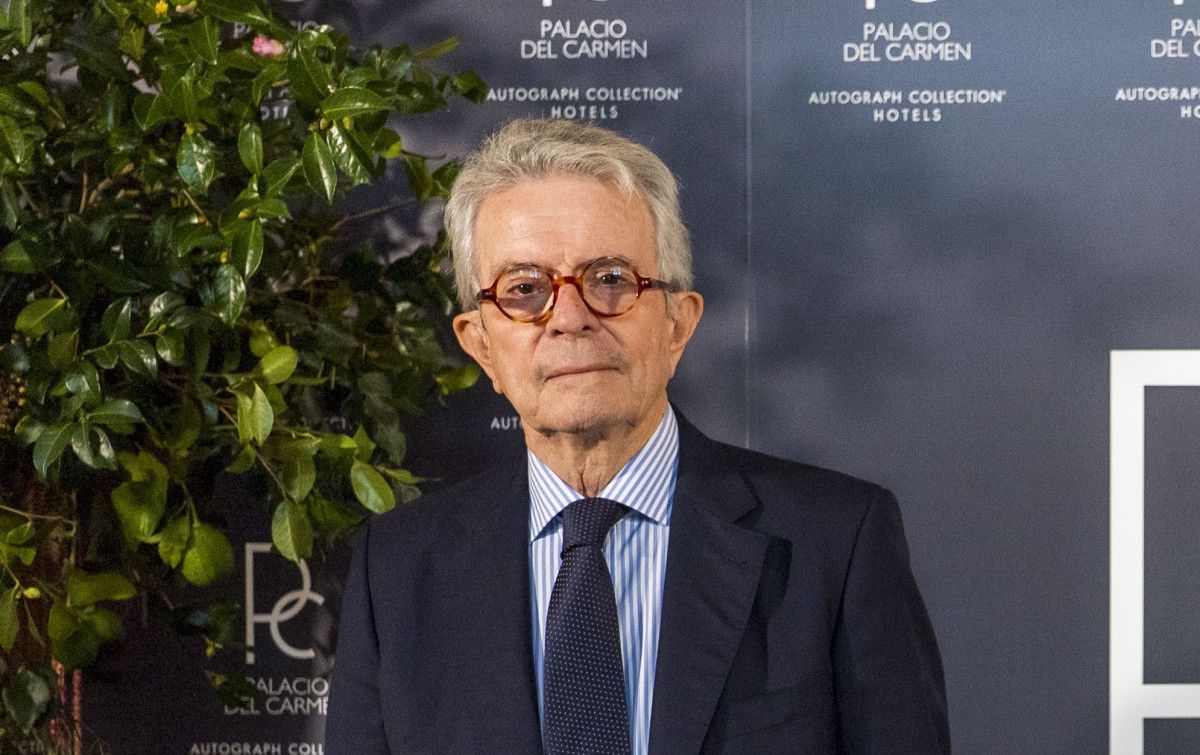
MADRID, SPAIN — In the dynamic world of international hospitality, few figures command the respect and historical perspective of Antonio Catalán. As the president and driving force behind ACHM Hotels by Marriott—a powerful joint venture between his private management group and the world’s largest hotel chain—Catalán has spent half a century shaping the European lodging landscape.
Marked by resilience, strategic foresight, and an aggressive push into high-end lifestyle segments, ACHM is currently riding a wave of financial and operational success. In an extensive interview, Catalán shared critical insights into the company’s performance amid global geopolitical headwinds, its surging portfolio surpassing the 100-property milestone, upcoming disruptive brand launches in Madrid, and innovative responses to pressing socio-economic challenges like the national housing crisis.
Main Facts
- Portfolio Growth: ACHM Hotels by Marriott’s total footprint has crossed the 100-property threshold, currently sitting at 105 hotels either fully operational or in active development across Spain, Italy, and Portugal.
- Financial Health: Despite initial concerns surrounding macroeconomic instability, inflation, and shifting U.S. political landscapes, ACHM expects to close the fiscal year with a robust 15% to 20% increase in sales compared to the previous year.
- Strategic Expansion in Italy: Italy has emerged as the company’s primary growth frontier. Catalán has set an ambitious target of expanding ACHM’s footprint in the country to between 30 and 40 hotels, citing a fragmented market reminiscent of Spain’s hospitality sector in the 1980s.
- High-Profile Luxury Undertakings: ACHM has been selected by Marriott International to operate an ultra-luxury St. Regis property nestled in the snow-capped Italian peaks of Cortina d’Ampezzo, aimed at becoming one of the world’s premier mountain resorts. Additionally, the company is finalizing the debut of Marriott’s disruptive lifestyle brand, Moxy, in Madrid.
- Addressing the Housing Crisis: Confronting severe housing shortages and skyrocketing rental prices in prime destinations, ACHM has been forced to take unprecedented measures, including the acquisition of a hotel in Salardú (Baqueira) solely to house its operational workforce.
Chronology: A 50-Year Journey Through European Hospitality
To understand ACHM’s current trajectory, one must view it through the lens of Antonio Catalán’s remarkable 50-year career in the hospitality industry.
- The 1980s (The Genesis): Catalán entered the Spanish lodging sector during a decade of rapid modernization. He founded AC Hotels, pioneering a distinct brand of urban, design-forward, functional business hotels that would eventually catch the eye of global lodging giants.
- The Marriott Partnership (2011): Marking a monumental shift in European hospitality, AC Hotels formed a strategic joint venture with Marriott International, creating AC Hotels by Marriott. This partnership blended Catalán’s localized development expertise with Marriott’s unmatched global distribution networks and loyalty systems.
- Evolution Beyond the Core Brand (2015–2020): Recognizing changing consumer preferences, Catalán began steering properties away from the standard AC flag in major metropolitan hubs, converting prime locations into higher-tier lifestyle and upper-upscale Marriott brands such as Autograph Collection, Westin, Sheraton, and JW Marriott.
- The Post-Pandemic Rebound (2021–2024): Navigating the catastrophic disruptions of COVID-19, ACHM pivoted swiftly, leveraging Marriott’s massive base of over 300 million loyalty members. The company solidified its presence across Southern Europe, establishing firm strongholds in secondary and primary urban markets in Spain and Italy.
- Current Milestone (Late 2024–2026): ACHM officially surpasses 105 properties in its combined portfolio. The company celebrates the silver jubilee (25th anniversary) of its completely renovated Palacio del Carmen in Santiago de Compostela while gearing up for the launch of Madrid’s first Moxy hotel and the massive Cortina d’Ampezzo St. Regis project.
Supporting Data and Portfolio Metrics
A deep dive into ACHM’s financial and operational metrics reveals a resilient business model insulated from many common macroeconomic shocks.
Financial Resilience and Pricing Strategy
At the onset of the year, external anxieties—particularly the political transition in the United States and potential trade or travel fluctuations—sparked internal caution. Because a significant portion of ACHM’s upscale urban client base originates from North America, leadership monitored average daily rates (ADR) on a bi-weekly basis.
However, these fears proved unfounded. Demand remained exceptionally robust:
- Sales Growth: Projected year-on-year revenue growth of 15% to 20%.
- Cost Control: Despite inflationary spikes in electricity and labor markets, ACHM managed operational expenses efficiently, avoiding severe margin compression.
- Geopolitical Isolation: Conflicts in regions such as the Middle East have caused virtually zero disruption to ACHM’s bottom line. The typical American traveler utilizing Marriott platforms is affluent, mature (averaging around 60 years of age), financially secure through multiple pension plans, and resilient to broader economic fluctuations. They travel frequently and spend heavily upon arrival.
The Distribution Power of Marriott
Operating under the Marriott umbrella provides ACHM with a structural advantage that independent operators struggle to replicate. According to Catalán, while third-party channels like Booking.com deliver steady business in secondary markets, the vast majority of premium international reservations flow directly through Marriott.com, powered by an ecosystem of over 300 million loyalty program members. This direct-to-consumer pipeline minimizes customer acquisition costs and ensures high-yield occupancies year-round.
Official Responses and Strategic Vision
During his recent address at the 25th-anniversary celebrations of the Palacio del Carmen in Santiago de Compostela, Antonio Catalán outlined the core pillars of ACHM’s ongoing development strategy.
Expanding the Luxury and Lifestyle Segments
While AC Hotels remain a stable cornerstone of the company’s portfolio—functioning exceptionally well in regional capitals like León—the luxury and lifestyle segments are driving future asset conversions.
"Although I was the founder of AC, we are having fewer and fewer AC hotels and converting them into other Marriott brands like Autograph Collection, JW, Westin, or Sheraton," Catalán explained.
As an example, a historic AC property in Seville is currently undergoing transition into the high-end Autograph Collection. Similarly, urban centers such as Madrid, Barcelona, and Málaga are seeing heavy investment in luxury lifestyle brands. Chief among these is Moxy, Marriott’s playful, disruptive brand targeted at millennial and digital-native travelers. Catalán confirmed that negotiations for a brand-new Moxy hotel in Madrid are slated for completion within a matter of weeks, following successful Moxy rollouts in Italian hubs like Verona, Turin, Venice, and Bergamo.
The Italian Frontier: The New Spain of the 1980s
When asked about geographic expansion, Catalán was unequivocal: Italy represents the company’s highest-potential growth market. While Spain’s domestic hotel market is mature, highly competitive, and saturated with domestic operators, Italy presents an open playing field.
"For us, the market in Italy is very manageable. We have a structure there, a construction team, a country manager, and a central office just like the one in Madrid. We aspire to have 30 or 40 hotels in Italy. That is the idea," said Catalán.
Comparing modern Italy to the burgeoning Spanish tourism market of the 1980s, Catalán notes that Italy features numerous under-optimized properties ripe for comprehensive rebranding and capital-intensive refurbishment.
Furthermore, ACHM has secured a major management agreement with Marriott to operate a luxury St. Regis property in the Italian mountain resort of Cortina d’Ampezzo. While ACHM typically acts as an owner or long-term lessee—often operating on a variable percentage of sales backed by a guaranteed minimum—the Cortina d’Ampezzo project represents a pure management contract, minimizing asset risk while cementing ACHM’s reputation as an elite luxury operator in alpine environments.
Industry Implications and Socio-Economic Challenges
While ACHM’s corporate balance sheet is remarkably healthy and virtually debt-free, the hospitality sector at large faces systemic external pressures that threaten sustainable growth. Foremost among these is the escalating housing crisis across major European urban centers.
The Housing Crisis Impeding Workforce Mobility
The severe shortage of affordable housing in cities like Madrid, Barcelona, and prime tourist enclaves has transformed from a purely social issue into an operational bottleneck for the hospitality industry. Workers are increasingly priced out of metropolitan housing markets, making recruitment and talent retention exceptionally difficult.
Catalán did not mince words regarding the severity of the situation or the political response to it:
"It’s a problem in Madrid and in other cities. In Baqueira, we had to buy a hotel [in Salardú] to house our workers. If not, they simply won’t relocate. Housing is absolutely out of control. I think with this government, this is an absolute disaster. The decree law they’ve introduced doesn’t make sense, and they don’t even know which direction it’s heading. We need to solve this issue because it’s a national problem that doesn’t just affect us—it affects everyone."
By taking the unprecedented step of acquiring residential/hotel facilities exclusively for employee housing in high-cost alpine regions, ACHM has highlighted the lengths to which private operators must go to maintain service quality in the face of public policy failures regarding real estate development.
Conclusion: A Steady Course for the Future
With 105 properties secured across Spain, Portugal, and Italy, ACHM Hotels by Marriott stands as a masterclass in resilient hospitality management. By balancing tried-and-true urban business lodging with aggressive lifestyle brand conversions, high-end luxury operations like the upcoming St. Regis in Cortina d’Ampezzo, and a laser-focused expansion strategy in Italy, Antonio Catalán continues to steer his enterprise through geopolitical turbulence with the calm hand of a veteran who has seen every phase of the industry’s evolution over the last half-century.



Leave a Reply