

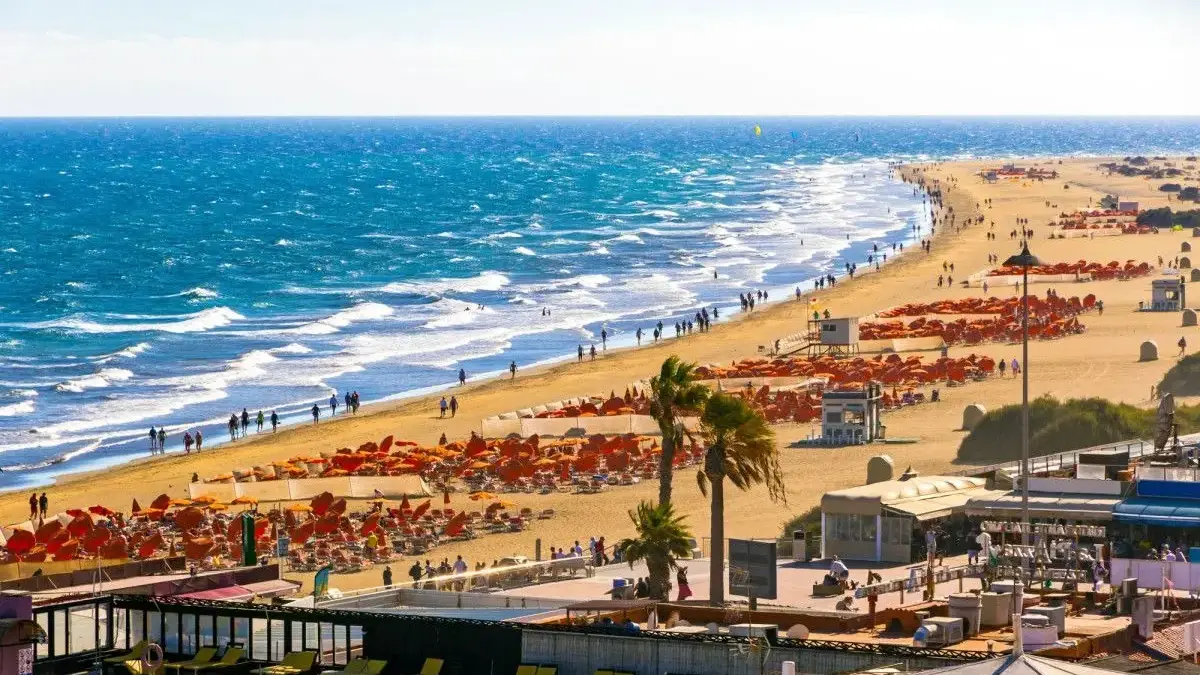
GRAN CANARIA — The economic and tourism landscape of the Canary Islands is set for a substantial boost following a pivotal decision by the City Council of San Bartolomé de Tirajana. Municipal authorities have officially granted the Canarian tourism heavyweight, the Lopesan Group, the urban planning licenses necessary to construct a flagship five-star luxury hotel in Maspalomas. The ambitious project, to be known as the Hotel Meloneras Boutique, represents an estimated financial investment of 41.6 million euros and underscores the region’s ongoing commitment to high-end tourism development, infrastructure modernization, and sustainable economic growth.
The announcement was formally made public through an official municipal communication on Friday, marking the culmination of rigorous administrative reviews. Alongside the green light for the new luxury resort, the local government’s Local Governing Board also approved a critical secondary license for Lopesan: a 2.4 million euro modernization and repositioning project for the existing Abora Interclub Atlantic Hotel in San Agustín. Together, these parallel initiatives signal a dual strategy of expanding premier resort capacity while simultaneously upgrading legacy infrastructure to reinforce Gran Canaria’s competitive standing in the international tourism market.
1. Main Facts: The Meloneras Boutique Hotel Project
The crown jewel of the recent municipal authorizations is the upcoming Hotel Meloneras Boutique, a luxury venture designed to cater to the increasingly discerning demands of high-net-worth travelers visiting the southern coast of Gran Canaria.
Scale and Location
The new five-star establishment will be erected on a sprawling plot of land designated as the Meloneras 2A parcel, encompassing a total surface area of 36,632 square meters. True to the principles of low-impact, high-quality architectural design prevalent in modern Canarian tourism developments, the physical footprint of the hotel will occupy approximately 14,488.07 square meters—representing 39.55% of the total available plot.
The computable buildable area (edificabilidad) will total 19,884,07 square meters. In a deliberate effort to blend the massive resort seamlessly into the natural topography of the coastline, municipal planning documents confirm that the complex will feature a tiered, stepped architecture. This cascading design ensures that the building harmonizes with the varying elevations of the terrain while strictly adhering to municipal density, volume, and land-use parameters.
Room Configuration and Amenities
The Hotel Meloneras Boutique has been meticulously planned to offer a deeply personalized, exclusive hospitality experience. Upon its projected completion, the establishment will boast a total of 249 high-end guest units, categorized to accommodate a broad spectrum of luxury clientele:
- 216 Standard Units: Designed with contemporary aesthetics, premium materials, and cutting-edge in-room technology.
- 24 Suites: Offering expansive living spaces, enhanced private amenities, and superior interior design.
- 8 Mobility-Impaired Accessible Rooms: Specially engineered to guarantee absolute comfort, safety, and barrier-free accessibility for guests with restricted physical mobility.
- 1 Imperial Suite: The ultimate expression of luxury within the resort, tailored for VIP guests seeking maximum privacy, expansive square footage, and elite-tier bespoke services.
Beyond the guest rooms, the resort’s master plan includes a comprehensive array of world-class leisure and wellness amenities. According to Davinia Ramírez, the municipality’s Councillor for Urbanism, the property will integrate expansive culinary spaces and restaurants, a state-of-the-art luxury spa, a fully equipped gymnasium, extensive swimming pool complexes, multi-tiered sun decks (solariums), carefully landscaped indigenous gardens, and robust back-of-house operational service zones. Furthermore, the property will incorporate 9,260 square meters of dedicated green spaces and 102 surface and subterranean parking spaces to accommodate guests and service logistics.
2. Chronology of the Approvals and Implementation Timeline
The realization of the Hotel Meloneras Boutique and the simultaneous upgrade of the Abora Interclub Atlantic follow a deliberate administrative trajectory, with clear execution phases mapped out by the developers and municipal overseers.
The Administrative Path
Discussions, architectural drafting, and preliminary environmental and urban planning submissions for the Meloneras 2A parcel have evolved over recent months, navigating the complex regulatory frameworks that govern coastal developments in the Canary Islands. The rigorous evaluation by the Department of Urbanism of San Bartolomé de Tirajana ensured that the project met all regional environmental safeguards, aesthetic codes, and zoning laws before reaching the desk of the Local Governing Board.
Construction Schedule and Deadlines
With the urban planning license now officially granted, the timeline for the creation of the Hotel Meloneras Boutique shifts from bureaucracy to execution:
- Phase 1: Pre-Construction and Mobilization (Months 1–6): Site clearance, detailed engineering blueprints, geotechnical surveys, and the establishment of logistical staging areas on the 36,632-square-meter plot.
- Phase 2: Structural and Civil Works (Months 7–24): Foundation pouring, earthmoving to accommodate the stepped structural design across the varying site contours, concrete framing, and the installation of core mechanical, electrical, and plumbing (MEP) backbones.
- Phase 3: Interior Architecture, Fit-Out, and Landscaping (Months 25–33): Interior partitioning, luxury room fittings, installation of spa and gym equipment, kitchen and restaurant outfitting, and the planting of the 9,260 square meters of botanical gardens and green spaces.
- Phase 4: Commissioning and Soft Opening (Months 34–36): Final inspections, staff recruitment and training, systems testing, and the phased administrative handover leading up to the official grand opening of the hotel.
In total, the execution window established for the construction phase is 36 months, placing the potential opening of the resort within the next three years.
3. Supporting Data and Economic Impact
The financial dimensions of Lopesan’s twin projects highlight the scale of corporate confidence in the southern region of Gran Canaria. While the headline figure of 41.6 million euros is dedicated exclusively to the greenfield construction of the Hotel Meloneras Boutique, an additional 2.4 million euros has been earmarked for the renovation of the Abora Interclub Atlantic, bringing Lopesan’s immediate localized capital expenditure to a combined 44 million euros.
Employment Generation
The economic ramifications of a project of this magnitude extend far beyond the hospitality sector. Municipal economic analyses project that the construction and subsequent operation of the Hotel Meloneras Boutique will generate more than 250 direct and indirect jobs.
During the active 36-month construction phase, employment will peak across multiple industrial sub-sectors:
- Construction and Civil Engineering: Specialized contractors, masons, structural engineers, and heavy machinery operators.
- Technical Installations: HVAC technicians, electrical grid specialists, plumbers, and telecommunications installers.
- Supply Chain and Logistics: Material manufacturers, wholesale distributors of construction aggregates, interior design furnishers, and commercial transport providers.
Once operational, the hotel will sustain a permanent workforce encompassing hospitality management, culinary arts, housekeeping, guest relations, wellness therapy, maintenance, and security, thereby contributing significantly to local employment stability and professional career pathways in tourism.
Modernization of the Abora Interclub Atlantic
Complementing the new build is the ongoing transformation of the Hotel Abora Interclub Atlantic, situated in the coastal enclave of San Agustín. Also operating under the Lopesan umbrella, this established property is undergoing a comprehensive physical and strategic overhaul backed by a 2.4 million euro injection recently greenlit by the Local Governing Board.
The primary objective of this intervention is twofold: to significantly elevate the property’s service standards—resulting in an official category upgrade from three to four stars—and to structurally rescue and recover 24 legacy guest units that were previously left in a state of disuse.
The scope of work for the Abora Interclub Atlantic includes:
- Comprehensive structural repairs, advanced exterior facade waterproofing, and modern protective surface coatings.
- Total renovation and aesthetic modernization of private guest terraces and balconies.
- Complete replacement of worn-out sanitary fixtures, piping networks, and electrical infrastructure.
- Interior remodeling involving modern spatial layouts, ergonomic furniture upgrades, and updated soft furnishings.
4. Official Responses and Institutional Perspectives
Municipal leaders in San Bartolomé de Tirajana have seized the opportunity to articulate a cohesive vision for the municipality’s tourism future—one that balances aggressive private sector investment with rigorous urban planning compliance and sustainable neighborhood integration.
Alejandro Marichal, First Deputy Mayor
Addressing the media following the issuance of the licenses, the First Deputy Mayor of San Bartolomé de Tirajana, Alejandro Marichal, placed strong emphasis on the transformative economic ripple effects of the Meloneras Boutique project.
"This initiative represents an extraordinarily important financial injection for the municipal economy," Marichal stated. He elaborated on the broad economic ecosystem activated by such a massive undertaking, noting that beyond the immediate job creation for residents, the project triggers a wave of commerce across local supply chains. "Think of the immense activity generated by a construction project of this scale: building contractors, specialized technical installations, raw material suppliers, facility maintenance firms, transport networks, and the myriad ongoing services required once the hotel finally opens its doors to the public."
Turning his attention to the parallel modernization of the Abora Interclub Atlantic in San Agustín, Marichal articulated a cornerstone philosophy of modern municipal governance: "As an administration, we firmly believe that attracting fresh, pioneering investments is just as crucial as actively facilitating the continuous renovation of our already established tourism stock. Upgrading existing assets is the only way to systematically elevate the overall quality of our destination’s touristic offer and safeguard our competitive edge globally."
Davinia Ramírez, Councillor for Urbanism
Providing technical insight into the spatial and architectural considerations of the Meloneras development, Councillor for Urbanism Davinia Ramírez highlighted the meticulous planning that preceded the municipal approval.
"When evaluating the Meloneras Boutique project, we looked past the headline number of 249 high-end accommodation spaces," Ramírez explained. "We scrutinized how these units integrate with the complementary leisure infrastructure—the bespoke dining spaces, the holistic spa, the gymnasium, the pools, the sun decks, and the extensive private gardens."
Ramírez praised the architectural team for successfully navigating the complex topographical contours of the Meloneras 2A plot. "The project achieves a masterclass in integration. By utilizing a staggered, terraced building methodology, the developers have ensured that the structure respects the natural elevations of the land while remaining strictly compliant with every established parameter governing spatial occupancy and volumetric buildability in this sensitive coastal zone," she concluded.
5. Broader Implications for Gran Canaria’s Tourism Sector
The simultaneous advancement of a €41.6 million five-star luxury resort and a strategic hotel modernization project carries profound strategic implications for Gran Canaria and the broader Canary Islands archipelago.
Elevating Destination Positioning
For decades, the southern coast of Gran Canaria—anchored by Maspalomas, Meloneras, and San Agustín—has been a cornerstone of European leisure travel. However, as global tourism demographics shift toward experiential travel, wellness tourism, and uncompromising luxury, destinations face mounting pressure to reinvent themselves.
By adding an ultra-exclusive property like the Hotel Meloneras Boutique, the destination reinforces its appeal to high-spending international travelers who seek low-density luxury, personalized service, and architectural elegance rather than mass-market volume. Simultaneously, the upscaling of the Abora Interclub Atlantic from three to four stars demonstrates that mid-tier legacy properties are not being left behind; rather, they are being aggressively modernized to meet contemporary environmental, aesthetic, and functional expectations.
A Model for Public-Private Synergy
The swift and coordinated handling of these licenses by the San Bartolomé de Tirajana City Council highlights a functional model of public-private cooperation. By cutting through bureaucratic gridlock while maintaining strict adherence to environmental caps, zoning laws, and architectural integration, municipal authorities are proving that sustainable economic growth and high-end tourism development can successfully advance hand-in-hand.
As ground preparation begins on the Meloneras 2A parcel and renovation works accelerate in San Agustín, all eyes will be on the Lopesan Group as it brings these two defining visions to life. Over the next three years, the completion of these projects will not only reshape the physical skyline of southern Gran Canaria but will also cement its reputation as one of the most dynamic, forward-looking, and resilient tourism destinations in Europe.



Leave a Reply