

By Fitness & Science Desk
Published: March 2025
Main Facts
When it comes to lifting weights in the gym, at home, or anywhere else, human movement is rarely a singular event. Every standard repetition against a resistance load is comprised of three distinct mechanical phases: moving the load, braking the load back to its starting position, and a transitional phase connecting the two. In exercise science, these are formally recognized as the concentric, eccentric, and isometric (or transitional) phases, respectively.
While the vast majority of gym-goers focus exclusively on the concentric phase—the explosive push or pull required to lift a weight—recent groundbreaking scientific literature highlights that the eccentric phase is equally, and in some metrics more, important for maximizing physical adaptation.
A newly published systematic review and meta-analysis in the prestigious Journal of Strength and Conditioning Research has re-ignited the debate on muscle hyper-trophy. Analyzing data from 26 high-quality studies encompassing 682 healthy adult participants, researchers evaluated the direct impact of concentric versus eccentric muscle actions on muscle growth. The findings challenge conventional bodybuilding wisdom: the eccentric phase demonstrated effects equal to or even greater than the concentric phase, particularly for upper-extremity muscle groups. Furthermore, eccentric-focused training yielded faster initial neuromuscular and structural adaptations.
Despite these clear physiological advantages, millions of fitness enthusiasts continue to treat the eccentric phase—the lowering portion of a lift—as little more than dead time, a mere setup for the next explosive repetition. Integrating a deeper understanding of muscle mechanics, supramaximal loads, and practical tempo training can fundamentally transform how athletes, bodybuilders, and everyday fitness participants structure their routines.
Chronology
To understand why the eccentric phase has been historically overlooked, it helps to trace the evolution of modern strength training and resistance exercise research.

Early 20th Century: The Rise of Isotonic Lifting
In the foundational days of physical culture, weightlifting was measured strictly by "lifted" weight. The barbell leaving the floor or clearing the chest defined success. The return of the weight to the ground or rack was viewed as a safety necessity rather than a training stimulus. Equipment design—such as traditional barbell plates and fixed-path selectorized machines—favored concentric resistance, cementing the cultural bias that "lifting" the weight is where the work gets done.
The 1970s–1990s: The Birth of Negative Training
As bodybuilding gained scientific scrutiny in the latter half of the 20th century, pioneers began experimenting with "negatives"—a colloquial term for eccentric training. Bodybuilders noticed that lowering supramaximal loads (weights heavier than what could be lifted concentrically) induced extreme muscle soreness and subsequent growth. However, due to the lack of controlled clinical trials and the high risk of delayed-onset muscle soreness (DOMS) or injury when unsupervised, negative training remained a niche advanced technique rather than a foundational training principle.
2025: Definitive Scientific Consensus
The publication of the systematic review and meta-analysis by da Silva et al. (2025) in the Journal of Strength and Conditioning Research marked a paradigm shift. By aggregating 26 rigorous studies and isolating variables related to muscle cross-sectional area (hypertrophy) across 682 participants, science provided definitive proof. The data confirmed that eccentric actions are not just complementary to concentric actions; they are primary drivers of muscular adaptation, prompting a complete reassessment of optimal rep tempos and workout program design.
Supporting Data
The scientific validation of eccentric training is rooted in rigorous biomechanical and physiological data. The 2025 meta-analysis provides profound statistical backing for what sports scientists have long suspected.
The Numbers Behind the Study
- Total Studies Analyzed: 26 high-quality peer-reviewed studies.
- Sample Size: 682 healthy adult participants.
- Primary Metric: Hypertrophic outcomes (muscle size adaptation) comparing eccentric vs. concentric muscle actions.
- Key Finding: Upper-extremity muscle groups demonstrated superior hypertrophic outcomes during eccentric-focused protocols compared to concentric-only or concentric-dominant protocols.
- Adaptation Speed: Eccentric actions consistently triggered faster initial physical and neurological adaptations, making them highly efficient for rapid conditioning.
Biomechanical Mechanics: Why Eccentric Works
To grasp why the eccentric phase yields such potent results, one must look at the cellular level. During a concentric contraction, muscle fibers shorten as actin and myosin filaments slide past each other, generating active tension. Conversely, during an eccentric contraction, the muscle lengthens under tension as it brakes an external load.
Because fewer motor units are recruited simultaneously to handle a given eccentric load compared to a concentric load, the mechanical stress experienced by those active muscle fibers is vastly higher. This results in greater micro-tearing of muscle protein structures, triggering robust signaling pathways (such as mTOR) that upregulate protein synthesis and muscle hypertrophy.

Official Responses and Expert Perspectives
As the fitness community digests the implications of the new meta-analysis, leading strength coaches, physical therapists, and exercise physiologists have weighed in on how the data alters practical training guidelines.
"For decades, trainers have coached clients to focus purely on the lift. But the science is unequivocal: if you are dropping the weight quickly or ignoring the descent, you are leaving half of your muscle-building potential on the table," notes a leading sports physiologist involved in human performance optimization.
Clinical and Rehabilitation Insights
Physical therapists have long recognized the unique properties of eccentric contractions in rehabilitation settings. Because tendons and muscles can tolerate significantly higher forces during lengthening than shortening (often 20% to 40% higher), clinicians utilize eccentric loading to rehabilitate chronic tendinopathies and muscle atrophy.
- Supramaximal Tolerances: An individual who can leg press 100 kg concentrically can safely control between 120 kg and 140 kg during the eccentric descent. This high-tension environment stimulates collagen synthesis in tendons, proving essential for injury recovery and structural reinforcement.
- Atrophied Muscle Recovery: For patients recovering from surgery or extended immobilization, eccentric movements help reactivate dormant motor pathways with reduced metabolic cost compared to full concentric repetitions.
Implications
Translating these scientific findings into actionable gym strategies requires understanding how to manipulate tempo, leverage advanced training techniques, and utilize specialized movements.
1. Standardizing Repetition Tempo
For the general population and everyday gym-goers looking to maximize hypertrophy, the solution is as simple as adjusting the rep tempo. A balanced, science-backed tempo consists of:
- Concentric Phase: Explosive and intentional (approx. 1 second).
- Isometric/Transitional Phase: Brief pause at peak contraction (0–1 second).
- Eccentric Phase: Controlled, deliberate lowering phase (approx. 3 seconds).
This controlled 3-second descent ensures adequate time under tension (TUT) and maximizes the hypertrophic stimulus identified in clinical literature.

2. Advanced Techniques for Supramaximal Eccentric Loading
For intermediate and advanced lifters seeking to push past plateaus, integrating supramaximal eccentric loads (weights 20%–40% heavier than concentric maximums) can yield dramatic breakthroughs. However, this introduces a mechanical problem: How do you lift the weight back up if it exceeds your concentric strength?
Fitness science and equipment engineering have provided several ingenious solutions:
- Bilateral Lift, Unilateral Lower: Perform the concentric (lifting) portion of an exercise using both limbs, and the eccentric (lowering) portion using only one. For example, execute a leg extension machine with both legs, but release and lower the weight using a single leg. This exposes that single limb to a supramaximal load safely.
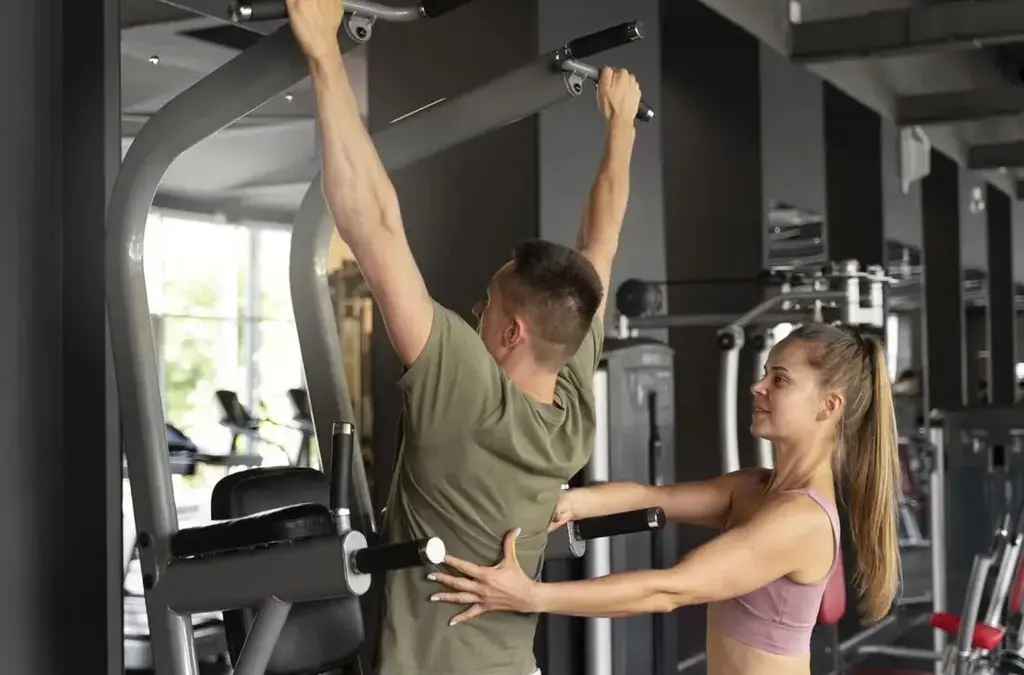
- Partner-Assisted Training: A training partner assists with the concentric push or pull (lifting 100% of the load plus extra), and then releases control, allowing the lifter to independently resist a heavy eccentric descent.
- Specialized Hardware: Advanced gym equipment now features mechanical drop-hooks or release mechanisms that unclip weight plates at the bottom of a movement (such as squats or bench presses), lightening the load for the concentric ascent.
3. Dedicated Eccentric Movements
Certain exercises are inherently biased toward the eccentric phase due to leverage and biomechanics. The Nordic Hamstring Curl and the Reverse Nordic Curl are prime examples. These bodyweight exercises are notoriously intense precisely because they demand extreme eccentric control of the hamstrings and quadriceps. Clinical studies frequently highlight the Nordic curl as one of the single most effective injury-prevention protocols for hamstring strains in soccer, track, and field athletes, while simultaneously driving profound muscle hypertrophy.
Conclusion
The modern obsession with how much weight we can push, pull, or lift off the ground has created a blind spot in physical conditioning. As the 2025 systematic review and meta-analysis confirms, the eccentric phase is far more than a transitionary reset—it is an anatomical powerhouse capable of accelerating muscle growth, fortifying tendons, and preventing injuries. By slowing down our descents, embracing controlled tempos, and exploring advanced eccentric overload techniques, fitness enthusiasts can finally unlock the complete potential of every single repetition.
References
- da Silva, L. S. L., Gonçalves, L. D. S., Alves Campos, P. H., Benjamim, C. J. R., Tasinafo Júnior, M. F., de Lima, L. C. R., Bueno Júnior, C. R., & Alves, C. P. L. (2025). Comparison Between Eccentric vs. Concentric Muscle Actions On Hypertrophy: A Systematic Review and Meta-analysis. Journal of Strength and Conditioning Research, 39(1), 115–134. https://doi.org/10.1519/JSC.0000000000004981



Leave a Reply