

Main Facts
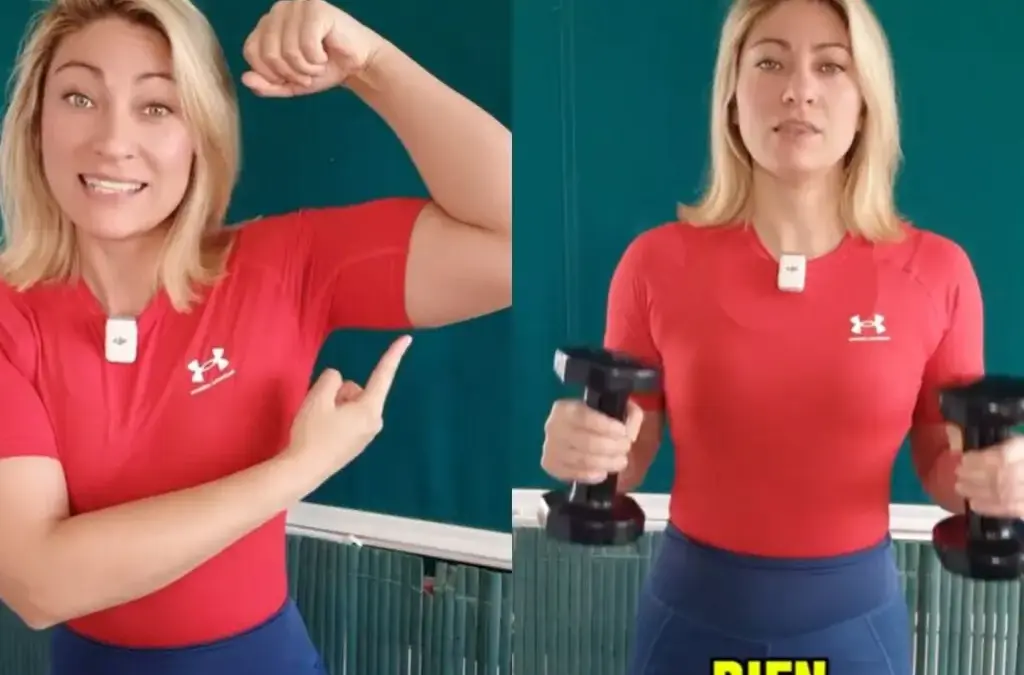
In the contemporary digital fitness landscape, physical therapists and wellness creators are leveraging social media platforms to democratize access to health and wellness. Among them is Alexandra Carrasco, widely recognized across digital communities by her moniker, "Tu Fisio 24 horas" (Your 24-Hour Physiotherapist). Boasting a rapidly expanding digital footprint of over 310,000 followers on TikTok, Carrasco has carved out a distinct niche by designing high-efficiency workout routines that require minimal equipment.
Her latest viral contribution to the platform is a specialized, comprehensive upper-body training routine designed specifically for home execution. Utilizing nothing more than a standard pair of dumbbells, the routine targets the primary muscle groups of the arms—specifically the biceps, triceps, and deltoids (shoulders).
Unlike conventional, high-intensity gym regimens that demand specialized machinery, heavy free weights, or extensive time commitments, Carrasco’s routine is structured around functional movement patterns, injury prevention, and mechanical efficiency. The sequence is explicitly marketed as an anti-flacidity, muscle-gain, and strength-building protocol. It is tailored to be universally accessible, making it suitable for both men and women across a broad demographic spectrum, from young adults to older populations seeking to maintain functional independence and physical vitality.
Chronology of the Trend: From Clinical Practice to Viral Digital Routine
The proliferation of accessible home workouts is not entirely new, but the integration of professional physiotherapy insights into viral short-form video content represents a significant evolution in public health education.
Phase 1: The Shift Toward Home-Based Functional Fitness
Over the past several years, shifting lifestyle habits, flexible work environments, and the rising costs associated with traditional commercial gym memberships have accelerated a permanent pivot toward home fitness solutions. Fitness enthusiasts and casual practitioners alike continuously seek routines that maximize caloric expenditure and muscular engagement with minimal logistical hurdles.
Phase 2: The Rise of "Tu Fisio 24 Horas"
Recognizing a gap in the digital market—where high-impact workouts frequently lead to repetitive strain injuries or poor user mechanics—Alexandra Carrasco established her online persona. By combining her professional background in physiotherapy with the algorithmic reach of TikTok, she began publishing targeted micro-workouts focused on pain mitigation, joint health, and structural longevity.
Phase 3: The Viral Upper-Body Circuit Release
The culmination of this digital strategy arrived with the publication of her recent dumbbell-focused routine. Designed as a follow-along video where Carrasco paces the viewer through every repetition, the content quickly gained traction. Within days of its release, the video garnered thousands of interactions, saves, and shares, cementing its status as a benchmark routine for individuals looking to combat upper-body muscular atrophy without stepping foot inside a traditional training facility.
Supporting Data: Anatomy of the 3-Minute Circuit
Carrasco’s routine is engineered for maximum physiological impact in minimal time. The entire circuit takes approximately three minutes to complete once through. Practitioners are instructed to perform three total rounds, culminating in a total training time of under ten minutes—proving that workout efficacy is dictated by mechanical tension and execution quality rather than sheer duration.
The structural breakdown of the routine comprises six distinct exercises, meticulously sequenced to alternate between pushing and pulling mechanics, thereby optimizing muscular recovery between sets:
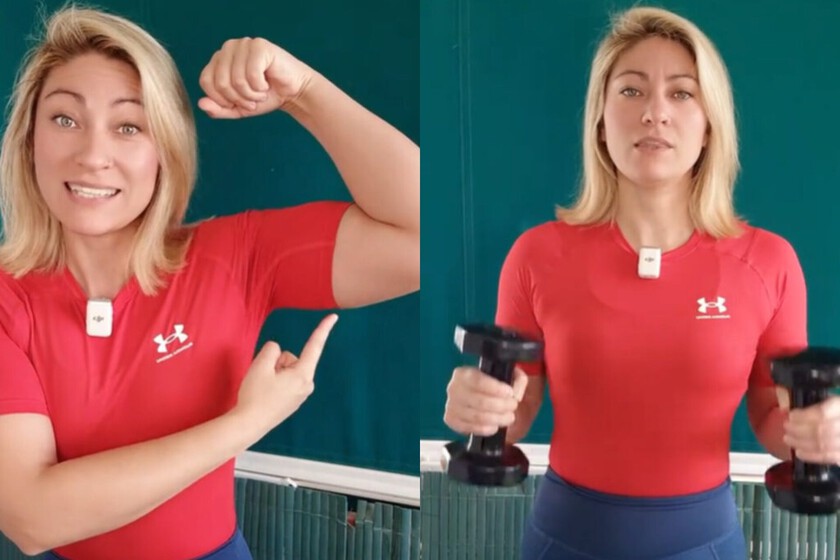
1. Simultaneous Biceps Curl with Dumbbells
- Target Muscle Group: Biceps brachii and brachialis.
- Execution: Practitioners hold a dumbbell in each hand, maintaining a neutral or supinated grip, and flex the elbow joints to bring the weights toward the shoulders.
- Physiotherapeutic Note: Carrasco notes that while simultaneous execution challenges core stability and bilateral coordination, practitioners can also opt for alternating repetitions if bilateral muscular imbalances are present.
2. Single-Dumbbell Front Raises
- Target Muscle Group: Anterior deltoids (front shoulders).
- Execution: The practitioner grips a single dumbbell horizontally by both outer ends. With a controlled tempo, the weight is elevated away from the body to eye level, followed by a slow, eccentric descent.
- Physiotherapeutic Note: Controlled eccentric movements are critical here to avoid momentum-driven swinging, which compromises the integrity of the shoulder joint.
3. Diagonal Shoulder Push
- Target Muscle Group: Multi-angle deltoids with an emphasis on anterior and lateral fibers.
- Execution: Departing from traditional strictly vertical or horizontal paths, this movement requires the practitioner to press the weights diagonally outward from the chest until the arms are fully extended.
- Physiotherapeutic Note: This diagonal trajectory respects the natural scapular plane, reducing impingement risks often associated with rigid, strictly lateral shoulder raises.
4. Overhead Triceps Extensions
- Target Muscle Group: Triceps brachii (specifically the long head).
- Execution: Holding a single dumbbell overhead with both hands, the elbows remain pointed forward while the forearms lower behind the head, followed by a powerful extension upward.
- Physiotherapeutic Note: Recognized by sports scientists as one of the most effective movements for upper arm girth and triceps isolation, overhead extensions place the long head of the triceps under a deep stretch.
5. Standing Chest Press
- Target Muscle Group: Pectoralis major and secondary engagement of the anterior deltoids.
- Execution: Mimicking a traditional bench press while maintaining an upright, standing posture, the practitioner presses the dumbbell forward from the chest against gravity.
- Physiotherapeutic Note: Standing variations demand heightened core activation to stabilize the torso against the anterior load, bridging the gap between upper-body pressing and core stability.
6. Seated or Standing Dumbbell Shoulder Press
- Target Muscle Group: Comprehensive deltoid development (anterior and lateral heads) alongside the upper trapezius.
- Execution: The routine concludes with a classic vertical press, driving the dumbbells overhead from shoulder height.
- Physiotherapeutic Note: As the final movement of the circuit, this vertical push ensures complete muscular fatigue of the shoulder complex before initiating the mandatory rest period between rounds.
Expert Perspectives and Official Responses
The intersection of social media fitness coaching and clinical physiotherapy has attracted significant commentary from health professionals, kinesiologists, and fitness educators.
Sports medicine specialists emphasize that routines like the one popularized by "Tu Fisio 24 horas" address a critical demographic need: age-related muscle loss, scientifically termed sarcopenia. Medical consensus highlights that beginning as early as age 30, adults experience a gradual decline in muscle mass and strength. Without targeted resistance training, this process accelerates in subsequent decades, contributing to frailty, metabolic slowdown, and postural degradation.
Certified personal trainers and physical therapists have publicly praised Carrasco’s emphasis on form over weight volume. By utilizing moderate dumbbells and enforcing a steady, follow-along cadence, the risk of acute joint trauma—particularly to the delicate rotator cuff complex of the shoulder—is substantially minimized.
Furthermore, digital health analysts note that the psychological barrier to entry for physical fitness is often intimidating. Expert responses underline that short, highly structured, equipment-light routines mitigate the "all-or-nothing" mindset that frequently deters individuals from initiating consistent physical activity habits.
Implications for Public Health, Fitness Culture, and Longevity
The viral success of home-based physiotherapy routines carries profound implications for modern health paradigms, shifting how populations approach preventive medicine and self-care.
Democratization of Physical Health
By utilizing platforms like TikTok to distribute clinical-grade exercise science, creators like Alexandra Carrasco break down socioeconomic and geographic barriers to fitness. Access to professional guidance is no longer restricted to those who can afford private personal training sessions or commercial gym memberships. A pair of inexpensive dumbbells and an internet connection are all that separates an individual from structured physical conditioning.
Combatting Sedentary Lifestyles and Flacidity
Aesthetic goals—such as toning the arms and eliminating age-related cutaneous and muscular laxity (colloquially referred to as "bat wings")—frequently serve as the primary psychological hook for beginners. However, the secondary physiological implications extend far beyond cosmetics. Increased muscular density directly correlates with enhanced insulin sensitivity, higher basal metabolic rates, and improved bone mineral density, reducing the risk of osteoporosis.
The Evolution of Preventive Physiotherapy
Traditionally, physiotherapy has been viewed strictly through a rehabilitative lens—something patients seek only after an injury occurs. Content creators who bridge the gap between clinical science and daily fitness conditioning are actively shifting public perception toward prehabilitation. By teaching proper movement patterns, joint mechanics, and balanced muscular engagement to hundreds of thousands of followers simultaneously, these digital interventions lay the groundwork for a healthier, more resilient aging population.
Ultimately, routines like the 3-minute dumbbell arm circuit demonstrate that sustainable fitness does not require complex infrastructure. Through deliberate pacing, professional anatomical insight, and digital accessibility, effective strength training is successfully migrating from the elite gym floor directly into the living rooms of everyday practitioners.


Leave a Reply