

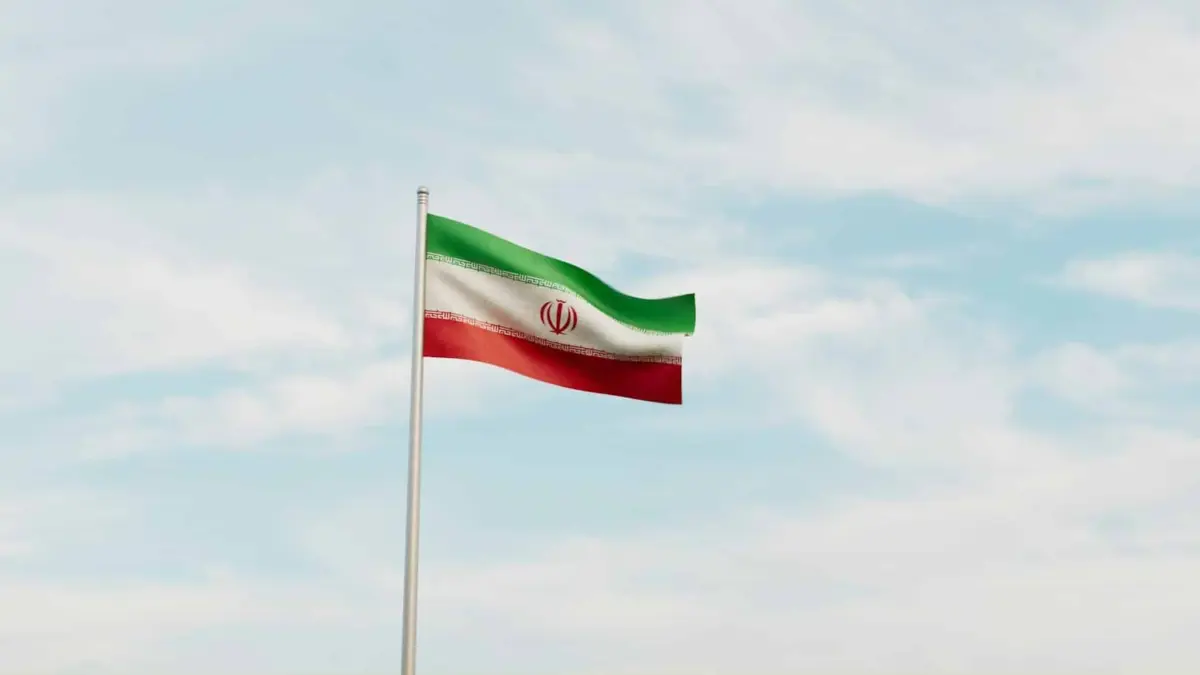
INTERNATIONAL DESK — The fragile security architecture of the Middle East faces its most severe test in years as tensions surge between Washington and Tehran over control and navigation of the critical Strait of Hormuz. What began as a localized confrontation has escalated into a high-stakes diplomatic standoff, deeply entangling global energy markets, international maritime trade, and the elusive pursuit of regional stability.
While the United States and its allies continue pressing for a diplomatic off-ramp to defuse the crisis and secure vital shipping lanes, Tehran has formalized a rigid baseline for any prospective dialogue. Through a series of uncompromising pronouncements, Iranian leadership has laid down six strict conditions for the reopening of the strategic strait and the resumption of bilateral talks. As both sides dig in their heels, the specter of a broader military escalation looms ominously over the region, leaving global policymakers and commodities traders on edge.
Main Facts: The Core of the Confrontation
The epicenter of the current crisis is the Strait of Hormuz, a narrow and vital maritime chokepoint through which a substantial portion of the world’s liquefied natural gas (LNG) and petroleum transits. The strategic waterway has effectively become a geopolitical hostage amid an ongoing naval blockade enforced by the United States and its regional partners.
The primary points of contention defining the current deadlock include:
- The Iranian Demands: Tehran has officially issued a six-point precondition framework, communicated by Mohammad Bagher Zolghadr, secretary of the Supreme National Security Council of the Islamic Republic of Iran. These demands range from the total cessation of economic sanctions to sweeping regional geopolitical concessions.
- Diplomatic Stalemate: Official channels between Washington and Tehran remain severely fractured. While U.S. officials have periodically signaled openness to dialogue, Iranian leadership has dismissed these overtures as disingenuous, accusing the White House of economic warfare and diplomatic hypocrisy.
- The Energy Threat: The blockade of the Strait of Hormuz—and the accompanying uncertainty surrounding alternative maritime corridors, such as ongoing discussions between Iran and Oman—directly threatens global energy security. Any prolonged disruption to this artery triggers immediate volatility in international oil and fuel markets.
- Core U.S. Objectives: Washington maintains that its military posture and economic pressures are designed to achieve two non-negotiable aims: halting Iran’s march toward a nuclear weapons capability and curtailing its regional proxy activities. The U.S. military maintains an active operational presence in the theater to safeguard international commerce and deter Iranian aggression.
Chronology of the Crisis: From Skirmish to Standoff
The trajectory of the current crisis has been marked by a steady erosion of trust, escalating rhetoric, and military posturing. Understanding the timeline is crucial to grasping why a diplomatic breakthrough remains so elusive.
Phase 1: The Outbreak and the Blockade
The latest cycle of hostilities built upon years of simmering animosity following the collapse of the Joint Comprehensive Plan of Action (JCPOA). However, the immediate crisis crystallized as naval confrontations intensified around the Persian Gulf, culminating in a de facto blockade of the Strait of Hormuz by U.S. and allied forces aiming to curb Iranian oil exports and assert maritime dominance.
Phase 2: The 160-Day War of Attrition
As the conflict crossed the 160-day mark, the economic and human toll mounted across the Middle East. Iran’s domestic populace and political apparatus unified around a hardline stance, asserting that Tehran would neither buckle under military pressure nor negotiate under duress. During this period, proxy conflicts involving regional actors linked to Iran—spanning Lebanon, Palestine, Yemen, and Iraq—intensified, drawing direct counter-responses from U.S. and allied forces.
Phase 3: Contradictory Diplomatic Signals
In recent weeks, the diplomatic front has been characterized by mixed messaging and public friction. Washington officials claimed that backchannel communications were underway to explore a peaceful resolution to the maritime crisis. This assertion was swiftly and publicly denied by Iranian authorities. The friction prompted sharp rebukes from Western leaders, including former U.S. President Donald Trump, who accused Tehran of hypocrisy and bad faith.
Phase 4: The Ultimatum and the Six Conditions
With diplomatic backchannels stalled, Iran’s Supreme National Security Council formalized its position by issuing the six sweeping conditions required to normalize relations and unblock the strait. Concurrently, Tehran pursued parallel maritime talks with Oman to establish alternative shipping routes, signaling a dual-track strategy of diversifying its trade vulnerabilities while maintaining a hardline posture against Washington. Today, the situation hovers in a dangerous equilibrium, waiting for either side to compromise or stumble into a wider military clash.
Official Responses and Diplomatic Positions
The chasm between Washington and Tehran is defined by fundamentally incompatible views of regional security, sovereignty, and international law.
Tehran’s Hardline Position: The Six Demands
Articulated clearly by Mohammad Bagher Zolghadr, Iran’s conditions are comprehensive and uncompromising, reflecting the regime’s core security anxieties and grievances:
- Zero Threats: Iran demands an absolute cessation of hostile rhetoric and threats in any medium or language from Western powers and their allies.
- End to Regional Aggression: Tehran insists on a permanent halt to what it terms "aggressions" against Iran by allied networks and proxy-adjacent conflicts in Lebanon, Palestine, Yemen, and Iraq.
- Withdrawal of Military Forces: The immediate cessation and withdrawal of foreign military forces operating in or directly threatening Iranian territory and territorial waters.
- Lifting of Sanctions: The complete and unconditional removal of all unilateral economic and financial sanctions imposed on Iran, which Tehran classifies as unjust economic warfare.
- War Reparations: Full financial compensation and restitution for the costs and material damages inflicted upon Iran as a result of historical and ongoing conflicts.
- Unfreezing of Assets: The immediate release of all Iranian financial assets frozen, confiscated, or impounded in foreign banking institutions abroad.
Iranian Foreign Minister Abbas Araghchi reinforced this stance during a national press briefing, bluntly stating that international intermediaries are wasting their time attempting to broker deals while Washington maintains its maximum pressure campaign. "While the United States refuses to lift sanctions and economic coercion, there exists no possibility of re-opening negotiations," Araghchi declared.
Washington’s Strategic Calculus
From the perspective of the United States and its Western allies, negotiating under the threat of a closed maritime choke point is unacceptable. Washington’s official policy rests on two unyielding pillars:
- Non-Proliferation: Ensuring Iran is permanently blocked from acquiring a nuclear weapon, which the U.S. views as an existential threat to its regional allies, particularly Israel and the Gulf states.
- Freedom of Navigation: Upholding international maritime law by keeping vital global trade arteries open against unilateral coercion or military blockades.
U.S. defense officials have reiterated that military operations in the region will remain active and robust until a comprehensive, verifiable, and permanent peace agreement is secured. Washington argues that Iran’s six demands are designed to shift the geopolitical balance of power in the Middle East and shield its regional proxy network from accountability.
Supporting Data and Economic Context
The geopolitical standoff is not merely a diplomatic exercise; it carries profound quantitative implications for the global economy.
- The Weight of the Strait of Hormuz: Economists estimate that roughly 20% of the world’s petroleum and a significant fraction of global liquefied natural gas pass through the Strait of Hormuz daily. Any disruption to this narrow corridor—measuring just 21 miles wide at its narrowest point—instantly sends shockwaves through futures markets.
- Inflationary Pressures: Energy price volatility directly feeds into global inflation, driving up the costs of manufacturing, transport, and consumer goods worldwide. Central banks globally monitor the Persian Gulf closely, knowing that prolonged maritime blockades can derail fragile post-pandemic economic recoveries.
- The Oman Alternative: Iran’s concurrent negotiations with the Sultanate of Oman to establish alternative maritime export routes reflect Tehran’s desire to insulate its vital hydrocarbon revenues from U.S. naval interdiction. However, logistics experts note that these alternative routes lack the capacity to fully replace the massive volume historically handled by the Strait of Hormuz.
Implications for Global Security and Markets
The implications of the current impasse extend far beyond the immediate geography of the Persian Gulf, touching upon international law, energy security, and the future of multilateral diplomacy.
The Threat of Escalation
With both Washington and Tehran maintaining maximalist positions, the margin for error is razor-thin. A miscalculation by naval vessels operating in close quarters within the Persian Gulf could easily trigger an unintended kinetic exchange. Analysts warn that an escalation could quickly pull in regional actors, transforming a naval blockade into a multi-front regional conflagration.
Economic Vulnerability
For European and Asian economies heavily reliant on Middle Eastern energy imports, the uncertainty is deeply unsettling. Energy markets hate volatility, and the prospect of a prolonged closure of the Strait of Hormuz forces energy importers to seek costly alternative supplies, straining industrial sectors and burdening consumers with higher utility and fuel bills.
The Future of Arms Control and Diplomacy
The collapse of trust between the U.S. and Iran severely damages the prospects for reviving any formal nuclear non-proliferation framework. If diplomacy fails entirely, the international community may witness a dangerous acceleration of regional arms races, with neighboring states feeling compelled to bolster their own defensive capabilities in the absence of a security umbrella.
Conclusion
As the standoff persists, the international community watches with bated breath. Whether diplomatic intermediaries—such as Omani negotiators or European envoys—can bridge the chasm between Washington’s security demands and Tehran’s six uncompromising conditions remains to be seen. Until a breakthrough occurs, the Strait of Hormuz remains a pressurized powder keg, holding global energy markets hostage to an escalating geopolitical chess match.


Leave a Reply