

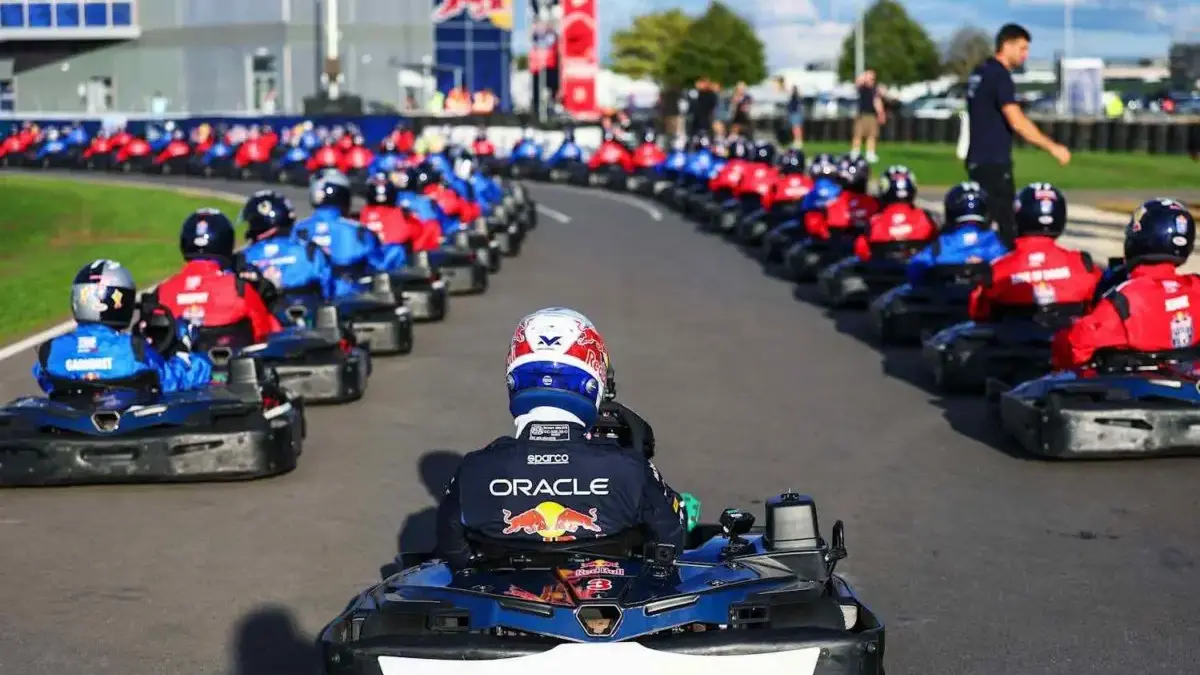
SILVERSTONE, UK — When Max Verstappen steps into a motorsport cockpit, records tend to shatter. Yet, even by the extraordinary standards of a four-time Formula 1 World Champion, the Dutchman’s latest stunt on British soil pushed the boundaries of automotive dominance. Far from the high-speed telemetry, high-pressure strategy walls, and multi-million-dollar carbon-fiber chassis of an official Grand Prix weekend, Verstappen traded the pinnacle of motorsport for a grassroots icon: the humble go-kart.
The stage was set at the historic Silverstone Circuit for a peculiar, high-stakes spectacle dubbed ‘Max vs. 100’. The premise was simple in description, terrifying in execution, and utterly unique: Verstappen was tasked with starting dead last on a 101-kart grid, required to hunt down and overtake every single competitor over a maximum of 30 laps or a 75-minute time window.
What was initially marketed as a blockbuster promotional event quickly devolved into a masterclass in car control, raw racecraft, and predatory killer instinct. Needing just 14 laps and a mere 35 minutes to clear the entire field, the Oracle Red Bull Racing spearhead turned a daunting obstacle course into a walk in the park.
Main Facts: Anatomy of the ‘Max vs. 100’ Challenge
The event, organized to push human and machine limits in a hyper-dense racing environment, was built upon strict parameters designed to test even the most elite reflexes in motorsport.
- The Protagonist: Max Verstappen, four-time Formula 1 World Champion.
- The Opposition: A sprawling, chaotic grid of 100 mixed-ability karters, featuring a chaotic cocktail of journalists, automotive content creators, digital streamers, Red Bull-backed athletes, and international competition winners.
- The Starting Position: P101. Verstappen was required to anchor the absolute rear of the grid.
- The Rules of Engagement: Every single time the nose or front bodywork of Verstappen’s kart successfully cleared the rear bumper of an opponent’s vehicle, that competitor was instantly and automatically eliminated from the race.
- The Constraints: A maximum race distance of 30 laps, or a strict time cap of 75 minutes.
- The Actual Result: Verstappen cleared the field in just 14 laps, needing only 35 minutes to achieve absolute clean-swept elimination.
Chronology of Chaos: From the Back of the Grid to Total Supremacy
1. The Startup and the First-Lap Carnage
The race got underway under a palpable cloud of tension and nervous laughter. With 101 go-karts packed tightly together like sardines, the run down to Silverstone’s opening complex of corners was always going to be a recipe for disaster. Yet, Verstappen’s legendary survival instincts kicked in before the green flag had barely settled.
Using lightning-fast reflexes honed over decades of professional competition, Verstappen picked off more than a dozen karts before even crossing the official starting stripe.
As the dense pack bottlenecked into the circuit’s hairpin, the inevitable happened: a massive, multi-kart pile-up. Karts spun across the tarmac, blocking racing lines and trapping bewildered drivers. Unfazed and navigating blindly through the dense cloud of rubber smoke, Verstappen threaded his machine through the wreckage. Over the team radio, the reigning F1 champion could only laugh, describing the scene as absolute, unadulterated "chaos."
When race control tallied the carnage at the end of the opening tour, 63 rival drivers had been eliminated without even surviving a single lap. Informed of the staggering statistic over his headset, Verstappen dryly quipped:
"Not a bad first lap, then."
2. The Hunt: Finding Rhythm in the Wreckage
With the herd significantly thinned by the lap-one incident, the race shifted from a game of survival pinball to a high-speed hunt. Verstappen found clear air, settled into a punishing rhythm, and began methodically slicing through the remaining thirty-odd survivors.
By Lap 7, the Red Bull maestro was already running in sixth position, sitting just 13 seconds adrift of whoever happened to be leading the surviving pack. Just two laps later, he had carved his way up to fourth place.
3. The Grand Finale
With fresher air and total command of his kart’s handling limits, Verstappen reeled in the remaining front-runners with surgical precision. Executing clean, risk-managed passes on the final few resilient competitors, he crossed the finish line to secure a comprehensive, uncontested victory. The final stats stunned onlookers: a task projected to take over an hour and dozens of laps was wrapped up in roughly the time it takes to run a standard F1 practice session.
Supporting Data & The Human Element
To truly understand the magnitude of Verstappen’s performance, one must look at the composition of the grid he decimated. While a handful of participants boasted regional karting experience, the vast majority of the 100 drivers were amateurs—social media influencers, automotive journalists, and gaming streamers who had likely never experienced the G-forces of competitive motorsport outside of a home simulator.
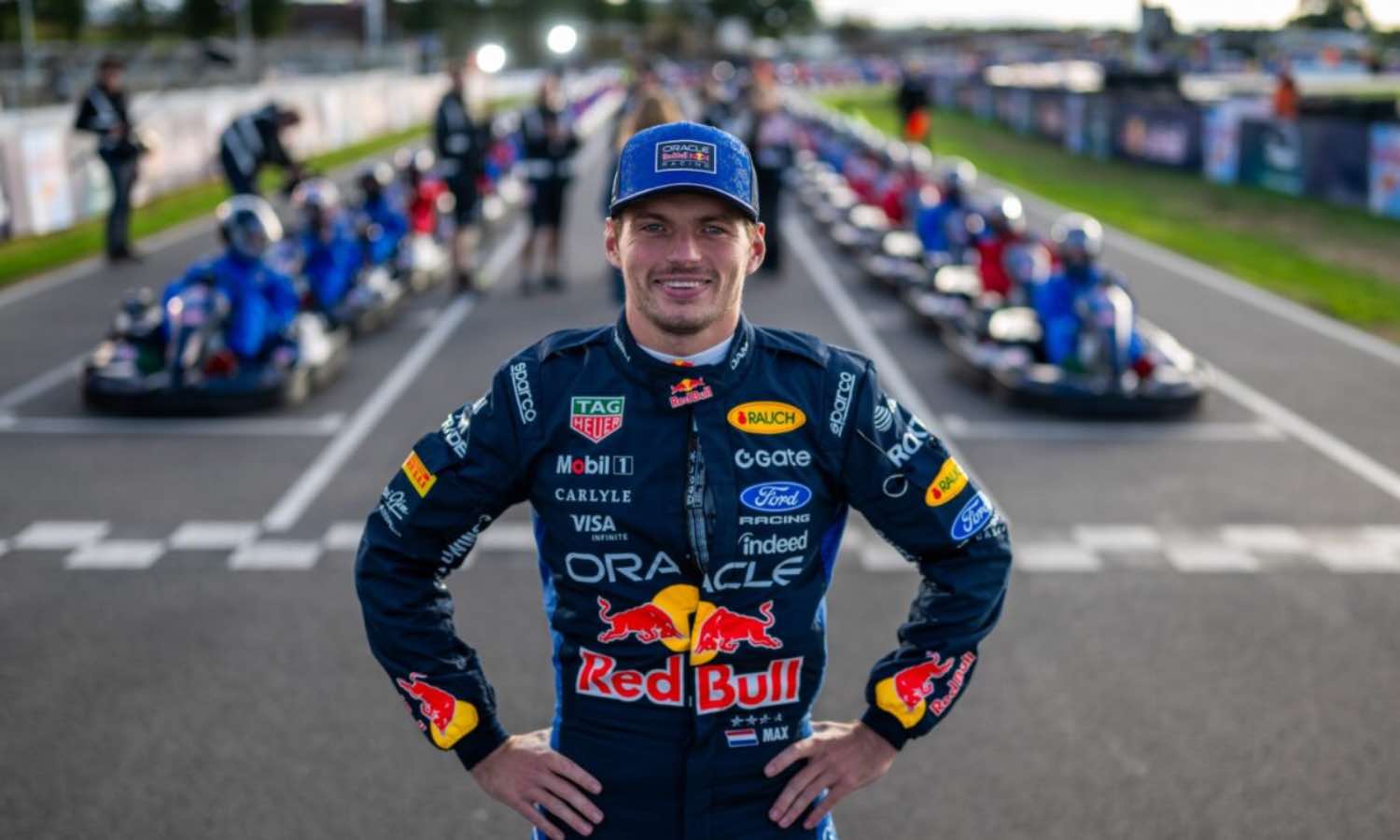
Placing these drivers on a truncated, technical configuration that blended Silverstone’s famous Grand Prix extensions with a custom karting arena created a massive performance delta. Yet, even among the few genuinely quick amateur drivers who managed to survive the first-lap attrition, Verstappen’s pace advantage was staggering.
Telemetry data from the event (unofficially captured by trackside analysts) showed that Verstappen was extracting absolute perfection out of the standard-issue rental karts, braking later, carrying significantly higher apex speeds, and utilizing tire slip angles that left professional coaches shaking their heads.
Official Responses and Reactions
Speaking to media members after stepping out of the cockpit, Verstappen reflected on the event with a broad smile, noting how deeply therapeutic it was to return to his earliest roots.
"It brings you right back to where it all started," Verstappen said, shedding light on his childhood spent traveling European karting circuits under the guidance of his father, Jos Verstappen. "When you’re young, this is your entire world. Coming back to a grid like this, with so many people, the sheer chaos of it—it’s pure fun. Of course, once the helmet goes on, you want to win, but the laughs out there today were special."
Event organizers and Red Bull representatives were similarly breathless. The challenge was originally conceived as a piece of digital-first entertainment—a viral stunt designed to bridge the gap between hardcore motorsport fans and mainstream digital content consumers. Instead, it turned into an unscripted testament to Verstappen’s relentless competitive drive.
A senior event coordinator remarked:
"We built this challenge wondering if 75 minutes would even be enough for him to catch the leaders. We honestly thought traffic management would be an insurmountable wall. For Max to do it in 35 minutes completely rewrites our understanding of what’s possible in these conditions."
Wider Implications: What ‘Max vs. 100’ Tells Us About Modern Motorsport
While the Silverstone karting showdown was fundamentally an exhibition—a piece of high-production-value entertainment meant to thrill fans during a break in the calendar—it carries deeper psychological and cultural implications for the current era of Formula 1.
1. The Psychology of an Apex Predator
Verstappen’s career has often been defined by his singular, unyielding obsession with racing. Whether he is dominating a rainy afternoon at Interlagos in an F1 car, grinding out virtual 24-hour endurance races on iRacing late into the night, or hunting down 100 amateurs in a rental kart at Silverstone, his brain appears hardwired to process spatial awareness and competitive pressure differently than ordinary mortals. The ‘Max vs. 100’ challenge proved that his competitive fire burns identically whether millions of dollars are on the line or simply bragging rights on a damp British afternoon.
2. Bridging the Gap to Grassroots Racing
In an age where modern Formula 1 is frequently criticized for becoming overly sterile, hyper-engineered, and disconnected from everyday fans, events like this serve a vital cultural purpose. By throwing the world’s most dominant racing driver directly into the meat-grinder of a mixed amateur grid, Red Bull successfully humanized elite motorsport while celebrating its foundational discipline: karting.
The image of a four-time world champion dodging spinning content creators and battling through a field of everyday enthusiasts has already cemented itself as one of the most iconic viral motorsport moments of the decade.
Conclusion
As the dust settles at Silverstone and the motorsport world turns its collective gaze back toward the relentless grind of the official F1 world championship, one truth remains blindingly obvious. Whether Max Verstappen is piloting a state-of-the-art Red Bull ground-effect monoposto or a humble, Briggs & Stratton-powered recreational kart, the outcome is almost always the same: absolute, unapologetic domination.

Leave a Reply