


When it comes to hypertrophy, every variable counts. From the angle of a bench press to the cadence of a repetition, modern bodybuilding and science continually seek to optimize the pathways to skeletal muscle growth. Among these variables, the inter-set rest interval has long been a subject of intense debate in fitness culture.
Traditionally, gym-goers were instructed to watch the clock meticulously, keeping rests short to "feel the burn" and maximize metabolic stress. However, contemporary exercise science is dismantling outdated paradigms. Recent findings suggest that the duration of your pause between sets is not just a recovery window; it is a critical regulatory mechanism that directly influences mechanical tension—the true holy grail of muscle building.
Main Facts: The Paradigm Shift in Inter-Set Rest Intervals
For decades, authoritative fitness guidelines—such as those historically promoted by the National Strength and Conditioning Association (NSCA)—advocated for relatively short rest periods ranging from 30 to 90 seconds to optimize muscle hypertrophy. The foundational logic behind this prescription was rooted in acute endocrinology: short rests provoke a sharp, transient spike in anabolic hormones (like growth hormone and testosterone) post-exercise.
However, emerging, high-rigor scientific literature has fundamentally challenged this premise. We now understand that these temporary post-exercise hormonal elevations play a negligible, if any, direct role in long-term skeletal muscle hypertrophy.
Instead, modern exercise physiology points to a far more decisive factor: mechanical tension.
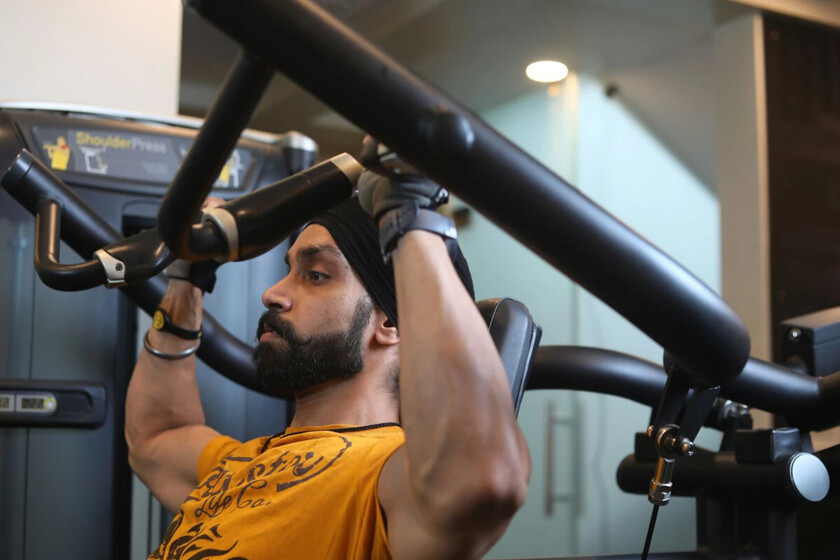
- The Inverse Relationship: There is a direct inverse relationship between rest duration and the magnitude of the load or volume lifted in subsequent sets. Shorter rests induce premature fatigue, forcing lifters to either drop the weight or perform significantly fewer repetitions in subsequent sets.
- The Death of Mechanical Tension: When performance drops due to inadequate recovery, the mechanical tension experienced by the muscle fibers plummets, directly inhibiting the primary molecular pathways responsible for muscle growth.
- The Flexible Solution: Rather than relying on a rigid, one-size-fits-all stopwatch approach, evidence now supports a dynamic, individualized rest structure centered around performance maintenance.
Chronology of a Debate: From Hormonal Hypotheses to Mechanical Realities
To understand how the fitness industry arrived at our current understanding of rest intervals, it is helpful to trace the evolution of scientific inquiry surrounding resistance training.
The 2000s: The Era of Metabolic and Hormonal Focus
In the early 2000s, landmark reviews—such as the influential work by Dr. William J. Kraemer and Nicholas A. Ratamess (2005)—dominated exercise prescription. Researchers observed that short rest intervals (coupled with moderate loads and high volume) created significant metabolic stress and sharp hormonal spikes. At the time, sports scientists theorized that these systemic hormonal baths were primary drivers of muscle tissue adaptation. Consequently, bodybuilders were advised to keep rest intervals brief to maximize this metabolic and endocrine response.
The Mid-2010s: Disproving the Hormonal Theory
As laboratory methodologies advanced, cracks began to form in the hormonal hypothesis. A pivotal study by Morton et al. (2016) demonstrated that systemic hormone concentrations do not dictate resistance training-mediated hypertrophy or strength gains. Researchers discovered that individuals with drastically different hormonal responses to identical exercise protocols experienced similar rates of muscle growth. The focus swiftly began to shift away from systemic hormones and toward local, mechanical factors.
The Late 2010s to 2020s: Prioritizing Volume Load and Mechanical Tension
By the turn of the decade, studies such as those by Longo et al. (2022) directly tested whether short versus long rest intervals impacted hypertrophy when volume load was accounted for. The data revealed that volume load—the total weight multiplied by sets and reps—is vastly more predictive of hypertrophic success than hormonal spikes induced by short rests.
The Present Day: Bayesian Meta-Analyses and Adaptive Rest
The conversation culminated in comprehensive modern reviews, including a landmark systematic review with a Bayesian meta-analysis by Singer et al. (2024). This contemporary research cemented the consensus that longer rest intervals generally foster superior muscle growth by permitting adequate recovery, preserving mechanical tension, and maximizing volume load across all working sets.

Supporting Data and Scientific Literature
To appreciate why modern strength coaches advise abandoning ultra-short rest periods, one must examine the empirical data comparing short versus extended inter-set recoveries.
1. The Mechanics of Mechanical Tension
As defined by Dr. B.J. Schoenfeld in his seminal 2010 review The Mechanisms of Muscle Hypertrophy, mechanical tension occurs when a muscle generates force against an external resistance. This tension triggers intracellular signaling pathways (such as the mTOR pathway) that upregulate muscle protein synthesis.
If you execute a first set of barbell squats for 10 repetitions to muscular failure, you generate maximum mechanical tension for that given load. However, if you restrict your rest to a meager 45 seconds, the phosphocreatine (PCr) energy systems within the muscle have insufficient time to replenish, and central nervous system (CNS) fatigue remains high. When you step under the bar for set number two, you may only be able to eke out six repetitions with the same weight—or you will be forced to reduce the load significantly.
2. Volume Load as the Primary Driver
A shorter rest interval forces a drop in performance. This reduction in total repetitions per set degrades your cumulative volume load. Scientific literature consistently demonstrates that higher volume loads—executed with high proximity to failure—yield superior hypertrophic outcomes. By granting your body adequate recovery time, you safeguard your capacity to produce force, maintaining high mechanical tension across multiple sets.
3. What Does the Data Say About Rest Length?
While individual needs vary based on exercise selection (e.g., multi-joint compound movements versus single-joint isolation exercises), current literature published in journals like Frontiers in Sports and Active Living points to roughly two minutes of rest as a highly effective baseline for upper and lower body hypertrophy exercises. This duration bridges the gap: it allows for substantial recovery of force-generating capacity without resting so long that the muscle cools down entirely or workout duration becomes inefficiently long.

Official Perspectives and Expert Consensus
Major governing bodies in sports science and strength conditioning have steadily updated their stances to reflect the nuanced reality of inter-set recovery.
- The National Strength and Conditioning Association (NSCA): While historical texts emphasized shorter rest periods for metabolic adaptations, contemporary updates from NSCA-affiliated researchers recognize that rest length must be tailored to the specific training goal. For maximum muscular hypertrophy, the emphasis has shifted toward ensuring that fatigue does not compromise the quality of subsequent sets.
- Leading Hypertrophy Researchers (e.g., Dr. Brad Schoenfeld, Dr. James Krieger): The prevailing expert consensus across modern evidence-based fitness communication is clear: manage fatigue, don’t chase it. Experts advise practitioners to view rest periods as performance-restoration tools rather than metabolic punishment. If a lift requires maximum neural drive (such as heavy deadlifts or squats), resting three to five minutes is not a sign of weakness; it is a physiological necessity to preserve mechanical tension.
Practical Implications for Your Workout Routine
Translating these scientific principles into your daily gym sessions requires moving away from rigid, clock-watching habits and adopting a flexible, performance-driven mindset.
1. Ditch the Fixed Stopwatch Mentality
Your body does not experience fatigue uniformly across an entire workout. Should you rest the exact same amount of time between your first and second sets as you do between your eleventh and twelfth sets? No.
As accumulated fatigue mounts over the course of a training session, your recovery capacity diminishes. Consequently, your rest intervals should be adaptive:
- Early in the session: When training fresh on compound movements, take longer rests (2 to 3 minutes) to ensure complete recovery of your ATP-PCr energy stores and maximal force output.
- Late in the session: As you transition to isolation movements or accumulate deep systemic fatigue, your rest requirements may naturally shift, though preserving performance remains the guiding light.
2. Monitor Performance Drops
Pay close attention to your repetition performance across sets. If you hit 10 clean repetitions on your first set of chest flyes with 60 kilograms, but your next set drops precipitously to 5 repetitions due to a 45-second rest period, you have severely compromised your mechanical tension. Extend your rest interval on subsequent sets so that your drop-off in repetitions is minimal (e.g., losing no more than 1 to 2 reps per set).

3. Knowing When to Call It a Day
Even with extended rest periods, there comes a point in a high-volume session where cumulative fatigue makes it impossible to maintain your target performance metrics. When your performance drops off a cliff despite ample rest, it is a sign of localized neuromuscular exhaustion. Rather than grinding through junk volume with heavily degraded loads, it is far more productive to terminate work for that muscle group and live to train another day.
4. Frequency and Volume Distribution
This brings us to the concept of training frequency—how many times per week you stimulate a specific muscle group. By increasing your training frequency (e.g., hitting chest three times a week instead of one massive session), you can distribute your total weekly volume into manageable chunks. This allows you to approach every single workout fresh, execute every set with minimal performance drop-off, and maximize mechanical tension across the board.
Summary Checklist for Optimal Rest:
- The Baseline: Use ~2 minutes as a reliable starting point for standard hypertrophy sets.
- The Rule: Rest as long as you need to maintain your target repetition range and mechanical tension, without turning your workout into an unstructured marathon.
- The Flexibility: Adjust your rest dynamically based on exercise complexity, proximity to muscular failure, and cumulative session fatigue.
By aligning your rest intervals with the laws of mechanical tension rather than antiquated hormonal theories, you will unlock a more efficient, scientifically sound pathway to maximizing your muscle-building potential.
References
- Singer, A., Wolf, M., Generoso, L., Arias, E., Delcastillo, K., Echevarria, E., Martinez, A., Androulakis Korakakis, P., Refalo, M. C., Swinton, P. A., & Schoenfeld, B. J. (2024). Give it a rest: a systematic review with Bayesian meta-analysis on the effect of inter-set rest interval duration on muscle hypertrophy. Frontiers in Sports and Active Living, 6, 1429789.
- Triplett, N. T. (2015). Essentials of Strength and Conditioning. Human Kinetics: Champaign, IL, USA.
- Kraemer, W. J., & Ratamess, N. A. (2005). Hormonal responses and adaptations to resistance exercise and training. Sports Medicine, 35(4), 339–361.
- Morton, R. W., Oikawa, S. Y., Wavell, C. G., Mazara, N., McGlory, C., Quadrilatero, J., Baechler, B. L., Baker, S. K., & Phillips, S. M. (2016). Neither load nor systemic hormones determine resistance training-mediated hypertrophy or strength gains in resistance-trained young men. Journal of Applied Physiology, 121(1), 129–138.
- Schoenfeld, B. J. (2010). The mechanisms of muscle hypertrophy and their application to resistance training. Journal of Strength and Conditioning Research, 24(10), 2857–2872.
- Longo, A. R., Silva-Batista, C., Pedroso, K., de Salles Painelli, V., Lasevicius, T., Schoenfeld, B. J., Aihara, A. Y., de Almeida Peres, B., Tricoli, V., & Teixeira, E. L. (2022). Volume Load Rather Than Resting Interval Influences Muscle Hypertrophy During High-Intensity Resistance Training. Journal of Strength and Conditioning Research, 36(6), 1554–1559.
- Millender, D. J., Mang, Z. A., Beam, J. R., Realzola, R. A., & Kravitz, L. (2021). The Effect of Rest Interval Length on Upper and Lower Body Exercises in Resistance-Trained Females. International Journal of Exercise Science, 14(7), 1178–1191.




Leave a Reply