

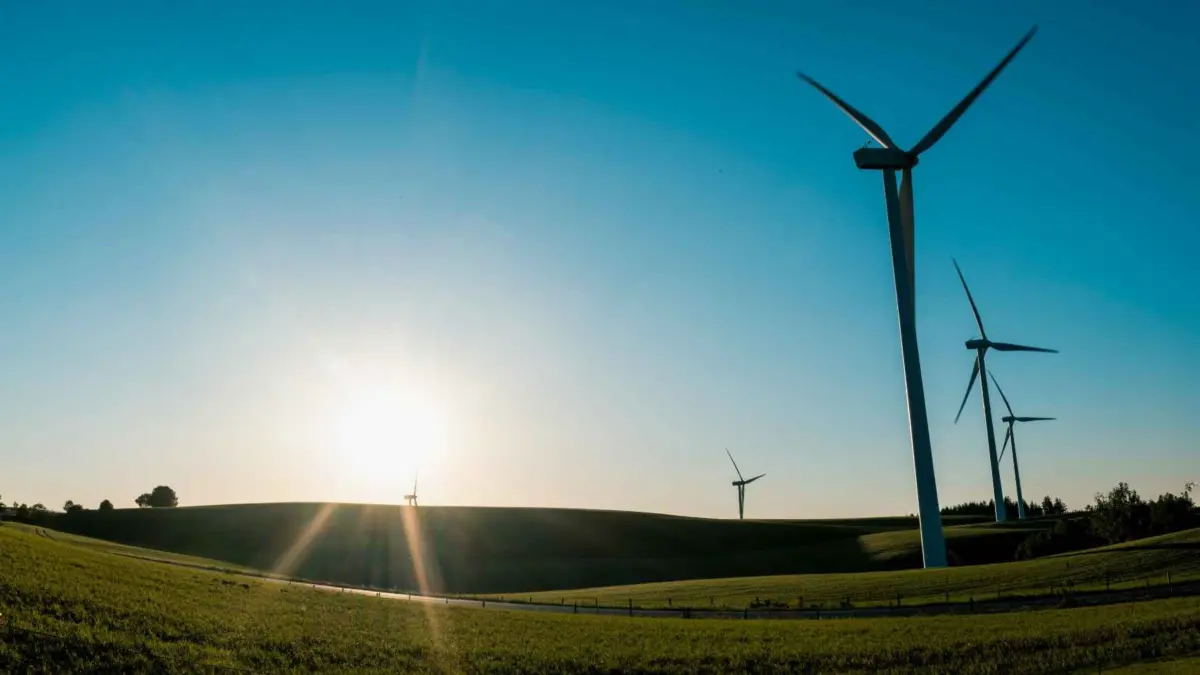
Global Energy Markets — The intensifying geopolitical conflicts in the Middle East have triggered an irreversible structural realignment of global energy markets. As traditional fossil fuel supply chains—most notably petroleum and natural gas—face unprecedented vulnerabilities, the international community is rapidly pivoting toward green alternatives. According to comprehensive reports released by the United Nations, renewable energy sources have transitioned from supplementary alternatives to becoming the definitive bedrock of global energy security.
Experts note that this fundamental paradigm shift marks a historic turning point from which there is no economic or political return.
1. Main Facts
The catalyst for this global energy reckoning centered around severe supply chain disruptions and critical choke points in the Middle East, specifically highlighted by the effective closure and militarization surrounding the Strait of Ormuz. This critical maritime corridor exposed the severe systemic flaws of a global economy tethered to centralized fossil fuel reserves controlled by a handful of state actors.
Key developments defining this era-defining shift include:
- The Vulnerability of Centralization: The traditional model of energy security—relying on concentrated oil and gas reserves—has proven to be a liability rather than an asset. Geopolitical volatility instantly translated into chaotic market fluctuations, skyrocketing fuel prices, and widespread supply panic.
- The Rise of Decentralized Renewables: In stark contrast to finite, centrally controlled fossil fuels, renewable energy technologies (solar, wind, green hydrogen, and advanced storage systems) offer nations a way to decouple their national security from foreign conflicts and maritime trade vulnerabilities.
- Unprecedented Installation Rates: Data from international energy monitors indicates that over 90% of all newly installed global energy capacity now originates from zero-emission, renewable sources.
- The UN Mandate: The United Nations General Assembly has officially codified this transition, declaring that centralized fossil fuel grids no longer guarantee energy security, thereby cementing renewables as the non-negotiable path forward.
2. Chronology of a Crisis: From Geopolitical Shock to Energy Transformation
To understand how the global energy landscape transformed so rapidly, it is essential to trace the sequence of events that exposed the fragility of the 20th-century energy model and forced the hand of policymakers worldwide.
Phase 1: The Pre-Crisis Status Quo (Early 2020s)
For decades, global stability was inextricably linked to the smooth extraction and transit of oil and natural gas. Despite mounting warnings regarding climate change and carbon emissions, most industrialized economies continued to treat fossil fuels as the irreplaceable foundation of baseline power generation. Transnational pipelines and strategic shipping lanes were heavily guarded, masking an underlying systemic fragility: the entire global economy relied on a deeply concentrated supply network.
Phase 2: The Middle East Flashpoint and Market Chaos
As geopolitical tensions escalated in the Middle East, the vulnerabilities of this centralized system were violently exposed. The severe disruption and eventual closure of key trade routes, most notably the Strait of Ormuz—through which a massive percentage of the world’s liquefied natural gas (LNG) and crude oil passes—sent shockwaves through international markets.
Energy prices spiked uncontrollably within days. Importing nations that lacked domestic generation capacities found themselves at the mercy of volatile spot markets, plunging industries and households into uncertainty and triggering inflation spirals worldwide.
Phase 3: Emergency Policy Reevaluation
Facing economic instability and potential blackouts, governments across Europe, Asia, and the Americas initiated emergency energy security reviews. Policymakers quickly realized that traditional strategic petroleum reserves offered only a temporary palliative.
To achieve true resilience, nations needed to eliminate their exposure to foreign supply shocks entirely. This realization transformed the green transition from an environmental goal into an urgent national security imperative. Capital was rapidly diverted away from high-risk fossil infrastructure and funneled into domestic, rapidly deployable renewable projects.
Phase 4: The United Nations General Assembly Reckoning
During the subsequent high-level debates at the United Nations General Assembly, international leaders formally acknowledged the death of the old energy paradigm. The consensus shifted from if the world would move past fossil fuels to how fast the infrastructure could be scaled. UN leadership highlighted nations that had aggressively pursued renewables prior to the crisis—such as Spain and Norway—as prime examples of economic resilience during systemic global shocks.
3. Supporting Data and Economic Indicators
The shift toward renewable energy is not merely a political reaction; it is heavily underpinned by compelling economic realities, technological cost reductions, and shifting investment flows.
The Cost Advantage of Decentralization
Unlike fossil fuels, whose market prices are hostage to OPEC quotas, pipeline politics, and currency fluctuations, renewable energy generation relies on infinite, localized resources (sunlight and wind). Once the initial capital expenditure for installation is met, the marginal cost of generation remains remarkably stable and low.
- Levelized Cost of Electricity (LCOE): Over the past decade, the cost of utility-scale solar photovoltaic (PV) power has dropped by more than 80%, while onshore wind generation costs have fallen by over 60%.
- The 90% Threshold: According to international environmental assessments, renewable energy technologies now account for roughly 9 out of every 10 megawatts of new power generation capacity added globally.
- Storage Innovations: The historical Achilles’ heel of renewables—intermittency—is rapidly being neutralized by breakthroughs in grid-scale battery storage, pumped hydro, and smart-grid management systems.
Macroeconomic Resilience
Nations heavily invested in localized renewable grids experienced significantly lower inflation rates and minimized energy poverty during the Middle Eastern crisis compared to fossil-dependent economies. By harnessing domestic wind, solar, and hydroelectric potential, these countries kept capital circulating within their own domestic economies rather than exporting billions of dollars abroad to purchase volatile hydrocarbons.
4. Official Responses and Institutional Perspectives
The international community, spearheaded by the United Nations and leading climate authorities, has issued definitive stances on the current trajectory of global energy markets.
The United Nations Position
In a landmark policy briefing, UN leadership did not mince words regarding the obsolescence of the old energy order. Highlighting reports from specialized agencies, the UN noted:
"Countries have realized once and for all that a centralized energy system based on fossil fuels simply does not provide genuine energy security. Oil and gas, once viewed as synonyms for economic stability, are now liabilities defined by production concentration and fragile maritime trade routes."
UN authorities emphasized that the ongoing transition is no longer constrained by technological feasibility or economic viability, but rather by the sheer velocity and administrative scale of project deployment.
The Evolution of the Energy Mix
Furthermore, the UN outlined the blueprint for the future global energy architecture. The organization stressed that the modern grid will rely on a triad of core elements:
- Massive Renewable Core: Solar and wind serving as the primary sources for electricity generation.
- Sustainable Biomass: Utilizing certified, sustainable biological matter for specific industrial heating and baseline needs.
- Green Hydrogen: Serving as the long-term storage and heavy-transport fuel vector, bridging sectors that are difficult to electrify directly, such as shipping, aviation, and heavy steel manufacturing.
5. Geopolitical and Socioeconomic Implications
The transition away from fossil fuels and toward renewables carries profound implications that stretch far beyond environmental conservation, fundamentally redrawing the geopolitical map of the 21st century.
The End of Petro-Diplomacy
For nearly a century, foreign policy has been heavily dictated by access to oil fields and secure shipping lanes. The rise of renewables dismantles traditional "petro-diplomacy." As nations achieve energy independence through domestic wind and solar farms, the geopolitical leverage held by oil-exporting cartels diminishes significantly. Power is shifting from resource-rich authoritarian states to technologically proficient nations capable of manufacturing and deploying green infrastructure.
The New Industrial Race
A fierce global competition is currently underway to dominate the supply chains of the green economy. This includes the manufacturing of photovoltaic panels, wind turbines, high-capacity batteries, and electrolyzers for green hydrogen production. Nations that fail to secure critical mineral supply chains (such as lithium, cobalt, nickel, and rare earth elements) risk trading one form of dependency for another. Consequently, circular economies, recycling technologies, and domestic mining security have become top priorities for industrial superpowers.
Social Equity and Energy Democracy
Decentralized renewable energy also fosters the concept of "energy democracy." Unlike oil refineries and mega-pipelines, which concentrate wealth and corporate power in the hands of a few multinational conglomerates, solar and wind installations can be scaled locally. Community microgrids, rooftop solar arrays, and municipal wind initiatives empower local populations, reduce transmission losses, and protect vulnerable socioeconomic groups from predatory utility pricing.
Conclusion: The Point of No Return
The convergence of geopolitical conflict in the Middle East and the maturation of green technologies has forced an abrupt, overdue awakening within the global market. While the transition was previously bogged down by political inertia and corporate lobbying, the harsh realities of fossil fuel vulnerability have broken down traditional resistance.
As global bodies like the United Nations have affirmed, the direction of travel is firmly established. The modern world is systematically dismantling the fragile, centralized energy systems of the past and replacing them with resilient, localized, and renewable networks. The ultimate challenge for governments and industry leaders is no longer debating the validity of the transition, but accelerating its scale and speed to ensure a stable, secure, and sustainable future for generations to come.

Leave a Reply