

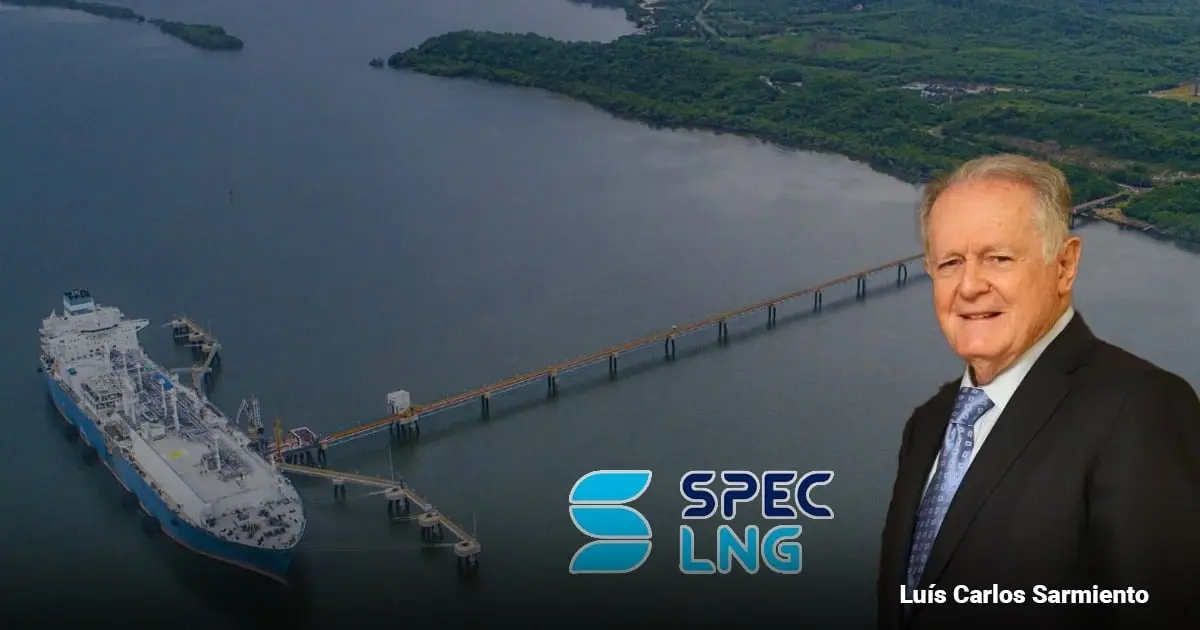
BOGOTÁ, COLOMBIA — In the complex and frequently volatile matrix of Latin American energy infrastructure, foresight often separates systemic collapse from resilient survival. Nearly a decade ago, a strategic bet made by Colombian conglomerates alongside international maritime logistics giants was dismissed by some as an over-engineered luxury. Today, that exact infrastructure stands as the single most critical safeguard protecting Colombia’s power grid from catastrophic blackouts.
As the country navigates the severe hydrological pressures brought on by the El Niño phenomenon—compounded by a sustained decline in domestic natural gas production—the Sociedad Portuaria el Callao (SPEC LNG) regasification terminal in Cartagena has evolved far beyond its original mandate. Originally conceived as a localized insurance policy for Caribbean thermal power plants, the facility now anchors the stability of the entire national electrical grid, supplying up to 40% of the country’s daily gas consumption during peak emergency periods.
1. Main Facts: The Anatomy of Colombia’s Energy Anchor
At its core, SPEC LNG is the only operational liquefied natural gas (LNG) import and regasification terminal in Colombia. Situated strategically within the industrial zone of Barú, Cartagena, the facility bridges the gap between international maritime energy markets and domestic consumption nodes.
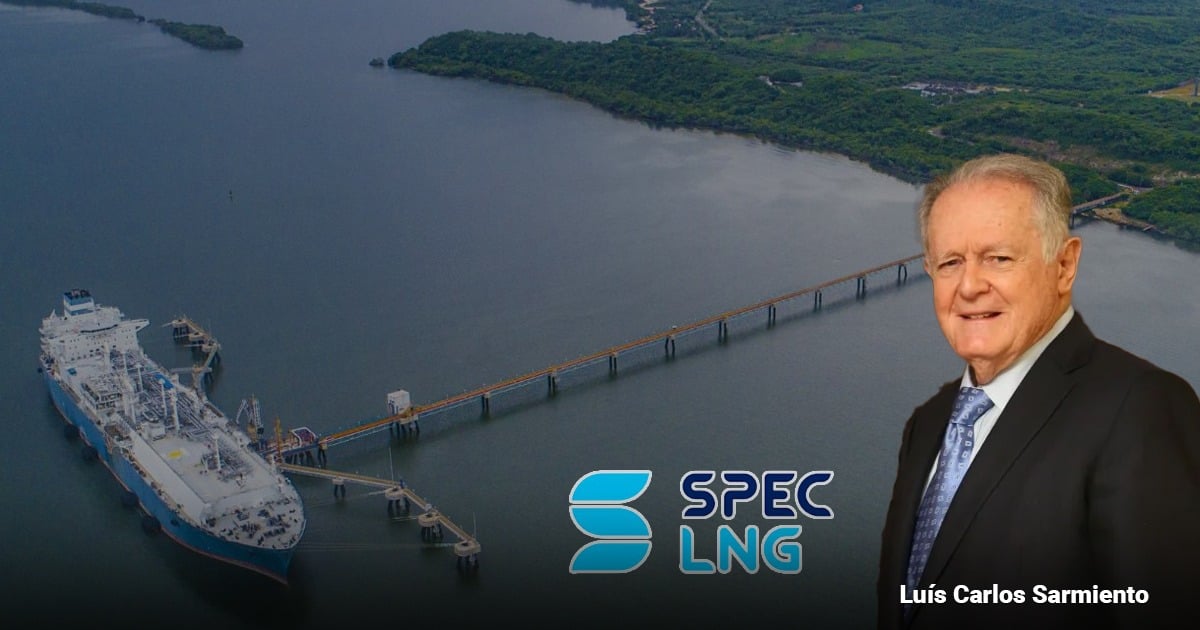
Ownership of the terminal is split between two primary stakeholders:
- Promigas (51%): A premier energy infrastructure, transportation, and distribution company operating under Corficolombiana, which forms part of Luis Carlos Sarmiento Angulo’s Grupo Aval.
- Royal Vopak (49%): A Dutch multinational independent tank storage company that acquired its stake in 2019, bringing centuries of European maritime logistics expertise to the partnership.
Management of the facility rests under the direction of General Manager José María Castro, a business administrator with over a decade of prior experience spearheading new energy ventures and LNG structuring for Promigas.
Under normal climatic conditions, when hydroelectric generation operates at full capacity, SPEC LNG contributes a modest 5% to 10% of the national daily demand (roughly 50 to 100 million standard cubic feet per day, or MMpcd). However, when severe droughts sap the nation’s reservoirs, the plant scales up to its maximum operating threshold of 400 MMpcd, effectively keeping the lights on for millions of Colombians.

2. Chronology: From Regional Insurance to National Necessity
The genesis of Colombia’s current regasification framework traces back to the mid-2010s, a period marked by shifting energy security paradigms.
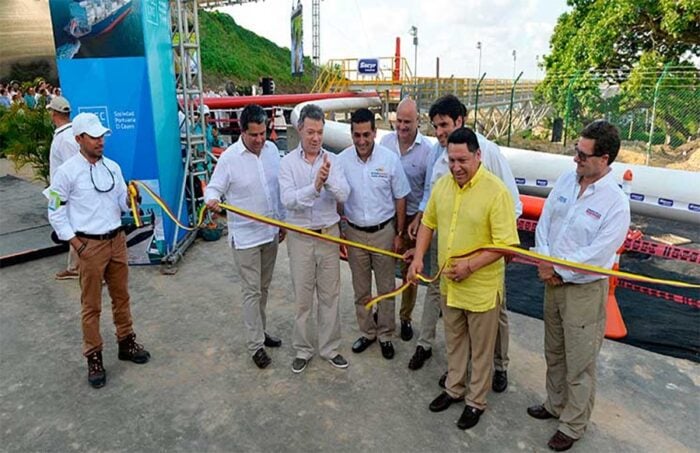
- December 2, 2016: President Juan Manuel Santos officially inaugurates Colombia’s first LNG regasification plant in Cartagena. Constructed by the Spanish firm Sacyr and spearheaded by Promigas, the initiative is designed explicitly as a localized thermal insurance policy for the Caribbean coast power plants: Tebsa, Termocandelaria, and Termoflores.
- 1999–2019 (The Vopak Heritage): Royal Vopak, SPEC’s Dutch partner, traces its corporate lineage back to 1839 (Van Ommeren) and 1616 (Pakhoed ports in Amsterdam and Rotterdam). Controlled discreetly by the Dutch Van der Vorm family through HAL Holding (born from the sale of the historic Holland America Line), Vopak injects deep global expertise into the Cartagena terminal.
- 2020: Recognizing the structural decline in continental gas reserves—particularly across Córdoba, Sucre, and Casanare—the Energy and Gas Regulatory Commission (CREG) issues new resolutions. These measures permit SPEC LNG to commercialize its idle capacity, opening the door to the wholesale market.
- 2023: SPEC LNG launches commercial open seasons, allowing private traders and industrial players to secure long-term import contracts. Gas imported through Cartagena transitions from a mere emergency backup for thermal generators to a recurring baseline supply for industrial, vehicular (GNV), and residential consumers.
- 2024–2026: As domestic natural gas production drops off more sharply during the administration of President Gustavo Petro, SPEC LNG transitions from a regional safety net into an indispensable national utility, shouldering up to 40% of the country’s daily gas demand.
3. Supporting Data: Matrix Vulnerabilities and Expansion Plans
To understand why SPEC LNG has become so vital, one must examine the structural composition of Colombia’s energy matrix.
The Hydroelectric Dependency Trap
Under normal conditions, Colombia relies on hydroelectric power for 70% to 80% of its electricity generation. However, during heavy El Niño cycles, hydro participation plunges to between 45% and 55%. This forces the thermal backup fleet—which runs on natural gas—to bridge a massive generation deficit.
The crisis escalates exponentially when hydroelectric reservoirs fall below the critical safety threshold of 25% to 27%, stripping the system of its capacity to meet nighttime peak demand.
Capacity and Expansion Metrics
- Current Maximum Output: 400 MMpcd (Covering 35%–40% of national gas demand).
- Phase 1 Optimization: Ongoing operational adjustments aimed at elevating baseline capacity to 450 MMpcd.
- Long-Term Expansion: Advanced proposals to scale the Floating Storage and Regasification Unit (FSRU) and onshore facilities to a robust 530–600 MMpcd.
4. Official Responses and Industry Perspectives
Market analysts, corporate leaders, and regulatory bodies have increasingly voiced concerns over what economists term a "single point of failure." Because SPEC LNG is currently the sole operational regasification terminal in the country, any unforeseen technical disruption to the FSRU vessel or the outbound gasoducts would leave the Caribbean thermal fleet—and by extension, the national grid—fatally exposed.
To mitigate this systemic risk, the government and private sector have accelerated alternative infrastructure projects to diversify import points.

The Pacific Regasification Project (Buenaventura)
Spearheaded by Óscar Isaza, president of Grupo PIO (Puertos e Infraestructura del Pacífico), the long-awaited Regasificadora del Pacífico is nearing completion in the Bahía de Buenaventura.
- Investment: Approximately US $128 million.
- Execution: Surpassing 90% completion, anchored by the arrival of the Pargo Rojo vessel from Asia to the waters of Valle del Cauca.
- Capacity: An initial injection rate of 60 MMpcd, linked via a 120-kilometer pipeline to TGI’s (Transportadora de Gas Internacional) network in Yumbo. This project is projected to alleviate chronic energy vulnerability in southwestern Colombia, a region historically starved by being at the "end of the pipe."
Amazonica LNG (Ciénaga, Magdalena)
On the Caribbean front, private capital initiatives are advancing complementary infrastructure. Led by former Ecopetrol Vice President Alberto Consuegra in partnership with the Jereh Group, the Amazonica LNG project in Puerto Nuevo (between Ciénaga and Santa Marta) represents a USD $180 million investment designed to connect directly into Promigas’s distribution grid by 2028.
5. Implications for Colombia’s Energy Future
The operational evolution of SPEC LNG highlights a broader truth about modern infrastructure planning: short-term insurance policies frequently morph into long-term systemic necessities.

As Colombia’s legacy gas fields in the interior and northern plains continue their natural decline, and as climate change makes weather patterns increasingly erratic, the nation can no longer afford an energy policy anchored solely in self-sufficiency myths. The foresight demonstrated a decade ago by Luis Carlos Sarmiento and his partners in Cartagena saved the country from rolling blackouts during successive environmental shocks.
However, reliance on a single terminal is a dangerous gamble. As the Pacific regasification terminal comes online and new Caribbean projects break ground, Colombia is slowly constructing a diversified, multi-port import architecture. Until those facilities are fully functional and integrated into the grid, the country’s energy sovereignty remains tethered directly to the steady arrival of LNG tankers into the Bay of Barú—making the legacy of SPEC LNG the definitive bridge between Colombia’s energy past and its uncertain future.


Leave a Reply