

Main Facts
The administrative machinery of the highest office in Colombia experienced a period of profound expansion and political maneuvering during the final stretches of the current government cycle. At the center of this dynamic was the Department of the Administrative Presidency of the Republic (DAPRE), an entity that acts as the core administrative engine for the Head of State.
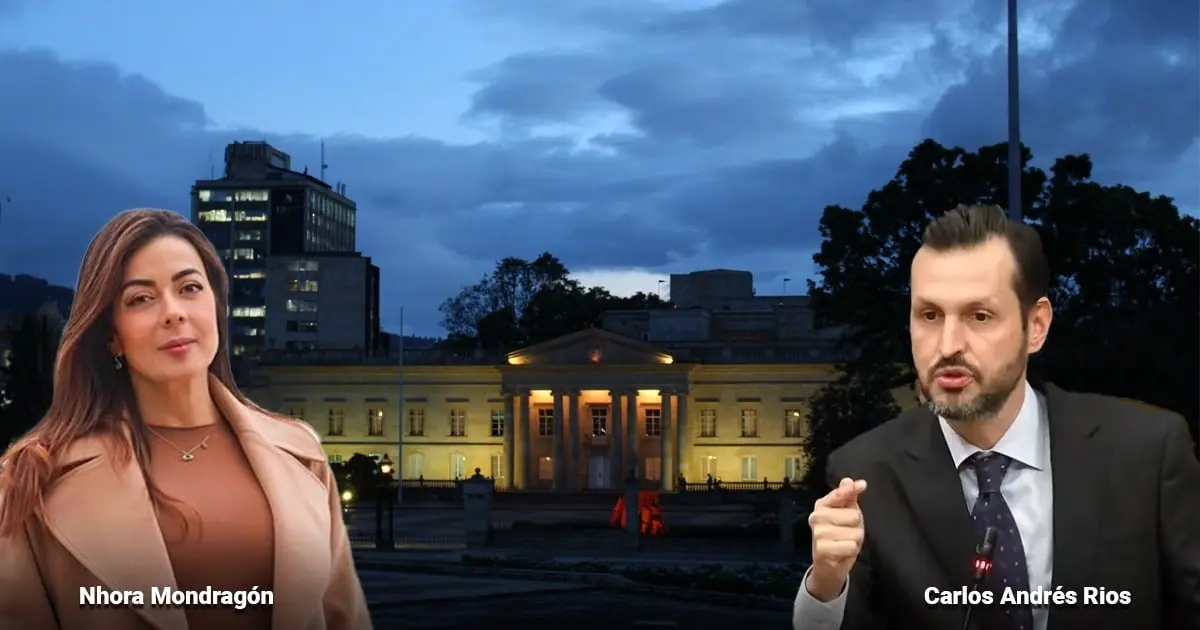
The focal point of recent scrutiny within this institution is Nhora Mondragón, who assumed control of the DAPRE on January 22, 2026. Stepping into the role as the final director of the administration’s tenure, Mondragón managed a staggering budget of 1.81 trillion pesos during her six-month tenure. Her administration oversaw a swollen bureaucracy that reached a peak of 1,019 dependent personnel, accompanied by exponential growth in service provision contracts.
Mondragón’s arrival at the DAPRE was not an isolated appointment; rather, it was the culmination of a deeply entrenched network of political patronage. She entered the inner circle of power backed heavily by Armando Benedetti—a prominent and polarizing figure in Colombian politics—and Juliana Guerrero, who at the time operated as a trusted right-hand ally to Benedetti within the Ministry of the Interior.
Mondragón’s tenure coincided with a critical juncture for the administration: the high-stakes legislative and presidential elections of 2026. With the explicit objective of safeguarding the continuity of the Pacto Histórico both in Congress and the presidency, the DAPRE functioned under a clear mandate of political consolidation. However, the electoral outcomes dealt a severe blow to the ruling coalition. The presidential candidate backed by the movement suffered defeat, and the Pacto Histórico shed 67 legislative seats in Congress.
Following the transition of power, revelations brought forward by the current DAPRE director, Carlos Ríos, exposed alarming fiscal management practices during Mondragón’s term. Figures presented before Congress revealed that contracting practices and payroll numbers surged exponentially between 2022 and 2026, triggering widespread debate regarding the use of public resources during an electoral cycle.
Chronology: From Regional Bureaucracy to the Heart of National Power
To understand how Nhora Mondragón reached the pinnacle of national executive administration, it is necessary to trace a political trajectory forged over decades in regional politics, particularly in the Valle del Cauca department.
The Regional Foundation
Mondragón’s career in public administration is closely intertwined with the political trajectory of Jorge Iván Ospina. She first gained prominence working as the manager of the departmental hospital of Valle del Cauca. Her administrative alignment with Ospina deepened when he transitioned to municipal leadership; during Ospina’s first term as Mayor of Cali, Mondragón served as his Secretary of Government, acting as a core operational figure within local governance. This long-standing alliance established her reputation as a loyal bureaucrat capable of managing complex political landscapes at the local level.
Transition to the National Stage
Mondragón’s leap to national prominence was facilitated by high-level political alignments. Recommended by Armando Benedetti, she was initially integrated into the national government machinery as the Director of Security, Citizen Coexistence, and Government within the Ministry of the Interior. This appointment was propelled by Juliana Guerrero, who wielded substantial influence as a close aide to Minister Benedetti during a period when the administration sought to consolidate its regional and legislative alliances.
Taking the Reins at the DAPRE
On January 22, 2026, Mondragón assumed the directorship of the DAPRE, replacing Angie Rodríguez amid underlying frictions with the executive branch. Her appointment occurred during a period when Juliana Guerrero still held significant sway within the inner circles of the Gustavo Petro administration.
However, this political umbrella proved fragile. Guerrero’s influence collapsed following legal investigations into her credentials and professional titles. The scandal culminated on September 9, when a Colombian court formally sentenced Guerrero to three years in prison for irregularities related to her academic credentials. Despite the crumbling of her primary political patron, Mondragón remained at the helm of the DAPRE during its most critical electoral months.
Supporting Data: The Anatomy of Bureaucratic Expansion
The fiscal and administrative realities of Mondragón’s tenure came to light when the new DAPRE director, Carlos Ríos, presented a comprehensive audit to Congress. The data served to justify budgetary adjustments and proposed spending cuts, laying bare the exponential growth of the department’s financial obligations and human capital under the previous administration.
Budgetary Scale
Upon stepping into the office in January 2026, Mondragón inherited and managed an annual budget of approximately 1.81 trillion pesos. This vast financial allocation was theoretically intended to streamline executive functions, coordinate policy implementation, and support the logistical demands of the presidency. However, legislative scrutiny revealed that a disproportionate share of these funds went toward expanding administrative overhead rather than operational efficiency.
Payroll and Personnel Inflation
Under Mondragón’s six-month watch, the internal staffing of the presidency experienced a dramatic surge.
- Official Personnel: The permanent staff roster expanded from 844 to 1,019 active positions. This expansion meant that over a thousand individuals directly depended on the administrative decisions and personnel maneuvers directed by the DAPRE leadership.
- Service Provision Contracts (Contratos de Prestación de Servicios): The most dramatic financial shifts occurred within external contracting. Expenditures on service provision contracts skyrocketed from 9.5 billion pesos to 31.3 billion pesos, representing an astronomical 228% increase. When viewed across the broader arc of the administration from 2022 to 2026, service contracts within the department expanded by a staggering 595%.
These figures transformed the DAPRE from an agile administrative coordinating body into a sprawling bureaucracy, sparking intense debate over whether public funds were diverted to accommodate political quotas and electoral campaigns.

Official Responses and Congressional Scrutiny
The revelations brought to light by Carlos Ríos sparked immediate reactions across the political spectrum, turning the DAPRE’s internal management into a battleground for legislative oversight and public accountability.
The Congressional Presentation
During his presentation before the legislative commissions, current director Carlos Ríos detailed the systemic challenges inherited from the previous administration. By contrasting the leaner structural baselines of 2022 with the bloated figures of 2026, Ríos argued that urgent corrective measures, spending caps, and structural recortes (cuts) were mandatory to restore fiscal discipline to the presidency. The presentation transformed dry budgetary statistics into a political indictment of how executive offices were utilized during the final stretch of the electoral cycle.
Silence and Defense from the Inner Circle
As the data regarding the 595% increase in service contracts and the jump to 1,019 personnel circulated through national media, representatives of the previous administration offered limited public defense. Defenders of the outgoing executive strategy maintained that the expanded administrative apparatus was necessary to handle the complex governance demands, regional coordination efforts, and sweeping structural reforms promoted by the Petro administration.
However, the legal downfall of Juliana Guerrero—who had been instrumental in placing Mondragón at the Ministry of the Interior and, subsequently, facilitating her rise—silenced many of the traditional defenders within the administration’s institutional flanks. The judicial ruling against Guerrero cast a long shadow over all political appointments tied to her network, shifting the narrative from administrative necessity to institutional infiltration by compromised actors.
Implications: Political Fallout and Institutional Lessons
The trajectory of Nhora Mondragón at the head of the DAPRE carries profound implications for the governance, political culture, and administrative integrity of Colombia.
Electoral Collateral and Political Realignment
The primary operational goal assigned to the executive machinery during Mondragón’s tenure was unambiguous: secure the legislative majority for the Pacto Histórico and retain executive power by winning the 2026 presidential race. The deployment of a 1.81-trillion-peso budget and the exponential multiplication of service contracts occurred precisely while these political objectives were being pursued.
The ultimate failure of this strategy—marked by the defeat of the administration’s favored presidential bid and the loss of 67 congressional seats—demonstrates the limits of bureaucratic mobilization in altering public sentiment. Far from securing long-term hegemony, the aggressive use of state apparatus for political consolidation resulted in severe democratic blowback and a fractured legislative coalition.

The Risk of Clientelism and Bureaucratic Bloat
The administrative data exposed by Carlos Ríos highlights a recurring structural vulnerability in Colombian governance: the weaponization of public entities to satisfy clientelist networks. When administrative units like the DAPRE experience a 595% increase in service contracts and expand permanent staffing past the one-thousand mark during an election year, questions regarding transparency and the misuse of public funds become unavoidable.
This dynamic fosters a culture of administrative inefficiency, where agencies swell not to meet the objective needs of citizens, but to accommodate political quotas dictated by influential brokers like Armando Benedetti and compromised figures like Juliana Guerrero.
Lessons for Future Administrations
The legacy left by Mondragón’s six months at the DAPRE serves as a cautionary tale for incoming and future executive teams in Colombia. It underscores the urgent need for stringent oversight mechanisms governing state contracting, particularly during transition years and electoral cycles.
Furthermore, it emphasizes the importance of insulating administrative institutions—especially those directly serving the Head of State—from partisan political engineering. Unless institutional firewalls are reinforced to prevent the unchecked expansion of payrolls and service contracts for political leverage, entities like the DAPRE will continue to risk losing their foundational purpose: serving the public interest rather than partisan electoral ambitions.




Leave a Reply