

Sovereign debt markets in emerging economies are undergoing a dramatic realignment. According to a comprehensive analysis of emerging market debt performance compiled by Bloomberg, Colombian and South African government bonds have emerged as global frontrunners, delivering stellar returns to international investors. Driven by a combination of falling country risk premiums, currency stabilization, and highly anticipated political transitions, these two nations have outpaced their developing-market peers by a wide margin.
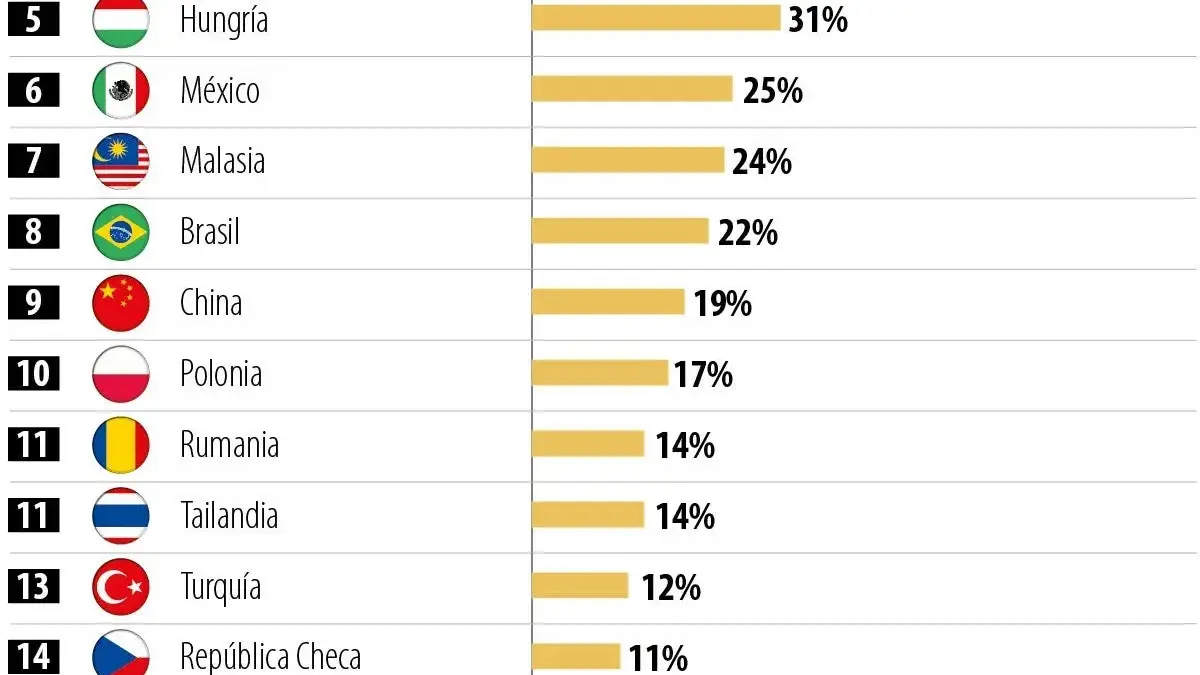
Since the beginning of 2024, South African sovereign bonds have yielded a spectacular total return of 70%, securing the top position in the Bloomberg emerging markets index. Close behind is Colombia, which occupies the second-place spot with a remarkable 45% return for bondholders. This performance represents a profound turnaround for both nations, which only a few years ago were weighed down by intense fiscal uncertainty, structural bottlenecks, and deep-seated political anxieties.
Chronology of the Market Turnaround: From Crisis to Recovery
To understand the scale of this financial recovery, it is essential to trace the economic and political trajectories of both nations over the last four years. The dramatic shift in bond valuations is directly linked to major political inflection points and structural reforms.
+-----------------------------------------------------------------------------+
|                          TIMELINE OF KEY EVENTS                             |
+-----------------------------------------------------------------------------+
|                                                                             |
|  [Late 2022]                                                                |
|  * Colombia's risk premium spikes to nearly 400 bps as President Gustavo    |
|    Petro takes office, proposing sweeping social and economic reforms.      |
|  * High global interest rates and local fiscal concerns weigh on Colombian  |
|    sovereign debt.                                                          |
|                                                                             |
|  [Mid-2024]                                                                 |
|  * South Africa holds pivotal general elections. The ANC loses its absolute |
|    majority, leading to a historic coalition Government of National Unity   |
|    (GNU) with the Democratic Alliance (DA).                                 |
|  * A major rally in South African bonds and the Rand begins.                |
|                                                                             |
|  [May 2025 - January 2026]                                                 |
|  * South Africa achieves an unprecedented streak of over 15 months without  |
|    scheduled power outages (load shedding).                                 |
|  * Energy availability factor (EAF) rises from 51% to 72%.                  |
|                                                                             |
|  [July 2026]                                                                |
|  * Colombia's country risk premium drops to 144 bps, its lowest level since |
|    2021, driven by market expectations of a political transition.           |
|                                                                             |
|  [August 7, 2026]                                                           |
|  * Colombia's new administration officially assumes office, solidifying    |
|    investor confidence and stabilizing the country's fiscal outlook.        |
|                                                                             |
+-----------------------------------------------------------------------------+
The Colombian Arc: Easing Political Anxiety and Fiscal Moderation
The roots of Colombia’s bond rally lie in the gradual easing of the intense political and fiscal anxieties that characterized the beginning of President Gustavo Petro’s term in late 2022.
- Late 2022 (The Peak of Uncertainty): Following the inauguration of Colombia’s first leftist administration, the nation’s risk premium—measured via Credit Default Swaps (CDS) and country risk spreads—surged toward 400 basis points. This spike was fueled by aggressive proposals to overhaul the healthcare, pension, and labor systems, alongside plans to halt new oil and gas exploration contracts. Concurrently, global central banks were aggressively raising interest rates, creating a highly challenging borrowing environment.
- 2024–2025 (The Institutional Check and Balance): As the proposed reforms faced significant resistance, legislative deadlocks, and modifications within the Colombian Congress, international markets began to price in a more moderate economic outlook. The country’s institutional checks and balances proved robust, preventing radical departures from fiscal discipline.
- July 2026 (The Pre-Transition Rally): Anticipation of the presidential transition on August 7, 2026, sparked a major rally. By July 2026, Colombia’s country risk premium plunged to 144 basis points—a level not seen since 2021 and approaching the historic ten-year average of 134 basis points recorded between 2011 and 2021.
The South African Arc: Coalition Politics and Infrastructure Revival
South Africa’s sovereign debt trajectory followed a parallel path of political and structural transformation, driven by an electoral shakeup and a dramatic resolution of its chronic energy crisis.
- May 2024 (The Electoral Turning Point): The African National Congress (ANC) lost its parliamentary majority for the first time since the end of apartheid in 1994. Rather than turning to populist factions, the ANC formed a market-friendly coalition Government of National Unity (GNU) with the pro-business Democratic Alliance (DA) and other smaller parties.
- Late 2024 – 2025 (The Energy Turnaround): For over a decade, South Africa’s economy was crippled by "load shedding" (scheduled power blackouts) managed by the state utility Eskom. Under the new administration, aggressive grid maintenance and regulatory reforms yielded historic results. By early 2026, South Africa recorded over 476 consecutive days—nearly 16 months—without scheduled power outages, fundamentally restoring the country’s industrial productivity.
Supporting Data: Comparing Emerging Market Performances
The extraordinary performance of South African and Colombian bonds stands in stark contrast to the broader emerging market landscape. While some developing nations managed solid double-digit gains, others struggled with local macroeconomic imbalances, geopolitical conflicts, or unfavorable monetary policies.
Bloomberg Emerging Market Sovereign Bond Returns (Since 2024)
| Country | Total Return (%) | Key Drivers |
|---|---|---|
| South Africa | 70% | Coalition government (GNU), 13% Rand appreciation, resolution of energy crisis. |
| Colombia | 45% | 64% drop in risk premium (from ~400 to 144 bps), currency stability, political transition. |
| Israel | 35% | High-yielding defense issuance, resilient domestic institutional buying. |
| Peru | 35% | Strong copper export revenues, conservative central bank policy. |
| Hungary | 31% | Easing inflation, stabilization of European Union funding prospects. |
| Mexico | 25% | Nearshoring capital inflows, though tempered by fiscal deficit concerns. |
| Malaysia | 24% | Tech sector export recovery, steady monetary policy. |
| Brazil | 22% | High domestic interest rates, offset by persistent fiscal spending anxieties. |
| China | 19% | Monetary easing by the PBOC, offset by structural real estate slowdown. |
| India | Negative | High initial valuations, inclusion in global indices already priced in. |
| Philippines | Negative | Vulnerability to high global food and energy import costs. |
| South Korea | Negative | Outflows to higher-yielding US assets, weak domestic demand. |
The Mechanics of the Carry Trade and Currency Appreciation
A major contributor to the 45% return for Colombian bonds and the 70% return for South African bonds was the behavior of their respective currencies against the US dollar, which made them prime targets for "carry trade" operations.
In a carry trade, investors borrow capital in low-yielding currencies (such as the Japanese Yen or Swiss Franc) and invest it in high-yielding assets in emerging markets. For these operations to be successful, two conditions must be met: high local interest rates and a stable or appreciating local currency.
- Colombia: The Colombian Peso (COP) maintained high real interest rates as the Central Bank (Banco de la República) adopted a cautious approach to cutting its benchmark rate. The combination of high yields and a resilient currency rewarded investors who absorbed the risk during the volatile 2022–2023 period.
- South Africa: The South African Rand (ZAR) appreciated by 13% against the US dollar following the formation of the GNU. This currency rally, combined with a sharp drop in the implied volatility of the Rand, significantly lowered the cost for foreign investors to hedge their currency exposure, boosting net returns.
Market Perspectives and Institutional Responses
The sharp decline in country risk premiums for both nations has drawn widespread commentary from institutional investors, rating agencies, and financial analysts.
Wall Street and IMF Perspectives
Market analysts emphasize that the high returns are a classic example of a "risk-moderation premium." According to a recent Bloomberg Opinion analysis:
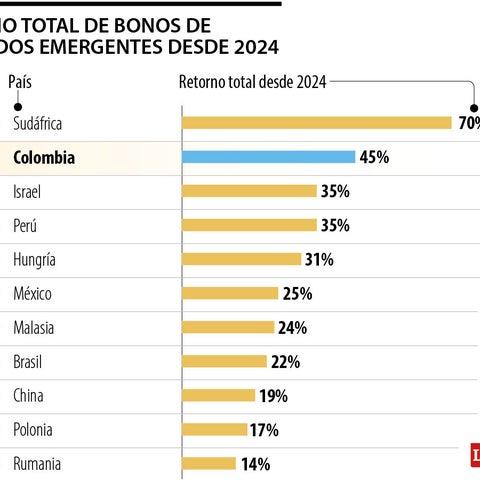
"The Colombian case appears as the second-best performance in our comparison. Part of this result is closely related to the sharp valuation of sovereign debt and the performance of the peso against the dollar. These factors have favored Colombian assets, positioning them as highly lucrative vehicles within global carry trade operations."
International Monetary Fund (IMF) observers have also noted that Colombia’s adherence to its Fiscal Rule—a legal framework that constrains government deficit spending—acted as an essential safety net. Even during the peak of the Petro administration’s reform push, the Ministry of Finance’s commitment to the Fiscal Rule reassured international credit rating agencies like Fitch Ratings and S&P Global, preventing a further downgrade of Colombia’s sovereign credit rating.
The Corporate and Industrial Impact in South Africa
In South Africa, the business community has reacted with overwhelming optimism to the resolution of the energy crisis. The South African Chamber of Commerce and Industry (SACCI) pointed out that the increase in the Energy Availability Factor (EAF) from 51% to 72% by January 2026 has transformed the country’s sovereign risk profile.
Previously, international rating agencies had downgraded South African debt deep into "junk" territory due to the fiscal drain caused by bailouts for Eskom. The stabilization of the state utility’s operations has significantly reduced the government’s contingent liabilities, directly leading to a contraction in sovereign credit default swap (CDS) spreads.
Implications for Future Investment and Fiscal Policy
The impressive rally of Colombian and South African sovereign debt carries profound implications for the future of emerging market investing and domestic fiscal policy.
Lower Borrowing Costs for the State
The most immediate benefit of a falling country risk premium is the reduction in the cost of new debt issuance.
- For Colombia, refinancing its existing international debt at 144 basis points over US Treasuries is vastly cheaper than doing so at the 400 basis points demanded in late 2022. This reduction in borrowing costs frees up vital fiscal space in the national budget, allowing the government to redirect funds from debt servicing to infrastructure and social development.
- For South Africa, the reduction in sovereign risk translates to cheaper capital not just for the government, but also for major state-owned enterprises (SOEs) and private corporations seeking international expansion.
The Lesson of Institutional Resilience
For global asset managers, the primary takeaway from the Colombian and South African bond rallies is the high value of institutional resilience in emerging markets. In both cases, initial political shocks led to oversold debt markets. However, the presence of strong democratic institutions—such as Colombia’s independent central bank and constitutional court, and South Africa’s independent judiciary and free press—prevented worst-case economic scenarios.
Investors who recognized that these institutional guardrails would hold were able to buy sovereign bonds at steep discounts, eventually reaping the 45% and 70% returns as risk premiums normalized.
Remaining Risks and the Road Ahead
Despite the stellar performance, market analysts urge caution. The high returns of the past two years were driven by a transition from "high risk" to "normal risk." Sustaining these gains will require both nations to address persistent structural challenges:
- Colombia: The incoming administration faces the task of revitalizing sluggish private investment, boosting non-traditional exports, and managing a tight fiscal deficit while navigating the transition away from fossil fuel dependency.
- South Africa: While the energy crisis has abated, logistics and transport bottlenecks—particularly within the state-run port and rail operator Transnet—remain a hurdle to economic growth. Additionally, the GNU coalition must maintain political cohesion ahead of future electoral cycles to preserve investor trust.
Ultimately, the performance of Colombian and South African bonds demonstrates that in the world of sovereign debt, the successful management of political transitions and structural bottlenecks is the most powerful catalyst for unlocking investment value.



Leave a Reply